From to
Elena Blasco brings together historical installations and works from 2026 in her second solo exhibition at Espacio Mínimo.
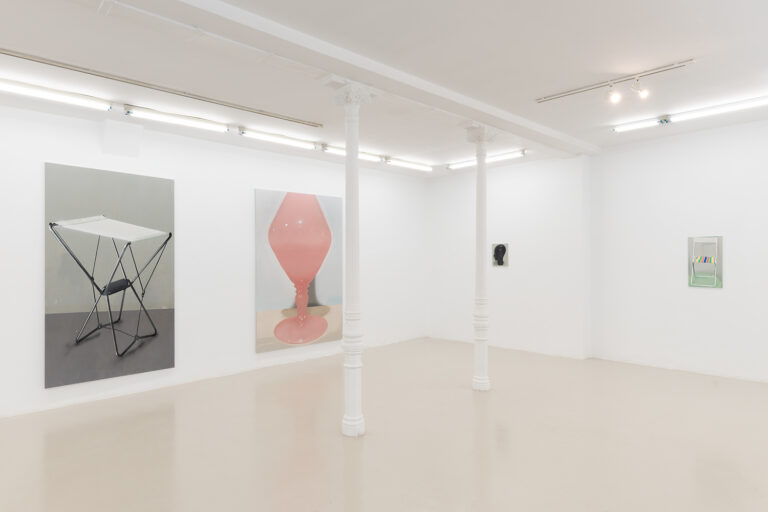
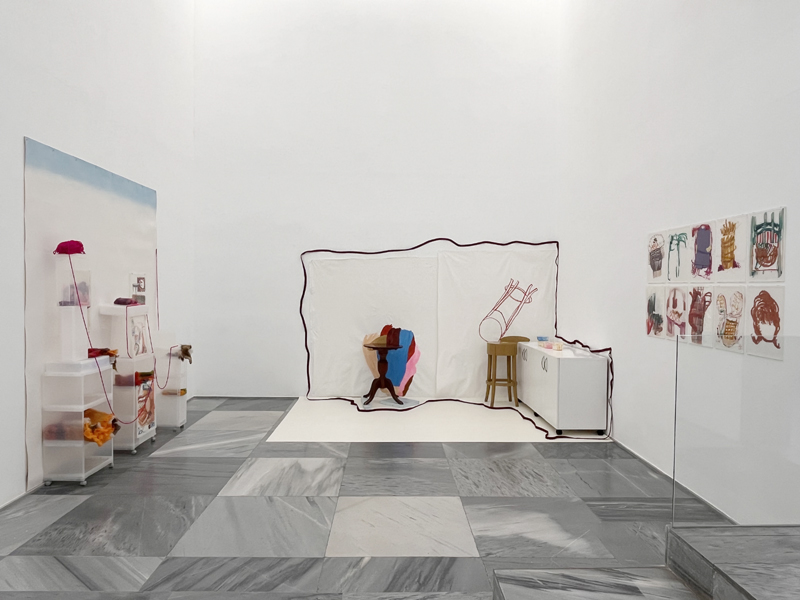
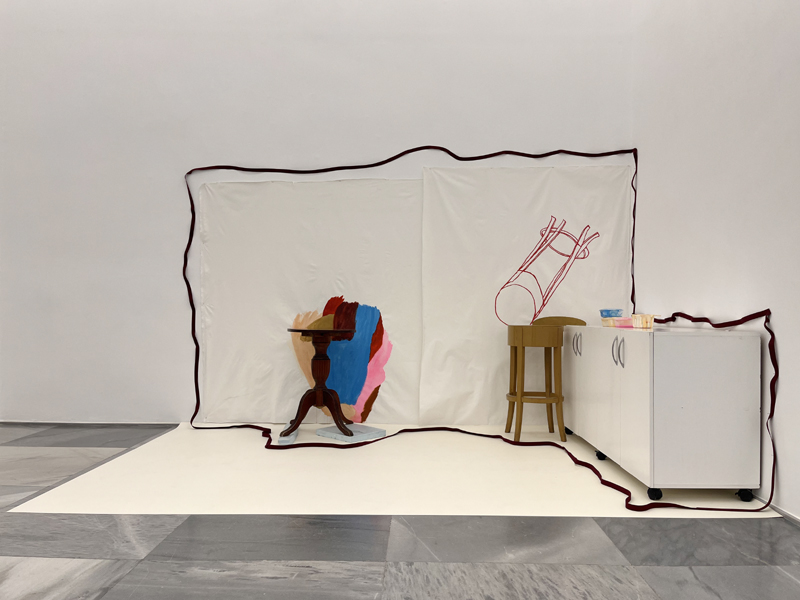
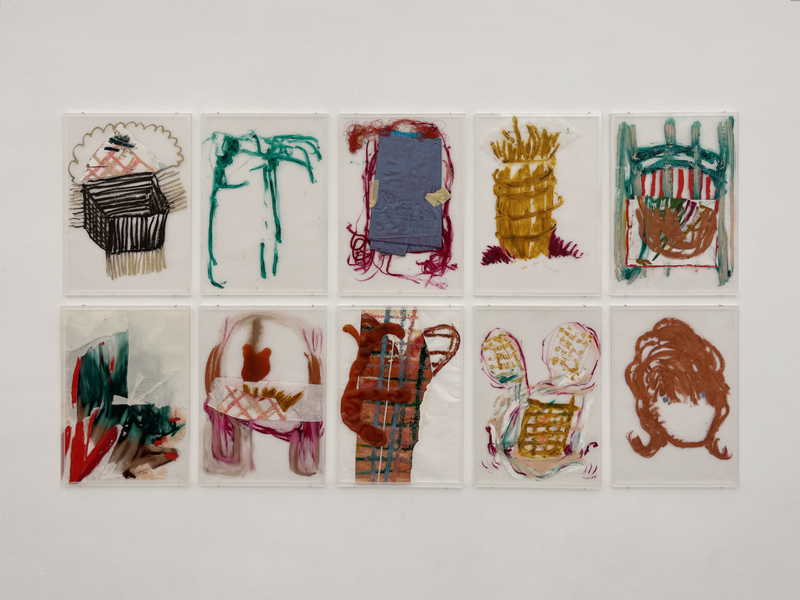
Elena Blasco has brought together at Espacio Mínimo furniture, paintings, drawings, textiles, and objects from very different periods of her career. MIX. La donna è mobile, her second solo exhibition at the Madrid gallery, combines installations from the 1980s and 1990s with works completed in 2026. At times, the three rooms at Doctor Fourquet 17 take on the appearance of a furniture store where the objects have lost their usual function. A curtain, a drawing, or a piece of glass may all form part of the same installation. The exhibition, which opened on September 10 during Apertura Madrid Gallery Weekend, will remain on view through November 14.
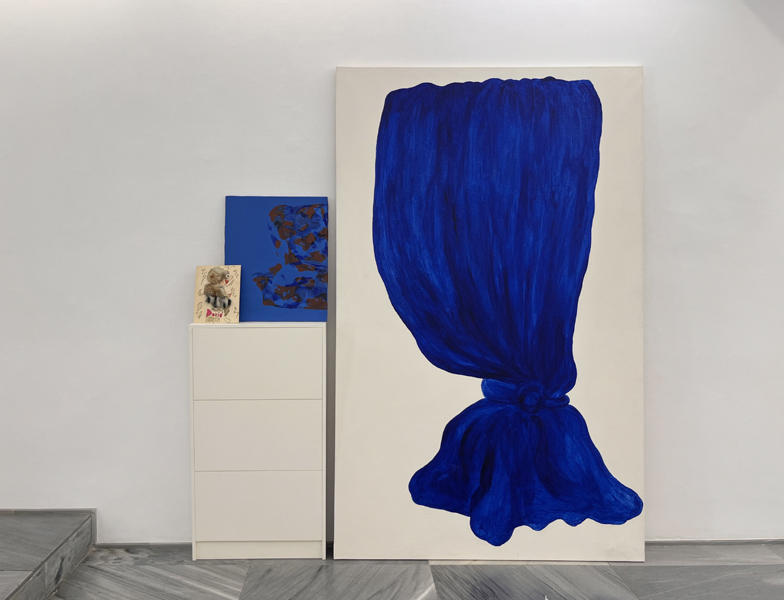
Blasco (Madrid, 1950) began exhibiting in 1976, after studying Fine Arts at the Complutense University and also training in photography and interior design. By the late 1980s, he was already working with objects that extended beyond the frame to occupy the gallery space. Todo se me hace poco para ti (1986), an installation of screen-printed glass and bronze, and La Bailarina (1989), a drawing, are among the earliest works in the MIX exhibition. Also on view are Blue Curtain (1994) and I Was Distracted and To Desire, I Sway (1991–1996). The selection revisits a period in which Blasco used elements of household furniture, industrial materials, and artisanal techniques, without drawing a distinction between painting, sculpture, and decoration.
His recent works retain this variety of techniques. Se comunican solo por un hilito, Es muy difícil, El niño, and Dos naranjas—all from 2026—are mixed-media installations. The gallery also features drawings created this year and Lo intentan, an installation from 1992. Blasco has not arranged the pieces as a retrospective. Older works appear alongside newer ones, and some installations bring together elements that might occupy different places in another presentation. In a statement published by Espacio Mínimo, the artist describes the choice of materials and their combination as an experiment. The possibility of moving a painting or a piece of furniture to a different location is part of that work.
Houses have appeared in Blasco’s work for decades, although their interiors could hardly be used as conventional living spaces. The furniture and decorative objects retain references to everyday life, but their proportions, colors, and combinations of materials set them apart from their usual用途. In 1991, on the occasion of an exhibition at the Ángel Romero Gallery, critic Carlos Jiménez wrote about the domestic interior as a space of resistance against uniformity. Espacio Mínimo revisits that interpretation for MIX and draws a parallel between the installations and dollhouses. The reference is particularly relevant for an artist who has used humor and objects associated with family life to also address social conventions and the roles assigned to women.
In 2012, the Sala Alcalá 31 in Madrid presented Millones y abundantes razones, an exhibition curated by Alicia Murría that brought together an extensive selection of her work. In 2023, Blasco opened her first solo exhibition at Espacio Mínimo, Teviasé unosapatito delala de mi sombrero, which focused primarily on works on paper. Her institutional presence has continued in recent years: in 2025, she participated in Cosas que hacen clac at the Centre del Carme in Valencia, and in 2026, her work Estufa-Adelfa (1991) was included in the presentation of the Reina Sofía Museum’s contemporary art collection. The installation, which belongs to the museum, underscores the importance of domestic objects in her work from the early 1990s.
Luis Valverde, co-director of Espacio Mínimo, explained in an interview with ART WEEKENDS that the gallery had wanted to work with Blasco for years and began preparing for that collaboration around 2021. The first exhibition took place in 2023. For Valverde, the title MIX. La donna è mobile reflects the possibility of modifying the arrangements during installation: a work can change locations, be incorporated into another installation, or take on a different context. This freedom also explains why the artist has revisited pieces created thirty or forty years ago without necessarily reconstructing their original presentations. The exhibition coincides with preparations for Espacio Mínimo’s move to a new location in Vallecas, after more than two decades on Doctor Fourquet Street.
Elena Blasco
Elena Blasco was born in Madrid in 1950 and lives and works in the city. She studied Fine Arts at the Complutense University, specializing in painting, and earned a degree in Photography and Decoration from the Escuela de Artes Plásticas de Madrid. Since her first exhibition in 1976, she has developed a practice that combines painting, sculpture, photography, and installation using everyday objects and supports.
Her work utilizes color, textures, and the transformation of objects to address issues such as gender-based violence and social injustices. Her career includes exhibitions at Sala Alcalá 31 and La Casa Encendida, both in Madrid. Espacio Mínimo describes her use of humor and an innocent appearance as resources that allow her to question the prejudices and conventions of daily life.
The gallery
Espacio Mínimo began its activities in Murcia in 1992 and opened its Madrid location in 2000. It is located at Doctor Fourquet 17, within the Lavapiés gallery circuit and near the Museo Reina Sofía. Its program features painting, sculpture, video, photography, and installation, maintaining relationships with Spanish and international artists who work with diverse media and procedures throughout their careers.
Among its artists are Elena Blasco, Liliana Porter, Ana Tiscornia, Juan Luis Moraza, Manu Arregui, and Donna Conlon. The programming alternates between solo exhibitions and other projects, maintaining continuity in the work of those they represent. Blasco's current show is the artist's second solo exhibition at the space and joins the presentations of her work that the gallery holds in its archive.
Exhibition images
Things to do near Espacio Mínimo
Doctor Fourquet allows for visiting two other galleries without changing streets: Juan Silió at number 20 and F2 at number 28. From there, one can continue toward Argumosa to visit 1 Mira Madrid or return to the Barrio de las Letras, where Leandro Navarro occupies Amor de Dios 1. These entries offer four different programs to choose a continuation based on your interests and available time.