
The story of Juan Silió begins in Santander in 1988, when Fernando Silió opened the gallery. His son Juan took over as director in 1999 and expanded the gallery’s program to include photography, new technologies, and a younger generation of artists. Since 2020, the gallery has maintained a second location on Doctor Fourquet Street, just a short walk from the Reina Sofía Museum, while continuing to operate out of its original space on Calle del Sol in Santander.
Gallery Profile
The Juan Silió Gallery opened in Santander in 1988 and maintains a location there at 45 Calle del Sol. Juan Silió is listed as the founder and director. In 2020, the gallery opened a second location in Madrid, at 20 Doctor Fourquet Street, bringing its well-established track record to one of the capital’s premier gallery districts. The gallery continues to hold exhibitions regularly in both cities, combining relationships cultivated over decades with the visibility offered by the Madrid art scene.
Juan Silió’s roster spans several generations of contemporary art. Among the artists with the longest careers are Mitsuo Miura (Iwate, Japan, 1946), who has lived in Spain since the 1960s; Eduardo Gruber (Santander, 1949), a painter and draftsman; and Juan Uslé (Santander, 1954), whose abstract paintings gained international recognition from New York and were honored with the National Prize for Visual Arts in 2002.
Belonging to a later generation are Philipp Fröhlich (Schweinfurt, Germany, 1975), a painter trained in set design who builds models as a starting point for his compositions; Alejandro Botubol (Cádiz, 1979), who focuses on painting and its relationship to landscape, light, and geometry; Carlos Irijalba (Pamplona, 1979), who works with photography, installation, and objects; and David Magán (Madrid, 1979), the creator of sculptures and installations in which glass, light, and color shape the viewer’s perception of the work.
Among the younger artists, Vicky Uslé (Santander, 1981) has recently expanded her pictorial research to include blown glass and three-dimensional works; Irene de Andrés (Ibiza, 1986) uses video, sculpture, and graphic art to analyze the history of tourism and its impact on the landscape; Blanca Gracia (Madrid, 1989) works across drawing, video, and installation; and Carmen Arias (Santander, 1999) uses sculpture to explore architecture, urban space, and the memory embedded within them.
Previous exhibitions held in Madrid showcase this generational and technical diversity. *Umbrales y rellenos* by Carmen Arias, presented between May and July 2026, employed material and spatial interventions. *Luz al Silencio* by Vicky Uslé, presented between March and May 2026, explored painting, light, time, and memory. *La Cavale* by Philipp Fröhlich, held from November 2025 to January 2026, employed a pictorial image associated with scene and movement. Each project utilized different approaches within a contemporary program.
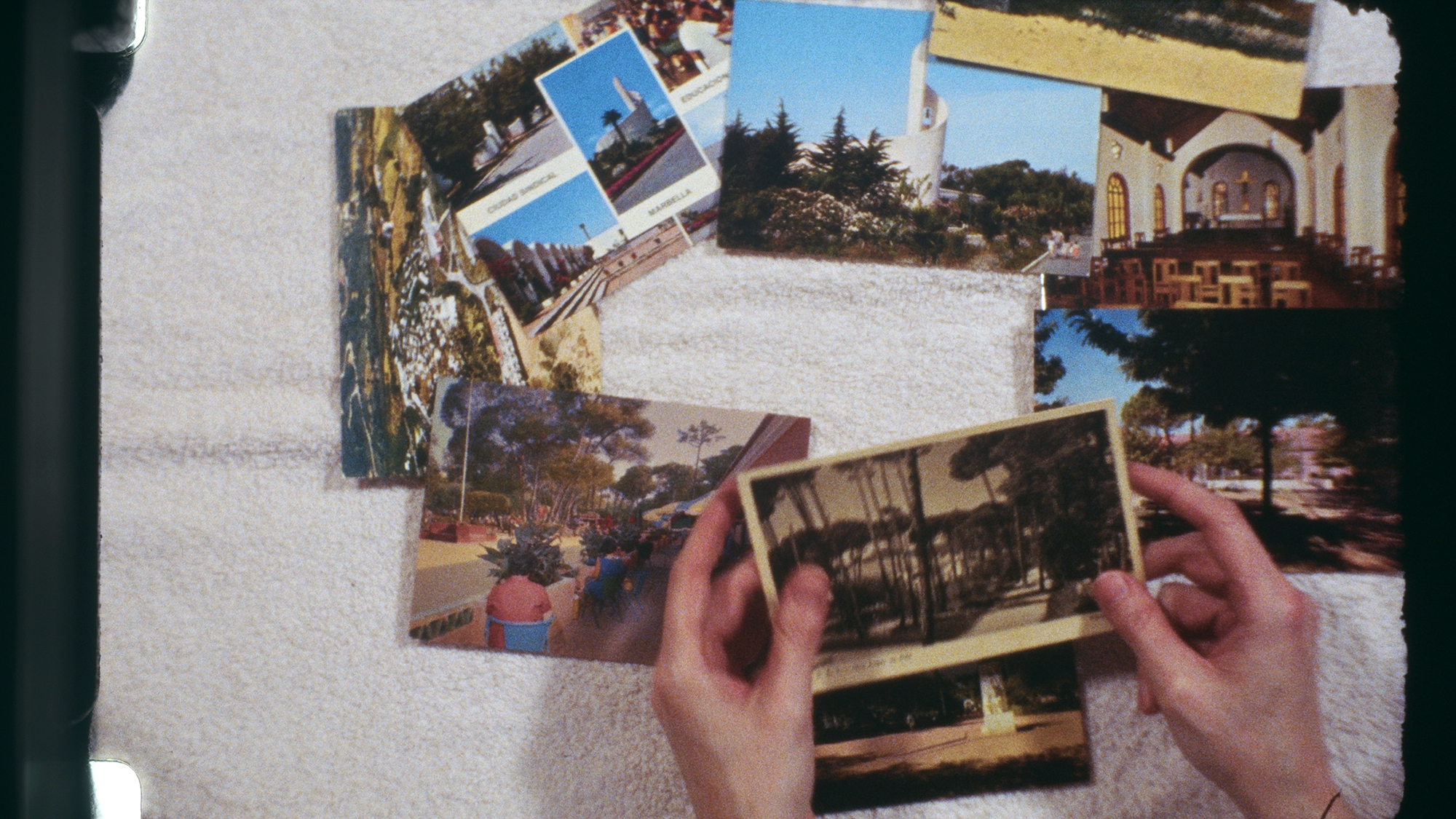
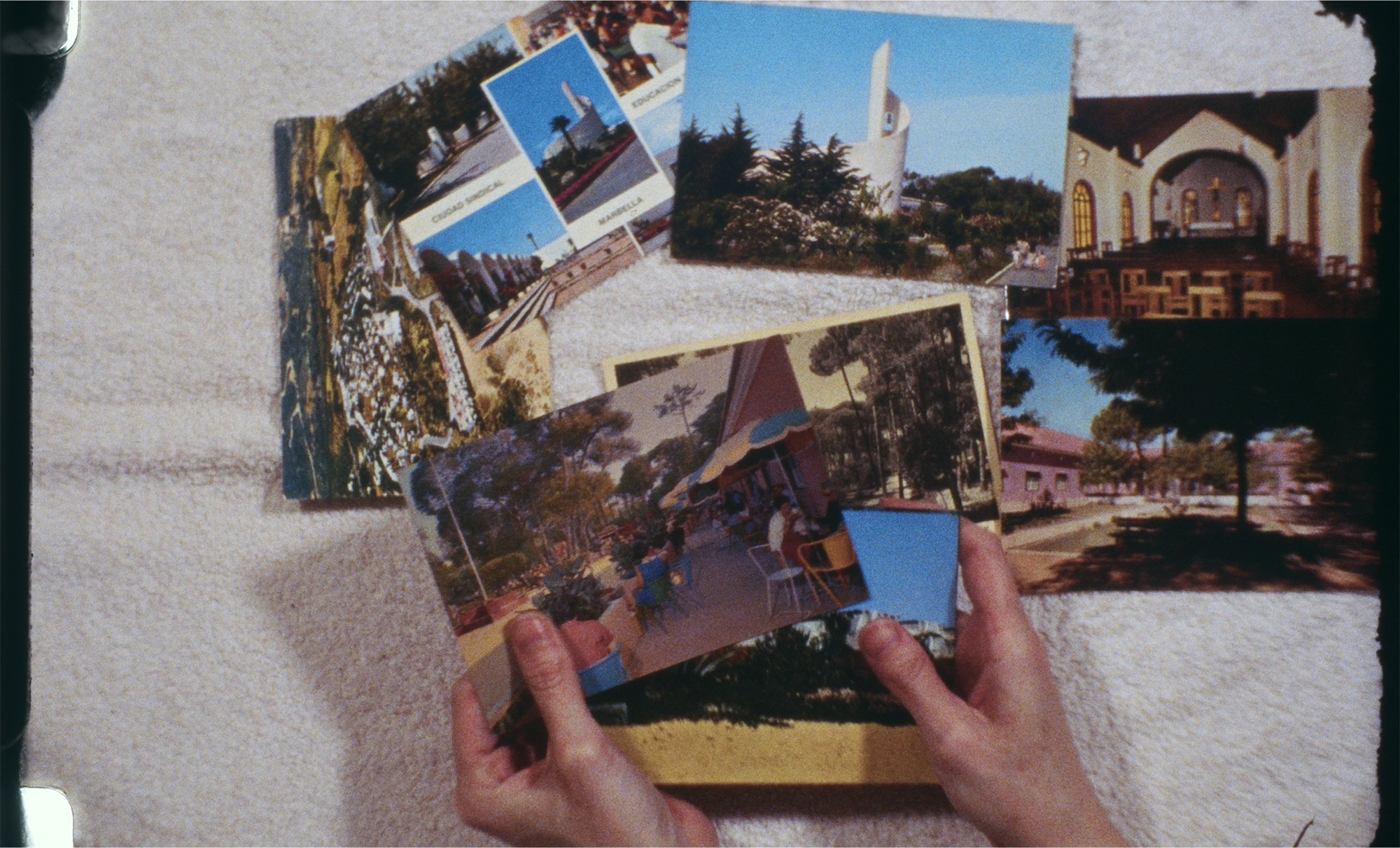
The current exhibition, *For a Place in the Sun*, by Irene de Andrés, is scheduled to run from September 10 to October 31, 2026, and is based at the Tiempo Libre Residential Complex in Marbella. The research explores tourist architecture, social tourism, collective memory, and the promises of well-being associated with that project. Images, remnants, and other materials related to the site allow for an examination of changes in its use and the enduring nature of its meanings.
Program
Why Go
"A Place in the Sun," the current exhibition by Irene de Andrés (Ibiza, 1986) at Galería Juan Silió in Madrid, is based on two resort complexes designed to organize workers’ leisure time during the dictatorships in Portugal and Spain. The artist draws a parallel between the Colónia de Férias Um Lugar ao Sol, inaugurated in Caparica in 1938 during the Estado Novo, and the Ciudad Residencial Tiempo Libre in Marbella, which opened in 1962 under the Franco regime. Both projects continued to operate after the dictatorships ended, although their trajectories have since diverged.
The case of Marbella is particularly significant. The resort offered low-cost vacations until 2023 in one of the areas most closely associated with luxury tourism on the Costa del Sol and is now slated for private development. De Andrés uses this transformation to explore the shift from a model of social vacations to one shaped by tourism pressure and the economic value of the region.
The research is presented through visual works created using postcards, photographs, newspaper clippings, notes, and stills, along with two video installations created in Caparica and Marbella. A publication by Editorial Concreta expands upon the project, which was developed with a 2024 Leonardo Grant from the BBVA Foundation. The exhibition can be viewed at Doctor Fourquet 20 through October 31, 2026.
What to Expect
Juan Silió’s recent exhibitions in Madrid offer a glimpse into a wide range of works. In *Umbrales y rellenos*, Carmen Arias incorporatedelements of architecture and urban life into the sculptures—ranging from a manhole cover reproduced from a mold to water jugs, roof tiles, and pieces related to water and the subsoil. The exhibition also revisited an earlier project by the artist: the first replica of the Altamira Cave, created for the Deutsches Museum in Munich.
In *Luz al silencio*, Vicky Uslé presented blown-glass pieces and works on paper. Light passed through the glass, and the resulting shadows were captured on the paper, taking her work from painting into the realms of volume and space.
A few months earlier, Philipp Fröhlich had presented *La Cavale*, his first exhibition at Juan Silió. The German artist works with models he builds in his studio, which he later uses as the basis for his paintings. The selection, featuring works created since 2020, demonstrated how light, color, and composition transform these models into scenes where it is difficult to determine what belongs to a real space and what has been constructed or imagined.
Represented Artists
What to Do Nearby
Yes. I would remove any opinions about Doppelgänger and leave only verifiable information. That makes it sound more like a news article:
Doctor Fourquet is home to several galleries just a few meters from Juan Silió. At number 28 is F2 Galería, which opened in 2014 and is directed by Paloma González and Enrique Tejerizo; at number 8, MPA / Moisés Pérez de Albéniz maintains one of its Madrid locations. The route ends at the Reina Sofía Museum, whose proximity has helped transform this area into one of Madrid’s main hubs for contemporary art galleries. Moving from these private spaces to the museum allows visitors to shift perspectives and connect the current exhibitions with the institution’s permanent collection and temporary programming.
Across the street from Doctor Fourquet, Swinton & Grant, located at Miguel Servet 21, combines a gallery with a bookstore specializing in comics, graphic novels, essays, self-published works, and artist books. Just a few minutes away, the Cine Doré houses the Spanish Film Archive and offers a regular program of film series, retrospectives, and archival films. For lodging in the area, Artrip occupies a small building on Valencia Street, while CoolRooms Palacio de Atocha is housed in a small mansion on Atocha Street, between Lavapiés and the Barrio de las Letras.
For dining, the Antón Martín Market, located at Santa Isabel 5, combines traditional food stalls with small restaurants. Among them is Doppelgänger, located on the market’s main floor. From there, Santa Isabel Street leads back toward the Reina Sofía Museum and Atocha, along a short stretch of streets lined with galleries, bookstores, movie theaters, markets, and museums.


