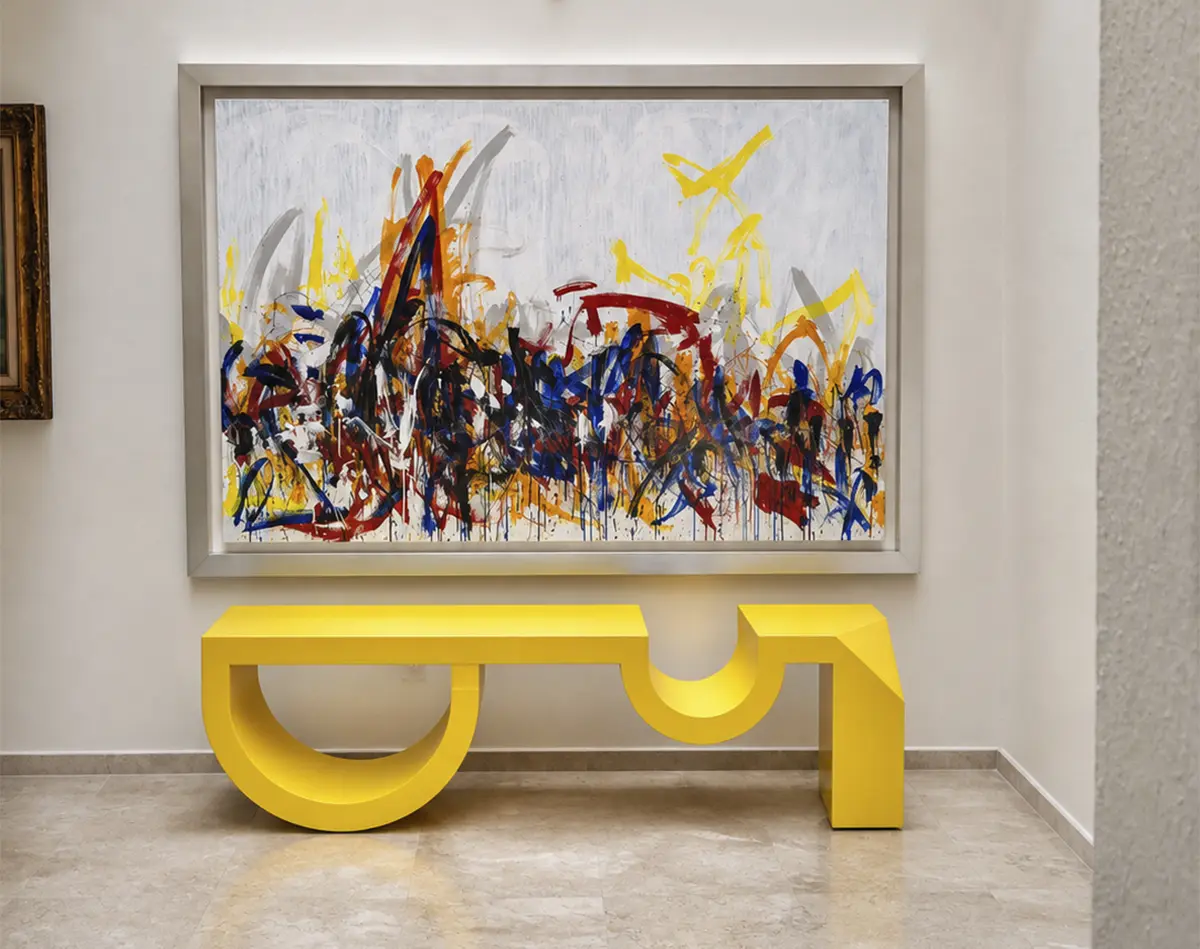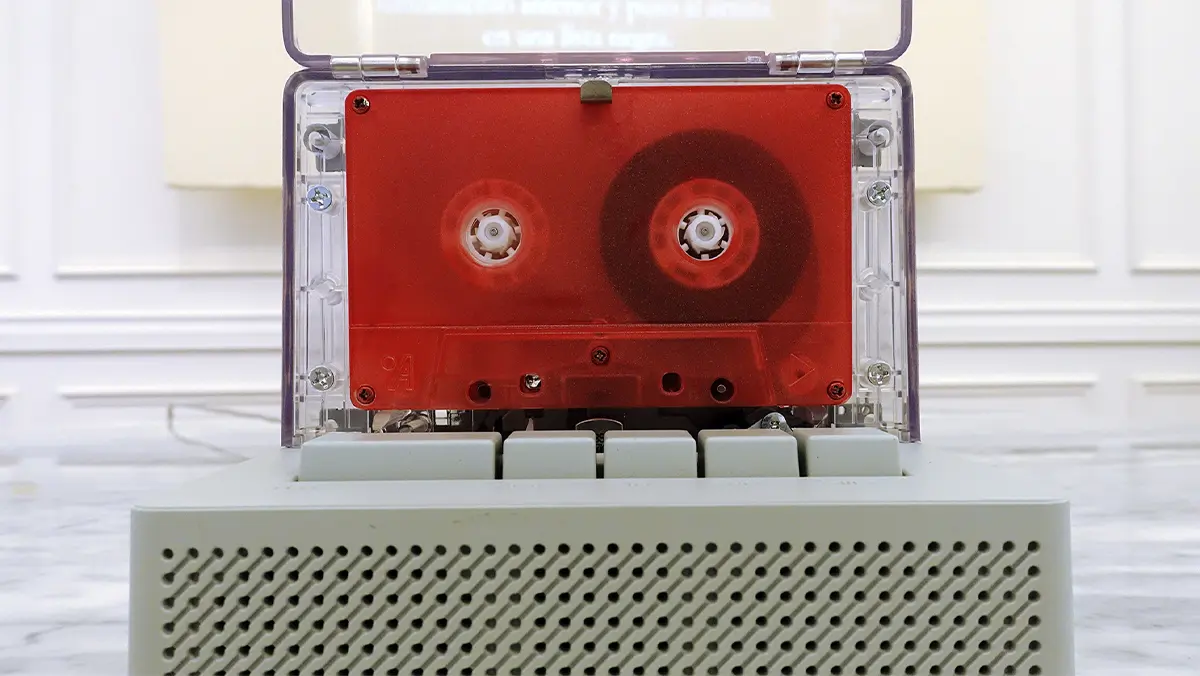

Chicano art, as evocative as it is misunderstood, finds an interesting place in *Here and There: The Right to Belong*, a binational exhibition and festival that brings together more than 100 works by artists from Mexico and the United States exploring memory, identity, and a sense of belonging.
“Here and There ” questions the geographical, cultural, and imaginary boundaries of today’s world. We spoke with the exhibition’s curator, Dr. Martina Ayala, about this. The exhibition runs through November 22, 2026, at the Indie Rocks! Forum Gallery, located in the Roma Norte neighborhood of Mexico City.

The right to exist between two worlds
What personal experience led you to make the right to belong the central theme of this exhibition?
My experience as a Chicana woman, born and raised in East Los Angeles, has been shaped by living between two countries, cultures, languages, and identities. I grew up with a deep connection to Mexico, but also with the awareness that our Chicana identity has its own history, built on generations of resistance, adaptation, and cultural creation in the United States.
The title is very revealing in that regard…
Like many Chicana women, I have experienced the contradiction of feeling like a foreigner in the United States and, at the same time, not being considered Mexican enough in Mexico. This experience has led me to question who determines our sense of belonging and why we are so often forced to choose between identities that are part of who we are.
What does the right to belong mean today?
For me, the right to belong doesn’t mean asking permission to occupy a space. It means recognizing our humanity, our history, and our right to exist fully, without having to fragment our identity to meet the expectations of others.
A dialogue without downplaying differences
The exhibition brings together the experiences of Chicanas, migrants, returnees, and those who have been deported. How did you create a dialogue among them without diluting their differences?

The exhibition brings together 58 intergenerational and multidisciplinary artists from Mexico and the United States, featuring more than 100 works that explore different dimensions of identity, memory, displacement, belonging, and cultural creation. From the very beginning, it was clear to me that I did not want to construct a homogeneous narrative of Chicano identity or the immigrant experience. There is no single way to be Chicano, Mexican, an immigrant, a returnee, or a deportee. Each experience is shaped by distinct historical, economic, political, generational, and personal circumstances.
My curatorial proposal is based on acknowledging those differences, not on eliminating them. The experience of a person who decides to move to Mexico voluntarily cannot be equated with that of someone who was deported and torn away from their community and the life they built over decades.
There are many stories behind each work…
Of course—for example, Victoria Ruth Martínez, a Chicana artist who decided to leave Long Beach, California, to settle in Mexico City, explores her relationship with Mexican culture, memory, and the objects that connect us to our personal histories. I was interested in creating a space where the works could engage in a dialogue without losing their autonomy or their unique characteristics.
Beyond the Cliché of the Neighborhood and the Border
What ideas about Chicano culture are you interested in challenging by presenting this exhibition in Mexico? What prejudices do you encounter on this side of the border?
One of my main goals is to challenge the limited and stereotypical representation of Chicano culture, both in Mexico and in the United States. Chicano identity is often reduced to images associated with the cholo, gangs, lowriders, tattoos, or a particular aesthetic of Los Angeles neighborhoods. These expressions have important histories and cultural meanings that deserve to be understood and respected. The problem arises when they become the only possible representation of an extraordinarily diverse community.
Chicano culture also has a rich history of social movements, community organizing, feminist thought, education, literature, theater, music, spirituality, and artistic production. In this exhibition, I am honored to present artists connected to the history of the Chicano Movement, alongside later generations who expand upon, reinterpret, and challenge its artistic languages and traditions.

A story of our own, not an incomplete version
In addition, this exhibition sparks a debate…
I’m also interested in challenging certain prejudices we encounter in Mexico: the perception that Chicanos are Mexicans who have lost our culture, that we speak Spanish poorly, or that we aren’t authentic enough. These ideas ignore the historical circumstances that gave rise to our communities and the many ways in which we have preserved, transformed, and recreated our cultural roots.
“Chicano culture is not an incomplete version of Mexican culture. It is a cultural expression with its own history, memory, and way of thinking—one that is deeply connected to Mexico but not subordinate to a single definition of Mexican identity.”
I want the Mexican public to discover that diversity and recognize Chicano art as an important contribution to the cultural history of both countries.
Nepantla, Mythology, and Sonic Memory
The concept of Nepantla runs through the curatorial proposal. In which work is this experience of living between cultures particularly visible, and what contradictions does it raise?
Nepantla, a concept of Nahua origin revisited and developed by Gloria Anzaldúa in her border studies, allows us to explore the liminal spaces where different identities, cultures, and systems of power meet and clash. It is not limited to living between Mexico and the United States; it also encompasses the contradictions of gender, spirituality, memory, and belonging.
Art and Feminism: That Interstitial Space
Isis Rodríguez stands out from a familiar vantage point in contemporary art: feminism
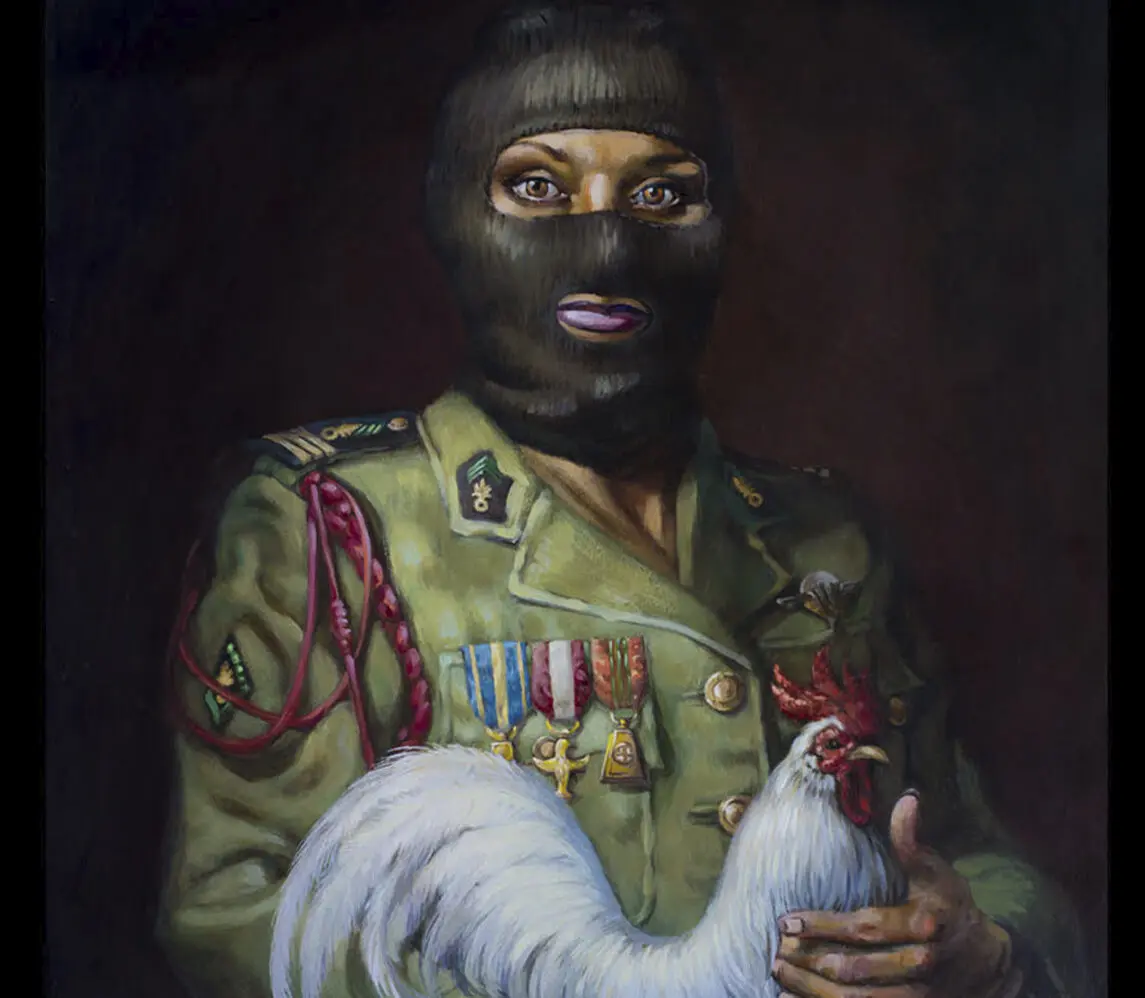
A particularly powerful image appears in the work of Isis Rodríguez, a contemporary painter of mythologies who has spent years exploring Nepantla from a feminist and spiritual perspective. In *The Captain*, from her series *Legends from the Realm of Nepantla*, she presents a figure who guides the spirit through the turbulence of that liminal space. Her work challenges the shame imposed on the female body and proposes new narratives of healing, transformation, and autonomy.
There is a wealth of visual history in the pieces…
In her paintings of quinceañeras and chambelanes, Isis explores another dimension of Nepantla: the transition from childhood to adulthood, family expectations, and individual desires. Drawing inspiration from Spanish court painting, she transforms young people and working-class families into figures of dignity and sovereignty, asserting their place within visual history.
Eugene Rodríguez approaches Nepantla through the tensions between power, representation, and freedom. In *Policing Our Dreams*, he brings together images of migrants, mariachis, and soldiers from different contexts to question why some people’s dreams are considered legitimate while others’ are monitored, repressed, or rejected. His work invites us to reflect on who controls cultural narratives and how the media influences our perception of others and of ourselves.

Beyond the Immigrant Experience and the Clichés
How did you prevent the experience of migration from becoming the sole framework for interpreting the work of the participating artists?
One of my curatorial concerns was to ensure that artists were not defined solely by their origin, cultural identity, or immigration status. Chicano art is not merely art about migration, just as Mexican art cannot be reduced to a national narrative.
In *Aquí y Allá*, we find works that explore family memory, feminism, spirituality, sexuality, the body, cultural history, everyday life, resistance, and artistic experimentation. For example, David Kelvin Santos, with *Muxe’/Guchachi’*, invites us to consider the complexities of muxe’ identities and the social and cultural spaces they inhabit, both in Mexico and within migratory processes. My responsibility as a curator is to recognize the participants as artists with their own trajectories, research, techniques, and artistic languages. Their works deserve to be appreciated for their aesthetic and conceptual qualities, not merely as testimonies to a social experience. Identity can help us understand a work, but it should never become a barrier that limits its interpretation.
Memory also has rhythm, sound, and color
Sheila E.’s drumheads, reworked by Pete Escovedo, bring together music, painting, and family memories. What do they reveal about the transmission of identity across generations?
Pete Escovedo’s participation in this exhibition represents an extraordinary convergence of music, painting, and intergenerational memory. We are presenting two works, *Toca mi Alma* and *Meeting of the Minds*, created on drumheads that once belonged to his daughter, the renowned percussionist Sheila E.
Through his paintings, Pete transforms instruments associated with his daughter’s musical expression into surfaces that preserve and reinterpret a shared memory. The Escovedo family represents an important tradition of Latin musical creation that has transcended generations and cultural boundaries. Their story reminds us that identity is not passed down in a static way: each generation receives a legacy, interprets it, and transforms it through its own experiences and artistic languages.
I am particularly interested in how these works help us recognize that the history of Chicano art is not limited to painting or graphic art. It is also shaped by music, theater, dance, and other cultural expressions that have been fundamental to preserving and transforming our collective memories. In *Toca mi Alma* and *Meeting of the Minds*, music and painting come together to remind us that culture is not merely inherited: it is practiced, transformed, and shared. Memory, too, has rhythm, sound, and color.
The Myth of Return and Art as a Means of Survival
Can Mexico also be a place that excludes those who return or are deported? How is that unease reflected in the exhibition?
Absolutely. One of the key aspects of this exhibition is to challenge the romantic notion that Mexico automatically represents a welcoming home for all people of Mexican descent arriving from the United States.
For many deported people, returning home is not a voluntary choice. It means separation from their families, communities, and the lives they built over years or decades. Upon arriving in Mexico, they may face discrimination, economic hardship, administrative obstacles, and a profound sense of rootlessness.

This reality is portrayed in a particularly moving way in the photographs and films of José Eduardo Aguilar, whose documentary work *El Digno Retorno* offers us a glimpse into his experience as someone deported to Mexico. Through photography and film, José Eduardo documents the human and emotional consequences of deportation, as well as the experiences of trauma and oppression endured on both sides of the border. His work reminds us that deportation does not end when a person crosses a border. Its consequences continue in daily life, in family relationships, in identity, and in the struggle to rebuild a sense of belonging.
The right to belong should not depend on a passport, an accent, or immigration status. It also includes the right to rebuild our lives, heal, and find a sense of community without having to constantly prove who we are.
Using Art to Support Artists
The project aims to foster collaboration and ensure fair compensation for artists. What needs to continue after the exhibition closes so that this intention translates into real opportunities?
From its inception, “Aquí y Allá: El Derecho de Pertenecer” has been much more than a temporary exhibition. It is the beginning of an independent, binational cultural movement that seeks to create real opportunities for artists and build a sustainable model of collaboration between Mexico and the United States. This project has been self-funded, with contributions from members of our communities in both countries who recognize the value of culture and artistic work.
We are currently seeking sponsorship from brands, foundations, and investors who share our vision and are willing to support an independent artistic movement. Our strategy includes various sources of revenue: the sale of original artwork, the production of cultural merchandise, the development of the Aquí y Allá Podcast, publications, and activities that generate funds. In December 2026 and January 2027, we plan to launch the exhibition catalog, a line of merchandise, and the Aquí y Allá Bazaar, conceived as a space to promote the artists’ work, generate sales, strengthen collaborative networks, and keep the project alive after the exhibition closes.
In the long term, our vision includes an annual binational exhibition and festival, a publishing platform, and the creation of a cultural center to facilitate artistic exchange between the two countries. Artists deserve much more than recognition and visibility: they deserve fair compensation, professional opportunities, and decent working conditions so they can continue creating. Our commitment is to use art to support artists.
The Political Climate
Would an exhibition like this have been possible—or would it have been the same—without the current political climate? What curatorial decisions did you make in response to that context?
I believe this exhibition would have been necessary at any point in history, because questions about identity, memory, displacement, and belonging have been with our communities for generations. However, the current political context lends it a particular urgency. We are living in a time when anti-immigrant rhetoric, deportations, the criminalization of racialized communities, and exclusionary policies are profoundly affecting the lives of millions of people.
But it would be a mistake to interpret this exhibition solely as a reaction to the current political climate. Chicano art has a history spanning more than half a century of resistance, cultural creation, and the struggle for recognition. It did not begin with the current crisis, nor will it end with it.
A key curatorial decision was to bring together different generations of the Chicano Movement with contemporary artists from Mexico and the United States, and to include experiences of deportation, return, gentrification, and displacement—without turning suffering into a spectacle or reducing the artists to the identity of victims. The exhibition does not aim to offer simple answers. It seeks to spark necessary conversations about the borders we construct and those we reproduce within our own communities. In times when so many political forces seek to divide us, asserting the right to belong is also asserting the right to exist, to create, to remember, and to build community.
We reveal more Latin American art in the spotlight in AW Magazine.