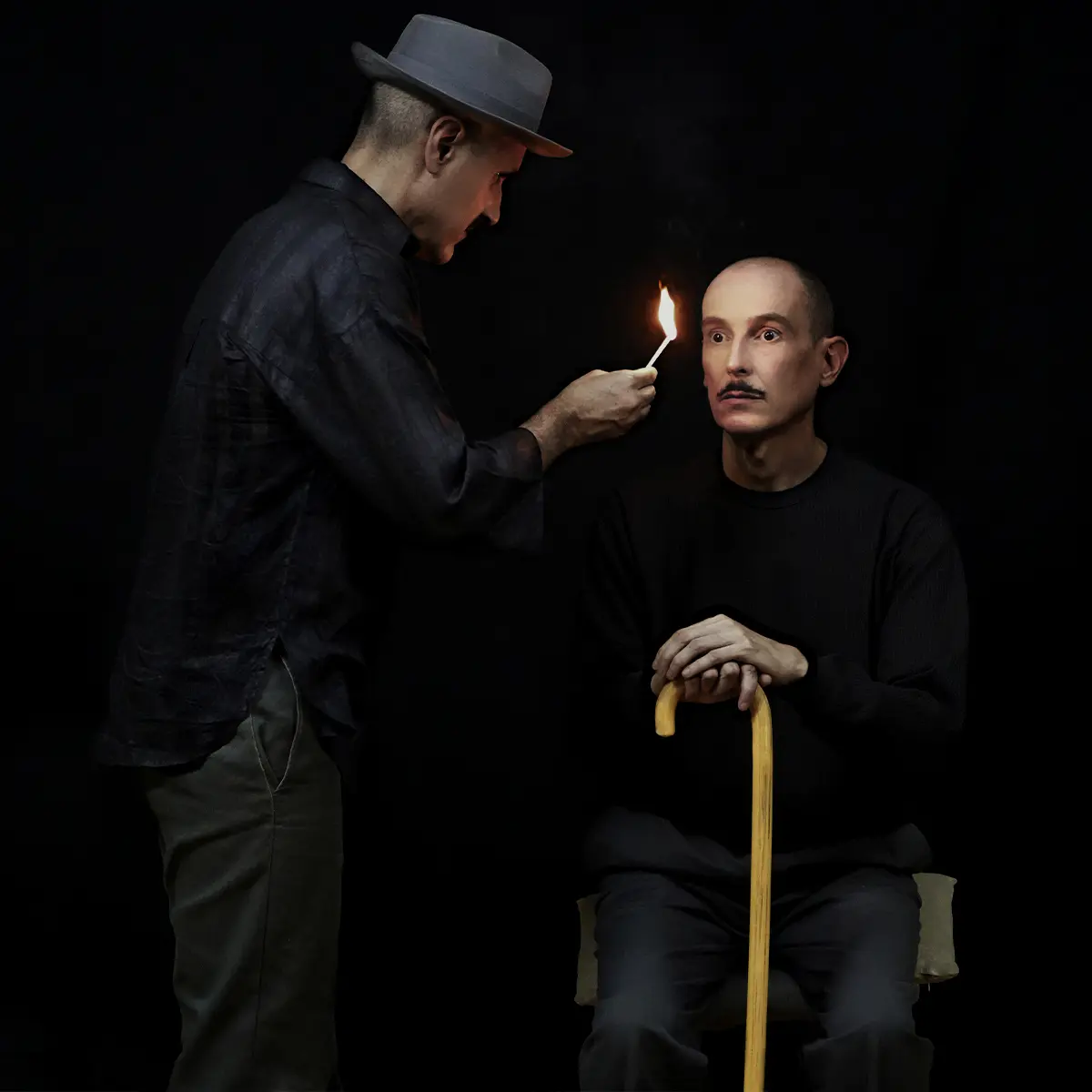

On the eve of their transatlantic trip and Hidrogenesse’s debut in Mexico, we spoke with Carlos Ballesteros (vocals) and Genís Segarra—in other words, Hidrogenesse.
The Barcelona-based duo that has left behind albums such as *Un dígito binario dudoso*,dedicated to the American mathematician Alan Turing, and unlikely hits like “No hay nada más triste que lo tuyo,” recently released *Variaciones Pombo* (2026), an album that sets the poetry and prose of Cantabrian writer Álvaro Pombo to music, from which has emerged what is perhaps one of their best singles, “imaginado es todo.”
Hidrogenesse will perform on Saturday, November 21, at the Centro Cultural España’s anniversary celebration.

What do you usually do while flying over the ocean? Does the journey inspire you, or does the destination?
The trip makes us incredibly sleepy, and we wish we could sleep for twelve hours straight. What inspires us is coming back—arriving at a place you’ve already been to and knowing where you’re going, how to get around there, and all that.
You’ll be spending some time in Mexico—how has your connection with the country been? Besides the CCE date, I understand you have more
We have several projects lined up in Mexico. We’ll be giving a talk and recital at the Museo de San Carlos on Pombo’s poetry and the creation of this new album. We’ll also be contributing music to an independent film that’s already being shot. We’ve also confirmed our participation in an art workshop at the Museum of Modern Art. And we may have more concerts lined up, which we’ll announce as they’re confirmed.
Which Mexican or Latin American artists resonate with you?
From Mexico, Valgur and Miki Guadamur—all names ending in -ur. From the Southern Cone, we’ve really enjoyed the albums by Juliana Gattas and Ceretti. We’ve also always been fans of Diosque and Javiera Mena…
One of your singles, “Imaginado es todo,” pays tribute to Álvaro Pombo; what was the most rewarding and the most challenging part of this project?
Our new album features poems by Álvaro Pombo set to music. We’ve always read his novels and poetry collections, and we’ve always wanted to make an album like this.
I hear a lot of synth-pop—the most elegant kind, let’s say, like the Pet Shop Boys and Kraftwerk—but there’s also a bit of a mood Raffaella Carrà—am I right?
Hahaha. It’s hard for us to see that Raffaella Carrà connection! Are you referring to the festive “Hortera y Mártir”? We were thinking more along the lines of French cabaret songs—Jacques Brel, Marc Almond… Synth-pop is intrinsic to the band. What is true, though, is that there are more ballads than ever. A lot of French influence, from Fauré to Murat.
I read in a review of “La jarra” that it reminds them of “Contamíname”—the version by Ana Belén and Víctor Manuel—what do you think of that interpretation?
We didn’t understand at all what the reviewer meant there. Maybe the somewhat Caribbean rhythm, but made in Europe
In the video for “Imaginado es todo,” you appear as mimes. Do you admire any particular mime? Do you find it funny when someone approaches you on the street, or are there no mimes like that anymore?
One of our favorite movies is *Les Enfants du Paradis*, which is a romantic and dramatic story about a mime. We love everything about that movie. When we first discovered it, we became obsessed with it and knew the dialogue by heart—it’s like a very long poem or a song.
They have collaborated with remixes by artists who seem to be their influences, such as Jarvis Cocker (Pulp), and he himself has featured them on his radio show. Has that saying—that you shouldn’t meet your idols because they might disappoint you—ever been true for you?
Not in this case. Jarvis has always been charming and generous. We also met Stephin Merritt, and although he’s a bit aloof, he’s likable in his own way. And Pombo has been very generous, too. So far, no disappointments.
These days, is it right to separate the artist from their work? In other words, even if you don’t agree with their ideology, if their music is good, should you overlook their views? Morrissey, for example?
We shouldn’t forget anything, and the music isn’t that important. It makes us sad and angry when an artist we like has stupid attitudes, but what can you do? That’s his business.
Do you keep discovering new authors or poets, or do you prefer to revisit the ones you’ve always loved?
We like to follow the path of the authors we like. Just like with music, we listen to the entire discography of the artists we like.
I know you’re big Sparks fans—did you like their movie Annette? Do you have any plans to make a musical or a movie?
We were only sort of into *Annette *. We’d love to write a musical and have someone direct it. Or set an existing screenplay to music… We’ve tried to convince Nacho Vigalondo, but so far we haven’t succeeded.
Death is a recurring theme on the new album, for obvious reasons related to Pombo’s influence; what do you think of the view of death in Latin America, or what you’ve seen in Mexico?
We envy the fact that you in Mexico are so comfortable with death. Here, it’s a topic that people avoid, skirt around, and turn their backs on. That’s just how we are, which is why we envy your more natural and intimate way of thinking about death and the dead.

In one song they say, using a a vocoder, that there’s nothing beyond death; are you convinced of that, or do you give it the benefit of the doubt?
We’re convinced. No doubt about it. The lyrics are by Pombo, and that’s why we love them—because he sings them without any drama. He recites everything that won’t be there after death: commas, H’s, ladies, forested areas… There won’t be anything!
What did Álvaro Pombo think of the songs or the album?
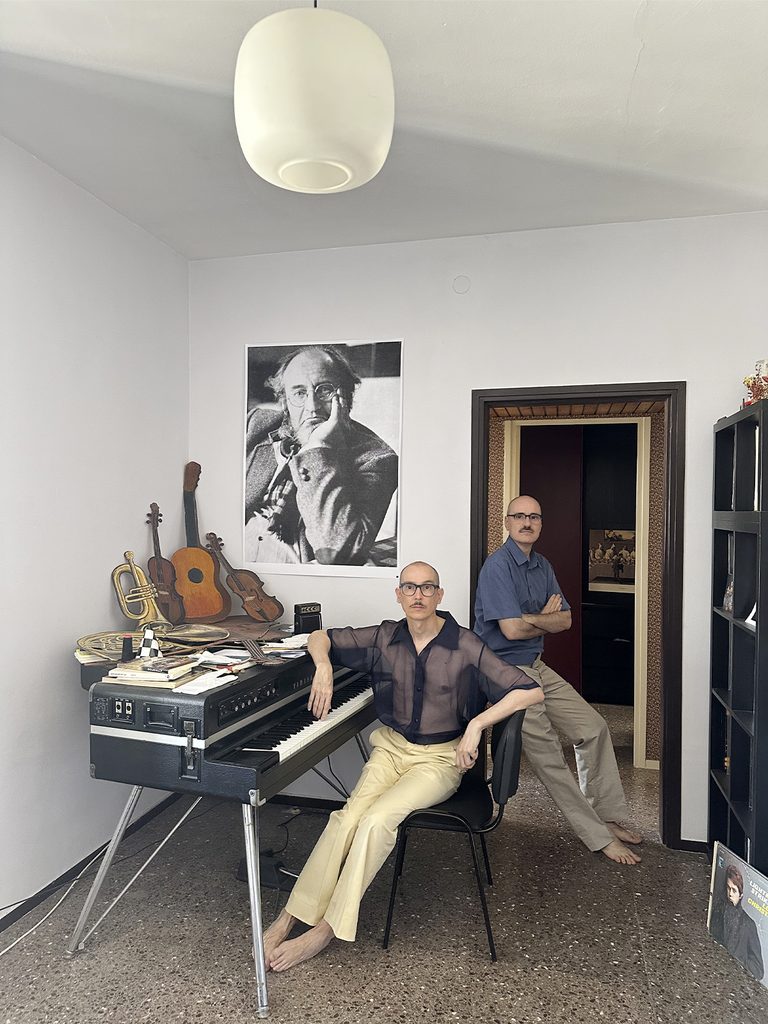
Before recording them, we went to his house to play a few for him in a very simple way, with a little keyboard. He was thrilled to hear his poems sung. He’s very happy that his poetry is being celebrated because he’s much better known for his novels.
Discover more stories and interviews about avant-garde music, pop, and art in AW Magazine.