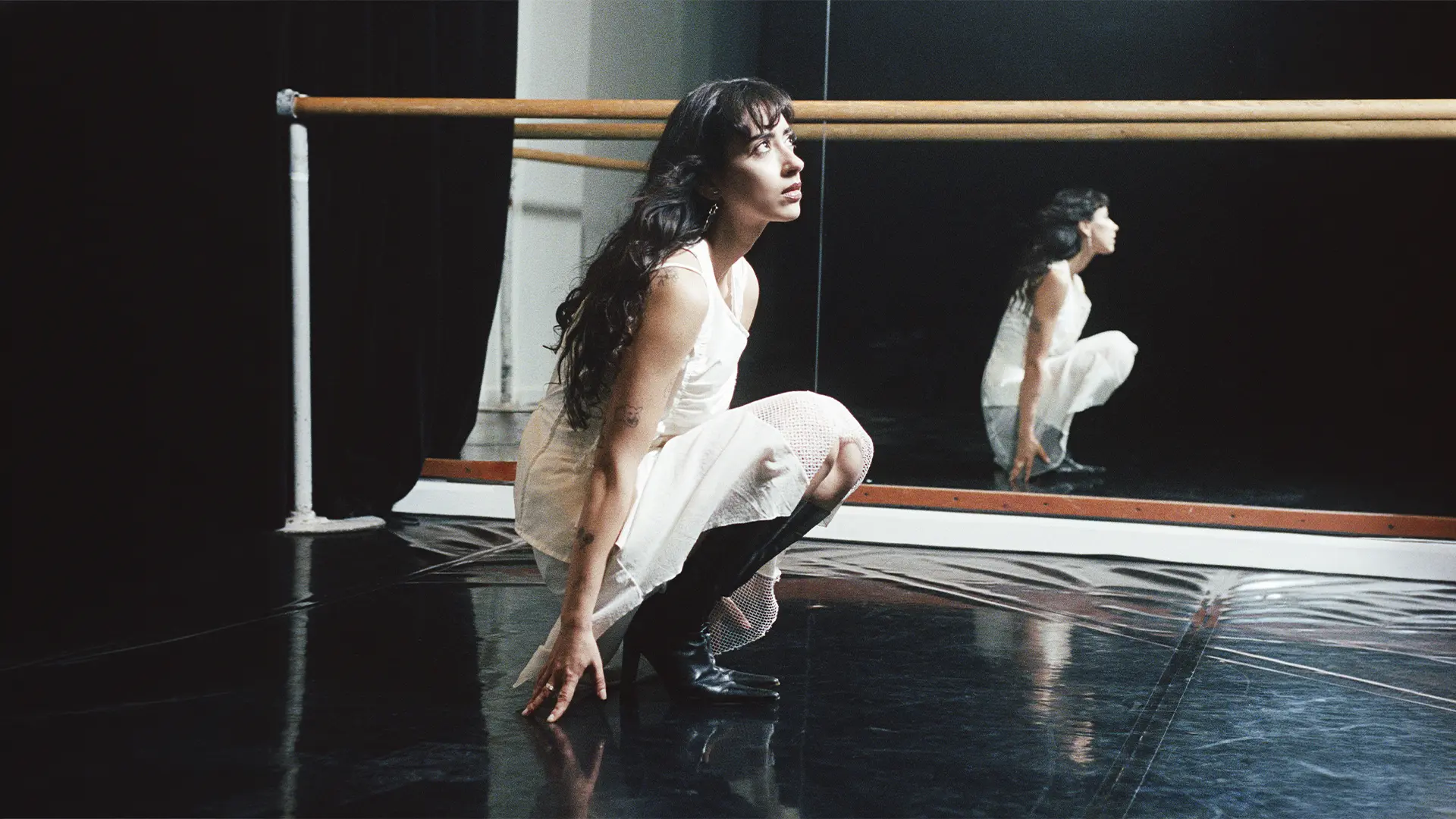

Gabriella Olivo sings proudly in Spanish and makes her Mexican roots a central part of *Reflexiones*, her debut LP, co-produced with Christian Sean. Tropical sounds, R&B, and experimental pop come together on an album that blends traditional sounds with electronic music and is best enjoyed as a continuous listening experience, letting one song flow into the next.

Raised in Canada, Gabriella has found in music a way to connect with Latin America and share that part of her history. On Art Weekends, we spoke with her about what it means to grow up between two cultures, female friendship, and her desire to make pop music that lets her try everything.
Although there are differences between Mexico and Canada, do you think women face common problems?
Women are women. There are differences between countries, of course. For example, I think there’s a lot more violence in Mexico. Many people come here to Canada for greater safety, but I think the underlying issue is incredibly universal.
But even in Canada, there’s violence against women. It seems that, even though some countries may think this issue has been resolved, we must continue to fight.
Exactly, exactly. This week—on Tuesday, I think—there was a very unfortunate incident in Montreal: a young man opened fire because he held incel beliefs. It’s happening; it’s happened in Mexico too, and it’s terrible. It’s happening everywhere. We have to keep fighting.
More and more artists—especially in the indie scene—are incorporating these messages into their music. Before listening to “Todas mis amigas,” the title reminded me of Objetivo Birmania and their song “Los amigos de mis amigas son mis amigos,” which was totally playful. But your song talks about female friends from a sisterhood perspective.
Yes. Also, I don’t know if you saw the video, but it has that more childlike, innocent vibe—like my friends—which contrasts with the message. Yeah, I get what you mean.
You performed a few weeks ago at the Montreal Jazz Festival with Lila Downs. How was the experience?
It was awesome—I loved it. People were really excited to be there. There were a lot of Mexicans who had come to see Lila, but they discovered me too and loved my music. So I’m super, super happy with the show. It was incredible.
Lila also has a background that spans two cultures: she’s the daughter of an American man and a Mexican woman from Oaxaca. Did you know that?
My mom told me yesterday; actually, I didn’t know.

What was it like interacting with her? Did she say anything about your music?
We said hello and took a photo together, but we didn’t have time to have a conversation. I was really busy, so I wouldn’t say we talked, but she looked super cute and friendly.
Your album is coming out, *Reflexiones*, is coming out, and you describe your music as experimental pop. How do you experiment with pop? Do you fuse genres or put your own spin on it?
Yes, exactly. I like to blend both traditional and modern music. I also like to write songs that don’t follow traditional pop structures. I have more experimental songs, with a first part and a second part, and they mix a lot of formats, a lot of elements, and a lot of genres. I like to create contrasts.
You grew up in Canada, but from a distance, what do your Mexican roots mean to you?
On the album, which is called *Reflexiones*, I have songs that talk about embracing those roots and no longer being afraid of my culture. When I was younger, I was embarrassed to speak Spanish. I didn’t realize that, in the end, it’s so enriching to have two cultures and to be able to share that culture with the community here. I’m so proud of that today, and I try to convey that through my music and by singing in Spanish.
What was it like working with producer Christian Shen? Where is he from, and how did you meet?
He’s from Montreal too and has his own music project, which is called Christian Shen—that’s his name. We’d played together in another artist’s band, and that’s how we met. Then he released his album last year; I went to listen to it and loved his style and sound.
I already knew he was a producer and a great musician too, so I wrote to him. We made our first single together, called “Ya sé, ya sé,” and I loved working with him. So I asked him, “Do you want to make the album with me?” And we made it together.

Do Canadians dance?
It depends. But in Mexican communities, obviously. There are a lot of Mexicans here, so there are definitely places where you can dance to tropical rhythms. But I think, in general, it’s not something everyone’s familiar with. That’s why I also like to make music so people can get to know those genres.
You did a cover of a Pedro Infante song. Is classic Mexican cinema also part of your influences?
Not the movies. I think it was more about the song than the films from those years. I wouldn’t say that cinema was part of the process.
When was the new album released?
It came out on October 2.
Did you know that October 2 is a significant date in Mexico? There’s a saying that goes, “October 2 is not forgotten,” because of the Tlatelolco massacre. It’s a symbolic date in the struggle of Mexican students.
I didn’t know that—thanks for telling me. It was just a coincidence. But yes, it came out on October 2, and hopefully I’ll be able to go after those dates or, as I said, in 2027, to play.
Discover more Latin American avant-garde music acts in AW Magazine.