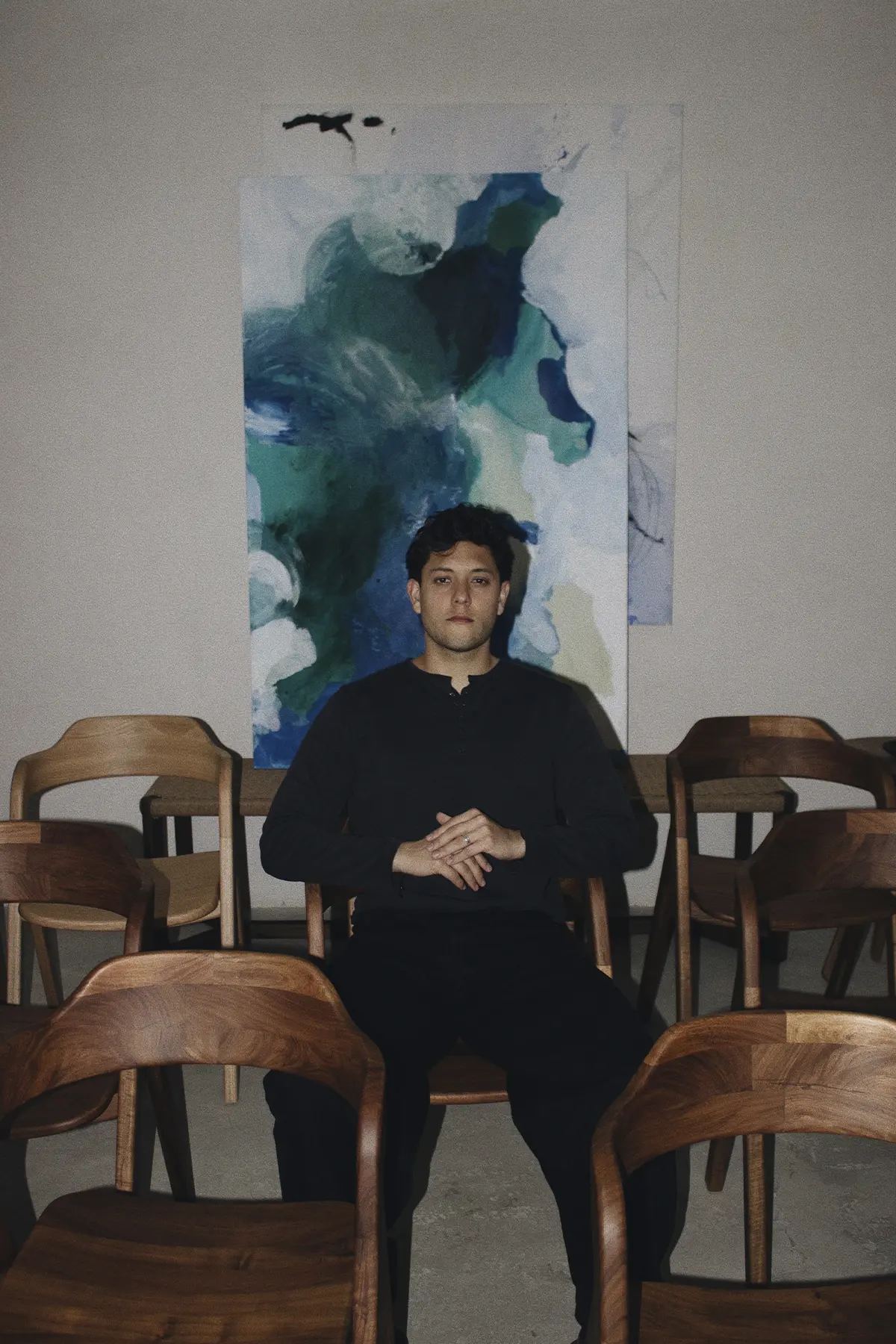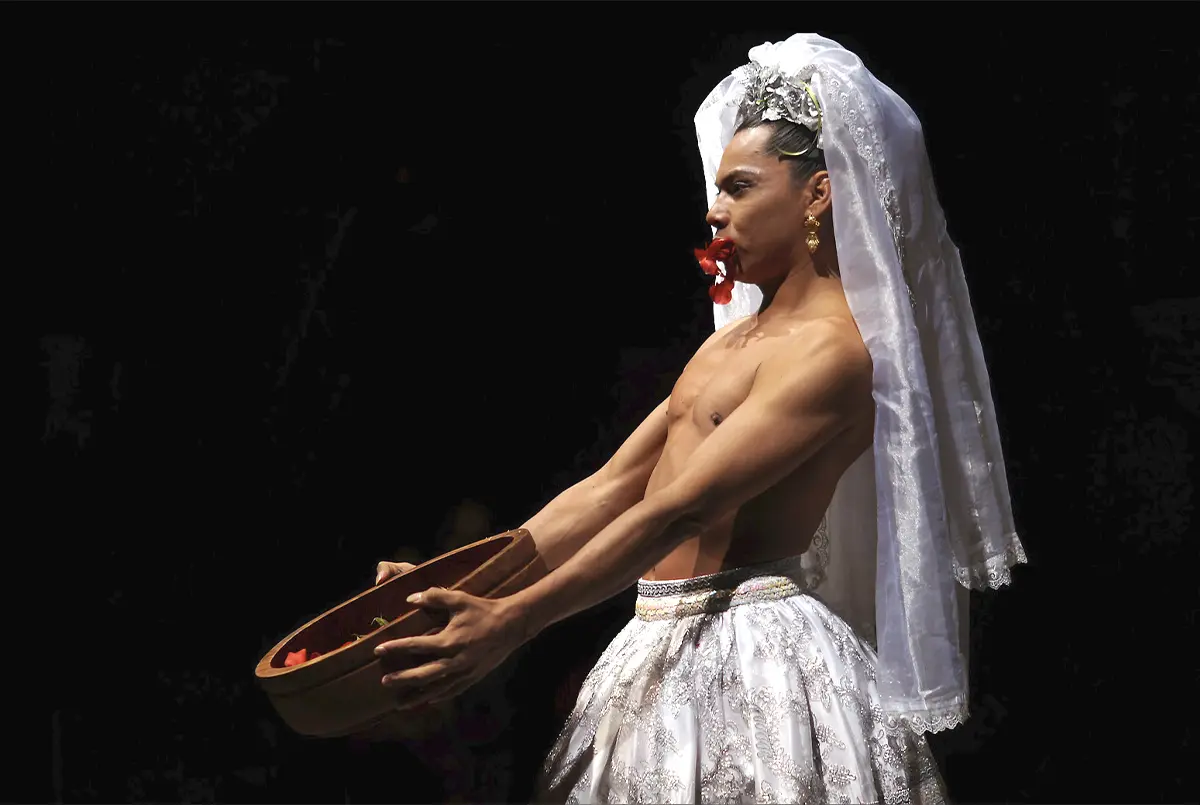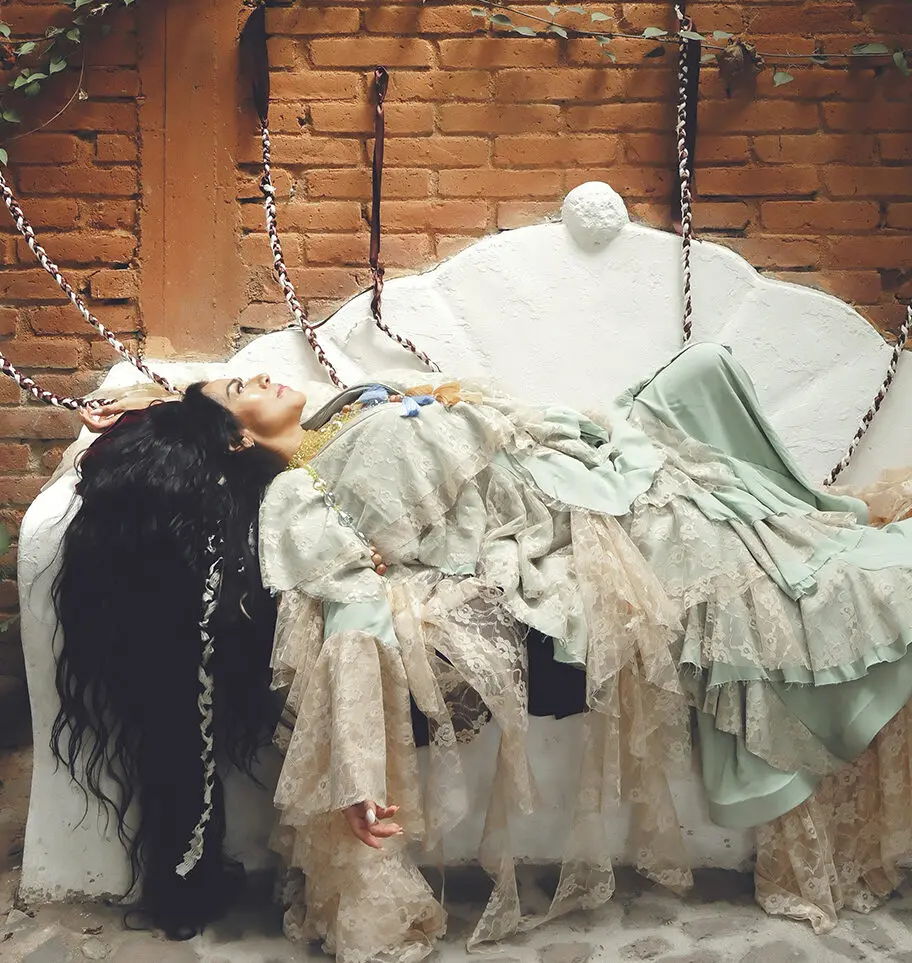

“I’m trying to remember who I once was—as an artist, as a woman, as a person—and to return to that same desire to express my convictions, my thoughts, my pain, my passion…,” Lila Downs confides to me at the beginning of our conversation.
We’re meeting to talk about Cambias mi mundo, their new album, but also about the art behind this work, identity, and roots.

Love and Renewal
The artist recently suffered a loss that sparked a profound inner transformation: American musician and saxophonist Paul Cohen, her partner of more than thirty years, passed away in 2022. “Love and renewal are fertile ground for creativity and art, ” says Lila.
“You Change My World”, which premieres on May 28, carries all that emotional weight, but also a strong commitment to the environment, history, and of course, the music that shaped it: “I’m someone who cares about the big issues that affect us. The issue of waste is something I’ve been trying to address for a long time.”
That concern is reflected in “El jardín del placer,” a track featuring Canadian-Cuban musician Alex Cuba. “I have a friend who makes art out of trash, and he tells me, ‘No, Lila, trash is a myth; human laziness is the real issue.’ He’s an artist who lives in Vietnam, and his name is Gabriel Levitt, ”says Lila.
Musically speaking, the new album features jazz, neo-cumbia, son, plenty of fusion, as well as flamenco and rumba—what better soundtrack to reflect on the ecological challenges facing indigenous peoples and our Mexico?
The unlikely intersection of anthropology and sensuality
Another piece, “Tomb 7,” was created to raise awareness about Monte Albán: “Urban sprawl is swallowing up our archaeological sites; it’s a reality all over the world,” says Lila, who is also an anthropologist by training. “Ever since I was young, I was invited to historical sites to collect tepalcates, analyze them, and catalog them.”
“It’s an important issue: how to protect that heritage and what steps we need to take to ensure it remains a valuable hub for us, for tourism, and for our historical legacy.” He then adds, “The interesting thing is that the song turned out to be very sensual, as a way of connecting that sense of identity with the past and touching something deep inside you to help you find yourself.”

The incident at Monte Albán referred to in the song took place many years ago and was led by the researcher Alfonso Caso in 1932. “I remember that he had to carry a gun because it was very dangerous: they had found gold at Monte Albán, and there was a risk that he might be robbed and that the Mixtec and Zapotec heritage of Oaxaca might be stolen,” says Lila.
Links to the past
While it didn’t quite reach the idyllic heights of the legend of El Dorado in Colombia, the discovery in question generated a great deal of excitement at the time. “Gold has always been an obsession for Europeans. But in reality, I believe that many tombs contain items of great historical value.”
The most recent discovery related to Monte Albán, Lila explains, “is the other hill right across from your house. We see it every day, but it’s called Atzompa and is home to a thriving community of potters and ceramicists who continue to make polychrome pottery just as it was done in pre-Hispanic times.” She adds: “What’s interesting is that this discovery was led by Dr. Nelly Robles about five or six years ago, I think. All of that belongs to the past, but it’s also important to connect it to our present.”
Lilia Downs: Born into the Arts
Lila Downs has always been surrounded by art. Her father, Allen Downs, was a visual artist, filmmaker, and sculptor; her mother, for her part, passed down a love of singing and music to her. A biologist by nature—due to her Indigenous roots and the upbringing of someone who grew up in the countryside—she also understands the cycle of life and death. “Oaxaca is a temple of art, from the crafts that provide so much inspiration. The potters, the ceramicists, the people who make wool rugs and use natural dyes,” says Lila.
For the album artwork, she turned to several local graphic artists. The cover of the single “El jardín del placer” was created by Alex José, a young artist from the Loxicha Nation. Lila discovered him when she saw one of his works posted on the streets: a manifesto that read, “mezcal is not a commodity, it is culture.”

Another local artist who participated was Tuxame—“with an X,” Lila clarifies—: “He’s very important because he comes from a diverse background and is creating some really powerful work within that Oaxacan surrealism.”
Of Roots and a Multicultural World
And on the subject of identity, Lila Downs explains that hers stems not from a single heritage, but from several: “My Indigenous heritage is Mixtec; I am also mestizo and Mexican-American.” In light of current debates on identity, conquest, and forgetting, the artist says: “It is the expression of a need of the moment. These are necessary social expressions to move forward with the next step as an identity and as a nation,” she affirms.
“I believe that, just as has happened in other countries where colonizers have apologized, there is also pressure for that to happen in Mexico.”
“Mexico is a nation with deep roots in the mestizo world. Unlike the United States, where colonization took hold and few intermarried with Indigenous peoples, Latin America underwent different processes ” Lila Downs.
Lila recalls a trip to Argentina: “The books you read in school teach you that there was very little racial mixing in Argentina. But when you travel there, you see people with black hair too, just like everywhere else in Latin America. It’s true that perhaps there’s a slightly larger Jewish and Eastern European community that has an influence. But racial mixing is also very strong,” she says.
“And it’s one thing for that nation to deny it, as is happening now with Peru. I feel that they, too, have very strong indigenous roots, but they’ve had to deny them and keep them hidden until now. That’s why I believe every nation has its own time to deal with these issues, but it definitely helps when leaders decide to approach history with humility.”
Discover more interviews in AW Magazine
To keep exploring this thread, visit music, film and cultural stories.