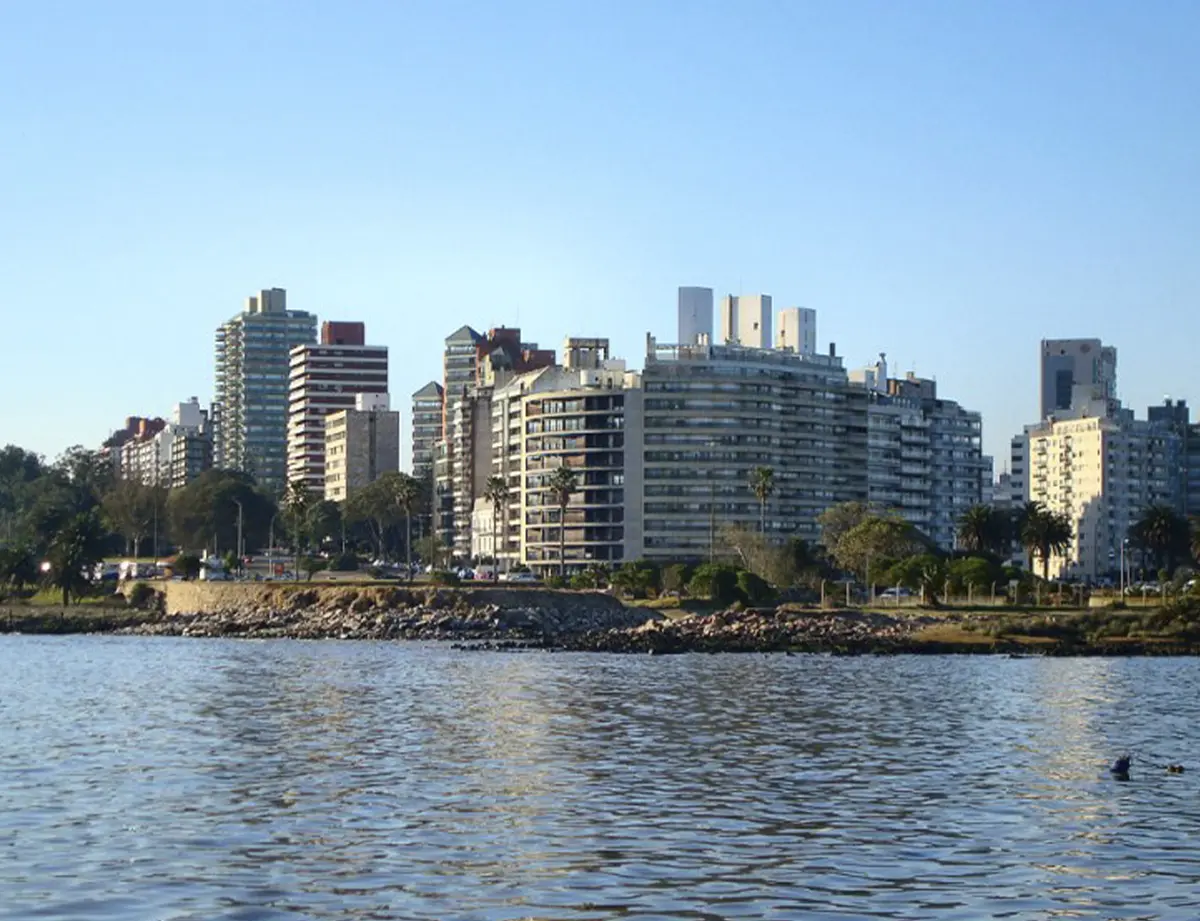

What to see in Montevideo in 48 hours? The city doesn’t try to dazzle. It prefers to win you over gradually. You only need to walk a few blocks to discover a city where the cafés, bookstores, the Río de la Plata, and an unusual urban calm ultimately reveal one of South America’s best-kept secrets. The challenge is to do it all in two days.
From afar, this capital city appears to be a destination where Latin American tradition—yes, even though the local band Cuarteto de Nos sings, ironically, “we’re not Latinos, I grew up here in the Switzerland of the South, ” in their song “No somos latinos”—is intertwined with modernity.

But Montevideo is also a contemporary remnant of an entire era whose history is still being written, with its echoes of European architecture and the distinct atmosphere of a metropolis where, on the banks of the Río de la Plata, more than half of Uruguay’s population and most of the cultural and social power of the southernmost nation in the Americas.
I arrived in the city for a 48-hour trip. Legend has it—there are other versions, but this is the most romantic one—that the city’s evocative name comes from some ancient Portuguese sailors who arrived along the riverbank and, upon seeing the hill overlooking the bay, exclaimed , “Monte vide eu!”
What I was really looking forward to when I landed was getting to the hotel. But I immediately regretted the thought of spending the rest of the afternoon and evening watching TV or scrolling through Instagram in a room when the Uruguayan capital and its nightlife were right outside. So, I decided to go out and explore the nightlife in Montevideo—or at least go out for dinner.
My first stop was Jacinto, a restaurant and café located at 349 Sarandí, on the corner of Alzáibar, right in the heart of Ciudad Vieja—the equivalent of the historic center in many Latin American capitals. At the helm is Argentine chef Lucía Soria, one of the figures who helped redefine contemporary Uruguayan cuisine. Her signature cuisine, with Italian and Spanish influences, changes with the seasons and prioritizes the quality of the ingredients over any culinary gimmicks.

The restaurant has its own artisan bakery and a wine list featuring mostly Uruguayan wineries. I opted for the octopus with a salad of small potatoes, cilantro, and pink peppercorns—one of those dishes where the ingredients speak for themselves. A glass of Tannat was enough to kick off the trip; next came the time to plan the next day’s itinerary.
The next stop was Baar Fun Fun —yes, with two “aa”s—one of Uruguay’s most traditional bars. Currently located at 1229 Ciudadela Street, this historic establishment opened its doors in 1895 and, since then, has become a must-visit for anyone who wants to experience Montevideo’s nightlife. How could you pass up a place where Carlos Gardel himself drank a Uvita—the bar’s signature aperitif—or where Uruguayan luminaries like Jorge Drexler have been regulars?
I’m thinking of heading down “La Caminera” to The Original Bluzz Bar at 760 Canelones, a live music venue featuring alternative bands and artists—and occasionally jazz. The legendary Clash City Rockers has closed its doors for good, so this seems to be the best option to wrap up the night. “The menu is hotter than your sister,” says their digital menu. I’m not convinced by the promise—I don’t even have any sisters—so two beers, three songs by El Último Ciclista—a Uruguayan project based in Spain—and goodbye, Bluzz; I’ll be back when I’m in a more relaxed mood.
Day 1: Morning
The morning begins where the night ended: in the Old City. I walk through the Citadel Gate toward the Sarandí pedestrian street. I stroll through Plaza Independencia to take a look at the Palacio Salvo, a historic skyscraper from the 1920s, built in an eclectic style blending Gothic and Art Deco, which impressed Blur singer Damon Albarn, who dedicated the song “The Tower of Montevideo” to it. I look up the song on Spotify; I think listening to it as I climb up to the observation deck to take in the view of the city would make for a great background soundtrack. Later on, there’ll be time to listen to Rubén Rada and his candombe beat.

The next stop is the Mercado del Puerto, where I have a Uruguayan breakfast of charcoal-grilled ribs with chimichurri, salsa criolla, and a mate. Plaza Independencia offers a variety of routes and sights where traditional Uruguay contrasts with modernity. As I take a few photos for Instagram, I think about where to go next.
I’d rather ask the people wandering around here than rely on the algorithm. It’s Sunday, and Uruguayans aren’t stressed out about work. “The Tristán Narvaja market is a must-see on Sundays in Montevideo,” a blonde girl wearing a Uruguay national team T-shirt tells me.
The shop, located about nine blocks from the plaza, offers vintage books, vinyl records, toys, and used furniture in a style similar to that of La Lagunilla in Mexico City. I buy a couple of books in Uruguayan editions and leave, because I could easily spend the whole day there browsing through South American treasures from decades past.

Uruguay is the second-smallest country in South America, but its capital is large in many ways. Fortunately, its city blocks—which follow the colonial grid on which the city was designed—aren’t particularly long. So, since it’s still early, I walk a little further toward the Rambla.
Stretching nearly 22 kilometers along the coast of Montevideo, this boardwalk is one of the longest in the world and one of the city’s major gathering spots. From there, the Río de la Plata looks like the open sea, while cyclists, runners, and families transform the Sunday scene into a vivid and picturesque snapshot of the Montevideo way of life.

As I walk along the Rambla, the cityscape changes as well. I take an Uber. Residential buildings get taller, and specialty coffee shops, designer boutiques, and restaurants overlooking the Río de la Plata begin to appear. I enter Pocitos and Punta Carretas, two of Montevideo’s most sought-after neighborhoods, where much of the city’s residential, culinary, and commercial life is concentrated.
A walk through this area also allows you to discover places like Galería Azur Uruguay, which is dedicated both to representing mid-career and emerging artists and to showcasing major figures in modern and contemporary art.

A little further east lies Carrasco, traditionally considered the capital’s most exclusive neighborhood, with grand mansions, embassies, historic hotels, and tree-lined avenues that showcase Montevideo’s most elegant and sophisticated side .
Kibón and Pocitos Beach are the next stops on the journey. Highlights in this area include the giant letters spelling out the city’s name and the view of the Río de la Plata. It’s getting dark, so I look for a place nearby to grab a bite to eat. After walking so much, I’m looking for an interesting option, and this time, I’m going to go with the reviews: I choose Pistatxofusion. The restaurant offers a 12-course tasting menu with drinks included, or shorter options, like a “petit gourmet” menu.
I arrived a little hungry, but they told me I should have made a reservation 24 hours in advance; when I explained that I’m writing a feature for Art Weekends and that I have to leave the city in less than 48 hours, they made an exception: a customer had canceled, so they had a table available.

The experience exceeded my expectations and confirmed that it was worth sticking with it. I hope to return to Montevideo someday to visit again and try their bean falafels once more.
Day 2: Morning
Comienzo la mañana desayunando en el café Brasilero, el lugar más típico e icónico para desayunar en Montevideo. Se trata de un histórico café de ambiente literario fundado en 1877, frecuentado por Mario Benedetti y Eduardo Galeano, el escritor que supo llevar el fútbol a la literatura. Mientras tomo un café cortado —un mesero me dice que eso mismo pedía Galeano— y un cuernito de queso, decido que la siguiente parada será el Estadio Centenario, declarado Monumento Histórico del Fútbol Mundial por la FIFA en los años ochenta.
The place is steeped in history: on its field, Uruguay defeated Argentina 4-2 to be crowned champion of the first World Cup. In addition, the impressive Soccer Museum is well worth spending part of the morning visiting, even if it means taking a 15-minute bus ride. Trying to hail a taxi on a Monday morning in Montevideo makes New York seem like paradise lost.

Back in the Old City, I walk along the Sarandí pedestrian street once again. By now, I understand why this area is home to so much of Montevideo’s cultural life. I take the opportunity to visit the Torres García Museum, dedicated to the painter and theorist Joaquín Torres García, one of the leading figures of the Latin American avant-garde. His constructivist paintings help illustrate the importance of his work for contemporary Uruguayan art.

A few blocks away, the atmosphere changes. The Andes 1972 Museum respectfully reconstructs the history of the plane crash that claimed the lives of the Uruguayan rugby team in the Andes Mountains. Photographs, original artifacts, and eyewitness accounts make the visit a moving experience that goes beyond sensationalism.
The last cultural stop of the day is the National Museum of Visual Arts, located in Parque Rodó.

Its collection brings together some of the most impressive works by Uruguayan artists, ranging from Juan Manuel Blanes and Pedro Figari to Rafael Barradas and Torres García himself. The museum showcases Montevideo as one of the major artistic hubs in the region.
Day Two: Afternoon
Evening is beginning to fall over Montevideo, also known as the Most Faithful and Reconquered City of San Felipe and Santiago de Montevideo, or simply the “Tacita del Plata.” So I decide to go to La Rueda de Candombe in Plaza España. It’s not your typical theater, but rather an evening experience deeply rooted in Montevideo’s identity: musicians gathered around a table perform a Uruguayan repertoire, while the local audience sings and dances around them. I learn that it traditionally takes place on Monday evenings and that admission is free.
La Rueda de Candombe proves that, even on a Monday, Montevideo finds a way to turn public spaces into a celebration. The drums, guitars, and voices keep the plaza packed well into the night. When the music ends, there’s still time for one last dinner before I say goodbye to the city.

It’s raining a little. Playing in the background is “La lluvia cae sobre Montevideo” by the Uruguayan band Los Traidores, released in 1986. The song, which over time has become an anthem of disillusionment, goes: “The rain falls on Montevideo, today as yesterday, and there will be nothing special…” It’s curious to hear it after spending two days exploring a city that, far from seeming gray, turns out to be full of cafés, bookstores, plazas, museums, and good music. I ask Siri for a more upbeat song from Uruguay. She responds with a Uruguayan plena. I end up going back to Los Traidores.
Before heading back to the hotel, I make one last stop at El Palenque, one of the most traditional restaurants in the Mercado del Puerto and a staple of Montevideo’s culinary scene.

The grill is still going, and there are still tables occupied. I order a “chivito canadiense,” which, despite its name, is the signature sandwich of Uruguayan cuisine. I can’t think of a better way to say goodbye to Montevideo than with hot coals, meat, and Uruguayan wine.
Para no desaprovechar el viaje, una guía en 48 horas
Ciudad Vieja y Plaza Independencia:
El corazón histórico de Montevideo. Recorre la Puerta de la Ciudadela, la peatonal Sarandí y contempla el Palacio Salvo, uno de los grandes emblemas arquitectónicos de la ciudad.
Turismo de Montevideo
Mercado del Puerto:
El gran templo de la parrilla uruguaya. Ideal para descubrir el asado, el chivito y los vinos nacionales.
Piedras 237, Ciudad Vieja.
Sitio oficial
Rambla de Montevideo:
Con casi 22 kilómetros frente al Río de la Plata, es uno de los paseos costeros más emblemáticos de Sudamérica.
Más información
Feria Tristán Narvaja:
Cada domingo reúne libros, vinilos, antigüedades y objetos curiosos en uno de los mercados callejeros más tradicionales del país.
Domingos por la mañana.
Más información
Pocitos, Punta Carretas y Carrasco:
Tres barrios donde conviven cafeterías de especialidad, galerías, restaurantes y algunas de las avenidas más elegantes de la capital.
Turismo de Montevideo
Estadio Centenario y Museo del Fútbol:
Escenario de la primera final mundialista y uno de los recintos deportivos más emblemáticos de América.
Sitio oficial
Museo Torres García:
La mejor introducción a la obra del gran referente del constructivismo latinoamericano.
Sarandí 683.
Museo Torres García
Jacinto:
El restaurante de la chef Lucía Soria es uno de los referentes de la gastronomía contemporánea uruguaya gracias a su cocina estacional y a su selección de vinos.
Sarandí 349.
Jacinto
Baar Fun Fun:
Fundado en 1895, es uno de los bares históricos de Montevideo y el lugar ideal para probar la tradicional Uvita.
Ciudadela 1229.
Baar Fun Fun
Café Brasilero:
Abierto desde 1877, conserva la atmósfera literaria que lo convirtió en uno de los cafés favoritos de Mario Benedetti y Eduardo Galeano.
Ituzaingó 1447.
Café Brasilero
Descubre más recorridos de 48 horas en AW Magazine.
Discover more 48-hour itineraries in AW Magazine.