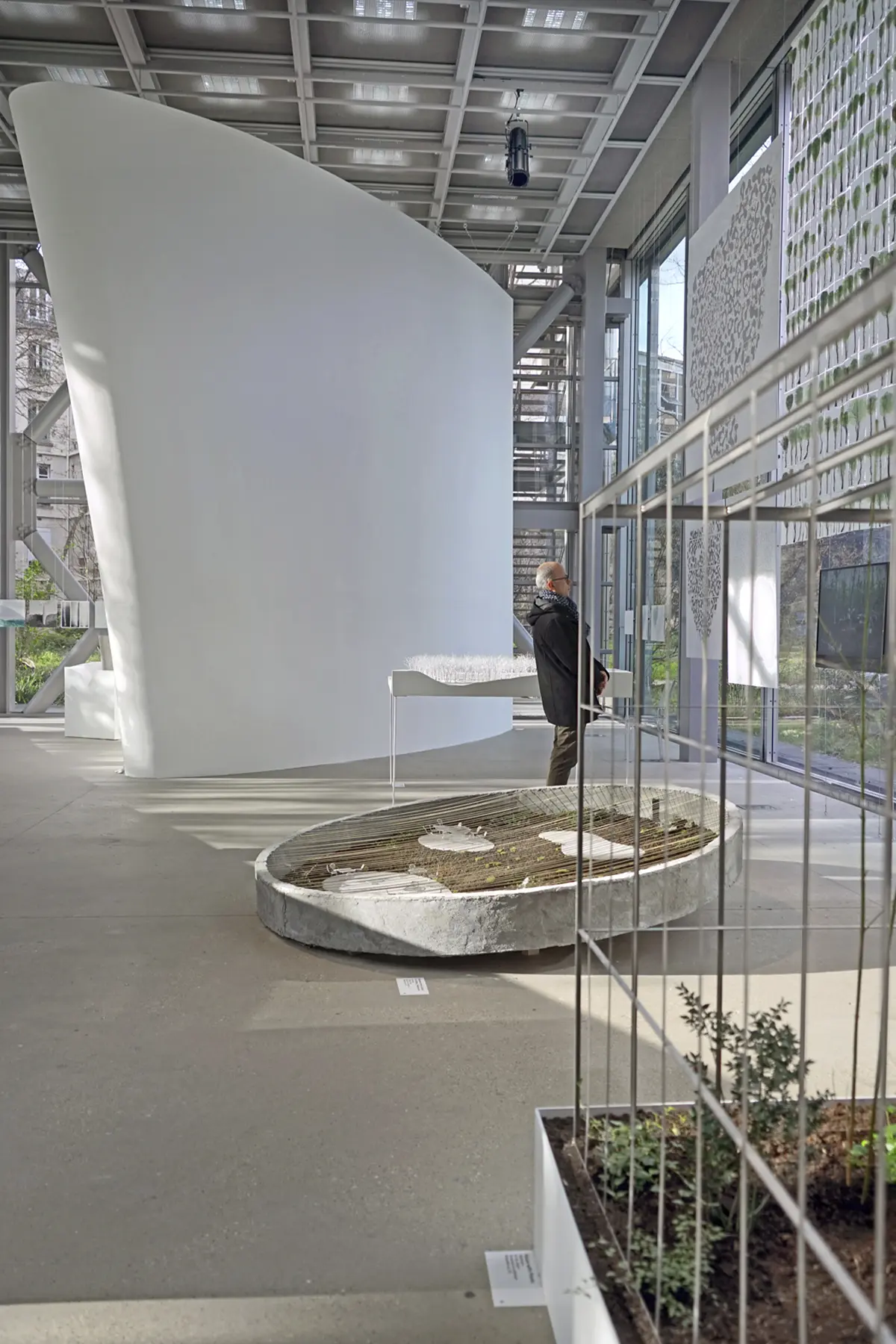

The first edition of the Barragán Prize—The Barragán Prize— honored the career of Japanese architect Junya Ishigami on October 9, at a splendid ceremony that brought together leading figures from the worlds of architecture, art, design, and culture. The event took place at La Cuadra San Cristóbal, the residential complex and stables designed by Luis Barragán in the late 1960s in Atizapán de Zaragoza, State of Mexico.

The choice of venue reflected the spirit of recognition: to celebrate a practice that finds in the landscape a way of thinking about architecture.
Junya Ishigami: New Ways of Conceiving and Experiencing Space
However, this quest has also faced challenges when ideas are transformed into livable spaces. For example, in his pavilion for the Serpentine in London, which opened in 2019, it was necessary to incorporate polycarbonate screens to reduce wind drafts. The intervention changed the way we perceive the space and highlighted a tension present in his work: how to reconcile the lightness we perceive with the conditions necessary for inhabiting a space.
And no, the wind did not diminish the impact of his work. The Japanese architect became, on his own merits, the first winner of an award that seeks to establish a dialogue between contemporary architecture and the legacy of Luis Barragán, through proposals that explore new ways of conceiving and experiencing space.

This annual award, organized by La Cuadra in collaboration with Bottega Veneta, seeks to recognize projects that break new ground in architecture as an art form. In its inaugural edition, the selection of Ishigami highlighted a career dedicated to exploring the dialogue between structure, scale, nature, and built space.
The Scope of the Recognition
In addition, the award offers a total of $100,000: $50,000 for the winner and another $50,000 earmarked for a one-year mentoring program. In this way, the program broadens the scope of the recognition: in addition to celebrating a career, it aims to share what has been learned with new generations of architects. In this way, accumulated experience finds a way to support other endeavors.
For its part, the jury brought together different ways of thinking about and working with space. Participants included Kazuyo Sejima, Winy Maas, Amanda Levete, Benedetta Tagliabue, and Jürgen Mayer H., along with artists Marina Abramović and Pedro Reyes, curator Raymund Ryan, and Louise Trotter, creative director of Bottega Veneta. In this way, the group opened up the conversation to art and design—disciplines with which Ishigami’s architecture maintains a dialogue.

Who is Junya Ishigami, winner of the Barragán Prize?
Born in Kanagawa, Japan, in 1974, Ishigami earned a master’s degree in architecture from Tokyo University of the Arts and worked at Kazuyo Sejima & Associates before founding his firm, junya.ishigami+associates, in 2004. Since then, he has designed buildings, installations, and projects that explore the ways in which architecture can integrate with the conditions of a place and alter our experience of it.
His works include the KAIT Workshop and KAIT Plaza at the Kanagawa Institute of Technology; MIZUNIWA in Japan; the visitor center at Groot Vijversburg Park in the Netherlands; and the Zaishui Art Museum in China. Added to this body of work is the Serpentine Pavilion in London, where a slate roof seemed to take on the lightness of a surface suspended above the landscape.
His projects have earned him the Golden Lion for Best Project at the 2010 Venice Architecture Biennale, the 2019 OBEL Award, and the 2024 Frederick Kiesler Prize. The Barragán Prize joins this list of accolades and resonates with a question that runs through his work: to what extent can the relationship between what we build and our surroundings be transformed?
A convergence of architecture, art, and landscape
In that sense, La Cuadra San Cristóbal provided a setting that resonated with those concerns. Located in Los Clubes, in Ciudad López Mateos, the complex was conceived as a private estate where the residence, stables, and landscape are all part of the same experience. Its walls, water features, and open spaces express an approach to architecture that continues to inspire new interpretations. Currently, its cultural program features exhibitions and activities related to Barragán’s indisputable legacy.
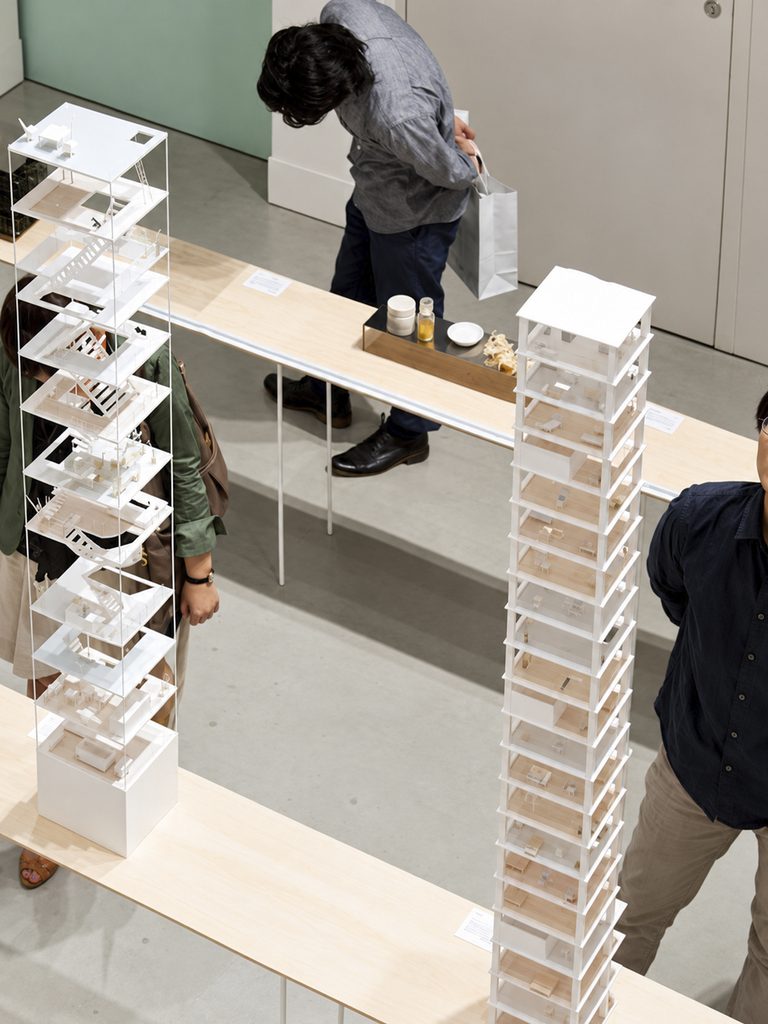
To celebrate the award ceremony, Bottega Veneta and Louise Trotter hosted a luncheon together with Fernando Romero. Among those in attendance were Abramović, Reyes, Tagliabue, Mayer H., and Ryan, as well as Kozo Honsei, Japan’s ambassador to Mexico.
The meeting continued the conversation that the award itself seeks to foster: how to bring together different generations and disciplines around an architecture capable of transforming our relationship with space. At La Cuadra, that conversation found a home where the landscape has been part of the answer for decades.
Discover more news about architecture and art in AW Magazine.