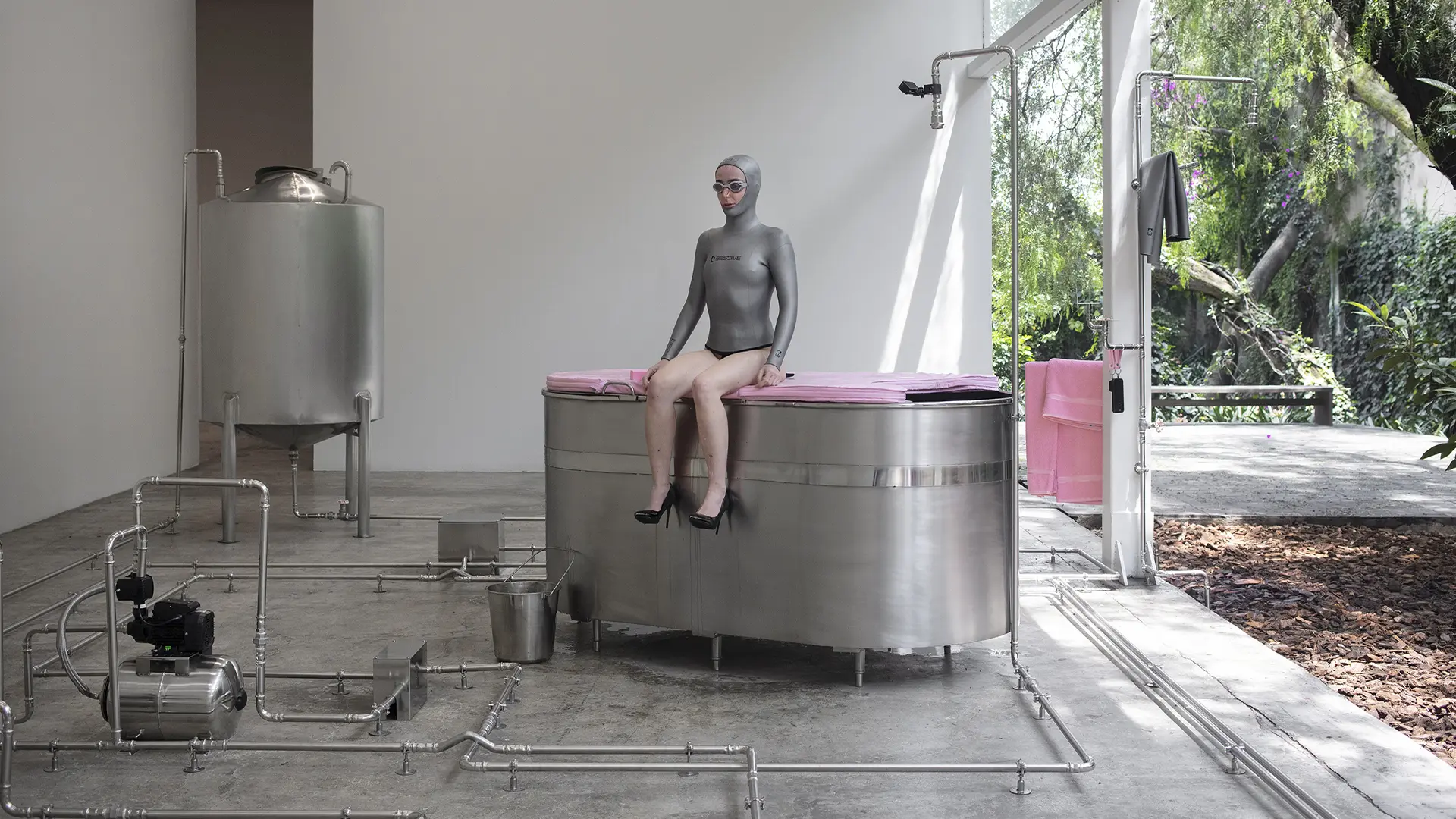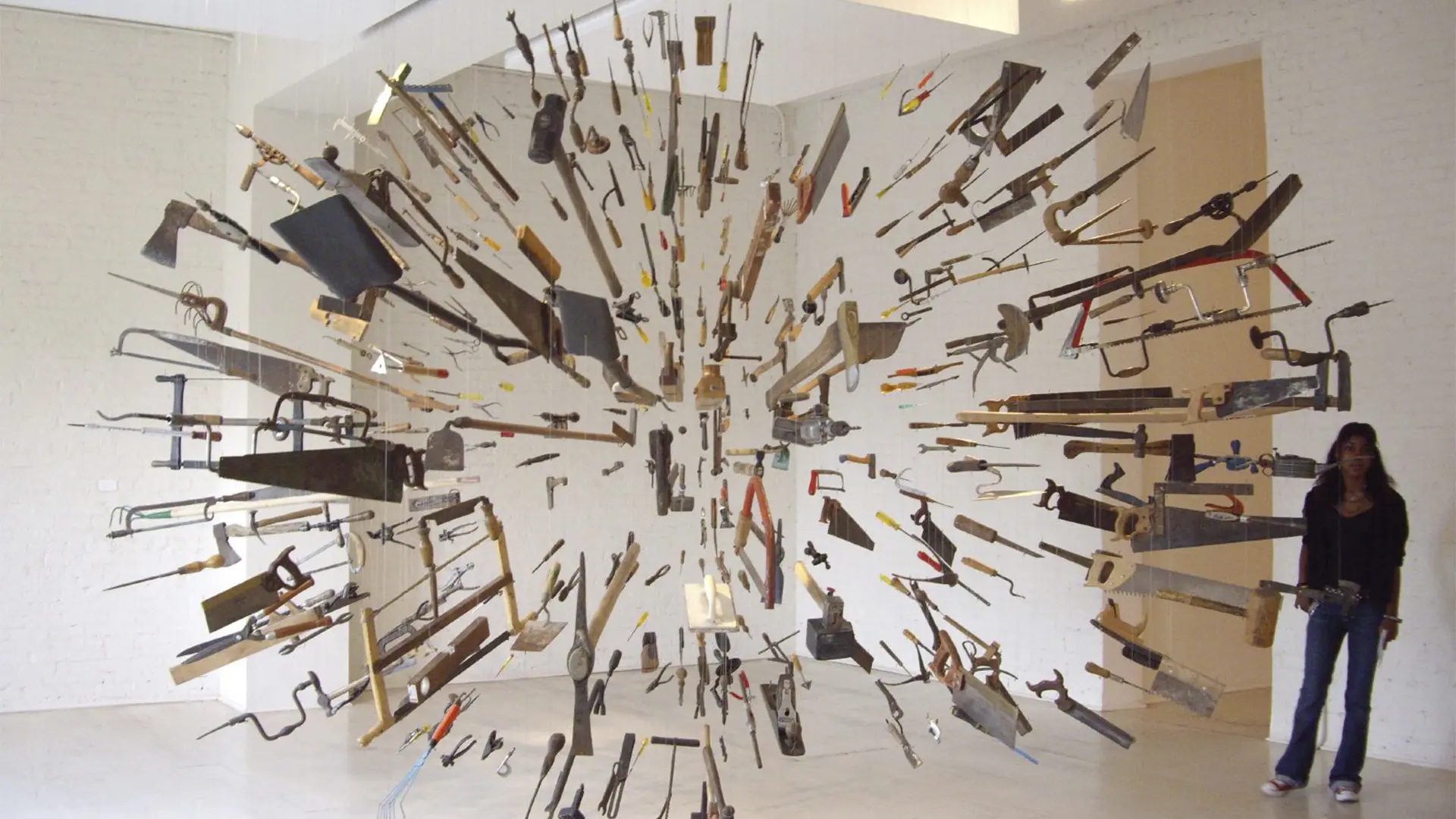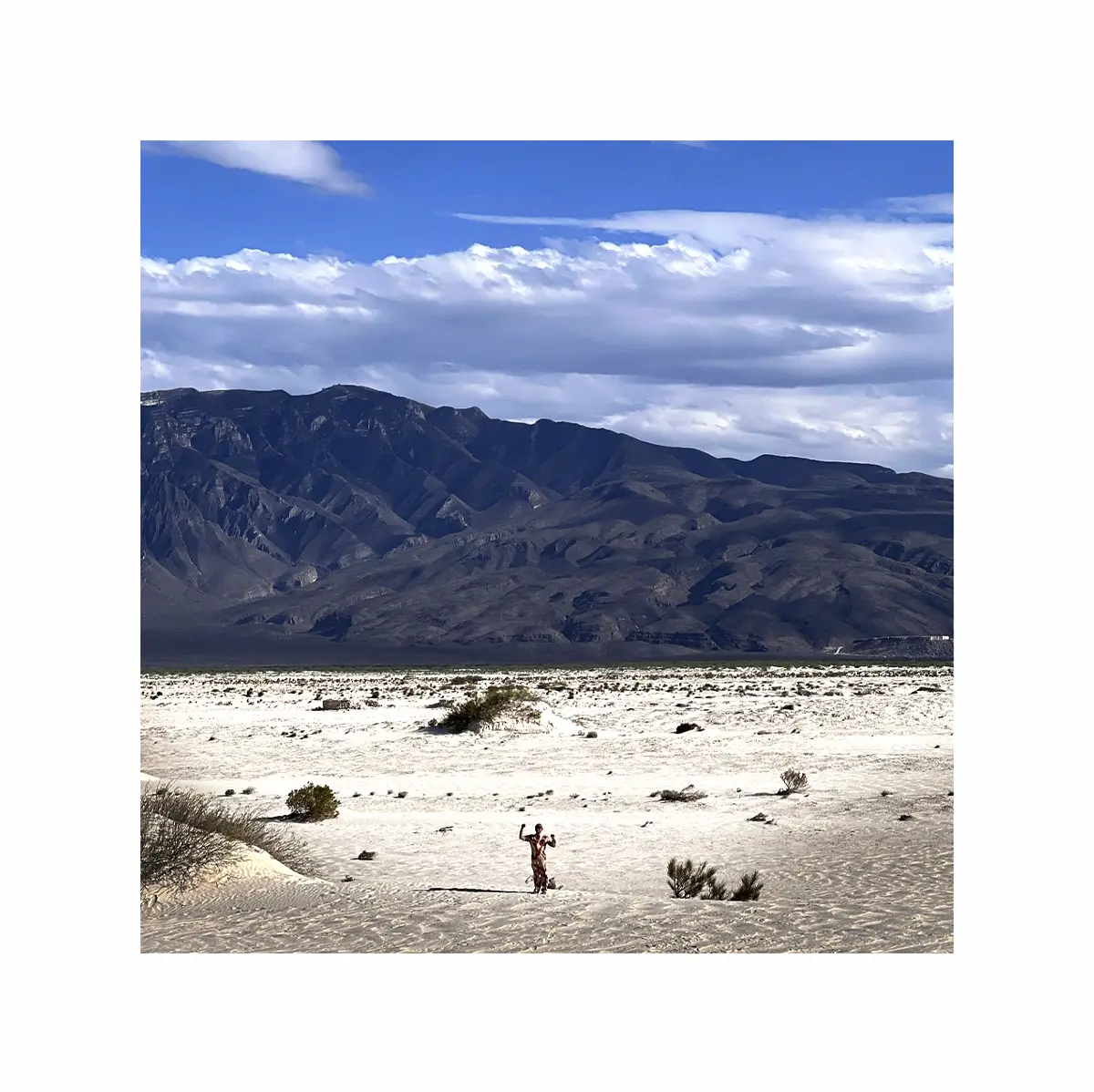

Someone once had the terrible idea of asking him if he was a frustrated architect because he was also involved in art. He responded with a hearty laugh. After all, architecture shaped each and every one of the wonders of the Ancient World, and that carries more weight than any prejudice.

An Architect Straddling Two Disciplines
Gabriel Sánchez Viveros —a graduate of UNAM, Mexico’s premier institution of higher learning—had the opportunity to build an extensive career in the Middle East, where he worked for more than a decade and a half, primarily in Saudi Arabia. “In 2012, I completed my last project there, for Princess Lolowah bint Faisal, daughter of King Faisal of the House of Saud,” he recalls.
He speaks of those years with nostalgia, but also with pride: he considers it a great experience to have represented Mexico and Latin America as an architect on the international stage. Back home, he began to rethink his creative future. “I always had plenty of work as an architect, but at that time I started to think about what I really wanted to do,” he recalls.
From Architecture to Conceptual Art
This response led him to delve deeper into conceptual art and the visual arts, eventually leading to the transdisciplinary practice he currently pursues, in which he integrates various disciplines and digital tools as part of a body of work that goes beyond architecture and interior design.

The interview takes place just as Gabriel is packing his bags in his studio in Mexico to spend some time in Germany, where his long-time partner is waiting for him. They both have a home in the Wiesbaden area. Several of the pieces sitting in his studio were created there. He shipped them to Mexico completely disassembled to put them together from scratch.
Tiny People and Their Own Little Worlds
His fascination with these tiny figures began during a visit to the famous Miniatur Wunderland museum in Hamburg, where precise recreations of cities and landscapes brought back memories of his training as an architect and the hundreds of models he built while he was a student. “I start seeing all those tiny people and creating worlds in my head,” he explains.

From this deeply personal exploration have emerged series such as *Geometry in Transit* and *Homage to Slim Aarons*, the latter inspired by the renowned American photographer who captured the golden age of international luxury in Hollywood and the Star System. “I think he served in a war, and when he returned, horrified by everything he had seen, he decided to start photographing beauty. That’s why much of his work revolves around swimming pools and luxurious settings, in places like New York or Acapulco during those years,” he recalls.
The Architecture of Yesterday’s Jet Set
But the connections to the once-glamorous port continue: Gabriel and her husband bought a house in Acapulco that belonged to the former manager of the Las Brisas hotel and that today preserves part of that collective memory of the luxurious Mexico of those days. “I salvaged the tiles and began creating scenes that have a little to do with the life of that Acapulco of yesteryear that I remember as a child and as a young man—the kind of things that appeared in *Jet Set* and that I read about in magazines,” he says.
The pieces blend inspiration from Aarons himself with that of local legends such as designer Esteban Matíaz—son of the legendary Colombian photographer Leo Matiz—whose sophisticated garments once captivated figures of the stature of Brigitte Bardot and Liza Minnelli.
Mexico’s Sports and Historical Legacy
That same nostalgic path recently led him to explore Mexico’s sporting and historical memory through a call for submissions launched by curator Emmanuel Razo and Yolanda Román for the Oscar Román Gallery. What began as a proposal for two pieces inspired by the 1986 World Cup in Mexico—created from clippings from used books he bought in Germany—eventually expanded into a series of 35 works centered on the past 1970 Mexico World Cup—an even more evocative choice.

For Gabriel, soccer isn’t just a game, but “a reflection of different eras”: “I was eight years old during Mexico ’70. It was very exciting after seeing all the tragedies that happened in ’68 with the Olympics and all the students who were gunned down by the government,” he reflects.
“Trash Collector“
This exploration gave rise to pieces like the one currently on display in Oscar Román’s Main Gallery: an old toiletry bag that belonged to his grandmother, transformed into a keepsake box. “People have told me I’m a ‘trash collector,’” he says with a laugh. Inside the suitcase, Gabriel combined a piece of soccer field turf with a pair of German soccer cleats from the 1960s that he found on eBay, which still bear the original mud from their old games.
“Just imagine if shoes could talk—what stories they would tell about this player’s life, his dreams, and his frustrations. We go about our daily lives, but it’s our memories that help us face the situations that come our way.”
In this way, sports intertwine with another of the major themes running through his current work: migration and relocation. For him, the journey of teams in a soccer championship is not very different from the global phenomenon of social displacement.
In another of his series, the artist mounts scale models on rusted steel nails measuring between 15 and 18 centimeters that once belonged to the doors of King Faisal’s Palace in Saudi Arabia. “They had to demolish that palace to expand the space in Mecca,” Gabriel explains, referring to his time in the Middle East.
“During a meeting with members of the royal family and Princess Lolowah, we decided to salvage doors and windows made in Egypt, India, and Bangladesh so we could reuse them. When we inspected the structures, we removed the rusty nails that were no longer usable. They were practically trash, but I kept them as part of my household goods.”

Nostalgic Glamour
Today, those steel nails that once supported royal palaces are encased in volumetric acrylic boxes, serving as supports for visual micro-stories: a firefighter rests on one, and a motorcycle carrying a couple rests on another. Saudi Arabia’s distant past, the historical legacy of the World Cups, and the nostalgic glamour of an idyllic, cinematic Acapulco thus converge in the architect’s studio.
“Art has always changed the world, for better or for worse, because it’s a way of portraying what people are experiencing in the moment; it’s like history books—paintings make you question who’s telling the story.”
That reflection brings us back to his own experience living in Saudi Arabia—especially what it was like to be a gay man living and working for more than a decade in a region where those freedoms were restricted. Gabriel approaches that period with a very unique perspective: “I think that all over the world—even here in Mexico right now—you’ll find stories of narrow-minded people. I came with a job offer and I went to work; I didn’t go looking for a boyfriend or to see if I’d find a prince. The work was very grueling because of the high temperatures, so I always presented myself as a gentleman, treating myself with respect by talking about design and architecture—and nothing else,” he says.

Overcoming the Obstacles of Censorship
Despite living in a country where the rights of gay people are not recognized and homosexuality is a serious crime, Gabriel never felt afraid per se: “Back then, there was heavy censorship of everything that could be accessed online; suddenly, websites for clothing would get blocked, and a police warning would pop up,” he recalls. It was precisely by navigating the obstacles of that censorship that he found his path: In an environment where platforms were shut down overnight, Gabriel stumbled upon a niche website: “I met my husband online while I was in Saudi Arabia,” he reveals.
“Gee, I couldn’t pick just one of the three—I think all three are at work all the time,” he confesses as he reflects on the principles that guide his vision. At the end of the day, that out-of-place question was poorly phrased. Gabriel Sánchez Viveros was never a frustrated architect who ended up making art. In fact, he never stopped being an architect. He simply changed materials; where he once built buildings, today he constructs memories, landscapes, and little stories capable of inhabiting the imagination of those who observe them.
More stories about the intersections between art and architecture in AW Magazine.