
The art scene in one of Mexico’s most iconic northern border regions has found a new focal point in Tijuana Art Week, an initiative that seeks to strengthen cultural dialogue and promote art collecting as one of the pillars for the development of contemporary art in the region.

Tijuana Art Week: The circuit that brings art to life from the border
From July 8 to 12, the city will host exhibitions, tours, showrooms, workshops, talks, and collaborations that will bring together artists, curators, gallery owners, cultural managers, institutions, and the general public. More than just a schedule of events, Tijuana Art Week aims to establish itself as a platform to promote the work of emerging and established artists, foster the exchange of ideas, and strengthen ties between the local, national, and international art scenes.
The first edition confirmed the interest in establishing an arts scene in the city. In addition to participation from the local community, it attracted visitors from Mexicali, Ensenada, Rosarito, San Diego, Arizona, Mexico City, Ciudad Juárez, and even New York, demonstrating Tijuana’s potential as a meeting point for the art scene on both sides of the border.
As part of the launch of its second edition, we spoke with Melisa Arreola and Mónica Arreola, members of the organizing committee, about the project’s origins, the growth of this initiative in just two years, and the vision driving this cultural platform.

The Origins of Tijuana Art Week: Bringing the Cultural Scene Together
Although it now runs for five days, the project began about two years ago, spearheaded by an organizing committee made up of Melisa Arreola Casillas, an architect, multidisciplinary artist, and cultural manager; Mónica Arreola Casillas, an architect, visual artist, and cultural manager; Leobardo García Córdova, a cultural manager, architect, and museographer; and Eduardo Lozano Murillo, a curator and art researcher. Their initial intention was to bring together, over a single weekend, initiatives that had previously taken place in a scattered manner. The community’s response and the interest shown by additional venues led that idea to grow into an entire week dedicated to contemporary art.
Melisa Arreola recalls that the initial goal was not to create an “art week” per se, but rather to bring together in a single weekend initiatives that had previously taken place in isolation. The idea was not just to have a week-long event, but to connect the artistic community and the general public through projects that were held on sporadic dates. What began as a two-day event grew as planning progressed, and with the addition of Eduardo Lozano to the organizing committee, that proposal eventually became a five-day program.
The curatorial challenge continues
The first edition presented a logistical and curatorial challenge for the team. In addition to coordinating studio tours, talks, showrooms, and exhibitions at independent venues and institutions, the goal was to create a route that would allow visitors to explore a significant portion of Tijuana’s art scene. The result exceeded expectations, attracting both locals and visitors from Ensenada, Mexicali, Rosarito, San Diego, Arizona, Mexico City, Ciudad Juárez, and New York.
Melisa acknowledges that the first edition grew out of a desire to see how things would turn out, but this second edition has turned out to be a bit larger than they expected, consolidating an exhibition circuit that this year is formally spread across five key exhibition venues: Sala de Espera, 206 Arte Contemporáneo, Ángulo Galería, Ceart Tijuana, and MIX MIX, located at Foro Central.

For Mónica Arreola, the project’s growth is not measured solely by the number of activities or visitors, but by the potential to foster an ongoing dialogue between the artistic community of Baja California and the binational region. The goal is for this exchange to extend beyond the local level, growing between Tijuana and San Diego, and also reaching the rest of the country through artists, researchers, curators, and collectors.
This vision stems from the experience that the four committee members have gained over more than a decade of visiting art fairs and venues in cities such as Guadalajara, Monterrey, Mexico City, Los Angeles, and San Diego. Observing these ecosystems allowed them to reflect on the shortcomings and strengths of their own city.
Boost the contemporary art market and local collecting
“We want people from outside the city to get to know Tijuana’s art scene, but we also want Tijuana residents to learn from those who come from abroad. We also want to foster learning, collecting, and an art market. There are so many creative people here; what’s needed is to strengthen the collecting culture so that artists can develop their work and make a living from it without having to move to other cities.”

Although Tijuana’s art scene already exists and is evident after fifteen years of growth, its activities used to take place in isolation.
“The circuit is definitely noticeable. Tijuana has grown tremendously over the past fifteen years, and it’s very clear where the studios, showrooms, and galleries are located. What we wanted to do was bring the events together in a single week, joining forces so that the public could visit them as a single circuit,” Melisa explains.
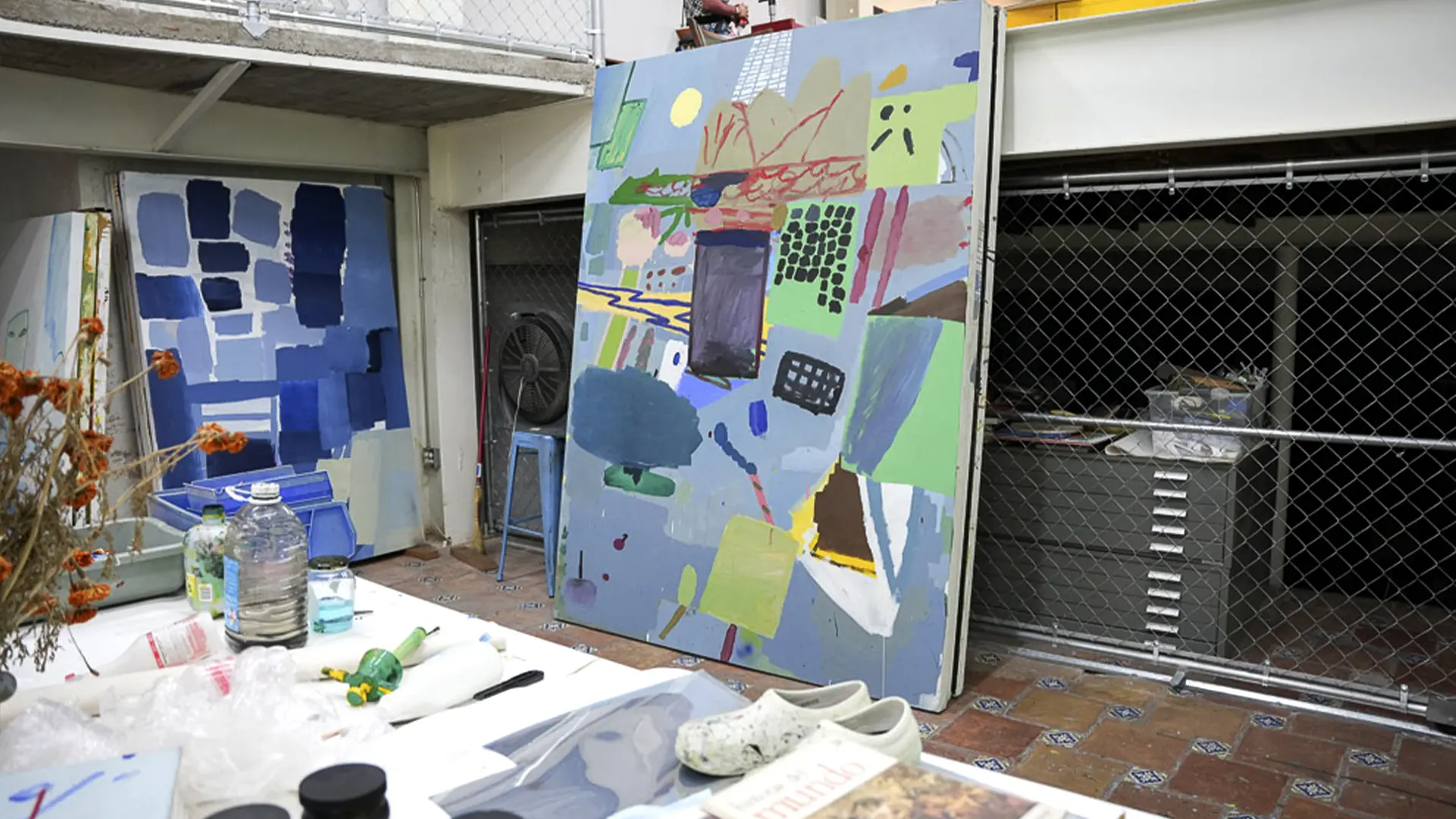
To achieve this, this year’s program incorporates one of the least visible aspects of artistic work: production workshops.
“Artists often create work in their studios, but they almost never open them to the public. We want to encourage them to do so and help people overcome their fear of buying art, even small-format pieces,” says Melisa.
Dialogues and Historical Memory
In addition to the tours, the second edition features a series of talks with projects that have shaped the recent history of art along the border. Among them is inSITE, a cornerstone of the region led by Carmen Cuenca, whose work began in the early 1990s.
“We’re interested in hearing from Carmen Cuenca herself about how the project came about, how it has evolved, and how it continues to find its place in the world of contemporary art,” explains Melisa.

Projects That Define the Baja California Circuit
Mónica adds that the Mexicali Biennial will also be participating—an independent project with a two-decade history that, despite its name, “takes place whenever it needs to”—as well as the Casa Roja collection from Monterrey:
“We’re interested in hearing their story and also learning how Casa Roja has built a collection focused primarily on emerging artists. We believe that can greatly enrich the city and the region.”
Finally, both agree that the true purpose of opening these channels is to demystify the elitism that often surrounds the discipline, embracing a completely horizontal approach:
“We want it to be a conversation on equal terms, between peers; we don’t want art to feel out of reach. What’s important is that emerging artists, mid-career artists, and established artists can share the same space, and that anyone feels they can engage with art,” Mónica concludes.
Discover more Latin American art events and fairs in AW Magazine.