
By: Gustavo Egusquiza
The London-based artist is presenting a glass installation and a performance for countertenor in Fitzrovia, both based on the testimonies of gay men who survived the epidemic of the 1980s and 1990s. She is doing so just a few meters from the site where the United Kingdom’s first hospital ward dedicated to HIV was opened.
On April 9, 1987, Diana, Princess of Wales, opened the Broderip Wing of Middlesex Hospital on Mortimer Street and shook hands—without gloves—with an AIDS patient. That gesture made headlines around the world at a time when many believed the virus was spread by touch. Broderip was the first facility in the country dedicated exclusively to HIV. The hospital was demolished in 2005; only the chapel remains, now converted into the Fitzrovia Chapel.
Nearly four decades later, on that same street, a Spanish artist has decided to listen to what that neighborhood never quite finished telling. Esmeralda Conde Ruiz (1980) is one of the six creators of *What Holds Us Together*, the exhibition that caps off Fitzrovia Quarter’s first artist residency and opens officially this afternoon at Radiant House, a Grade II-listed Art Deco building with blue tiles, located at 36–38 Mortimer Street.
A Friend, a Neighborhood, and an Archive
The starting point is a personal one. Conde Ruiz came to this corner of the West End, drawn by the memory of a friend who lived in Fitzrovia during the HIV/AIDS crisis. From there, he began conversations with neighbors and survivors of that era, eventually turning his four-month residency into what curator Lydia Allain Chapman describes as an exercise in listening.

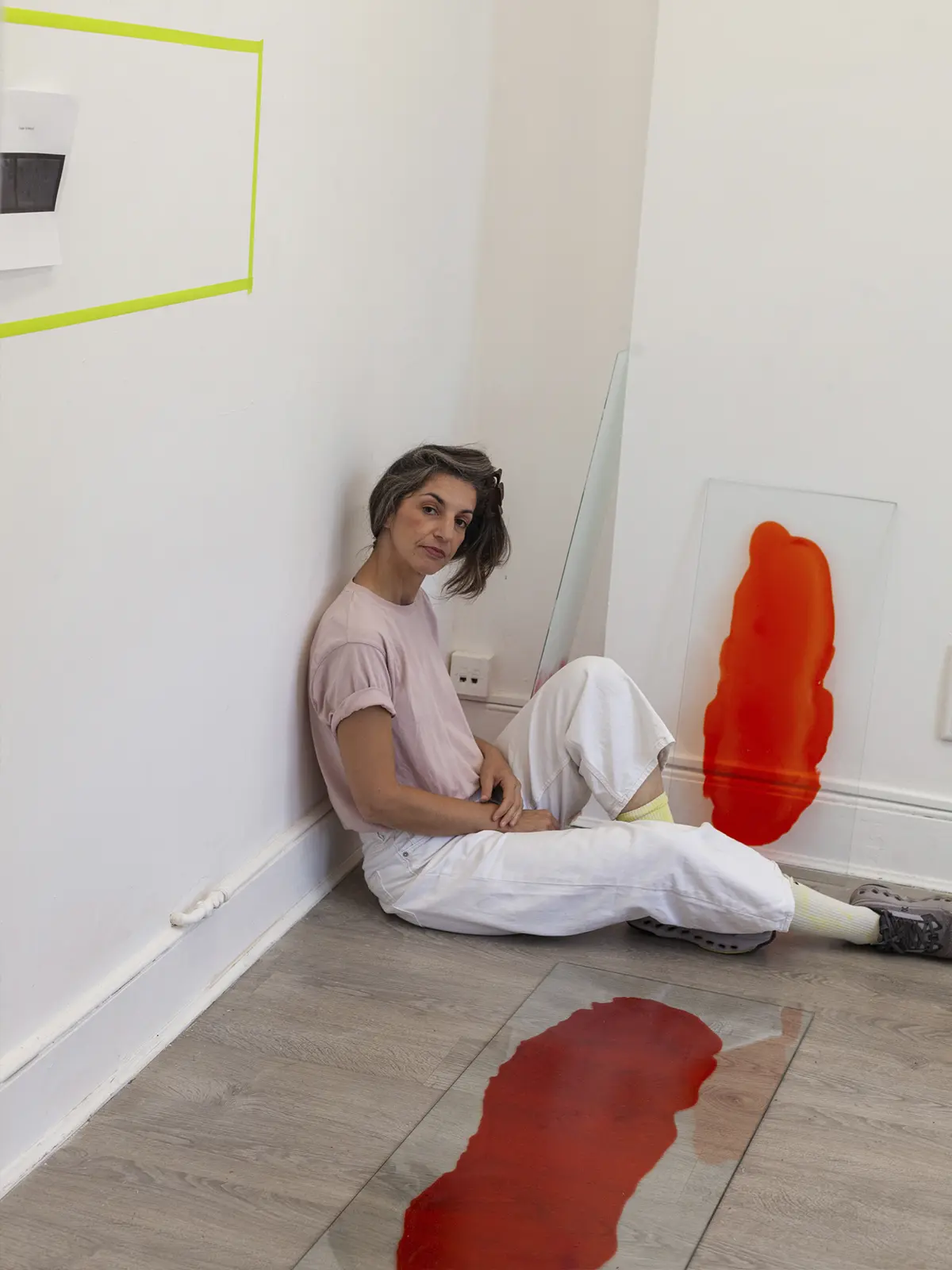
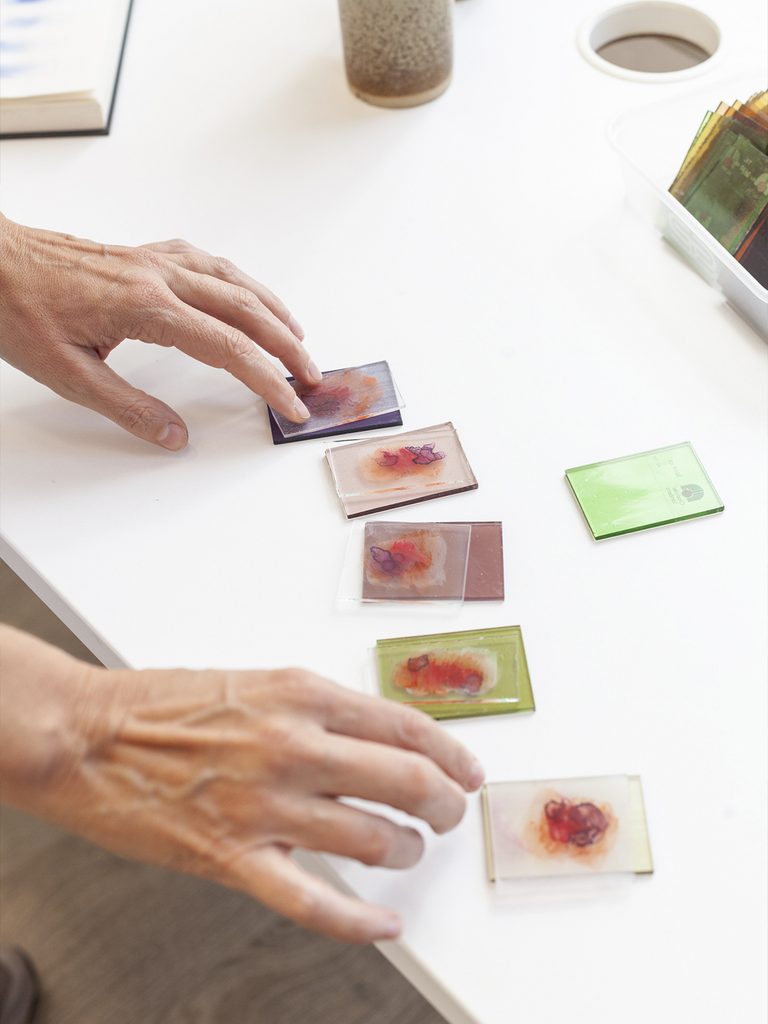
The result is two pieces. The first, *Friends of Dorothy* (2026), is a series of glass works whose color, pattern, and arrangement evoke a group of people sitting together. The title is no accident: “friend of Dorothy” was, for decades, a code that LGBTI people used to discreetly recognize one another and identify safe spaces. Conde Ruiz reclaims the expression to turn it on its head: what was once whispered is now declared as visibility, acceptance, and solidarity.
The second is *All the Things We Don’t Talk About* ( 2026), a performance conceived for Fitzrovia Chapel itself—the last remnant of the hospital where that pioneering ward once operated. The work is based on testimonies from older gay men who lived through the epidemic, drawn from the National HIV Story Trust archive and online forums, and brings them into the present through the voice of a countertenor.
A Career Built on Voices
The choice of voice as a medium comes as no surprise to anyone familiar with her career. Trained in sculpture at the Royal College of Art, Conde Ruiz is a composer, director, and audiovisual artist, and has made collective singing her signature. In 2016, she created and directed the 500-voice amateur choir that performed at the opening of the new Tate Modern expansion in the Turbine Hall. She has worked with choirs in Ecuador, New York, Syria, and Sydney; composed a piece for the Dresdner Philharmonie featuring 350 children from seven countries; and collaborated with artists such as Yoko Ono, Olafur Eliasson, and Nick Cave.
His work has been exhibited at the Tate Modern, the Gropius Bau in Berlin, HELLERAU in Dresden, and the Burghof Lörrach. She works with glass, light, sound, and bioplastic to create color-saturated environments that are never quite still: spaces where stability seems temporary and the viewer is drawn in, both physically and emotionally, to the change. She has also developed projects with Syrian refugee children for the United Nations, and in 2022, she researched the sound of artificial intelligence during a residency at the Technical University of Dresden.

Six Women and a Neighborhood in Transition
The residency, organized by The Langham Estate—which owns 11.3 acres of property in Fitzrovia—selected six artists from among 253 applicants. Alongside Conde Ruiz, the exhibition features Jingshan Ding, Purdey Fitzherbert, Holly Keogh, Monya Riachi, and Tabitha Wilson—all women. For four months, they had free use of studios in a vacant building awaiting renovation at 53 Great Portland Street, in a city where the cost of workspace is driving creators out of the city center.
“The residency asks what artists need to take risks and create meaningful work: space, time, trust, and a supportive community,” explain curators Lydia Allain Chapman and Luke O’Donovan.
There is also a commitment to permanence: The Langham Estate will acquire one work from each artist to form a new collection dedicated to Fitzrovia. The memory that Conde Ruiz has sought out on Mortimer Street will, therefore, remain in the neighborhood.

Practical Information
Exhibition: What Holds Us Together
Dates: October 19–25, 2026. Monday through Friday, 11:00 a.m. to 6:00 p.m.; Saturday and Sunday, 12:00 p.m. to 6:00 p.m.
Opening: Thursday , October 22, from 6:00 p.m. to 8:00 p.m.
Location: Radiant House, 36-38 Mortimer Street, London W1W 7RG.
Admission: free . For more information, visit fitzroviaquarter.co.uk.
Discover more articles about contemporary Ibero-American artists in AW Magazine.