
What do the hands of a clock and a used accounting book have in common? Time is a tyrant, and accounting is a headache, but ultimately, both serve to keep track of hours or cash. We can’t escape either one.

At La Cometa Gallery in Bogotá, Cuban artist Glenda León and Spanish artist Luisa Pastor take these themes into realms where measuring and counting are no longer enough to explain everything. That’s where art —always reliable—steps in to help us make sense of these concepts.
Gold, Value, and the Abstract Market
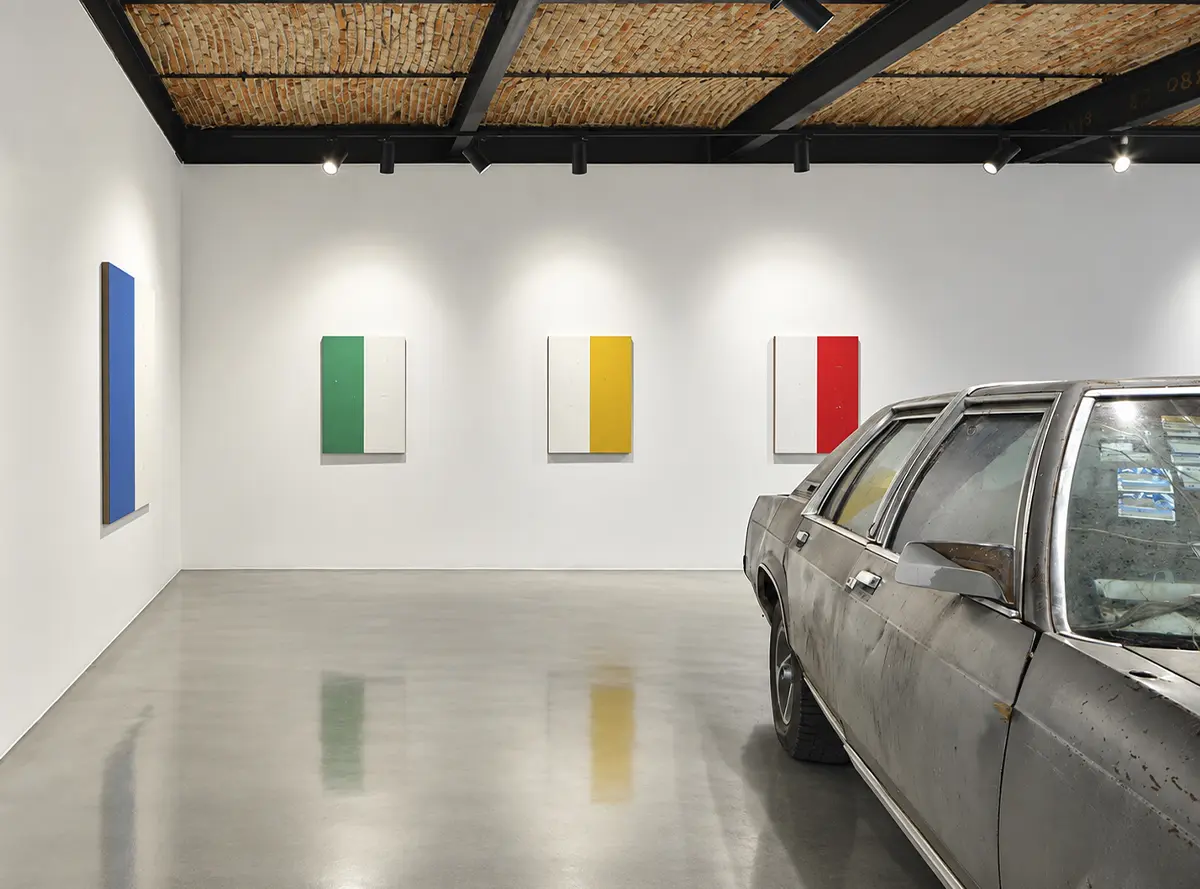
In these exhibitions, both artists give new meaning to gold and to that abstract idea of what is considered the value of a piece. “An endeavor that transforms the cold mathematics of money, the patterns of nature, and the hands of the clock into sublime works that not only amaze the viewer but also invite them to reflect,” states the gallery’s press release about this pair of solo exhibitions.
And time is certainly the raw material of art—the kind that seeks to make us look beyond the obvious, as León-O, the leader of the Thundercats, as he invoked the power of his mythical Sword of Prophecy. “There are dimensions of reality that, because they’ve become so normalized, turn invisible,” the press release continues. That’s the bridge between wakefulness and sleep that the works of both artists lead us across.
Both find possibilities where some of us would see only everyday objects. León moves between drawing, photography, video, and installation to explore the relationships between sound and silence, the visible and the invisible; Pastor works with accounting ledgers, paper, and clippings to alter the order of the numbers. In this way, they propose alternative ways of interpreting them. “I don’t like art; I want to be an accountant; I prefer adding numbers up, ” go the lyrics of the song “Por amor al arte” by the Spanish duo La Monja Enana—undoubtedly the soundtrack to listen to with headphones when visiting this two-artist exhibition.

Glenda León: Listening to What the Clock Doesn’t Say
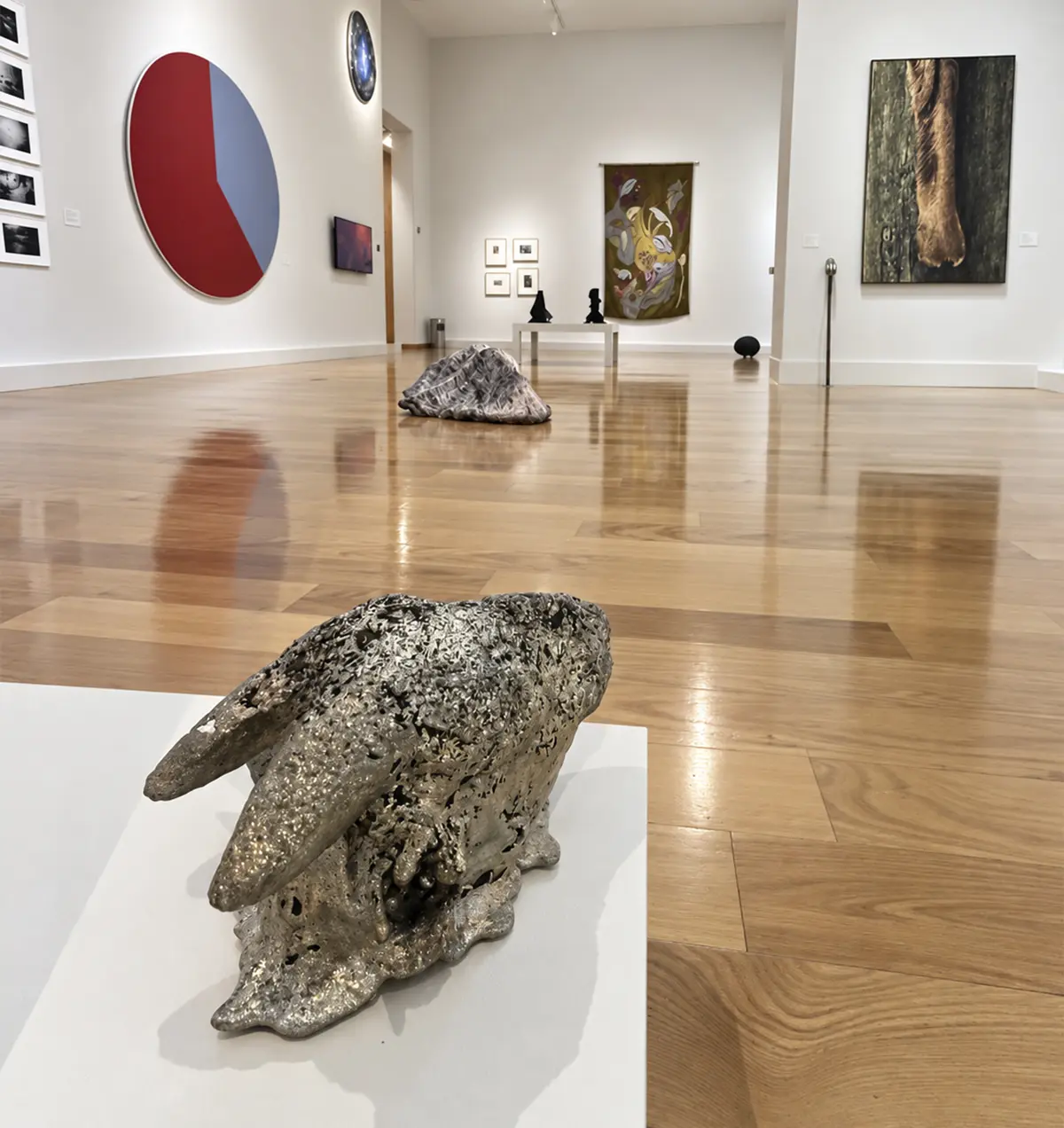
In *Time Is a Sound We Don’t Hear*, her first solo exhibition in Colombia, Cuban artist Glenda León—who lives in Madrid—presents 22 works, including large-scale installations, altered objects, and textile pieces. Glass, bronze, branches, LED lights, and clockwork elements serve as her raw materials as she explores a question that affects us all: How do we relate to time beyond simply owning a top-brand wristwatch?
“It is a poetic reflection on time, on how we relate to the world, and also on a sense of lightness in the face of the gravity of the current situation,” Ana Cárdenas, artistic coordinator of La Cometa Gallery.
Because what the clock shows is one thing, and what we experience as it ticks away is another. León draws on concepts from quantum physics to explore the possibilities of a single moment: a decision or a chance encounter that can change our destiny. In one of his series, shown here for the first time, he transforms the clock hands into lines that trace patterns in space. Freed from the task of telling us we’re late for an appointment, they challenge our determination and our contemporary obsession with measuring everything.
Three of her textiles explore the patterns found in a bee’s flight, a river’s course, and a hurricane’s spiral. Evocative? Of course.

Bogotá plays an active role: a local mother and daughter crafted the textiles, and local workshops produced the glass components. The “Espejismos” section was set up near the assembly workshop; in this installation, wood and LED lighting play with what we think we see.
The invitation to “listen to the voice of the True,” taken from the teachings of Don Juan by Carlos Castaneda, is echoed in a quote from Borges: “I have said ‘wonder’ where others say ‘custom.’” Perhaps that is what it is all about: looking anew at what we thought we already knew.
Luisa Pastor: You Can Also Unravel Knitting
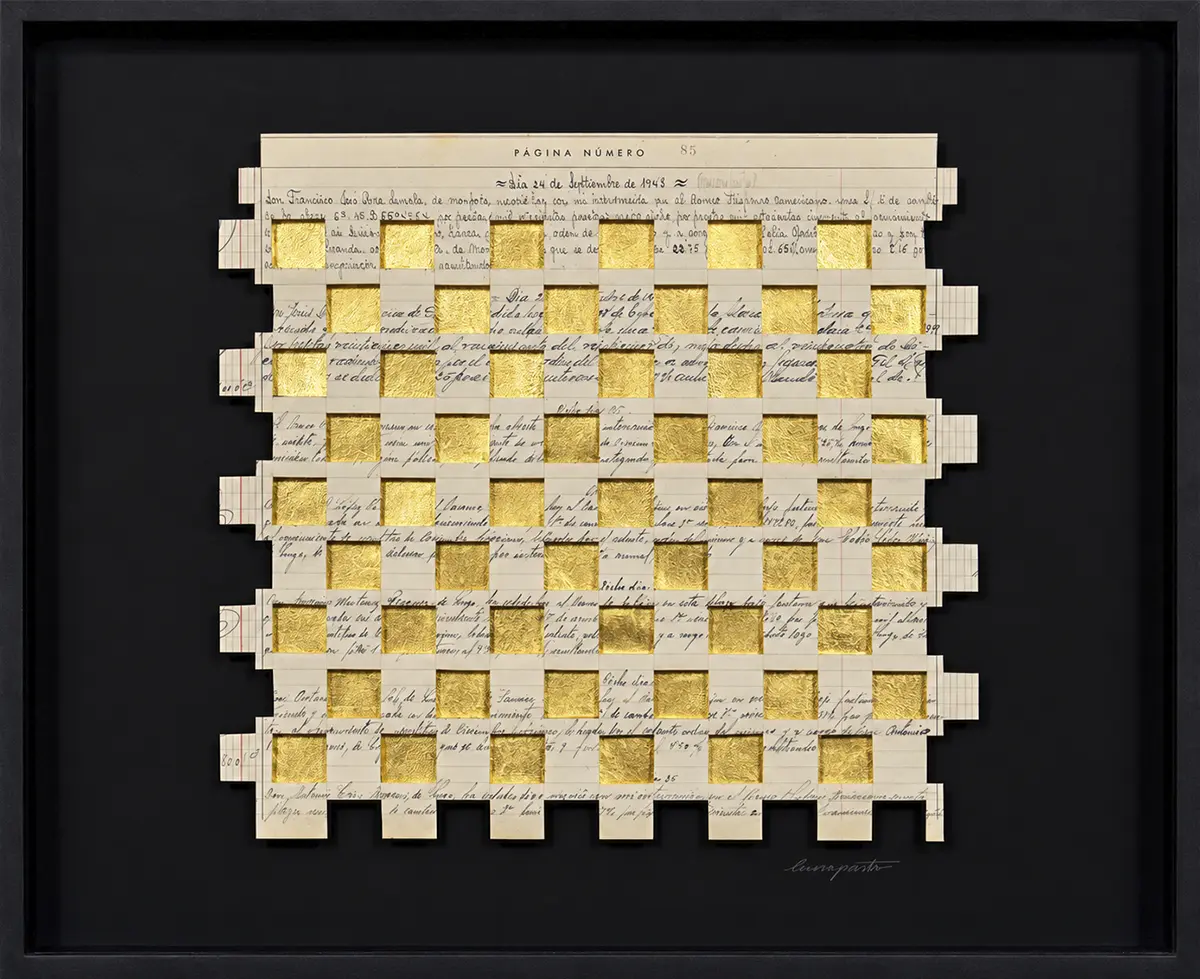
In *Warp and Weft: Writings on Value*, Luisa Pastor transforms old ledgers into art pieces. The records of possessions, transactions, and balance sheets are still there—like a cold Excel spreadsheet—though they are no longer read in the same way.
The artist cuts, carves, layers, and intertwines the paper “until the numbers become reliefs, shadows, and hollows.” A book designed to organize money ends up reshaping our concept of value. What remains of a number when it loses its place on the balance sheet?
This is where gold comes in, with all its symbolic weight. “Money doesn’t buy happiness,” as the saying goes, but it does inspire. Pastor slips it between the altered pages and into the cracks of the ledgers: what might have appeared as a figure recorded with the tax office now occupies a physical space within the artwork.
Who decides how much something is worth? That is the question the work raises. Within its pages lie the traces of those who made those calculations, of their exchanges, and of what they deemed worth recording. A fingerprint that reveals accounting DNA and mathematical decisions that may hold a hidden meaning: manipulated figures, balance sheets, and a story we can imagine but will never truly know.

What’s Left Out of the Calculation
León’s clock hands and Pastor’s pages lead us to reflect on how much we fail to notice when we believe that everything can be measured in numbers. We spend our days checking the time and doing calculations.
In these examples, we can approach the subject from a much more cynical and humorous perspective and, just for a moment, imagine that we aren’t slaves to time (and it’s time to check and count how many characters I’ve written in this review).
You can visit both exhibitions at Galería La Cometa, located at Carrera 10 # 94 A–25, Bogotá, Colombia, Monday through Friday from 10 a.m. to 6 p.m. and Saturdays from 11 a.m. to 4 p.m. The gallery is open to the public, and admission is free.
Discover more moments in art in AW Magazine.