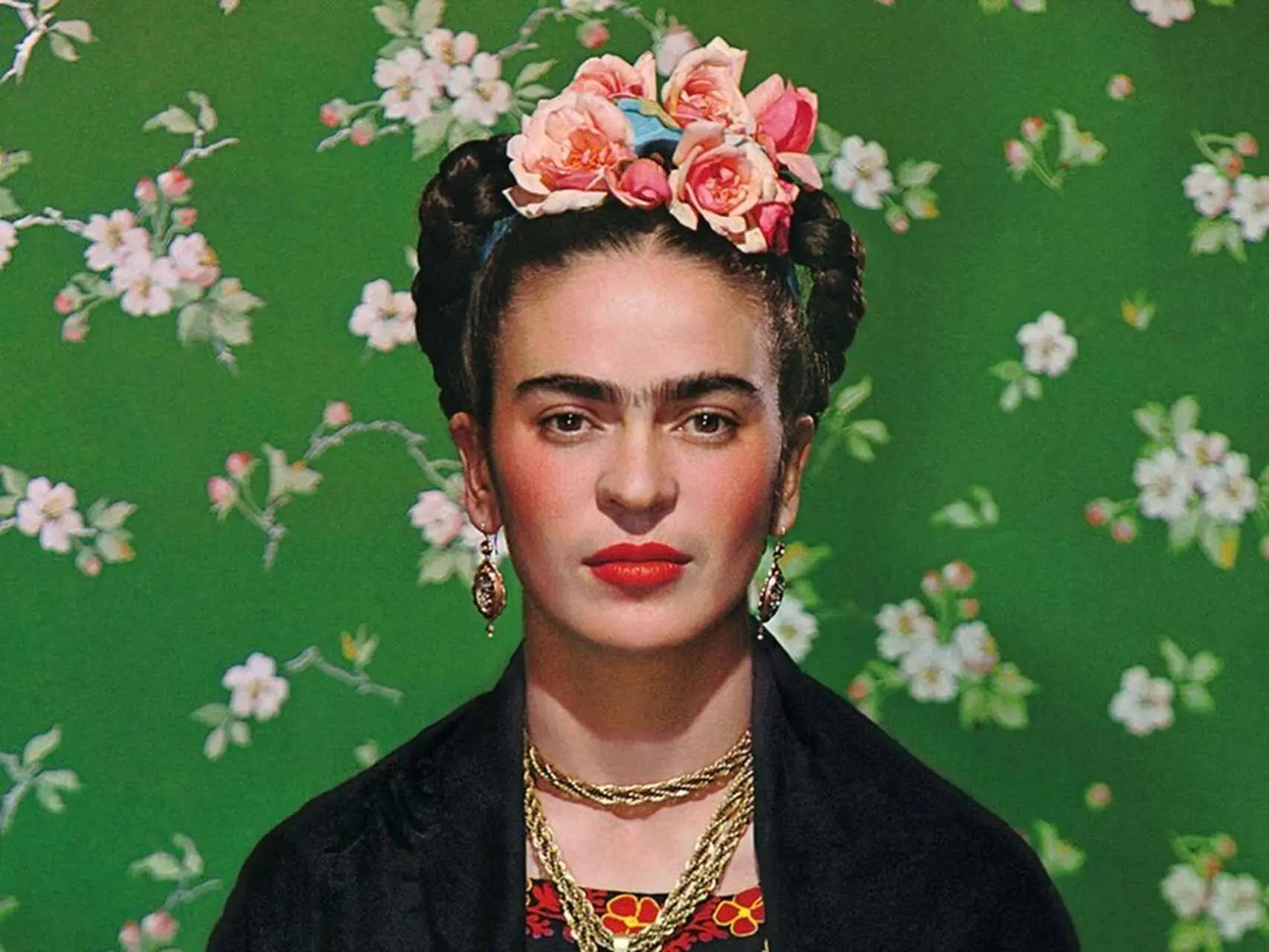

The controversy continues. A long-standing legal protection—that is, a government ban—restricts the export of works by artists considered essential to the national heritage, such as Diego Rivera, José Clemente Orozco, Remedios Varo, and Frida Kahlo. Today, this measure is at the center of a legal and media dispute over the case of *Self-Portrait with Medallion*, an oil painting created by Kahlo in 1948 and owned by the banking institution Ve por Más (Bx+).

The bank filed a petition for constitutional protection in 2023 (three years ago) after the National Institute of Fine Arts and Literature (INBAL) denied its request for permanent export. The institute’s legal argument is that the painter’s designation as an Artistic Monument prohibits her work from being permanently removed from the country.
In this regard, Judge Giovanni Azael Figueroa noted that the purpose of the litigation is to determine whether that provision exceeds the regulatory powers of the Executive Branch.
What is the Designation of Kahlo as an Artistic Monument?
The decree, issued on July 18, 1984, by then-President Miguel de la Madrid, establishes one of the most comprehensive protections for Mexico’s artistic heritage. Its scope covers the entire body of Frida Kahlo’s work, regardless of whether it belongs to the government or to private collectors. The provision prohibits their permanent export, meaning that the pieces may only leave the country on a temporary basis and with the express authorization of INBAL.
The purpose of this measure is to preserve Mexico’s cultural heritage, prevent the loss of important works, and ensure that they remain in the country as part of the national artistic legacy. However, in the case of Frida Kahlo, this decree is the strictest of all, as it is the only one that expressly prohibits permanent export.

The debate reaches the Supreme Court
Recently, the issue was brought before the Supreme Court of Justice of the Nation (SCJN), which agreed to review the constitutionality of the 1984 presidential decree. This review of the legal protection that restricts permanent exports limits the rights of private owners over these artifacts by classifying them as part of the nation’s cultural heritage, which could redefine the scope of the government’s protective measures.
The issue has sparked a heated debate about the balance between the right to culture and the property rights of private individuals who own works by the painter.
During the Court’s deliberations, some justices pointed out that a permanent export restriction is not explicitly provided for in Article 16 of the Federal Law on Monuments, which does, however, allow for the export of artistic works when they belong to private individuals. The dispute also raises a matter of great legal significance: To what extent can the state restrict property rights to protect cultural heritage in the face of the position taken by those who legally own the works?

The issue has gained momentum in the wake of the controversy surrounding the Gelman Collection, which includes eleven paintings by Frida Kahlo and was recently loaned to Banco Santander for a temporary exhibition in Spain. All of this comes as the Casa Azul in Coyoacán presents a unique calendar of activities to commemorate Frida Kahlo in July, marking the 119th anniversary of her birth on July 6, 1907.
The Gelman Collection Factor
The controversy gained greater prominence with the case of the Gelman Collection, considered one of the most important collections of modern Mexican art. Part of this collection, which includes eleven paintings by Frida Kahlo, was loaned to Banco Santander for exhibition at the Faro Santander cultural center in the Spanish city of Santander, raising questions about the scope of the permits granted by INBAL and the length of time the works will remain outside Mexico.
The pieces in the collection are by artists designated as National Artistic Monuments, so their transport abroad is subject to strict regulations. In the case of Frida Kahlo, these protections require the authorities to ensure the return of any work that is temporarily taken out of the country.
The controversy also intensified due to conflicting reports about how long the artworks would remain in Spain. While there was initially talk of five years, authorities later clarified that the export permits are valid for two years. Finally, Mexican President Claudia Sheinbaum confirmed that the artifacts must return to Mexico in 2028.

The ruling issued by the Supreme Court could set an unprecedented precedent regarding the scope of the government’s authority to protect Mexico’s artistic heritage and redefine the balance between the preservation of cultural assets that are valuable both artistically and financially.
More art news in AW Magazine.