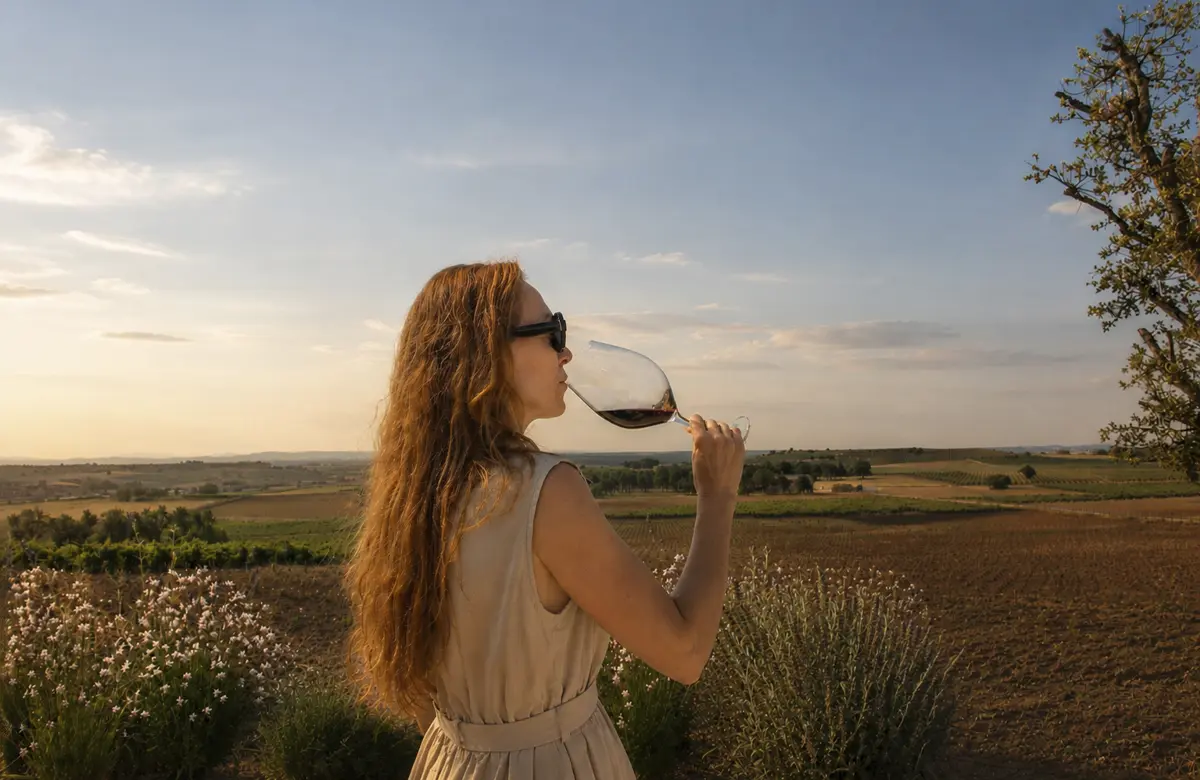

The combination of wine, scenery, architecture, and cuisine creates such an idyllic experience that it’s hard to pass up. It can make for a great weekend getaway if you’re in Spain, or the perfect reason to hop on a flight from anywhere in the world and indulge in the sybaritic pleasure of sipping fine wine amid evocative architecture. With the arrival of the penultimate, nostalgic season, the vineyards change color, and the Ribera del Duero region shines with all its cozy charm.

A journey where a love of wine takes center stage
This evocative journey invites you to discover wine from the places where it is born. Bodegas LA HORRA and Áster present Ribera del Duero vs. Rioja: 2 Regions, 4 Wineries, a wine-tasting tour in which two of Spain’s great wine-producing regions open their doors and welcome visitors.
Ribera del Duero and Rioja are two regions closely associated with Tempranillo—the red grape variety widely cultivated in Spain to produce full-bodied red wines—but each has its own distinct identity shaped by its respective landscapes and methods of crafting the so-called “nectar of the gods.” The tour features four wineries: Bodegas LA HORRA and Áster in Ribera del Duero, and Bodegas RODA and La Rioja Alta.

Respect for the Territory
In the world of winemaking, respect for the terroir means crafting wines that seek to preserve and reflect the region’s unique characteristics: the soil, the climate, the vineyards, and the natural environment. This philosophy is evident throughout the tour, which includes a historical overview that sheds light on this way of life in which wine takes center stage.
Architecture also plays a central role in the experience. The tour allows visitors to discover Carme Pinós’s design and understand how Bodegas LA HORRA blends seamlessly into the landscape. Each space has been conceived to precisely complement the different stages of the winemaking process, establishing a dialogue between aesthetics, functionality, and the surrounding landscape.

Two projects, one way of understanding wine
During the tour, participants delve into the winery’s history, its philosophy, and the different stages of winemaking. The tour offers insight into both the essence of the Ribera del Duero and the ties that bind Bodegas LA HORRA and Bodegas RODA—two projects within the same group that share a common approach to wine, even as they interpret different regions, giving them that distinctive family character.
The first tour lasts approximately an hour and a half and concludes with a comparative tasting of wines from Ribera del Duero and Rioja. Participants taste Corimbo and Corimbo I, both from the Ribera del Duero DO, along with Roda and Roda I, from the Rioja DOCa. This selection allows participants to observe the differences between the two regions and recognize how the same grape variety expresses itself differently depending on the landscape, climate, and winemaking methods.

Region, Craft, and Cuisine
The wines are paired with Aubocassa extra virgin olive oil and a selection of tapas made with products from La Fonda del Prado. The olive oil is incorporated as yet another expression of the relationship between the region, craftsmanship, and gastronomy. Some of the tastings are also complemented by a special charcuterie platter, prepared to accompany and bring out the character of each wine.
At noon, it’s time to head to Bodegas Áster through the forest that surrounds both wineries. There, the experience continues with a tour and tasting of Áster El Espino and Finca El Otero, from the Ribera del Duero DO, and Viña Alberdi and Viña Ardanza, from the Rioja DOCa. During this stop, the wine pairings feature traditional tapas from both regions.

A Look at the origin and influence of the landscape on wine
In addition to this tour, Bodegas LA HORRA offers a variety of other tour options. Some focus specifically on the architecture and Carme Pinós’s design; others delve into the history of Grupo RODA and the similarities and differences between its two wineries. For those seeking a more in-depth experience, the “Ribera vs. Rioja” private tour offers a comparison of four iconic wines: Roda, Corimbo, Roda I, and Corimbo I, accompanied by cured meats and Aubocassa extra virgin olive oil.
Ribera del Duero vs. Rioja: 2 Regions, 4 Wineries has been designed as an experience open to wine enthusiasts, travelers, and connoisseurs alike. The tour aims to spark curiosity and encourage a broader perspective on the origin and influence of the landscape in every sip.

The Essence of Four Major Wine Projects
In addition, the tour offers a truly unique experience: it allows you to visit, in a single day, two wineries located in the heart of the Ribera del Duero region in Burgos and, at the same time, discover the essence of four of Spain’s leading wine-making projects. This uniqueness takes on even greater significance when you consider that Bodegas RODA and La Rioja Alta, S.A. are neighbors in the historic Barrio de la Estación neighborhood of Haro, while Bodegas LA HORRA and Bodega Áster share the same landscape in the Ribera del Duero. This is undoubtedly an exceptional circumstance that makes this experience a unique opportunity to explore the different interpretations of two key regions of Spanish wine.
Tours are available for the rest of the year, and reservations can be made directly with Bodegas LA HORRA. Once you’ve chosen a date, it’s time to prepare your palate.
Discover more experiences and getaways in AW Magazine.