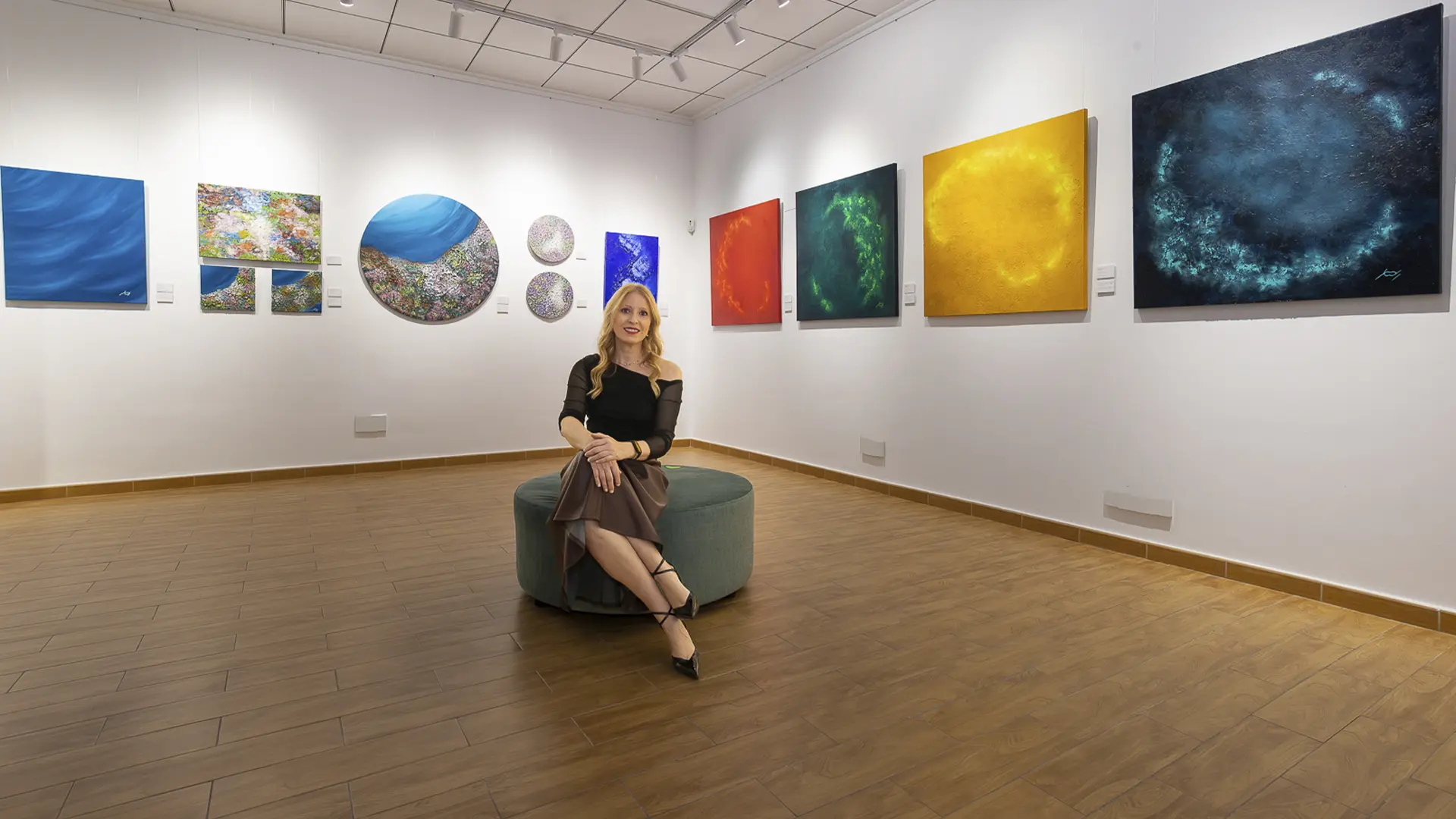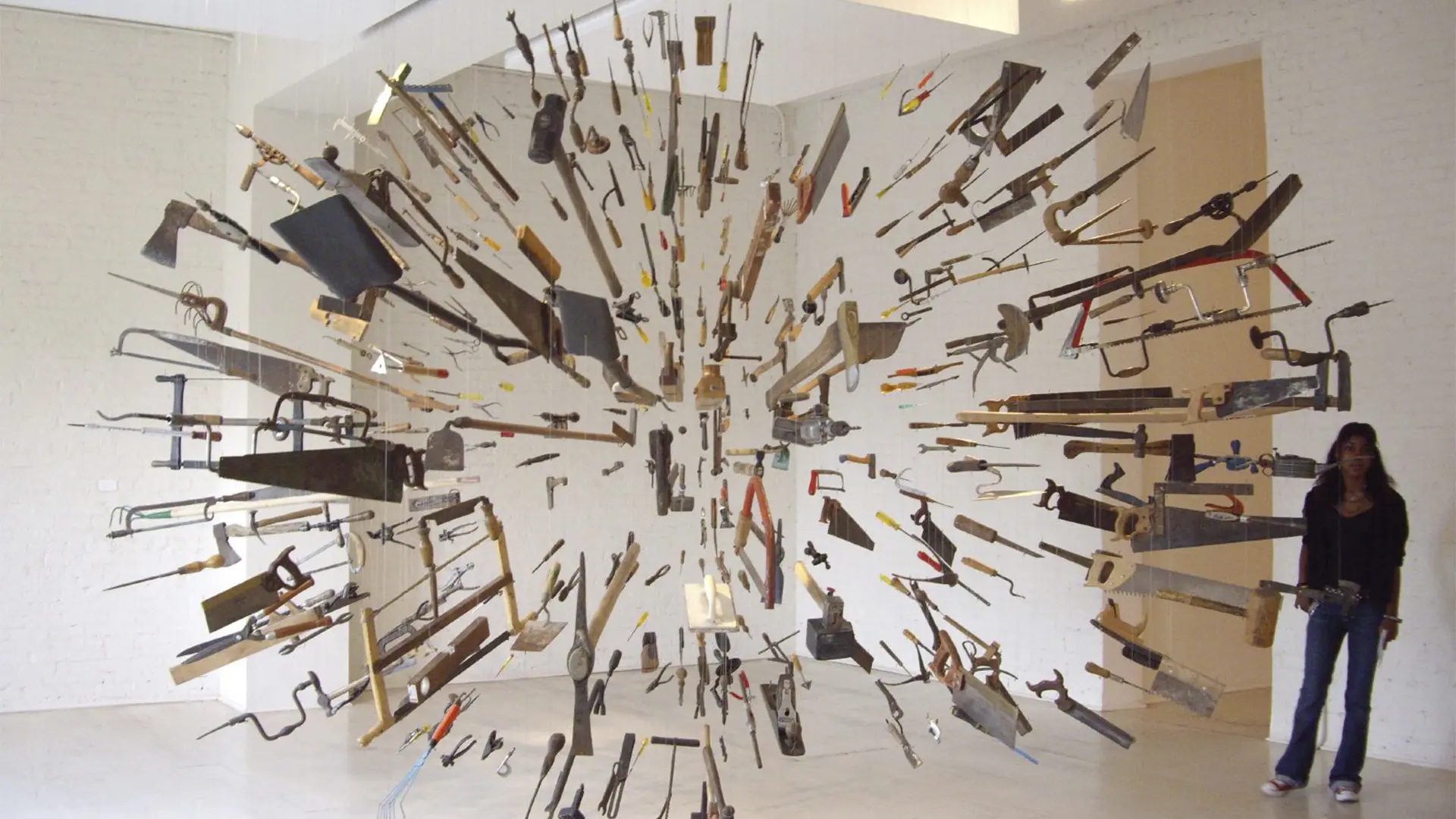

Damián Romero is the curator of ZⓈONAMACO LAB at CASA HOTBOOK, and with his distinctive and resonant vision, he has organized the exhibition around the concept of RADICAL OPTIMISM—that is, optimism as an act of informed resistance. In his curatorial text, Romero states that, far from any “age of innocence,” he sought to distance himself from “a naive or escapist vision.”

Optimism as Informed Resistance
La exhibición reúne prácticas de arte digital y contemporáneo que exploran “la relación entre tecnología, cuerpo y percepción, interrogando los sistemas que moldean nuestra atención, nuestra química emocional y nuestra idea de futuro”, explica el curador.
The result is satisfying for those of us who seek to be surprised in a world where such moments are increasingly rare. In the context of ZⓈONAMACO LAB, the concept of immersion takes on a different meaning. Play and the much-overused concept of “playful art” are deployed here as critical resources. As Romero points out, the works function as “sensitive prototypes of futures where imagination, criticism, and desire can still reprogram what is possible.”
AMIANGELIKA, Brian Eno, CNDSD & Iván Abreu, Iregular, Linnea Goransson, Matthew Feyld, Orly Annan & Brian Close, Rodrigo Garrido, Stefan Bruggemann, and Tania Candiani are the featured artists of the second edition of ZⓈONAMACO LAB, running from September 11 to October 11, 2026, at Casa Hotbook. Of particular note, of course, is the presence of the legendary Eno, who in 2010, during one of his visits to Mexico—ever the provocateur—stated: “A crisis in art is always a very good thing; I like it, I love crises; I think they serve to rethink art and revolutionize it.”
Today, faced with the challenges of contemporary technologies and the exhaustion they cause, “Radical Optimism explores how digital devices, images, and systems transform our attention, our perception, and the way we imagine the future,” states the curatorial statement.

Technology, the Body, and Perception
Romero, who is also the founder and director of MUTEK Mexico, brings together practices that are very different from one another but are all linked by a common question: What happens to our perception when technology ceases to be merely a tool and becomes space, language, matter, and presence?
Generative Systems and Works in Transition
Based in England, AMIANGELIKA works at the intersection of new media and audiovisual design. The artist “develops generative systems rendered in real time that react to sound, movement, and human presence.” In her installations and performances, the machine does not entirely dictate what happens, nor is the audience limited to merely observing. The viewer’s presence alters what they see and hear, so that no two experiences are exactly alike. Her work also explores tensions drawn from mythology and metaphysics, now expressed through the beloved and reviled technologies of the present.
For Brian Eno himself, the idea of constant transformation is fundamental. From the development of ambient music and his experiments with the glam rock band Roxy Music to his light, video, and sound installations, Eno has challenged the notion of the artwork as a finished object. His work with generative music is based on rules and conditions capable of producing random configurations. This creative logic extends to his distinctive visual installations, where light, color, and sound construct slowly changing environments that turn every moment into a unique combination.
Artificial Intelligence, Memory, and Territory
CNDSD & Iván Abreu explore the intersections between code, sound, architecture, artificial intelligence, and generative systems. The duo coined the term “Live Cinema Coding” to describe a methodology based on writing and manipulating code in real time. Using this approach, they generate images, sound, three-dimensional scenes, and narrative structures that change in real time.
Starting from a similar premise, Iregular builds audiovisual systems that react to the audience’s presence, movement, and decisions. Founded in Montreal by Daniel Iregui, the studio works with geometry, light, sound, algorithms, artificial intelligence, and machine learning to produce installations in which every interaction alters the behavior of the work. The game’s apparent accessibility serves as a gateway to uncomfortable questions about control, connectivity, and our growing dependence on the digital world and scrolling.
From Digital Language to the Embodied Experience
Linnea Göransson and Stefan Brüggemann share an interest in language, though they approach it from different perspectives. Göransson works with short phrases rendered in neon, concrete, graffiti, and photography. In their recent works, memes, screenshots, and snippets from social media are brought into the art world “to reveal words and digital images as cultural materials of our time,” they note in a press release.

Matthew Feyld occupies the other end of the creative spectrum. His minimalist painting draws on monochromatic fields, dots, circles, and basic geometric shapes to explore how even the slightest variation can transform our perception of a surface and the space that contains it. It’s something like the “butterfly effect” applied to art. Rather than presenting the painting solely as an image, Feyld understands it “as a physical object capable of optically and physically activating architecture,” in his own words.
Image, Ritual, and Movement
Orly Anan & Brian Close, for their part, create experiences that blend ritual, image, sound, and movement. Anan’s imagery combines masks, characters, symbols, and references drawn from various cultural traditions to explore identity, transformation, and alternative perception—themes that deeply inspire artists who explore altered states of consciousness. Close investigates the relationships between electronic composition, visual abstraction, architecture, and time. Together, they open up a space where the human, the spiritual, the fantastic, and the digital can coexist in a one-of-a-kind piece.

Rodrigo Garrido extends questions about technology and the body to artificial intelligence, consciousness, and emotions. His “Sentient Sculptures” are physical entities equipped with artificial systems capable of perceiving, reacting, and developing simulated behaviors and emotional states. Garrido does not use AI merely to produce images or objects: he makes it the very essence of the artwork. By projecting human emotions and vulnerabilities onto artificial entities, he ends up creating an uncomfortable social mirror.
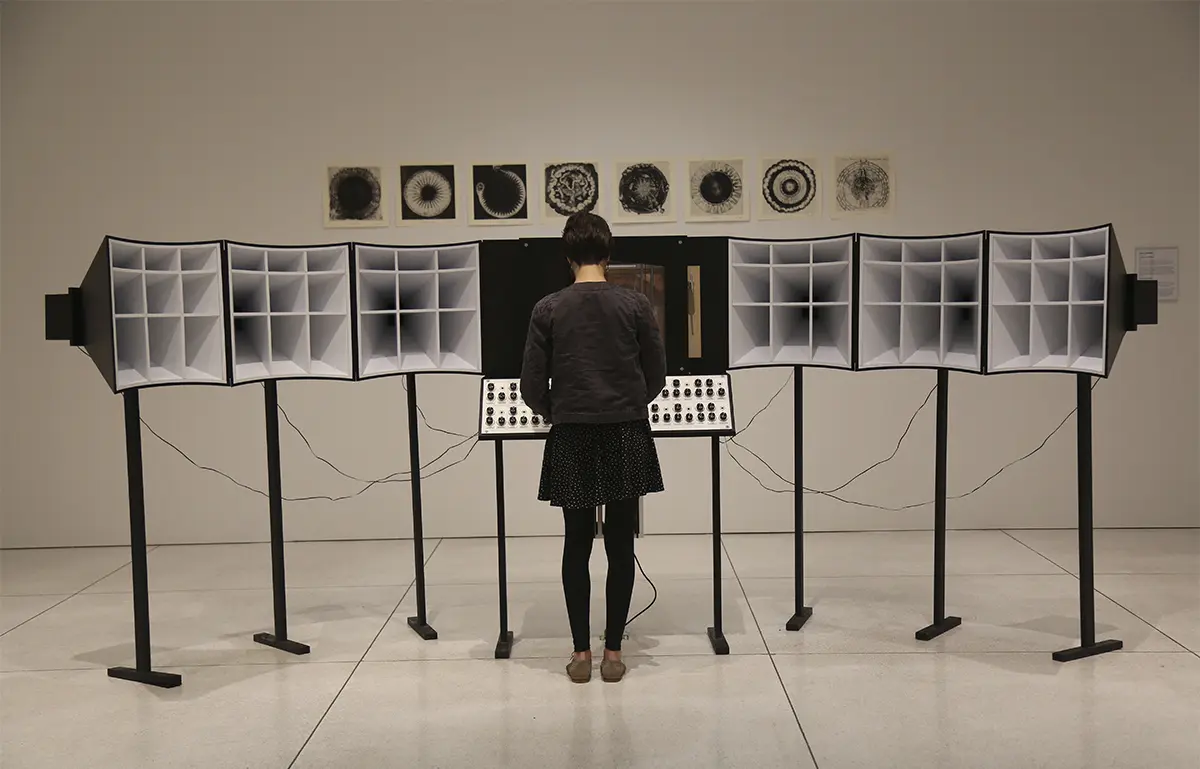
For her part, Tania Candiani draws on technology, memory, sound, and territory as part of a single body of research. Candiani reclaims ancestral mechanisms, industrial machines, and techniques considered obsolete in order to reawaken them in the present. Sound appears as a physical phenomenon, a communication tool, and a vehicle for making visible what normally remains hidden. Her work reminds us that technology neither begins nor ends with the digital realm: it is a cultural construct shaped by centuries of experience.

An Invitation to See Things Differently
In this edition, ZⓈONAMACO LAB is collaborating with CASA HOTBOOK on Radical Optimism to redefine the way we inhabit a space designed to connect. Both initiatives come together in an exhibition where the public interacts through play and where the galleries serve as a stage for the imagination: a bridge between the viewer and the artist’s perspective. The immersive environments become territories of exploration, where ideas take shape and invite visitors to interpret and create.
The proposal does not aim to teach through theory, but rather to awaken our sensibilities and celebrate the emotional connection we can develop with art. In a present saturated with stimuli, devices, and images, there is still the possibility to pause, to be surprised… and that is the premise.

Presented by HSBC and with MINI as the main sponsor, the exhibition will be open Tuesday through Sunday, from 11 a.m. to 8 p.m., at CASA HOTBOOK, located at Monte Líbano 280, Lomas de Chapultepec, Mexico City.
Tickets and registration: mangopase.com
Discover more art fairs and biennials in Mexico and Latin America in AW Magazine.