
Exploring and enjoying Guadalajara in 48 hours seemed like an impossible mission to me. I arrive in the city at night. Amid the ringing of bells, the pink sandstone, the aroma of meat in its own juices—or a good birria—and an increasingly contemporary cultural scene, the arrival is as evocative as it is sophisticated.
All you have to do is stroll through its squares, lose yourself among Orozco’s murals, or listen to a mariachi band as evening falls to understand why they call it the Pearl of the West.

But beyond the mystique of good tequila, Guadalajara straddles the line between tradition and the avant-garde. Here, the colonial legacy coexists with the buildings that have shaped the country’s cultural history and an art scene that never stops reinventing itself. And it’s not that the city can’t decide between the past and the future; it’s just that, in Guanatos, nothing ever stays the same.
I think two days are barely enough to get a glimpse of a metropolis that reveals itself through local markets, contemporary galleries, bustling cafés, and neighborhoods that have found new ways to express Guadalajara’s identity without abandoning their roots.
Day 1. Morning
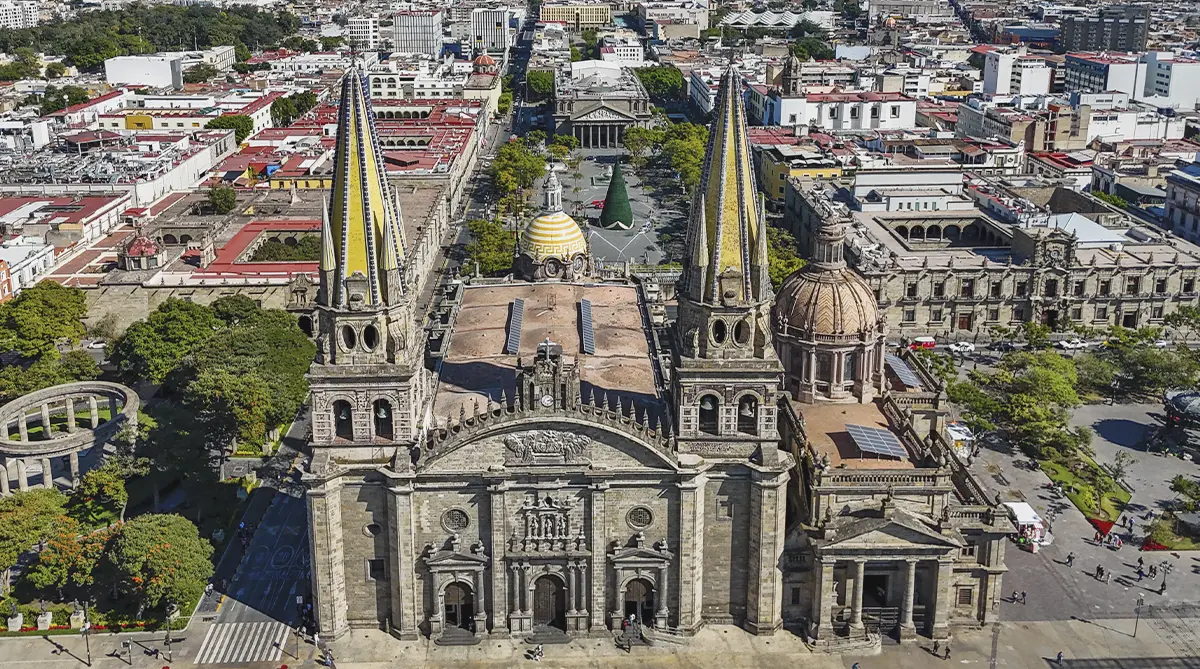
A morning walk through the Historic Center is a great idea. I wake up craving a good cup of coffee; maybe it’s too early for a torta ahogada… or maybe not. Guadalajara boasts some of the country’s highest-rated coffee shops, such as El Terrible Juan or Culca, but for now, the bells of the Metropolitan Cathedral are calling me. There’s nothing like starting the day in front of one of the monuments that best represents the city’s history and taking a photo worthy of those old-fashioned postcards.
The Cathedral is, without a doubt, one of the great architectural masterpieces of western Mexico. Its neo-Gothic spires dominate the skyline of the Historic Center, while its interior features a blend of Baroque and Neoclassical elements that reveal centuries of history. Its central location makes it the ideal starting point for continuing the tour rather than staying to enjoy the morning in the surrounding area.

The Plaza de Armas is another one of those places where the city of Guadalajara seems suspended in a moment in time. In the shade of the trees, amid musicians, vendors, families, and people starting their day, the plaza invites me to stop for a few minutes. Someone told me that it functions as a small urban botanical garden, a living museum of plant species, and I think they were right.
I check the time. It’s barely noon, and I’ve already visited (and photographed) some of the places that best capture Guadalajara’s identity. Across from the plaza stands the Government Palace, where a José Clemente Orozco in his fifties painted one of the most powerful images in Mexican muralism. Above the main staircase, the figure of Miguel Hidalgo emerges engulfed in flames, clutching a torch. The scene seems to come to life as you climb the steps, and it’s very cinematic.

As I leave, I continue through Plaza de la Liberación. A few steps away, I see the Degollado Theater, with its neoclassical façade and columns that have made it one of the city’s great landmarks. Almost without realizing it, I arrive at the Hospicio Cabañas just as someone drives by in a car, blasting music by Nopal Beat at full volume. Somewhere in the most contemporary part of Guadalajara, those musical projects that combined electronic music with indigenous sounds emerged a few years ago.
At the legendary Hospicio, I learn that the site is a UNESCO World Heritage Site. This historic building, designed by the Spaniard Manuel Tolsá, is today one of Mexico’s most important cultural venues. On the dome, José Clemente Orozco painted *El hombre de fuego* (*The Man of Fire*), a work that envelops visitors and ranks among the great masterpieces of 20th-century Mexican muralism.
Afternoon
As evening falls, it’s worth heading to the Americana neighborhood. If the Historic Center tells the story of Guadalajara’s past, this modern and somewhat hipster neighborhood—yes, this crowd still exists—reveals its present. I walk along Chapultepec Avenue until I lose myself in the streets of Libertad and López Cotilla, illuminated by car headlights, where old Porfirian residences stand side by side with art galleries, design studios, boutique hotels, and some of the most highly recommended restaurants not only in the city but in the entire country.

A stop at Trámite | Buró de Coleccionistas is practically a must. For years, it has been one of the spaces that has best defined contemporary art in Mexico. A few blocks away, Galería Curro continues that conversation with a more experimental approach and a strong program featuring Latin American artists.

I’m in no hurry. I’ll take a break for another coffee, perhaps on a terrace where I can watch the rhythm of life in the Colonia Americana, Guadalajara’s most cosmopolitan neighborhood, where night is now falling. And perhaps that’s the best time to visit it.
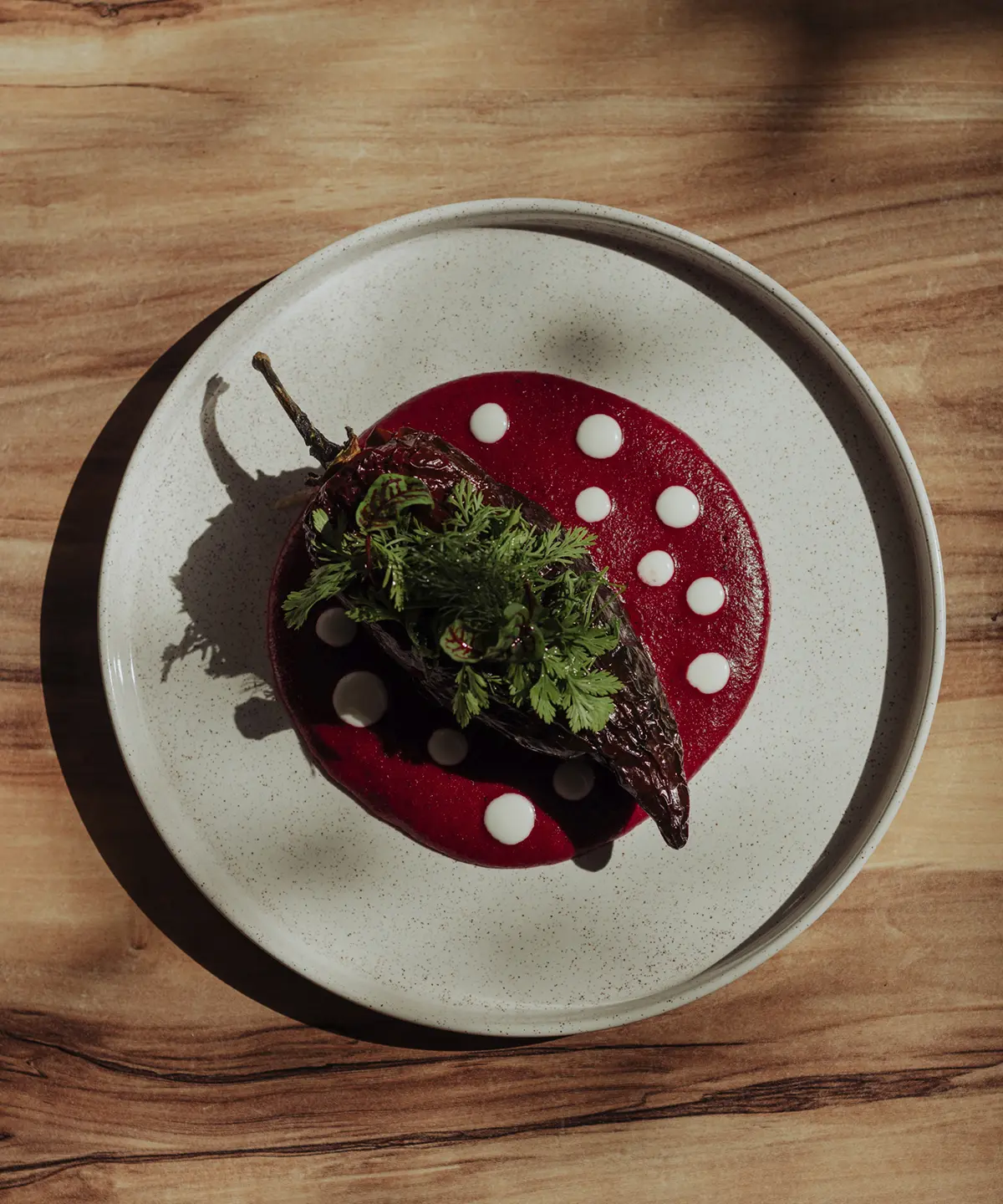
For a sophisticated dinner, Alcalde —a restaurant recently awarded a Michelin star—is the next stop. After all, we’ve had nothing more than a street-side snack and a coffee fix worthy of a coffee junkie. There, chef Francisco Ruano offers cuisine deeply rooted in the Earth’s cycles. His menu is a journey that deconstructs Guadalajara’s culinary traditions in a very elegant way.

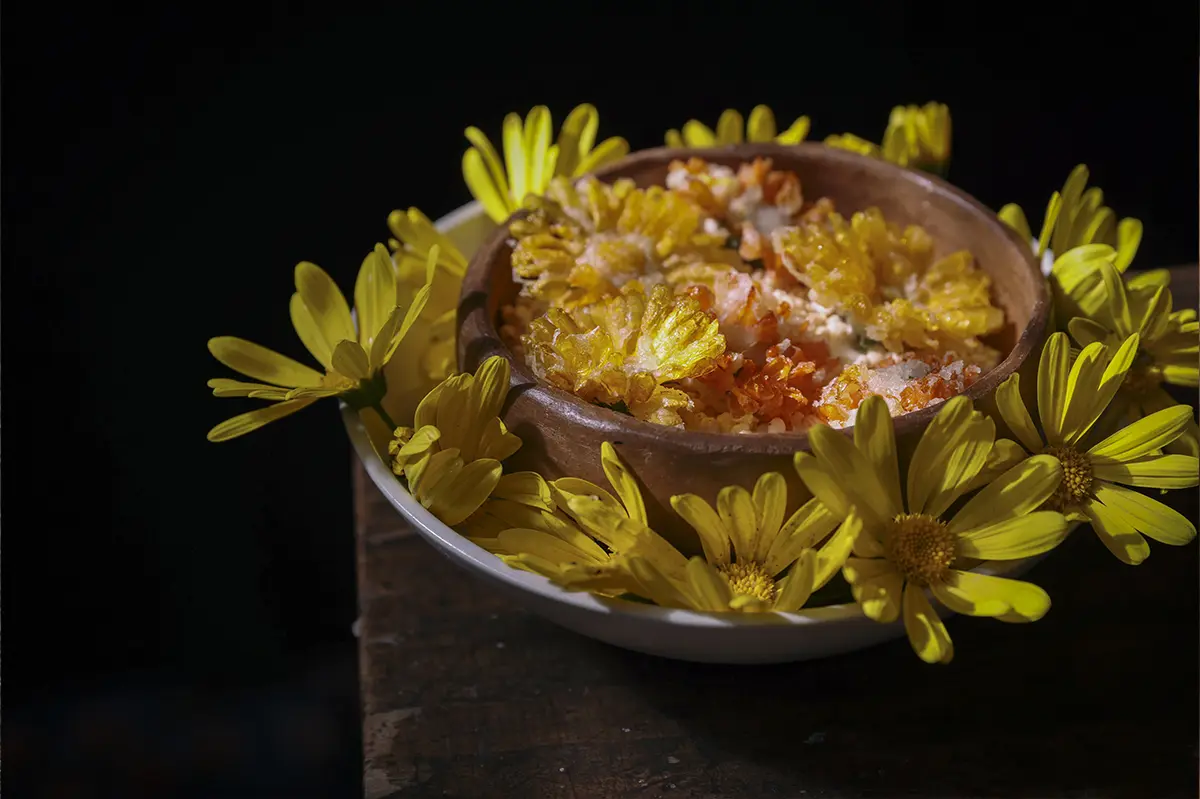
Young coconut is a must-try dessert, as are the Guadalajara-style reinterpretations of the classic tlayuda and duck. At Alcalde, there are no tortas ahogadas (or at least I didn’t dare to ask), but its tasting menu is undoubtedly the highlight of this brief visit.
Very close by, at 1306 Garibaldi Street, there’s a Karne Garibaldi location, famous for holding the Guinness World Record for the world’s fastest food service. Maybe tomorrow, before we leave, it’ll be worth stopping by; after all, the service is immediate, and the plane won’t wait.
Night
A little further north, the route takes you through Puerta de Hierro and the Andares shopping center. Walking through The Landmark at that time of day is to witness the city’s most ostentatious side: amid luxury brands and imposing corporate architecture, it becomes clear why Guadalajara has established itself as one of the country’s major economic hubs.

As I head out, with night falling, I start to wonder if it’s worth going all the way to the Chivas stadium just to see it lit up—or maybe to run into the ghost of the legendary Jorge Vergara. It’s a bit far from here, on the outskirts of Zapopan, but the excitement for soccer—fueled by the World Cup—always outweighs the distance.
Day 2. Morning
The second day calls for prioritizing activities. I decide to start the morning of day two in San Pedro Tlaquepaque. Although it’s actually another municipality outside of Guadalajara, today the region is fully integrated into the capital’s rhythm, and its colonial atmosphere offers a respite from the oppressive hustle and bustle of the metropolis.
I spend the first few hours strolling through some colorful cobblestone streets, a promenade lined with grand houses that have been transformed into art galleries and independent design boutiques. While Googling for restaurant recommendations, I learn about local legends, such as the one that says the basements of El Refugio and other historic estates in the area are connected to a network of secret underground aqueducts used in the 19th century. I don’t quite believe it: the exact same thing is said about every Mexican “Pueblo Mágico.”
The walk takes me to El Parián. Crossing the courtyard surrounded by traditional cantinas and listening to the mariachis while enjoying a tequila cazuela with citrus and a traditional meal is, more than just a cliché, a complete immersion in the spirit of the town. And no, I haven’t had a torta ahogada yet.

Afternoon
In the middle of the afternoon, I return to the city center to continue my tour. I stop at Plaza de los Mariachis, also known as Pepe Guizar, a spot that exudes the nostalgia of old Guadalajara and where local musicians gather to liven up the atmosphere with their songs of revelry and heartbreak. It’s a brief trip back in time before returning to the modernity of the western part of the city.
Night
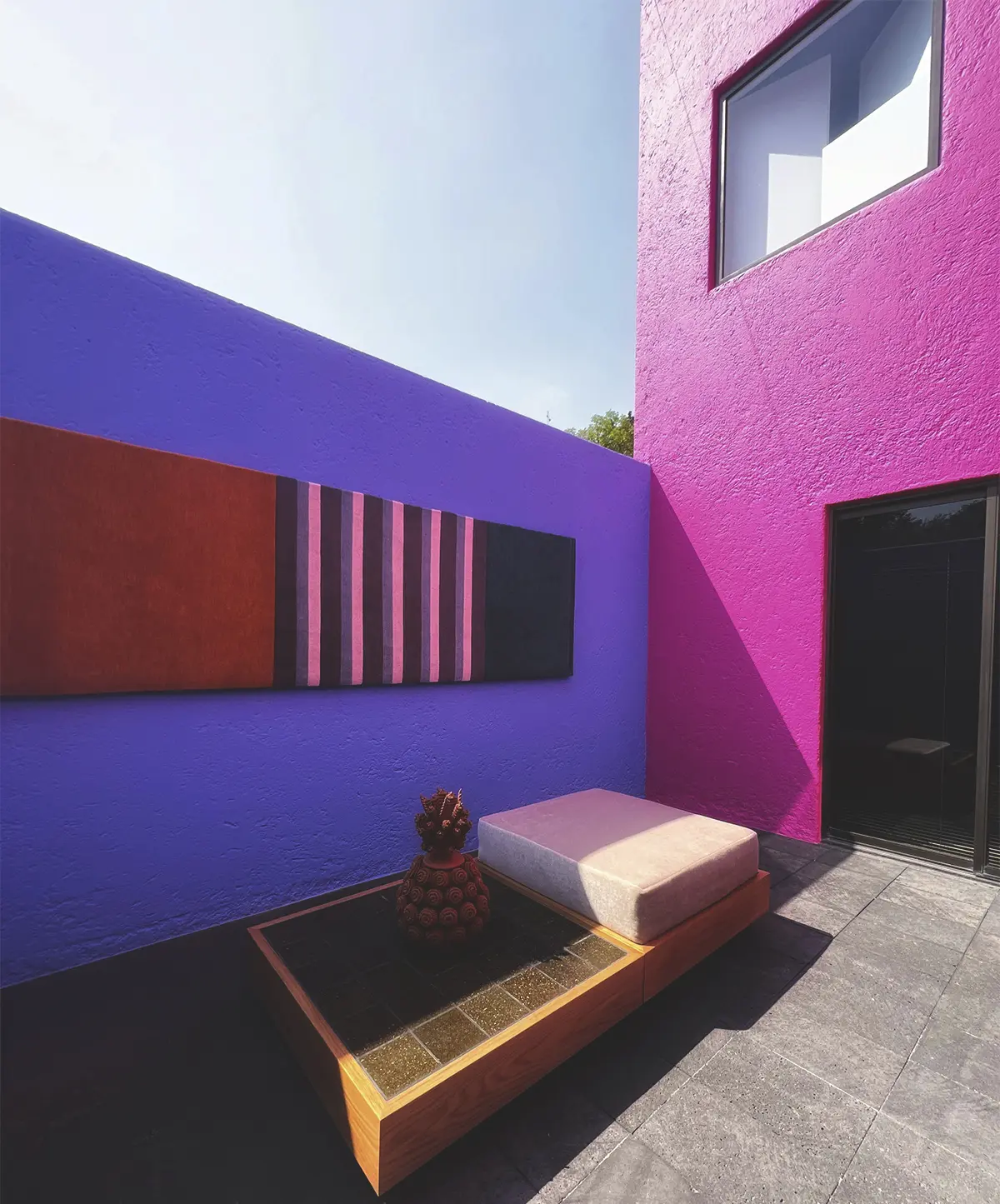
The last night in the city also known as the City of Roses is the perfect time to visit the bustling Chapultepec Avenue and its surrounding streets. Before that, inspired by the city’s nickname, I feel like going to take some photos at the Casa Rosa Luis Barragán, but I suspect it won’t be easy to get in, so I decide against it (besides, it’s not that close—I’ll save it for another visit).
As the epicenter of the contemporary art scene and initiatives such as Art Week, the entire neighborhood exudes art. I take advantage of the fact that several independent galleries are extending their hours to visit them.
I make a must-see stop at guadalajara90210, a nomadic and irreverent project that challenges exhibition formats by adapting to specific sites, and I continue on to established venues like Páramo and Ánima Galería, where the conceptual installations demonstrate why the local visual arts are attracting global attention.
My nighttime walk inevitably takes me past the facade of the old Roxy Theater. Although its glory days as the cathedral of alternative rock in the ’90s are frozen in the collective memory, its avant-garde silhouette still resonates in what is now a cultural center.
For my farewell dinner, I prefer to head away from Chapultepec and explore the terraces along side streets like Libertad or Prisciliano Sánchez. I wrap up my trip by indulging in signature cocktails and local hospitality.

I stop by De la O, an impeccable contemporary cantina, to try some aged pulque or a drink made with agave spirits, and I wrap up the night at Pare de Sufrir, the legendary mecca of mezcal, where the music selection and relaxed atmosphere provide the perfect finale to say goodbye to Guadalajara. One last tostada, one last toast, a cliché photo of the La Minerva fountain, and Guadalajara bids me farewell, proving that in 48 hours, you can discover what this city is all about.
Guadalajara: una guía en 48 horas
Catedral Metropolitana de Guadalajara:Torres de agujas neogóticas y arquitectura monumental; punto de partida del Centro Histórico. Av. Fray Antonio Alcalde 10.
Palacio de Gobierno:Sede histórica con los imponentes murales de José Clemente Orozco; la imponente figura de Miguel Hidalgo sobre la escalera principal. Av. Ramón Corona 31.
Teatro Degollado:Joyel neoclásico y símbolo de las artes escénicas de Jalisco. Fachada con columnas monumentales. Calle Belén s/n.
Museo Cabañas (Hospicio Cabañas):Patrimonio Mundial de la UNESCO; resguarda en su antigua capilla la cúpula de “El hombre de fuego” y las grandes cimas del muralismo del siglo XX. M–D 10:00–17:00. Cabañas 8, Las Fresas.
Restaurante Alcalde:Cocina de autor contemporánea a cargo del chef Francisco Ruano, reconocida con una estrella Michelin. El viaje culinario que redefine la tradición tapatía. Av. México 2903.
The Landmark Guadalajara:Epicentro del lujo, marcas internacionales y vanguardia corporativa en la exclusiva zona poniente. Paseo de los Virreyes 45, Puerta de Hierro.
Cantina De la O:Refugio contemporáneo en la colonia Americana para entregarse a la coctelería de diseño, pulques curados y destilados de agave selectos. Calle Argentina 70.
Discover more “48 Hours” guides on Art Weekends