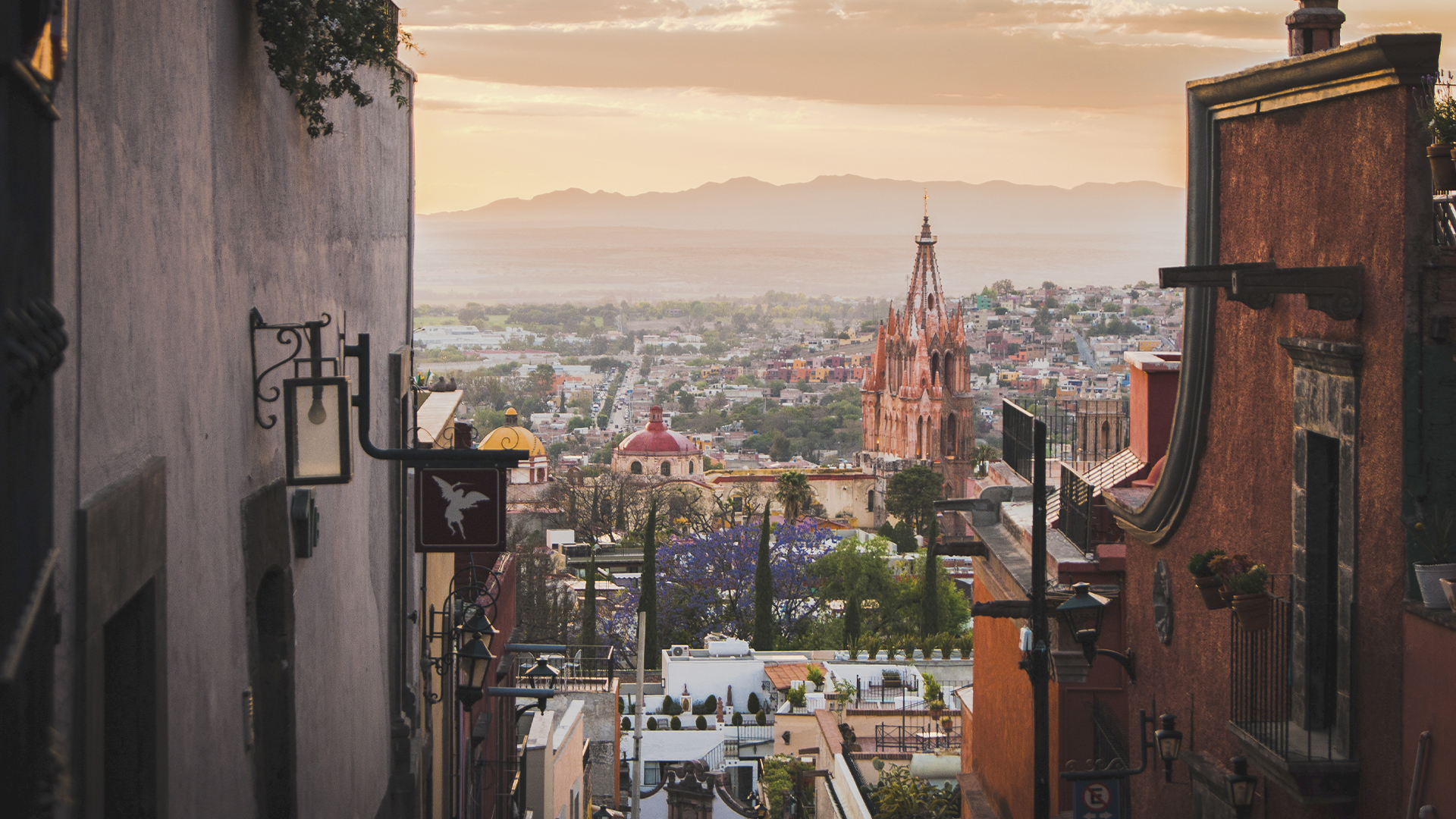

The dawn breaks in shades of pink, and before the first espresso, the town breathes. There are places that etch themselves into your memory before they do into your eyes. San Miguel de Allende sounds like bells and heels on stone, spoons clinking against coffee cups, paintbrushes resting, and folk music. We only have two days to walk amidst the light, amidst living art, hand-painted chapels, and a garden that hides a canyon.

Day 1: Morning
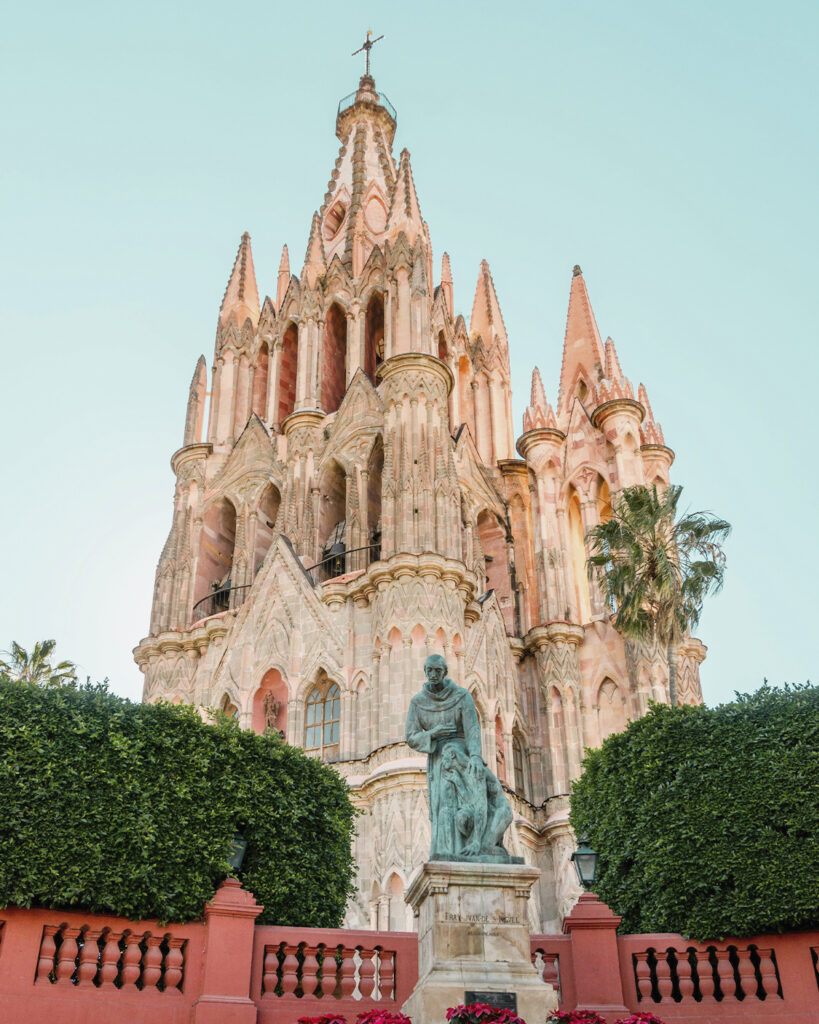
I sit in front of the Parish of Saint Michael the Archangel. At this hour, the courtyard belongs to the locals and the sparrows. But not for long, because soon curious visitors will appear, speaking English or French. The city is a magnet for those who want to experience a global version of Mexican culture. And there it is: a stone spire piercing the sky, photographed a thousand times. Remember that the church has visiting hours, and it’s always a good idea to check whether or not there’s a mass if you want to explore the interior at your own pace.
“The pink quarry seems to have just been lit up, and I think of Zeferino Gutiérrez, the self-taught stonemason who, in 1880, redesigned the façade with neo-Gothic elements inspired by European postcards, because the church was on the verge of collapse.”
It’s early, and I’m in the mood for a cup of coffee that smells of patience. I walk down Loreto until I come across Lavanda Café, fresh-ground coffee at the counter, food served until 2:00 p.m., and afternoon coffee until 5:30 p.m. They greet me with a smile and show me the sweet cinnamon bread that speaks to their experience working in the oven, along with a phrase that serves as a motto: “we take our time.” I sit in the back, by the large window, and sketch the route on a napkin. “It’s not every day that a cloud shaped like a bell tower appears,” I write in my notebook.
Two days, many stories in San Miguel de Allende
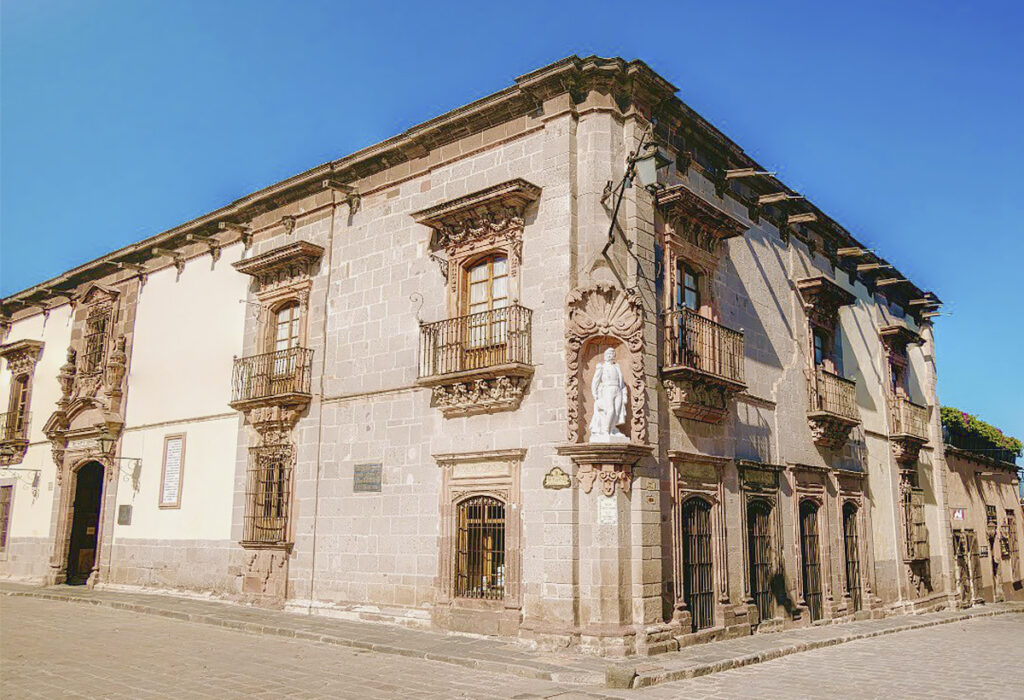
My next stop is the Casa de Allende Historical Museum, the city’s history told through a Churrigueresque mansion. The museum, the former residence of Independence leader Ignacio Allende, highlights the importance of San Miguel el Grande as the commercial hub of the Bajío region and recreates the pulperías. Don’t think of the rich bounty of the sea. That’s what the stores were called where goods from the ranches of San Miguel were sold. It also preserves a document containing the indictment and sentence that led to the execution of the national hero, who was condemned by the Spanish as a traitor; he was shot in the back, and his head was severed and displayed as an exemplary warning to insurgents.
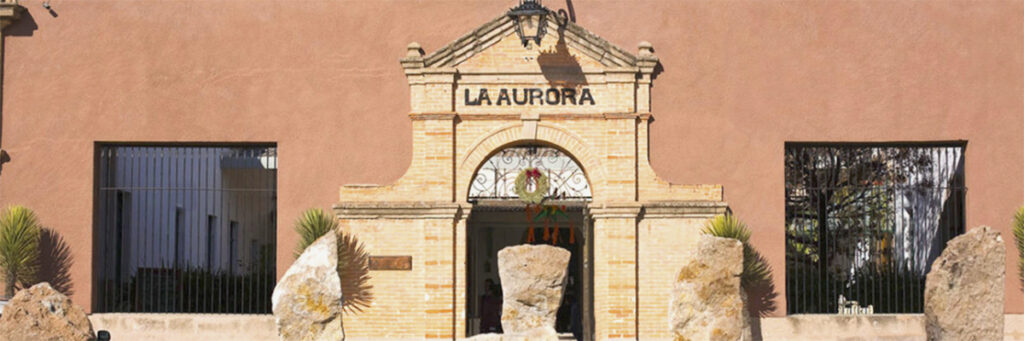
I cross the Jardín de Allende, which stays green year-round thanks to its laurel trees, and walk about 15 minutes toward the old textile factory that has been converted into a vibrant hub of workshops and galleries. At the La Aurora Factory , the walls retain a certain industrial pulse: echoes of threads, looms, and the toil of its 500 workers. But what can be heard now are frames resting on the floor, hushed conversations, and the chisels shaping a sculpture.
I wander in and out of studios, flip through catalogs, order a bottle of mineral water, and watch an oil painting dry in silence. It’s easy to lose track of time here for a couple of hours, amid blown glass, antique shops, and open studios. I round out the morning with a light lunch at the Café de la Aurora: paninis, salads, desserts, and coffee, sheltered from the studios. Ideal for a break before the next stop. If I had a little more time, I probably would have chosen Cumpanio, a spot with a hundred years of history, a Franco-Italian heritage, and a pride in well-crafted dishes, without any vague gastronomic experiments. Their scallops and Milanese cutlet brighten up the day and give me the strength to carry on.
Afternoon
I head back to the Ignacio Ramírez Cultural Center—also known as “El Nigromante”—to see the Siqueiros Gallery. The unfinished work *The Life and Work of Generalissimo Don Ignacio Allende* showcases the mastery of the muralist who once sought to kill Leon Trotsky. Two blocks from the garden, I return once again to Dôce 18 Concept House: a courtyard, several shops, fashion for those who shop in dollars, and a place where, with a drink in hand, you can sit down and relax.
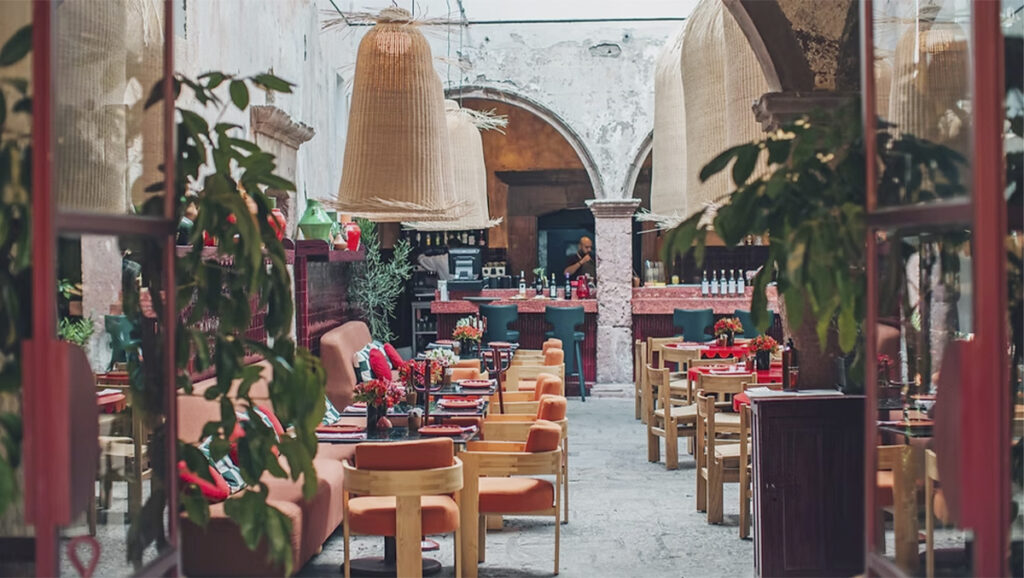
I’m uploading to Trazo 1810, seasonal cuisine faithful to tradition yet bold in its offerings, and a terrace with the best view of the parish and the city. Make a reservation at sunset, order a cocktail, a tequila, or a mezcal, and you’ll understand the city. Another view, somewhat different but equally splendid, is offered by Luna Rooftop, the bar at the Rosewood Hotel. There’s live music on some Fridays, and you should also make a reservation if you want to go at sunset. Plus, the hotel has a packed schedule of experiences. For example, in the Pirules garden, you can learn to grill. And if you’re a guest staying at the hotel, you might be lucky enough to get an apron and a chef’s hat. I still have mine. And a good day deserves a good ending: a mezcal tasting at La Mezcalería.
Day 2: Morning
The second day calls for clearing your mind and setting out in search of the invisible. The Cañada de la Virgen is nestled among the hills along the Laja River basin. It was built by the Hñahñu, the “men who speak with their noses.” The archaeological site is unique. Unlike other ceremonial sites, it faces west and is dedicated to observing astronomical phenomena related to the Sun, the Moon, and Venus. A visit to the complexes, courtyards, and collections will likely take at least two hours. But remember that you are in a place where the universe is measured and observed.
At lunchtime, a good idea is a leisurely lunch at The Restaurant. Donnie Masterton is the owner and chef. His life, between the heat of the stoves and the never-ending parties in Hollywood, seems like any chef’s dream (complete with some of their nightmares). Eventually, Masterton settled in San Miguel, and his menu features dishes from Asia, Italy, Mexico, and the United States. But it’s home-style cooking, at a price that seems more than reasonable today, and an elegant experience akin to dining at some of the city’s finest homes.
Afternoon
Even if it’s hot, the afternoon is worth a visit to El Charco del Ingenio, a botanical garden and nature reserve set around a canyon where we can admire agaves and nopales, succulents from all over the country, and understand why the conservation of our native flora is everyone’s responsibility. And so we don’t get too serious and can return to our childhood, a visit later to the Museum of Traditional Mexican Toys will bring back the smile of our childhood. Teacher Angélica Tijerina collected more than 3,000 pieces over 57 years, which are now on display. The museum, known as La Esquina, has five galleries and pays tribute to the master toy makers of Guanajuato.
Night
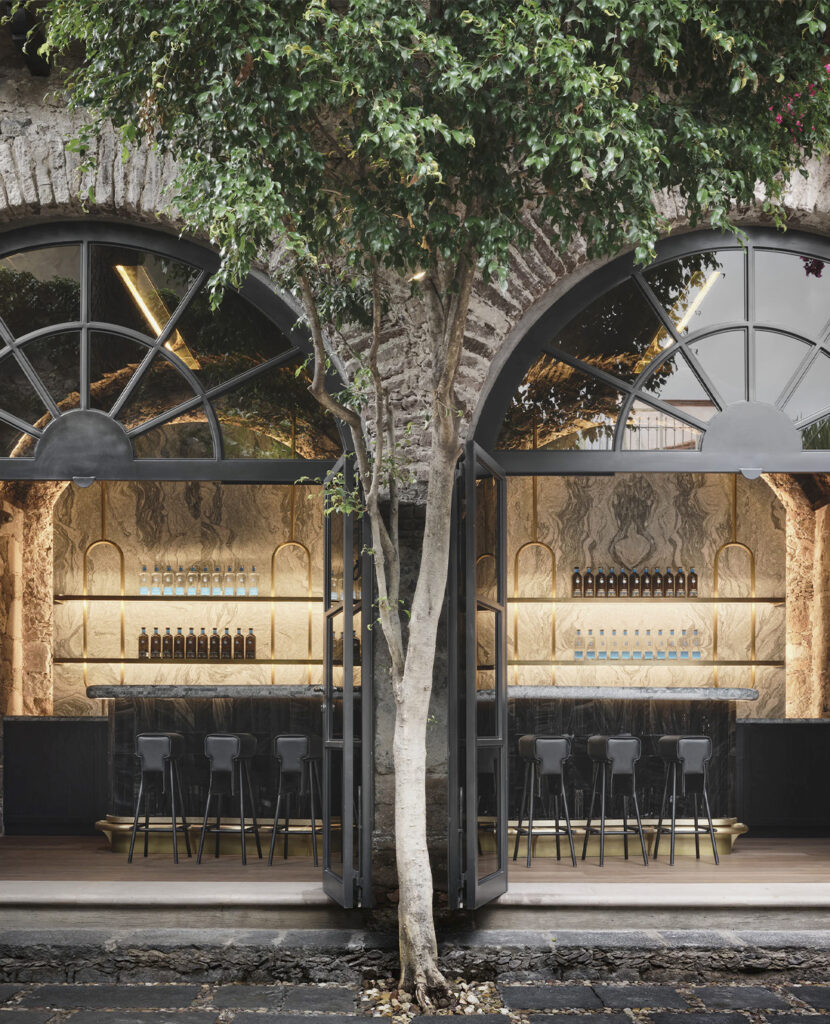
Our 48 hours deserve a grand finale. Casa Dragones Tasting Room, “the world’s smallest tequila bar,” with six seats at Dôce 18. The obsidian cube is a creation by interior designer Gloria Cortina. A piece of obsidian made up of 4,000 iridescent mosaics. And if we’re still up for it, we’ll finish with a visit to El Manantial, a cantina with a seafood menu. It’s open “from afternoon until late.” A policy that we travelers appreciate.
To make the most of your trip: a 48-hour guide
Ignacio Ramírez “El Nigromante” Cultural Center (Fine Arts): Unfinished mural by Siqueiros and workshops. Mon–Sat 10:00 a.m.–6:00 p.m.; Sun 10:00 a.m.–2:00 p.m. 75 Hernández Macías. World Heritage Cities
Shrine of Jesús Nazareno in Atotonilco: Popular Baroque and mural painting; part of the UNESCO site “San Miguel and Atotonilco”, “one of the most beautiful examples of Baroque architecture and art in New Spain”. Check the sanctuary’s liturgical schedule. UNESCO World Heritage Centre
San Francisco Church: Late Churrigueresque façade; a masterclass in stonework. Two blocks from the Main Square. U.S. News Travel
Oratory of San Felipe Neri: Altarpieces, chapels, and stonework; a key feature of the Historic Center’s sacred landscape. Insurgentes 12. World Heritage Cities
Church of Our Lady of Health: A façade featuring a monumental conch and an intimate atmosphere in Plaza Cívica. Soledad 7. On a Stroll
Santa Ana Public Library & Theater: Schedule of films, plays, and talks; a great place to read. Insurgentes 25; Mon–Fri 10:00 AM–5:00 PM; Sat 10:00 AM–2:00 PM. The Public Library
To keep exploring this thread, visit our purposeful travel section; you can also continue through 48 hours of art and culture.