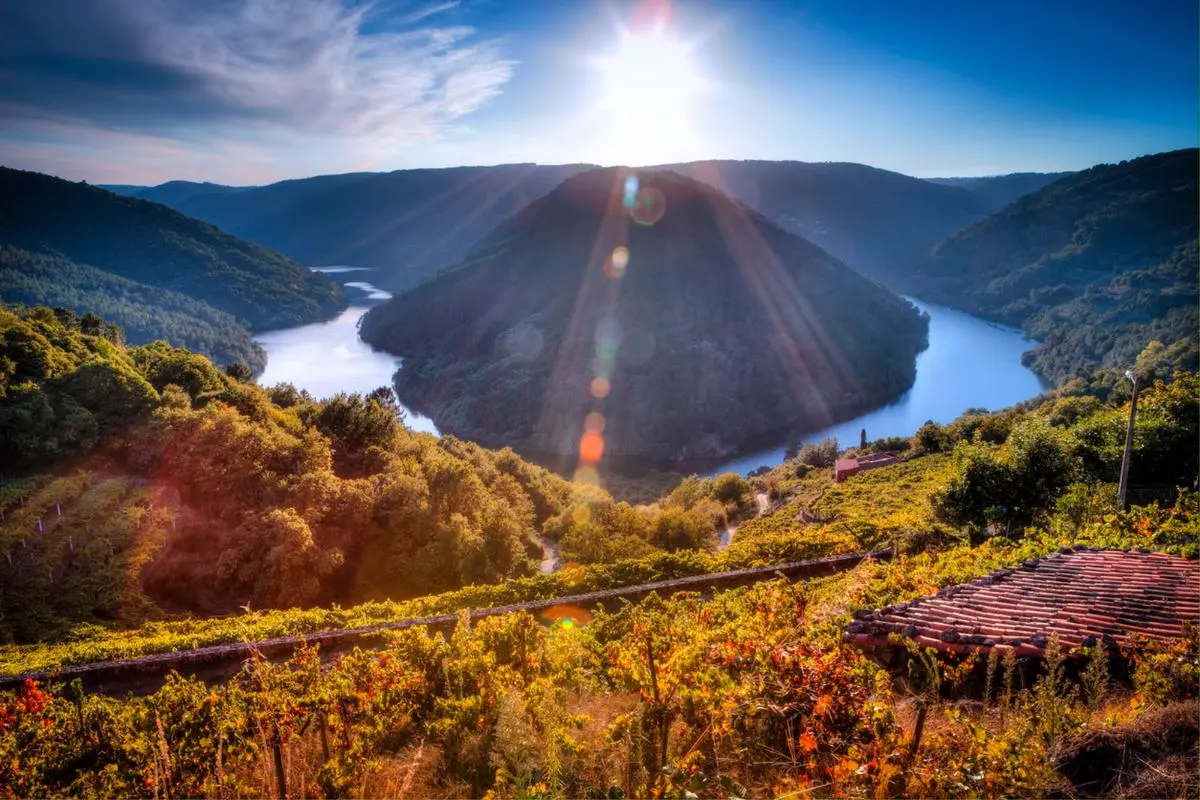

The Ribeira Sacra is one of those destinations you want to visit both for what you see and experience—dramatic landscapes, art, history, and cuisine—and for what you can only sense once the noise fades away. The silence, sometimes gently interrupted by birdsong or the rustling of tree branches, explains why for centuries it was the destination of hermits and monks seeking the ideal setting for contemplation.

This region, comprising 26 municipalities in the south of the province of Lugo and the north of the province of Ourense in Galicia, Spain, lies nestled between the riverbeds of the Miño, Sil, Cabe, and Bibei, which have shaped a landscape of canyons where chestnut and oak trees—typical of the Atlantic forest—thrive. For example, on the slopes, terraced vineyards produce some of the most interesting wines in the northeastern part of the peninsula.
In addition, the area is home to some of the most important examples of Romanesque monastic architecture associated with the Benedictine Rule on the Iberian Peninsula—and perhaps in all of Europe—whose influence can still be felt today in the culture of its inhabitants.
On this trip, we’ll be based at the monastery of Santo Estevo de Ribas de Sil, and we’ll travel along roads that require skill to navigate, climb up to lookouts not suitable for those afraid of heights, and take a closer look at the stone ruins built by those monks.

The Monastery of Santo Estevo and the Magic Rings
We arrived at the Monastery of Santo Estevo de Ribas de Sil in the afternoon. The road winds downhill through curves and forests of chestnut and oak trees which, even though it is spring, display the reddish hues of an early autumn. The curve that opens up to the impressive complex that was once a Benedictine monastery leads us into one of the best-preserved sites.

Located in the small municipality of Nogueira de Ramuín, the building retains elements of the Romanesque, Gothic, Renaissance, and Baroque styles. The monastery has three main cloisters: the Bishops’ Cloister, the Gatehouse Cloister, and the Kitchen Cloister. And the entire complex, including the parish church located next to it (which costs 2 euros to visit), reminds us of an ancient medieval legend.
The Legend of the Nine Bishops
In the early 10th century, nine bishops retired to the monastery, leaving behind their benefices and privileges to devote themselves to prayer and contemplation. After their deaths, they were buried in the church, and their rings were transformed into miraculous relics that cured illnesses, which attracted pilgrims and, consequently, brought wealth to the monastery.
A legend that has received a curious sort of confirmation, since during a recent restoration, a bag containing four of these supposed miraculous rings was found, along with a manuscript that read: “These four rings are what remain of the nine Holy Bishops. These are the ones that remain. (sic) The others disappeared. Water is poured over them for the sick, and many are healed.”

Today, the complex is a Parador Nacional. The hotel has 77 rooms, a spa, and a restaurant. Ours, a standard double room, did remind us of monastic austerity, with its stone windows opening onto the lush forest landscape; however, as is still the case with some Paradores, it needs some updates to make the stay even more pleasant. In the restaurant, you can find examples of the local cuisine, such as vegetables (delicious grilled leeks), seafood (if in season, cockles are a perfect choice), and a short but interesting wine list to treat yourself to a taste of the Ribeira Sacra wine region.
San Pedro de las Rocas
The winding, narrow road leading from Esgos to San Pedro de las Rocas is a showcase of the area’s landscape. Lush forests, curves, and streams that these days cascade into small waterfalls. We have chosen this first destination because it was here that one of the defining moments of Romanesque art took place.
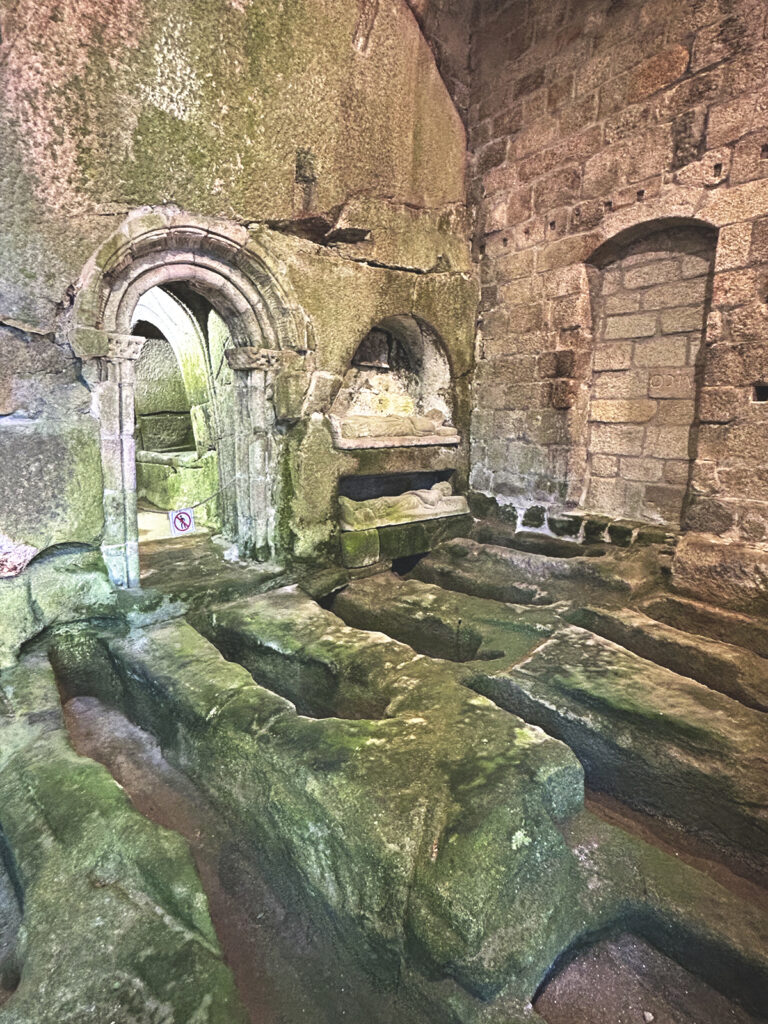
A monastery carved out of the rock
San Pedro is considered the oldest monastery complex in the Ribeira Sacra. Today, it features three chambers carved into the rock, and a series of anthropomorphic tombs carved into the floor can be seen.

The church houses several 12th-century frescoes depicting a world map of the territory known at that time. Adjacent to the complex is the Ribeira Sacra Interpretation Center, which is very interesting (and free), where you can learn about monastic life in the Middle Ages and how many of the trades necessary for maintaining the monastery and its surrounding lands have been preserved in Galician history up until recent times.
Saint Cristina of Ribas de Sil

The ancient monastery of Santa Cristina de Ribas de Sil dates back to the 10th century and is considered one of the jewels of Romanesque architecture, situated in a natural setting in the Sil River basin. The complex (which costs 2 euros to visit) includes a single-nave church with a Latin cross plan and three apses. It also features a bell tower and the remains of a cloister. The monument is situated in an area designated as a site of cultural interest.
Viewpoints overlooking the Ribeira Sacra
Surrounded by chestnut trees, if you visit the area during harvest season, please remember that these trees belong to the local residents and that harvesting them is part of their way of life. In the villages of the region, you’ll find products made from this fruit, which is still used today as a key ingredient in stews and to make the flour used to bake the famous chestnutbicas or San Martiño cakes. In the surrounding area, just a few kilometers away, along a road where we’re surprised by a patch of fog that we quickly drive through, we reach the Cabezoás and Madrid viewpoints overlooking the Sil River. Here, the landscape unfolds from above, and we can see the terraced vineyards in the distance.
The Heroic Viticulture of the Ribera Sacra
In the Ribeira Sacra, the traditional art of winemaking is known as “heroic viticulture.” This technique is characterized by slopes that often exceed 30 or even 40 percent, as well as by the organization of the land into stone terraces and a high degree of land fragmentation. This model has its origins in the monastic communities that organized the territory since the Middle Ages, and has made it possible to maintain vine cultivation on the slopes of the Sil and Miño rivers, establishing a direct relationship between topography, human effort, and agricultural continuity that defines the landscape and results in wines of great character. Among the most widely grown varieties are Mencía for reds and Godello and Albariño for whites.
Wine Tasting Among the Terraced Vineyards at Alma Das Donas
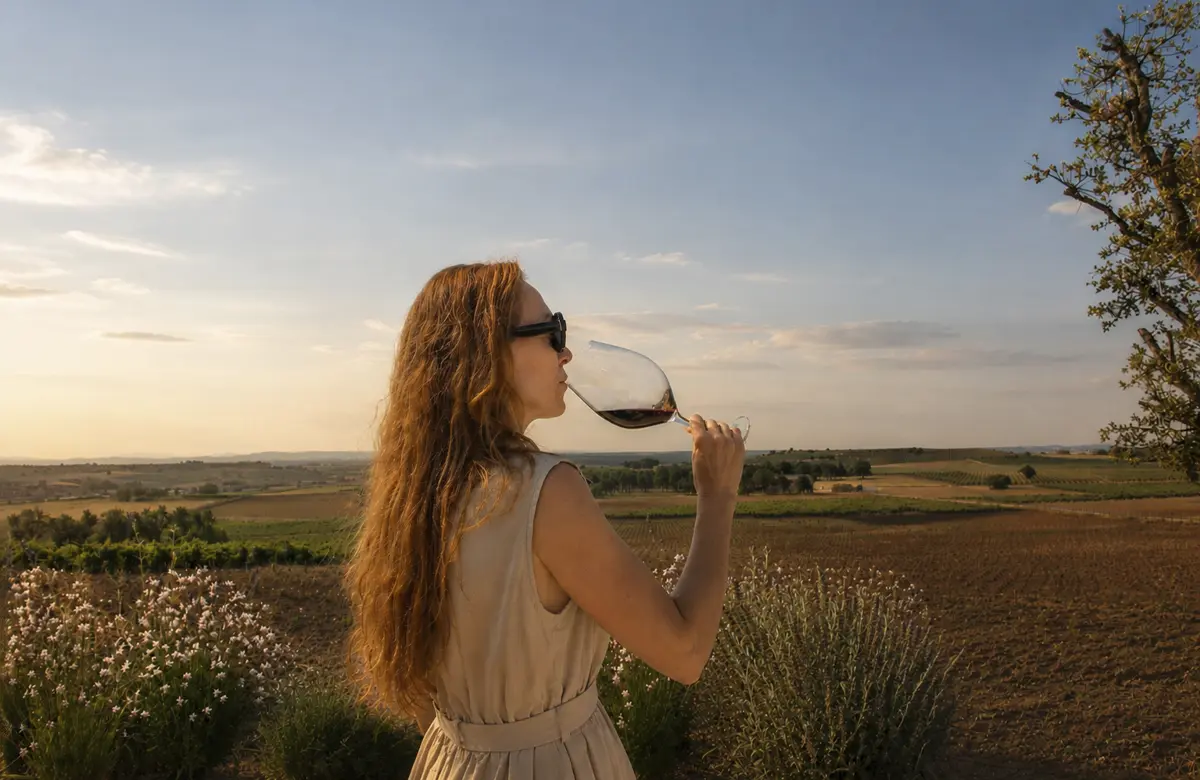
If you’re traveling through this area, be sure to visit Alma Das Donas. Situated on a south- and southwest-facing hillside very close to the river, it enjoys a unique microclimate that is ideal for its vines, which are over 50 years old. You can visit starting in March, take a tour of the vineyards, and enjoy a tasting of three wines—a tour that lasts about an hour and costs 20 euros.

For cheese lovers, one of the best options is to visit the town of Chantada in Lugo. In addition to its impressive architectural and artistic heritage, the town is home to the Airas Moniz cheese factory, which, according to experts at the Salon de Gourmets, produces Spain’s best blue cheese, Savel. This culinary venture was born out of a drastic break.
The owners decided to raise Jersey cows on pasture, using their raw milk to produce this delicacy. They offer guided tours where you can meet the animals and learn about the production process, and you can opt for a tasting at the end of the tour for 48 euros. And if your visit to the municipality happens to coincide with the 5th or 21st of the month, you can find the best local products at the farmers’ market.
Lado: Young, innovative cuisine in rural Orense

We left behind the dramatic landscape of the Ribeira Sacra, with its chestnut and oak trees and monasteries, to take a detour to the Baixa Limia-Serra do Xurés Natural Park. It’s nearly a two-hour drive (about 150 kilometers) from Santo Estevo, and the park covers 30,000 hectares with an average elevation of 1,000 meters above sea level, home to roe deer, golden eagles, and many other species of mammals and birds, as well as the famous “piedras cabaleiras,” granite boulders of glacial origin.
In one of its municipalities, Muiños, lies Lado Restaurante, a young venture that showcases the direction in which modern Galician cuisine is heading. After finding success in Lugo, its founders, Borja Piñeiro and Elia Pereira, decided to return to the rural area of Ourense to reopen their restaurant within Casa As Fontes, the former family home now converted into a small 14-seat dining space.

The menu consists of two options that change with the seasons and market availability: Brétema, an 8-course meal, and Lado, a 14-course meal. Both offer a journey through the roots of the Galician land, the result of the mountains’ proximity and a delicate approach to techniques and cooking methods.
A menu inspired by the Galician countryside
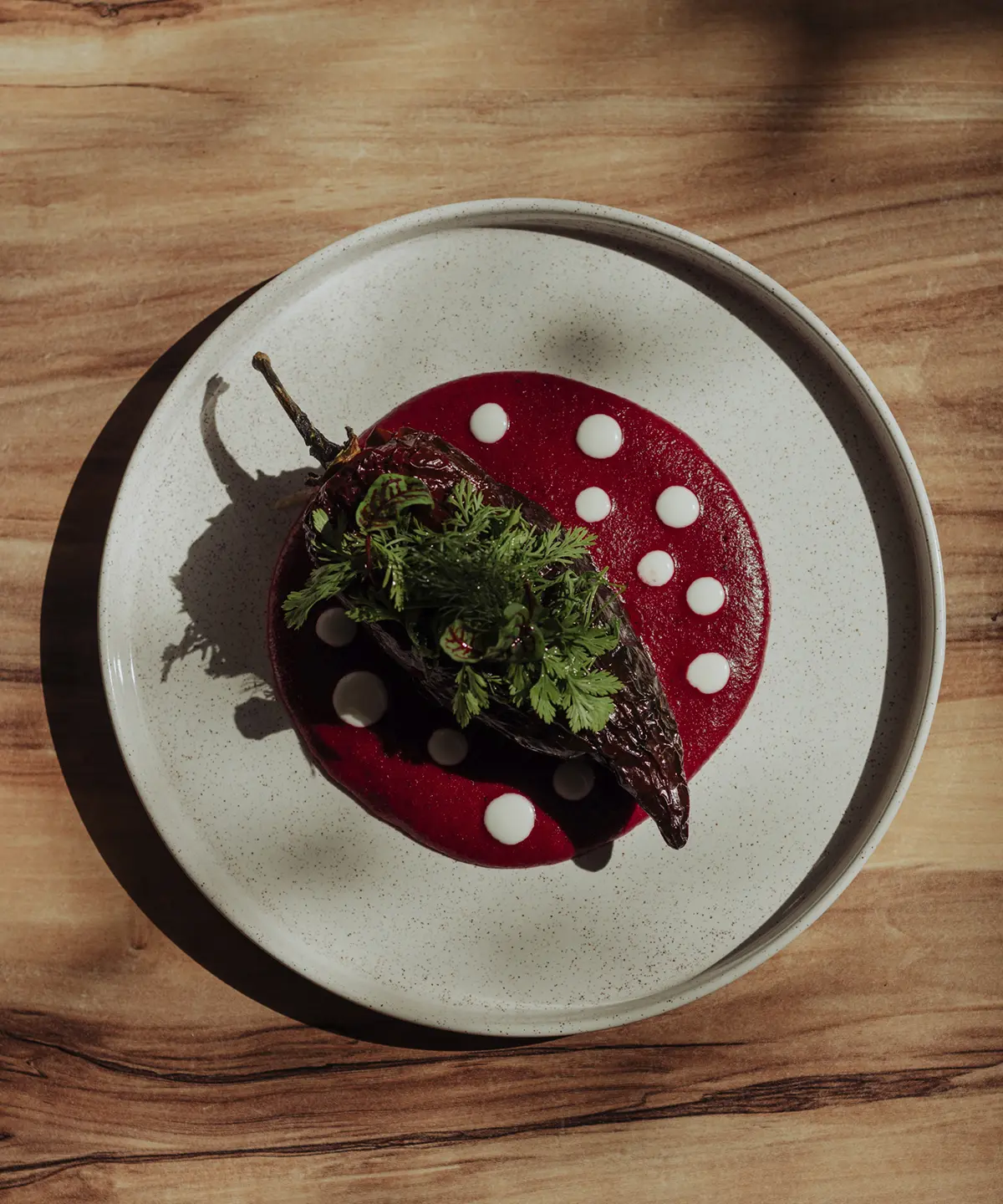
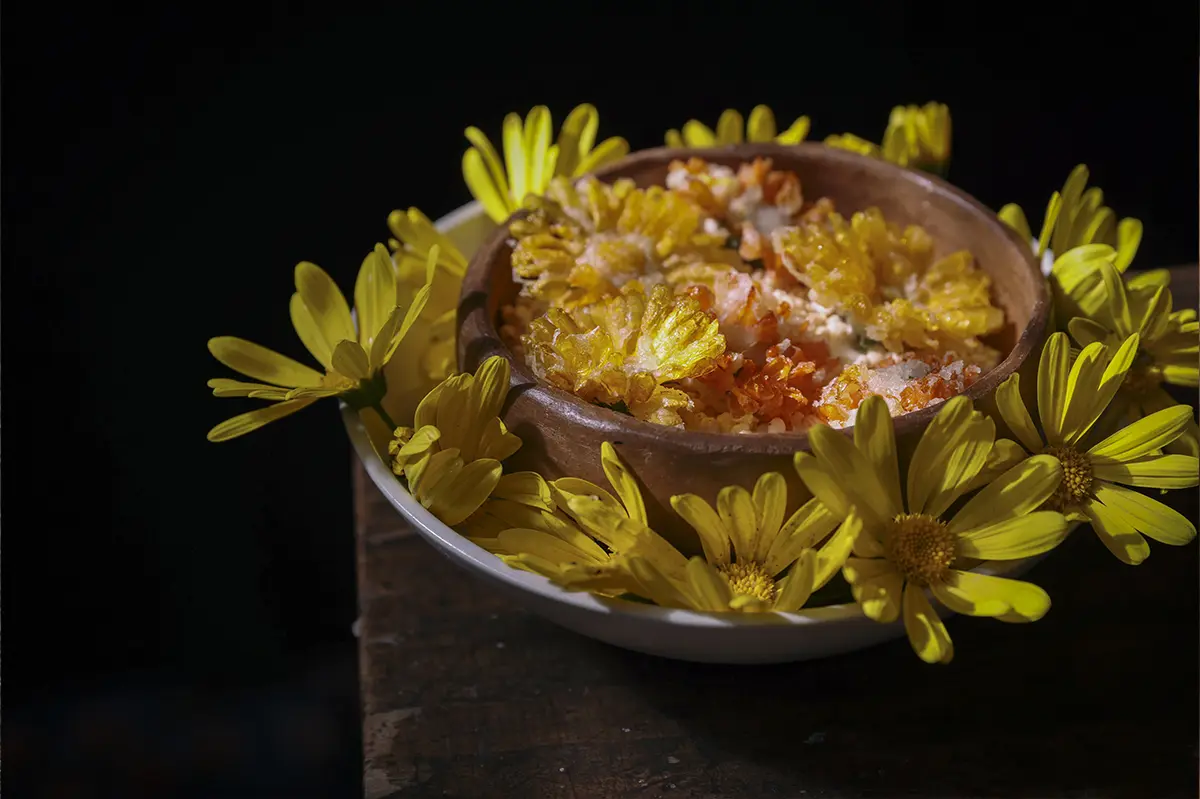
Highlights from the menu include the richada and cabbage filloa, dried and candied pink tomatoes with sour cream and lemon-rosemary oil, a delicate seafood carpaccio with codium seaweed and strawberries, or Mos rooster (a native Galician breed) served with apple, celery, and wheat. The desserts, created by Elia, offer a journey ranging from the freshness of raspberries with kefir and vanilla to the classic pain perdu with honey cream and tonka bean. The menus are priced at 50 and 75 euros, respectively (drinks not included).

Beyond the cuisine, Lado embodies the idea of a leisurely journey into the inland north of Galicia: a long meal, the scent of damp wood, and the feeling of having found a place far removed from the hustle and bustle. Because traveling in Galicia is also about knowing when to veer off the main road.
Explore more trips at AW magazine.
To keep exploring this thread, visit cultural destinations with soul; you can also continue through restaurants with history and flavor.