
The relationship between intellectuals and soccer has been as intense as it has been contradictory.
“Everything I know for certain about morality and human obligations, I owe to soccer,“ the French writer and philosopher Albert Camus once said. As a young man, the author of *The Stranger* played goalkeeper for Racing Universitario d’Alger (RUA) from 1928 to 1930.
Soccer: Intellectualism and Base Passions
For his part, his contemporary—the slightly less optimistic George Orwell (we can’t quite picture him wearing a soccer jersey)—author of 1984, describes this sport in the very pages of his famous dystopian novel almost as Marx described religion—as the “opium of the people.”
“Hard physical labor, taking care of the home and the children, petty arguments with neighbors, movies, soccer, beer, and, above all, gambling filled his mind. It wasn’t hard to keep them at bay,” the book states verbatim.
We wouldn’t want him there with us while watching a Mexico-Argentina or Spain-Germany game.
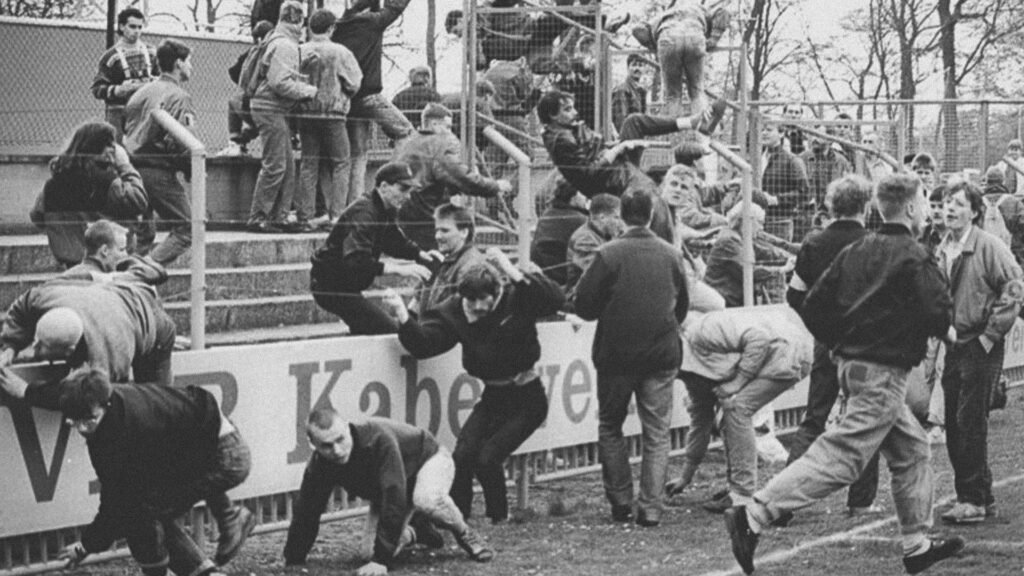
Intellectuals such as the Argentine Jorge Luis Borges criticized soccer in their day. Borges believed that this sport stirred up “the worst passions,” giving rise to toxic nationalism and “a tribal need for superiority.” And perhaps that’s true—the bitterness is part of the game’s charm.
Why Messi Would Be Borges in a Parallel Universe
Surely the author of Ficciones would hate the analogy made by the Mexican Juan Villoro proposes in his book *Dios es redondo*: “If I were to draw analogies between soccer and literature, Messi would be Borges—just imagine that left foot writing!—and Cristiano would be Paulo Coelho—lots of marketing and success, but no depth.”

In the same vein, Carlos Vela would fit the mold of J.D. Salinger: someone who sacrifices his career just to avoid having to explain himself. Vela, whom fans have all but forgotten today, was a player on the Mexican national team who repeatedly turned down national team call-ups simply because he preferred to watch the NBA. That is indeed a practical philosophy that undoubtedly irritated die-hard fans.
On one occasion, Vela mentioned that soccer wasn’t his main passion and that he preferred other sports, such as NBA basketball. That is indeed a practical philosophy that undoubtedly irritated the die-hard fans (and rightly so).
Umberto Eco added fuel to the soccer fire with his remark: “I don’t hate soccer; I hate soccer fanatics. The fan has a strange trait: he doesn’t understand why you aren’t a fan, and he insists on talking to you as if you were one.”
Soccer and Religious Existentialism
“How is soccer like God? In the devotion many believers have for it and the distrust many intellectuals have for it,” said Uruguayan writer Eduardo Galeano, and no one should take such a statement lightly, coming from the author of powerful books like *Open Veins of Latin America*. His book *Soccer in Sun and Shadow* distilled his thoughts.
“Soccer is the only religion that has no atheists,” was another of his quotes. Although he might have made an exception for Johan Cruyff, the Dutch player and former Barcelona star—whom history considers the best soccer player in Europe in the 20th century—who did not entrust the outcome of a game to divine forces.
“In Spain, all 22 players make the sign of the cross before taking the field. If that worked, every game would end in a tie,” Johan Cruyff.
Interestingly, several of soccer’s major powers are also very religious countries. Brazil, Italy, Argentina, and Spain are predominantly Catholic; few soccer players or coaches identify as atheists.
Sunday Religion
And of course, neither in tennis, nor in baseball, nor—much less—in Olympic synchronized swimming are there churches like the one Maradona has had since October 30, 1998—his birthday—in the city of Rosario, Argentina. Perhaps we should classify soccer as the average parishioner traditionally does: a “Sunday religion.”
Or take the Spanish writer Manuel Vázquez Montalbán, whose works—in addition to the famous *Los mares del Sur*—include a novel titled *El delantero centro fue asesinado al atardecer*. “Soccer stadiums are the new cathedrals of a secular society” was another of the quotes he left behind in *Soccer: A Religion in Search of a God*, his posthumous work published in 2005.

No other sport inspires such passion, nor gives rise to urban legends such as the mass suicides following the famous “Maracanazo” (when Brazil lost at home to Uruguay in 1950) or alleged acts of revenge: On June 22, 1994, while trying to clear a cross, Escobar scored an own goal that contributed to Colombia’s elimination from the World Cup. On the night of July 2 of that year, Humberto Muñoz Castro—a bodyguard for gambling mafias—shot and killed him in the parking lot of a nightclub in Medellín.
2026 World Cup: A Surreal World Cup
In the context of the 2026 World Cup, which Mexico, the United States, and Canada are jointly hosting, an unusual World Cup reveals that this sport—even though it continues to dominate our mental landscape (Orwell, you were right)—is now being monitored more closely by that Big Brother known as FIFA (once again: how did you know, Orwell?—is keeping a closer eye on it than ever, capable of canceling a fan’s highly sought-after tickets if there’s “suspicious” activity on their account or imposing fines in the millions on anyone who dares to broadcast and charge for one of the matches in their bar.
Not to mention that one of the host nations is in the midst of a war in the Middle East against a country that has a team in the tournament.
Let’s just say it’s been a surreal World Cup so far—a bit like the script for the movie *The Goalkeeper’s Fear of the Penalty Kick* (Die Angst des Tormanns beim Elfmeter, 1972) by Wim Wenders, or perhaps like an episode of *Captain Tsubasa*, the Japanese cartoon.
“The most important of the least important things”
The Gabo Foundation’s official website features one of Gabriel García Márquez’s many reflections. The Colombian Nobel laureate acknowledged: “I think that we must not only calm soccer fans, but we must also calm human beings and change the way society functions, because outbreaks of violence in soccer are nothing more than a projection of that. We must change mindsets and bring peace to humanity.”
“I’ve never watched a soccer game, and that makes me part of an inconceivable minority,” said Carlos Monsiváis, according to a report by journalist Luis Baylón.
Finally, former soccer player Jorge Valdano —whom everyone knows as the great “philosopher and intellectual of soccer”—famously defines the game as “the most important of the least important things” and thus, in just the right measure, captures a sport that has inspired books, works of art, exhibitions, installations, and poems, but also many of the most extreme acts committed by hooligans and the like.
Perhaps that is where the true magic of soccer lies. No other activity simultaneously inspires the admiration of philosophers, the contempt of some intellectuals, the devotion of millions of people, and the ability to reflect—with equal intensity—both our virtues and our shortcomings.
As long as there are people willing to spend hours debating a penalty kick or celebrating a spectacular goal, and as long as there are artists, writers, and thinkers who dedicate paintings, books, songs, or movies to it, there will continue to be reasons to view this phenomenon as more than just a simple competition to see who gets the ball.
More on art and soccer in AW Magazine