
Soccer and art: the same thrill. It’s a bold title. Very much so. “Do they really share the same thrill?” The (pessimistic) George Orwell would disagree: “Soccer, beer, and betting filled the horizon of their minds,” he declares in his (also pessimistic) novel 1984. For him, art was not part of that opiate-like formula for the masses.

Other critics, however, have acknowledged its power. Carlos Monsiváis mocked soccer, but he understood its impact: its ability to sway the mood of an entire country. “The world united by a ball,” read the (far from pessimistic) slogan of Mexico ’86.
Guillermo Santamarina’s curatorship: beyond contemplation
Now, in the midst of World Cup year, Soccer and Art: That Same Excitement (the official title has an accent, just as Hugo Sánchez would pronounce it after his long stint in Spain) at the Jumex Museum invites us to look beyond the field. The exhibition brings together around 75 works by 69 artists and offers a different perspective on this collective phenomenon. And yes, the risk is well managed, as it finds sufficient (even more than enough) points of convergence, and the public leaves with a different perspective on the sporting phenomenon that continues to captivate the world and bring even nations at war together on the same field.
Soccer and art: that same emotion shows that sports and artistic creation, far from being opposing realms—one associated with mass entertainment and the other with aesthetic contemplation—share the same capacity to generate emotion, identity, and collective reflection
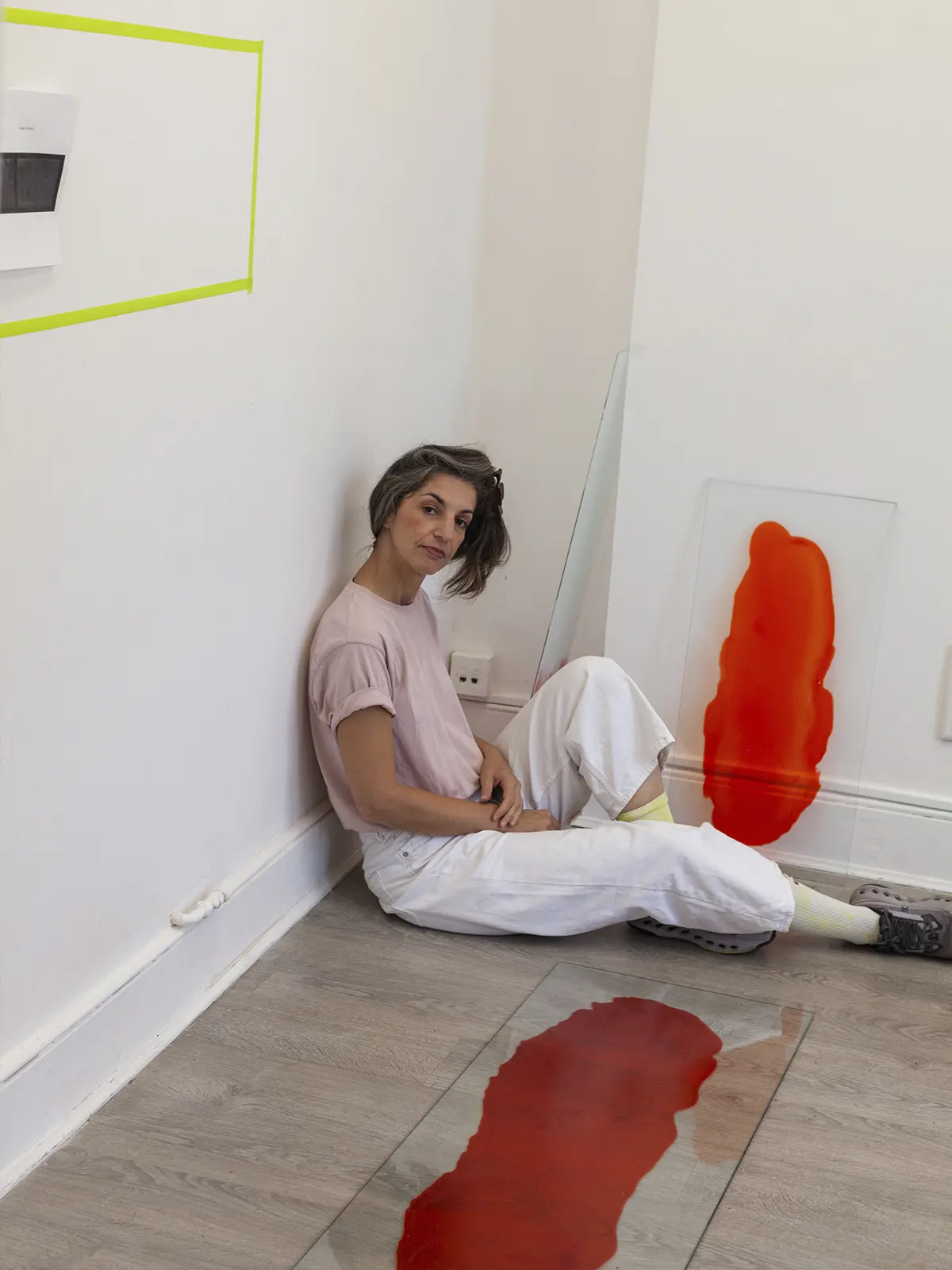
The exhibition design is the work of Guillermo Santamarina, the renowned curator and visual artist who has organized programs at venues such as Ex Teresa Arte Actual, the Museo Experimental El Eco, the MUAC, the MUCA Roma, and the Museo de Arte Carrillo Gil, among many others.

“I don’t know anything about soccer,” she admits. “I get into soccer every World Cup with a very dear friend; we have a tradition of getting together to watch a few matches.” And who better than an outsider to the soccer world to heal Soccer and art: that same emotion? Someone who has probably never worn a Chivas de Guadalajara or Cruz Azul jersey, but who possesses the right sensibility to bring soccer’s unique aesthetic into the realm of art.
Soccer and art: the same excitement, without the clichés
“I accepted the fact that it had to be a special performance. That it couldn’t just be the obvious choice. And I think we pulled it off,” he admits with the relief and excitement a player must feel when scoring a decisive penalty kick while the entire stadium watches.
“This World Cup is pretty chaotic. I don’t understand how it can be held in so many cities and feature so many matches while genocide and other atrocities are taking place. The truth is, the game doesn’t interest me at all, not even after this experience,” he reveals.
But what he finds much more appealing now is the massive phenomenon: “All the visual, symbolic, and representative aspects of soccer—beyond the sport itself—that is, everything that surrounds it.”

“The entire exhibition is, at the very least, exploring, inviting , and prompting reflection on a concept known as critical thinking,” adds Guillermo, “perhaps my naivety as a curator is particularly linked to what might be called a humanistic energy, despite a world as messed up as the one we’re living in.”
Soccer as a cosmos where fascinating patterns emerge
Santamarina has no doubt that soccer possesses a powerful force of creativity and imagination, similar to the elements that make up the world of art. “The information and intuition that tie it a little bit to magic,” he says. “Soccer as a cosmos where interesting forms emerge, not just in the immediacy of what happens on the field.”
All those devices—as he calls them—are scattered throughout that separate world he envisions Soccer and art: that same emotion, from the accessories—the uniform, the shoes, the ball—to its geographies. This entire space set aside for the game opens up to the stands, the stadium, and all its surroundings. “From the fans’ passion, the matches, the rivalries, the communities—all of this,” adds Santamarina, who never imagined that the convergence of soccer—as it is known in the other 2026 World Cup host countries, the United States and Canada—would draw such a large crowd.

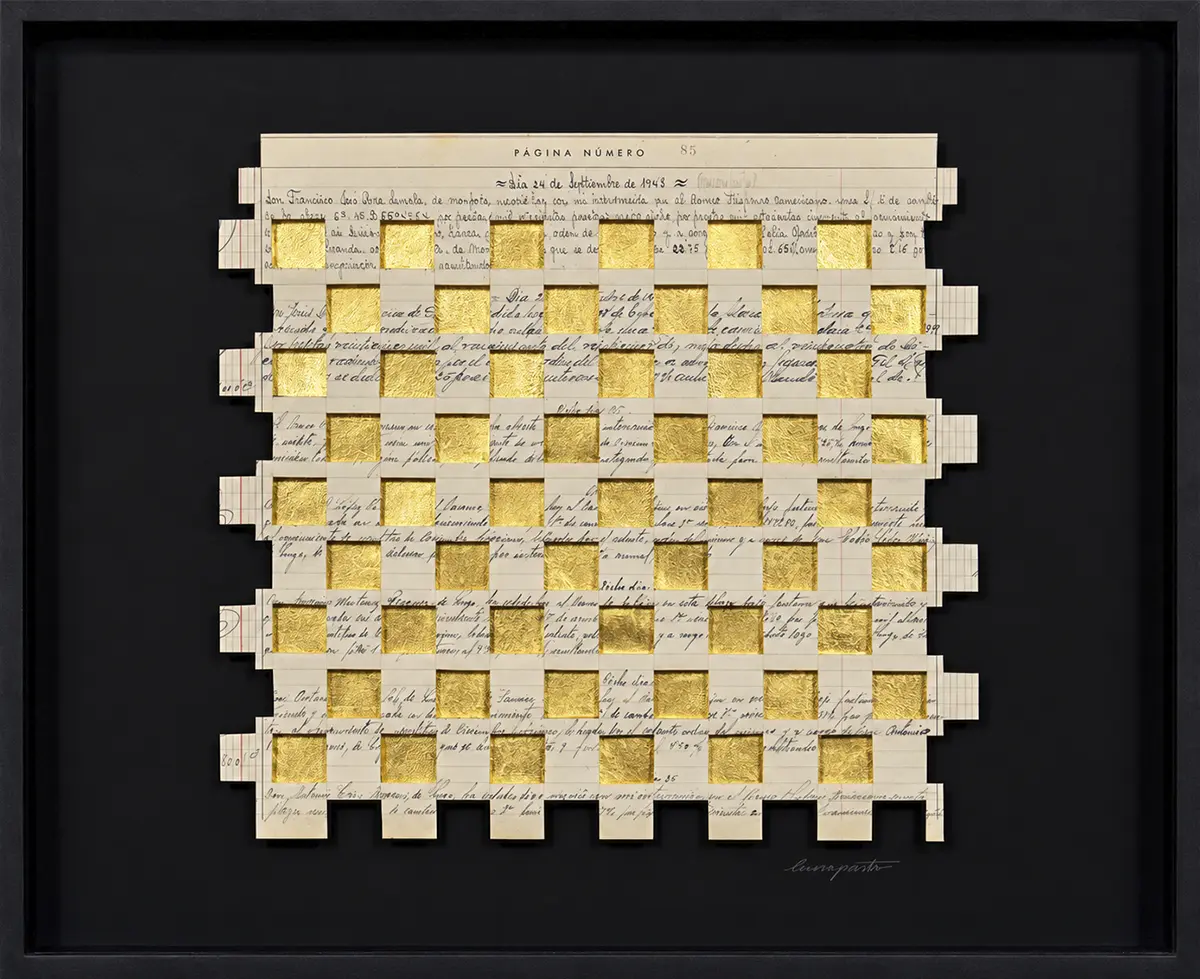
Among the artists featured are Maurizio Cattelan, Melanie Smith, and Rafael Ortega, as well as iconic works by Francisco Toledo and Manuel Rocha Iturbide.
“At first, I didn’t think it would be such a big deal. There aren’t many artists who create interesting work based on soccer. There is some work out there, but not much that’s really good.” – Guillermo Santamarina
“Yes, just as there are good and bad matches, there are good and bad plays,” I tell him. “The challenge could have been very simple, but it was much more complex in that sense, because we had to find a play that spoke more to our reality,” Santamarina says.

Soccer Stories
Soccer and art: that same excitement also revisits and showcases stories that seemed lost. Like the almost forgotten story of the Mexican women who thrashed the Austrian national team in 1970, “eleven women, now elderly ladies, who were heroines,” adds Santamarina; or the memory of artist Alejandra Laviada’s grandfather, a soccer player. “That is also an embrace of the very history of the soccer player and the relationship they have had with society. In the case of Alejandra’s piece, it is a microhistory that belongs to an intimate, family sphere, but one that is shared in a way that allows us to connect.”
The curator is quick to acknowledge Mauricio Rocha’s work in museum design: “As a soccer fan, he also presents a piece that speaks to his childhood passion and his weekly journal entries.” Nor does he overlook the vindication of performance artist Marta Minujín, who presents a work parallel to the time of the dictatorship in Argentina, in which she stands before the world atop a stadium, taking advantage of the situation “by offering herself in a way that is perhaps quite crude, but at the same time with a certain interplay of naivety and perversion,” he comments.

The Experience of Soccer and Art: That Same Excitement
From the extensive body of work presented in Soccer and Art: That Same Emotion, at least eight pieces were commissioned from artists such as Diego Berruecos, Iñaki Bonillas, Sofía Echeverri, and Tercerunquinto. “Entering the exhibition through the piece by Paul Pfeiffer—a prominent American contemporary artist known for manipulating mass media images to question consumer culture—highlights the power of synesthesia, conceived with an innocence and in a very immediate way that speaks to this almost primal need for play,” concludes Santamarina.
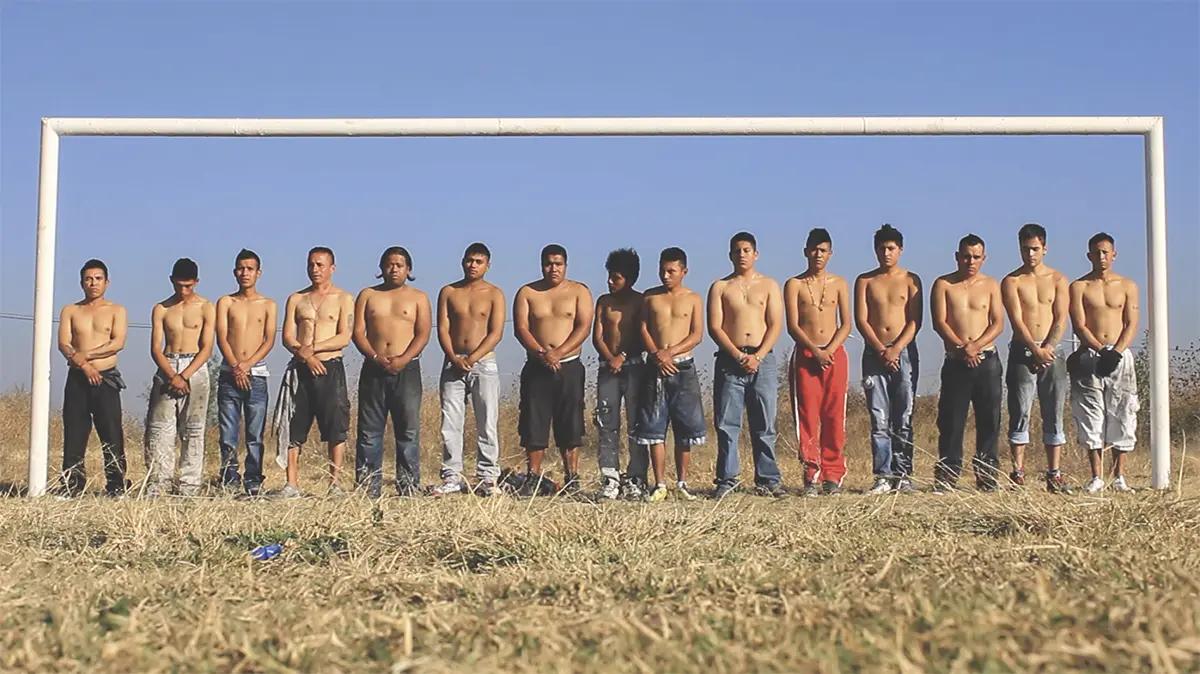
Without a doubt, it is a playful and evocative experience that resonates deeply. It is not the typical, forced-in exhibition of soccer-themed art and culture; it goes beyond the locker room and the playing field. Its themes address issues of gender, community, identity, globalism, and social and political implications, and, moreover, it is staged as a journey that begins at the installations on the plaza in front of the museum and takes us on a journey through paintings, sculptures, installations, photographs, and videos, drawing on references to soccer fields and symbols of soccer’s visual culture.
We’re willing to bet that if he were still alive, César Luis Menotti—the legendary Argentine coach who always championed soccer as a cultural force and who once coined phrases like: “You can stop running toward the opponent’s goal, the only thing you can’t do is stop thinking, ” he would surely enjoy *Soccer and Art: That Same Emotion* immensely . And yes, you’ll walk out dreaming of electric, dystopian soccer balls.
To keep exploring this thread, visit contemporary art from Latin America.