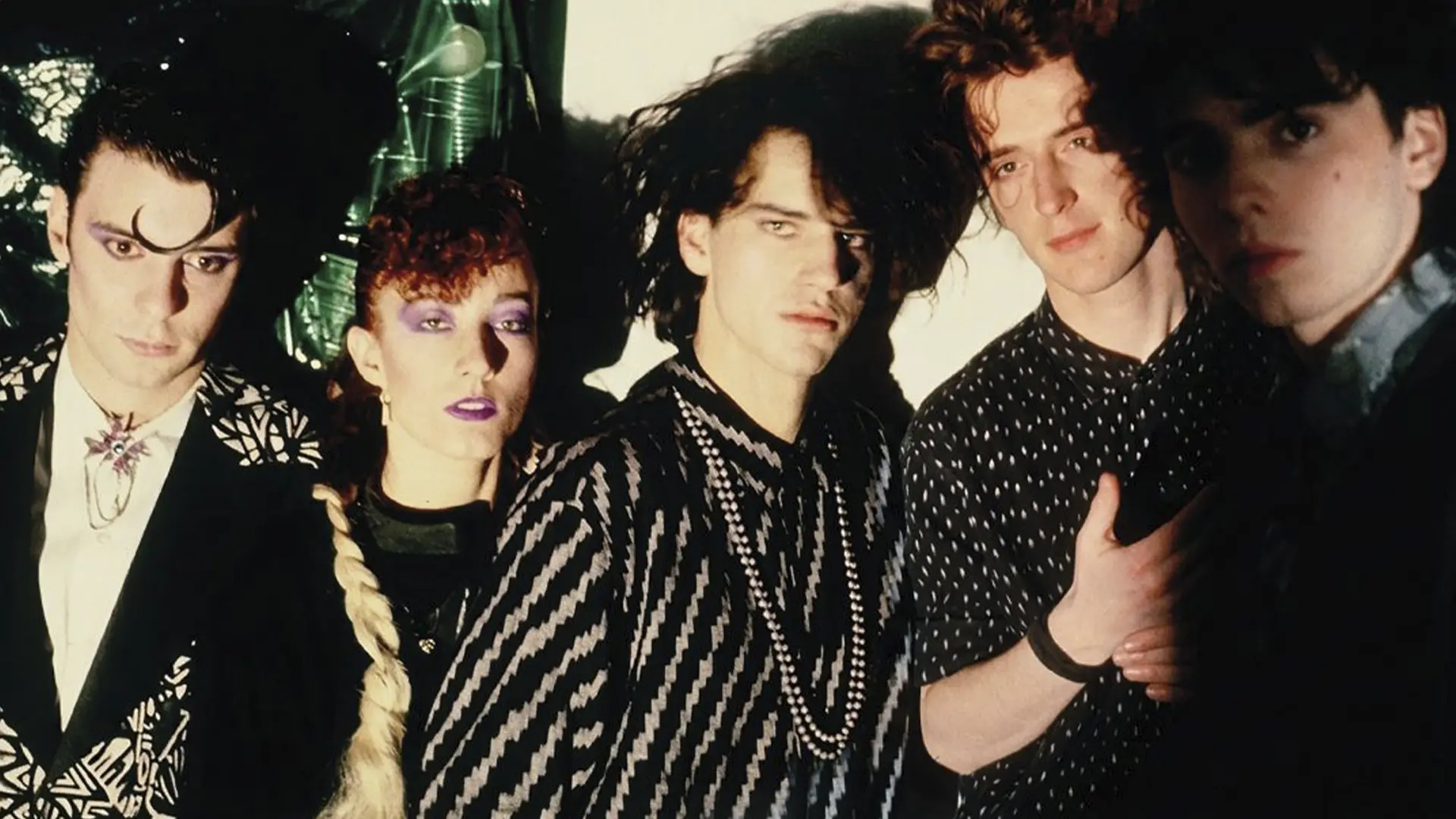

Modern Architecture: The Story of *Consumación* or *Consumo* (Vademécum, 2026), written by Argentine journalist and author Diego Giordano, recounts the making of the debut album by the band Fricción, led by Richard Coleman. The book tells the story of a moment that could have been even bigger and, among other revelations, unravels what happened that led Fricción to become a cult band rather than achieving massive commercial success. We spoke with Giordano—who is also the author of *Uníendo Fisuras* (about Soda Stereo’s album *Signos* )—as he joined us from Rosario, Argentina.

Prologue to a Story That No Longer Existed
Personally, why do you think Fricción is considered a cult band and hasn’t broken out like many of its contemporaries?
Fricción went through many lineup changes in a short period of time. The first was a quartet featuring Gustavo Cerati, Fernando Samalea, Christian Basso, and Richard Coleman. Just as they were about to start recording their first album, Cerati—due to his extremely busy concert schedule with Soda Stereo—let them know he couldn’t continue. And Coleman, in a wise decision, realized he couldn’t replace Gustavo Cerati. So he chose to expand the band’s sound with a saxophonist and a singer who could also play keyboards. But here’s the thing: there was very little time before they went into the studio, which meant that this lineup didn’t have time to rehearse or even bond as a group. And there were many other issues related to the band members’ youth. There were internal tensions within Fricción because, just as they were entering the studio to record their album and starting to perform, Charly García recruited Christian Basso, Fernando Samalea, and Richard Coleman to join his band. Fricción’s concert schedule was completely dictated by Charly’s schedule. Not even six months had passed since the album was recorded, and the band was already gone.
Did Coleman’s production and leadership play a role?
Cerati was supposed to be the album’s artistic producer, but he couldn’t do that either; he ended up just recording guitars on a few tracks. So Coleman took on the responsibility of producing the album artistically, and, as he confessed to me—and as it’s in the book—he was quite despotic, as he himself acknowledged. All decisions went through him; he had the final say. Which doesn’t strike me as crazy: it was his band, they were his songs, and he was the album’s producer, even if his methods weren’t exactly the best. Then tensions began to arise between the booking agency that managed Fricción and the record label.
The Big Misunderstanding About Friction
Did you feel there was competition or rivalry with Soda Stereo, which was also part of the group?
To me, that’s the big misunderstanding surrounding Fricción. Coleman was very clear that Fricción wasn’t an alternative version of Soda Stereo; it was a much more insular band.
Was Argentina’s economic situation during those years a determining factor in the scope of *Fricción*?
Argentina entered a period of hyperinflation that ultimately destroyed the careers of many artists and bands. Record labels began canceling contracts with bands that weren’t selling as well or were just starting out, and prioritized contracts with Charly García, Soda Stereo, and other top-selling artists. Don Cornelio y La Zona was another band that suffered the same fate: they managed to record only two albums out of the three-album contract they had. The same goes for Fricción. There were many factors that contributed to the band’s turbulent and short-lived career. If you listen to Fricción’s first album, *Consumación o consumo*, you’ll find maybe one hit, or two at most, followed by very convoluted and obscure songs. Coleman likes to call it “obtuse pop.” The record label and the agency believed they could position him as a sort of “Soda Stereo B,” so they took him to the same venues. Coleman had charisma, but he didn’t want to be Cerati or have that kind of connection with the audience.

Cover of the book *Modern Architecture: The Biography of *Consumación* or *Consumo*, Fricción’s First Album*, by Diego Giordano. Photo: Courtesy of the author.
Modern Architecture: The Book and the Album Featuring the Song of the Same Name
Why choose *Consumación* or *Consumo* instead of their next album, which was a little better known?
I really like *Para terminar* more than *Consumación o consumo*, but I decided to tell the story of *Consumación o consumo* because its origins are extraordinarily rich. It begins with Coleman and Gustavo Cerati getting together to play songs for each other between 1983 and 1984, when Richard Coleman briefly joined Soda Stereo. He went to the rehearsal space because he heard that Soda Stereo wanted to try out a second guitarist to become a quartet. Coleman played with them for four or five rehearsals and then told them, “You’re a trio; I feel like I’m the odd one out.” He left Soda Stereo, but remained very close with Cerati, and they began sharing songs at Richard’s apartment.
How do you approach writing a book about a cult band without it necessarily becoming a condensed text?
A book’s fate is unpredictable; you never know what will happen once it goes on sale. My friends tease me and say that each of my books is shorter than the last, because I tend to write in a very concise and accessible style. That’s something I picked up from my professional training—working for ten years at a newspaper: writing so that everyone can understand it, without excess or embellishments.
Ban music in English
Fricción, Soda, and Cerati all embraced Anglo-Saxon music at a time when the Falklands War was still a sensitive issue.
The Falklands issue is curious. While the conflict was underway and in the aftermath, Sumo played in Buenos Aires pubs, and Luca Prodan sang in English without any problem. There was one thing that was—like every measure taken by a dictatorship—absolutely ridiculous: banning English-language music on the radio when the war broke out. But Argentina and England have an ambivalent relationship: on the one hand, very tense; on the other, very close. Just look at what happened with the match in the ’86 World Cup: for Argentina, that was the final of the world. However, in the world of rock, the Rolling Stones are the most popular band in the country; they come here and fill stadiums. They liked XTC, whose albums were from ’82 or ’83. Coleman was lucky enough to travel to Europe in ’81 and came back with cassettes by The Clash, Peter Hammill… Cerati had started dating a Belgian girl who also came back from Europe with tons of records. They had access to information that was very sophisticated for the time. Back then, if you wanted an imported album, you first had to find out about the existence of a band like the Cocteau Twins, go to a specialty record store, and wait maybe eight months for it to arrive.

The book also discusses that moment when there was a break with the past, with previous fashions and styles.
Slowly, but with great conviction, Virus was the first band to break that mold, even though it cost them dearly (they were pelted with rocks, tomatoes, and oranges). The most popular band of the Argentine rock revival was Soda Stereo—there’s no doubt about that—but none of what Soda achieved would have been possible without Virus, because Virus paved the way.
More Than Just a Story of Friction
For the book, did you talk to Coleman and anyone else?
I spoke with a lot of people. Everyone in the band except Fernando Samalea, who didn’t want to participate. I think there were more than 30 interviews; I even spoke with the graphic designer and the photographer for the album’s artwork, who provided some great insights. It’s not just the story of Fricción, but the creative process that led to the album.
Finally, what did you learn from exploring that moment so deeply?
I was talking about this with Roque Di Pietro, the book’s editor, and he told me that something similar happened with the book on Don Cornelio and La Zona: since these bands broke up a long time ago, they were frozen in time at that moment, and there was no further material about them. Writing about this means looking again, through today’s eyes, at what first fascinated me.
Discover more books and secret stories about Ibero-American music in AW Magazine.a