From to
MAISTERRA brings together paintings and works on paper by Miguel Ángel Campano created over four decades.
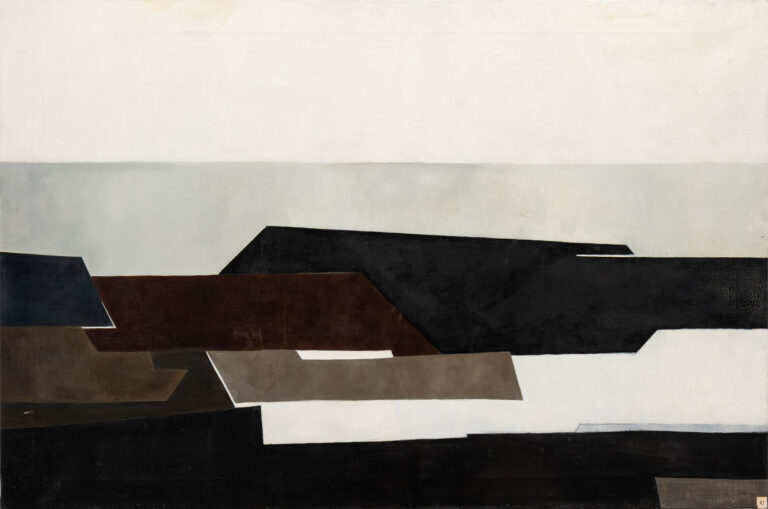
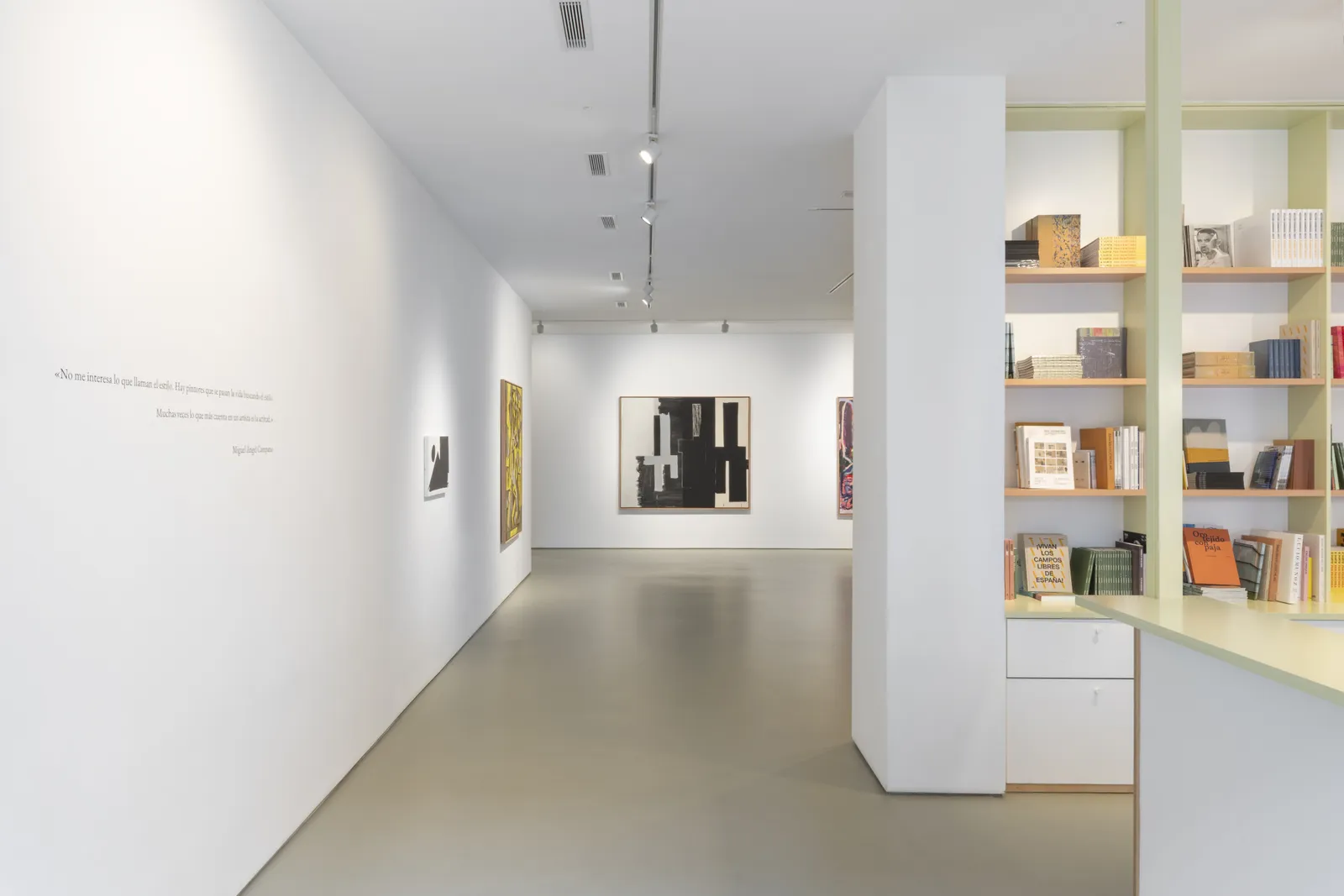
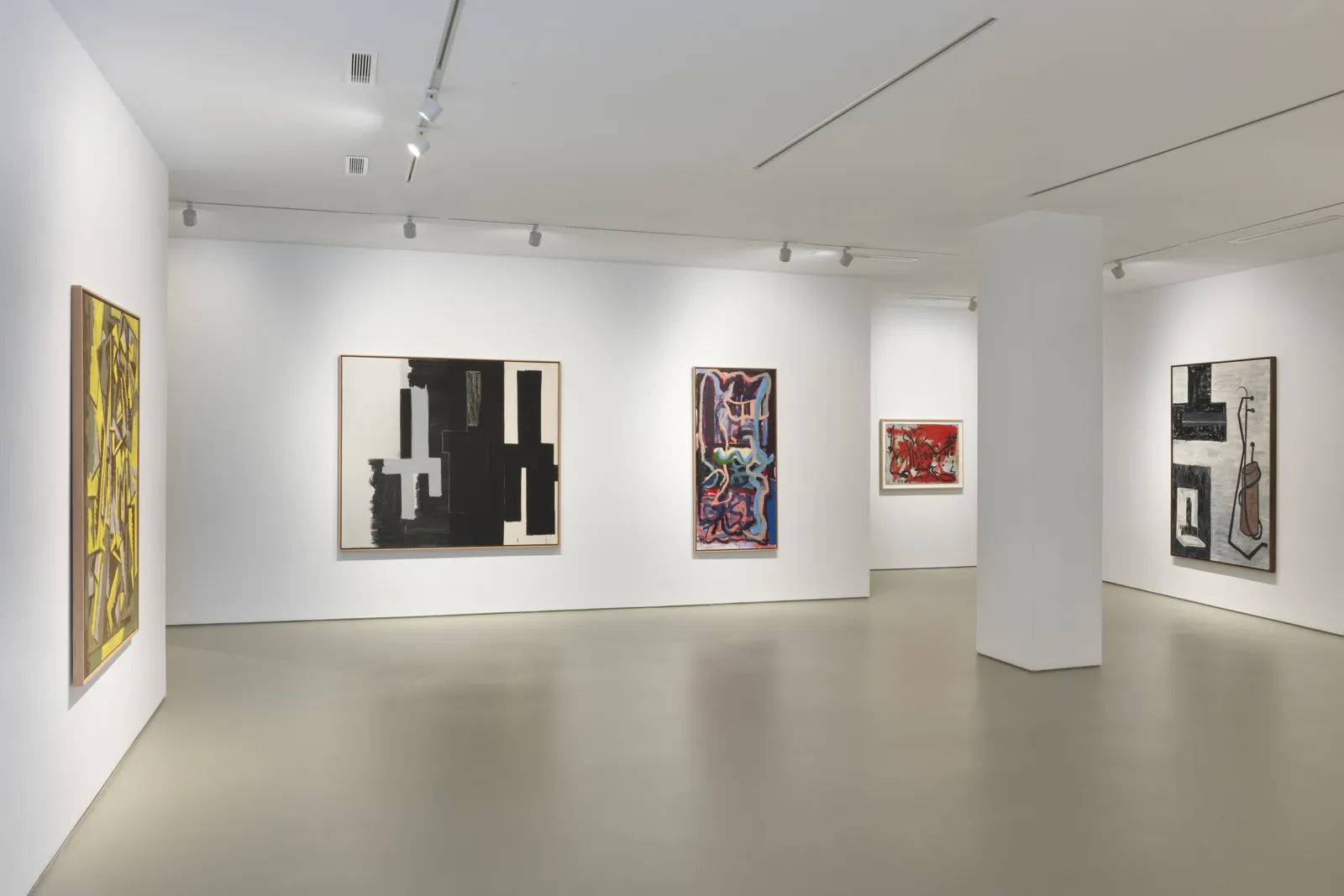
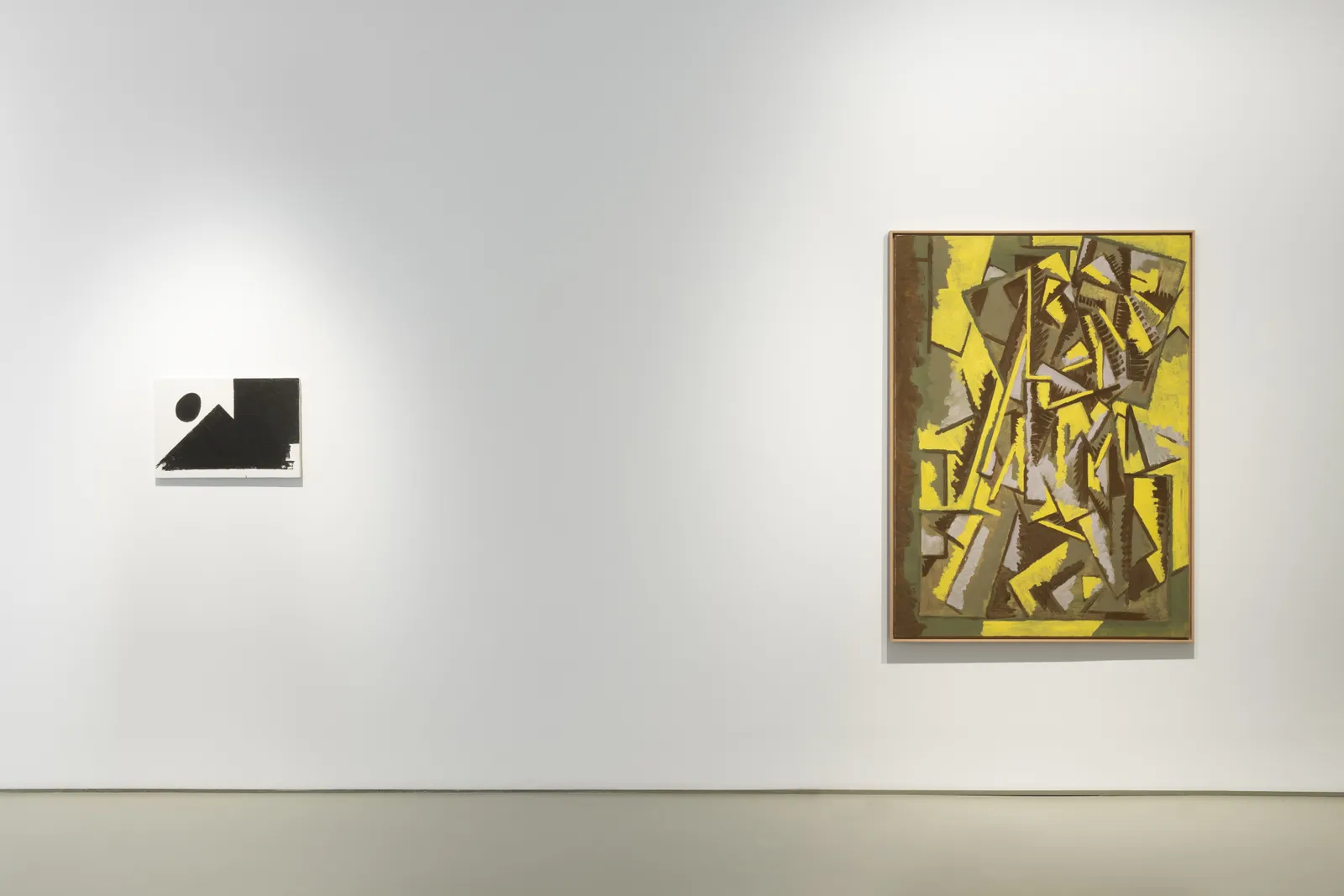
In 1979, Miguel Ángel Campano (Madrid, 1948–Cercedilla, 2018) created Voyelles 11, a composition on cardstock measuring 34 by 49 centimeters in which he used paint, graphite, and newspaper. The work is part of his exploration of the vowels in Arthur Rimbaud’s poem. Nearly thirty years later, he painted Plegaria (2006), after having gone through various phases of abstraction, large gestural canvases, and predominantly black compositions. Both works are part of the exhibition that MAISTERRA is dedicating to the painter at its location on Calle Hospital in Madrid, from September 10 to November 7, 2026. The gallery has brought together paintings and works on paper spanning four decades, with formats ranging from small compositions to canvases measuring over two meters.
Campano studied fine arts in Valencia and architecture in Madrid. In the late 1970s, he settled in Paris, where he began to work with greater gestural freedom following his early geometric explorations. His interest in literature gave rise to the Vocales series, while French painting became a constant influence in the years that followed. In 1980, he received a grant from the Juan March Foundation that allowed him to delve deeper into the study of Cézanne, Delacroix, and Poussin. It was not a matter of reproducing their paintings: Campano took certain compositions as a starting point and subjected them to successive transformations. La Grappa, created between 1985 and 1986 and inspired by Cézanne, belongs to that period.
The paintings of Ruth and Booz, created between 1989 and 1992, occupy a prominent place in the exhibition. The series is based on Summer, one of the paintings from Nicolas Poussin’s The Four Seasons, painted between 1660 and 1664. Campano worked on this composition for years, gradually reducing its narrative references. MAISTERRA presents works of very different sizes, ranging from small square oil paintings measuring 27 and 35 centimeters to a canvas measuring 190 by 142.5 centimeters, dated 1991. The Reina Sofía Museum specifically placed Ruth and Booz’s latest paintings at the beginning of its 1999 exhibition, as they foreshadowed their later work featuring large black surfaces on neutral backgrounds.
In 1994, Campano traveled to India, where he returned the following year. Those stays gave rise to paintings such as Raju and various versions of *Plegaria*. His exposure to the fabrics and colors he encountered during his travels influenced his choice of materials and the composition of his canvases. The MAISTERRA exhibition features Plegaria VI (1997), an oil on canvas measuring 250 by 260 centimeters. Also on view is Sima de los huesos (2001), alongside later works and works on paper. The selection does not strictly follow the order of the series and reveals that some lines of inquiry continued while the artist began others.
Campano received the National Prize for the Visual Arts in 1996. Three years later, the Reina Sofía Museum dedicated an exhibition to him at the Palacio de Velázquez in Madrid, focusing on his work from the 1990s. In 2019, after his death, the museum presented D'après, a retrospective of more than one hundred works that the painter had helped curate. The MAISTERRA exhibition is smaller in scale and focuses on works from various periods, including A L.C. 18 (2001) and an oil on paper from 1985–1986. The gallery revisits a statement by Campano from 2013 in which he rejected the pursuit of a personal style as the goal of painting. His successive changes in approach, evident in the works gathered in Madrid, were part of a career in which he returned several times to the same artists, motifs, and materials without necessarily repeating the results.
Miguel Ángel Campano
Miguel Ángel Campano was born in Madrid in 1948 and died in Cercedilla in 2018. He studied Fine Arts in Valencia and architecture in Madrid; he began exhibiting in 1969. His contact with Fernando Zóbel and the artists of Cuenca in 1971 accompanied his early geometric investigations. In 1976, he moved to Paris, where his painting acquired a more gestural character.
His series Las vocales, Ruth y Booz, La Grappa, and Los naufragios rework references from the history of painting. He received the National Prize for Plastic Arts in 1996 and had exhibitions at the IVAM and the Reina Sofía Museum. His work is part of collections such as the Centre Pompidou, the British Museum, and the Museum of Spanish Abstract Art.
The gallery
MAISTERRA was founded in 2007 and works with Spanish and international artists from different generations. Its program combines the presentation of new works with the research of trajectories and legacies. In February 2023, it opened its current headquarters in Hospital 8, in Madrid, designed to emphasize the face-to-face encounter with the works and the relationships they generate.
The gallery represents the legacies of Miguel Ángel Campano, José Luis Alexanco, Patricia Gadea, Sarah Grilo, and Lucio Muñoz. It also works with artists such as Silvia Bächli, Jacobo Castellano, Soledad Sevilla, and Susana Solano. This coexistence between generations allows Campano's exhibition to be situated within a program that maintains active historical research and contemporary practices through long-term collaborations.
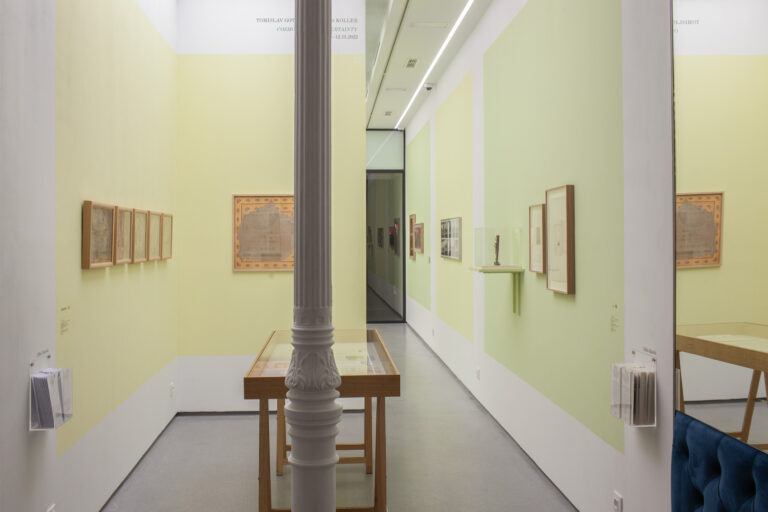
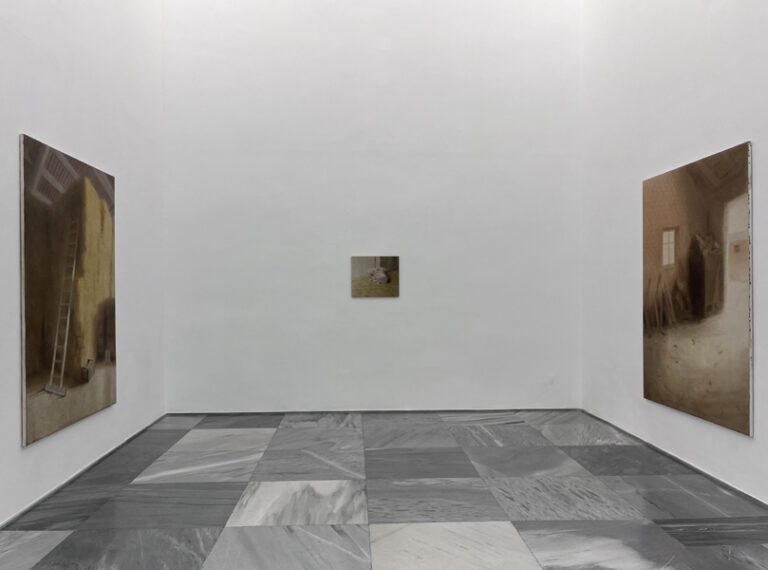
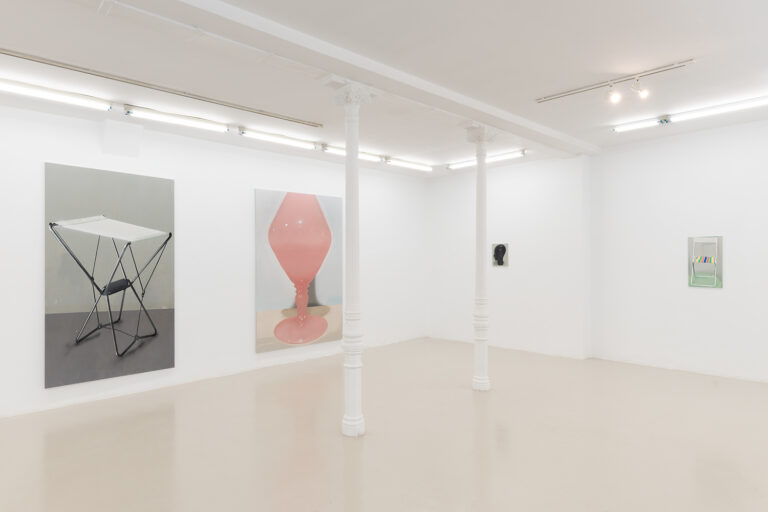
Exhibition images
Things to do near MAISTERRA
From Hospital, you can continue toward Argumosa to visit 1 Mira Madrid and then proceed to Doctor Fourquet, where Espacio Mínimo and F2 are located. Another possible stop is José de la Mano, in Alameda, toward the Barrio de las Letras. These four listings allow for following different programs within that route and choosing the continuation based on available exhibitions and schedules.