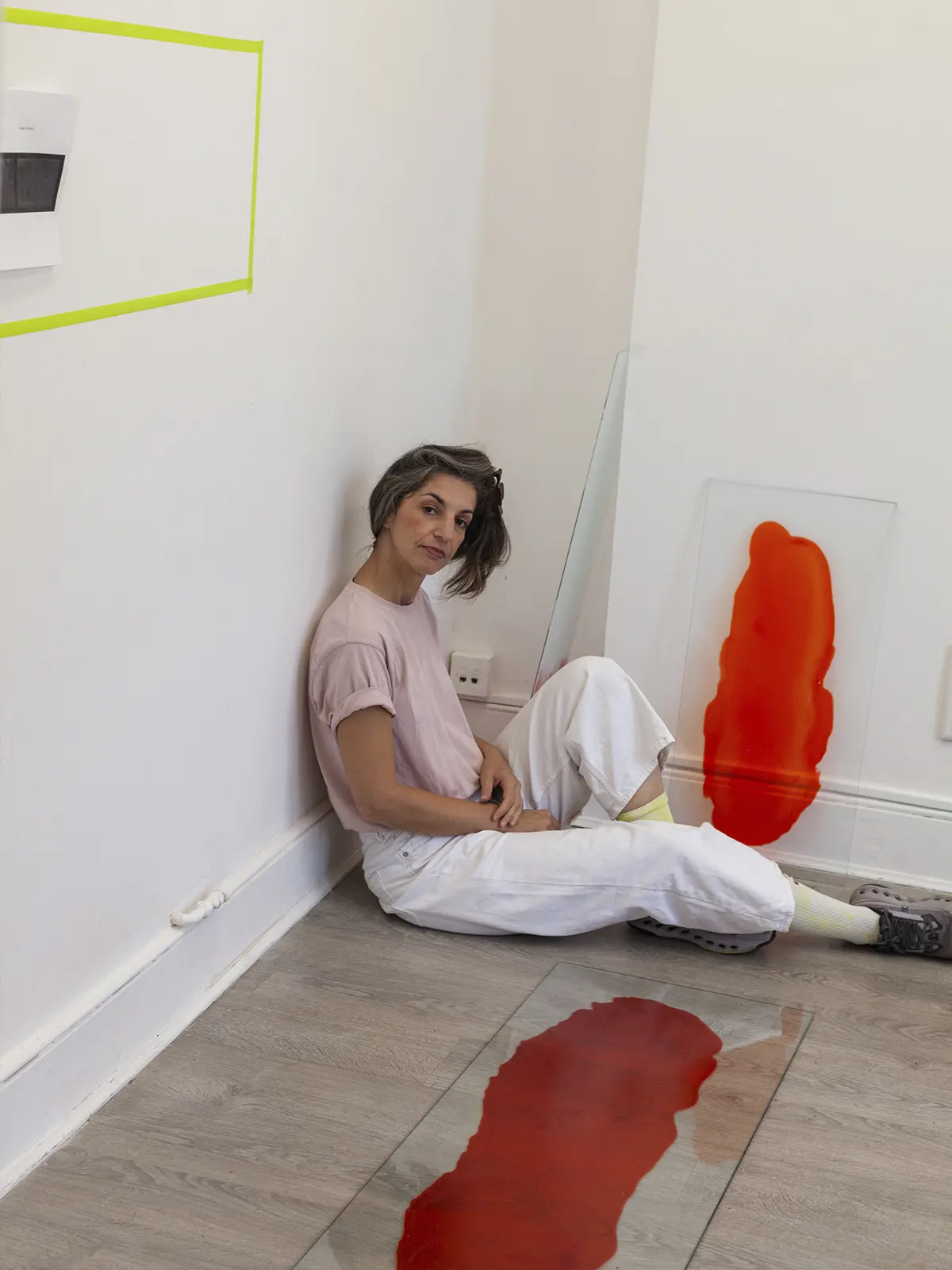
After many years away, Alina Sánchez ( 1983) has returned to her hometown. And it’s not true that Tlaxcala is just a meme. Although it holds the curious distinction of being Mexico’s smallest state, it is home to striking projects like that of this video artist, who has already presented her work at venues such as the Experimental Video Festival in Barcelona, Spain; the Hiroshima Art Center in Japan; the Homeostasis Lab event in Brazil, and in Mexican galleries such as the Museum of Modern Art, Ex Teresa Arte Actual, the Siqueiros Public Art Gallery, the Carrillo Gil Art Museum, and MUCA Roma.
Alina currently serves as curator of the “Video Art in the Age of Social Media” platform and workshop and as co-curator of the local gallery Archipiélago Nómada.

“I’ve been around photography and video since I was a child; my dad had his VHS cameras and used to film us all the time to preserve our memories. ‘I’ve always believed that images have the power to capture what is emotional and heartfelt,’ she confesses, just before pausing the conversation to say she’s going to get her coat. Tlaxcala is usually cold at the end of the year.”
Video Art as a Cold Territory: Emotion, Ritual, and Machines
When approaching creation with technological equipment—rather than organic materials like paint—video art often loses its emotional component between the frames. That’s why it’s worth asking whether we’re dealing with a cold genre (much like the climate in this area in December). “A work can indeed go unnoticed because we assume it’s there, available as a piece you can view later, find on YouTube, or return to the museum to see. But even so, I feel that despite the coldness, it connects with a ritualistic aspect,” he says.
“With technological advancements, the contemplative quality that video art once had has been lost. In that sense, I do think it has that sense of coldness.”
“With technological advancements, the contemplative quality that video art once had has been lost. In that sense, I do think it has that sense of coldness” —Alina Sánchez
In Alina Sánchez’s work, contemplation is not merely about admiring beauty or feeling uneasy about the darkness that certain images may exude, but about crafting a reality that stirs our senses. That is why her pieces feature branches, shadows, mists, and other natural phenomena that, although they often go unnoticed in everyday life, when visualized in a work outside their context, make us look at reality in a different—and, of course, altered—way. Alina’s obsession: understanding how “the real” is constructed when daily life collides with the digital universe and its HD fantasies.
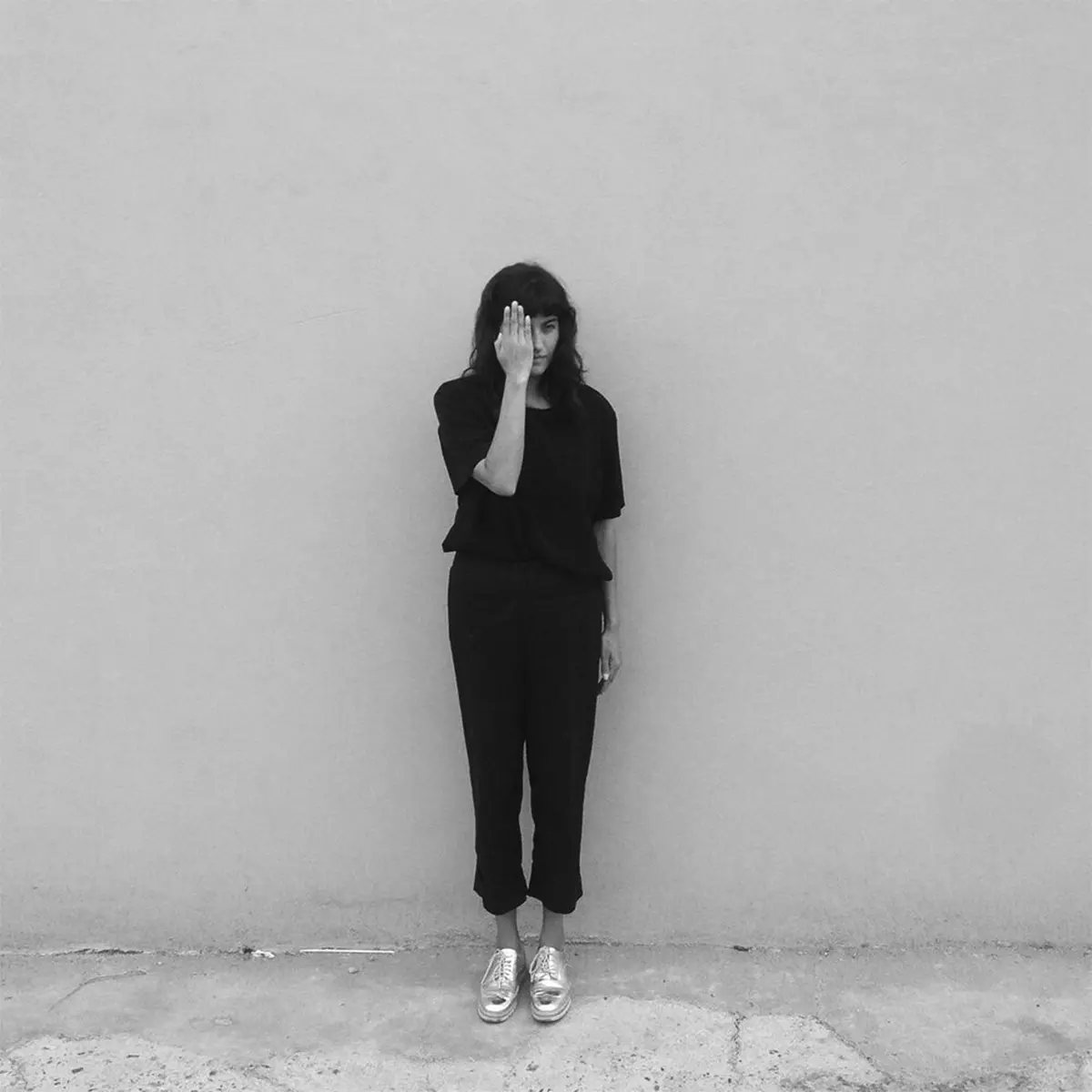
Aesthetic and musical influences that shape his work
The artist blends installation, video, experimental sound, and digital media, as if stirring up worlds where it’s unclear where the physical begins and the pixel ends. The result: works that move boldly between both realms, in which technology can recreate styles of the past. The artist uses a laptop and state-of-the-art software, but her images possess a timeless quality; we could just as easily be in 1984 as in 2045.
“Alina is one of the most prominent figures in the experimental audiovisual scene. Her meticulous work draws on new digital technologies with a unique focus on Gothic aesthetics, underpinned by a remarkable knowledge of post-punk musical styles and the world of electronic music,” Guillermo Santamarina, curator of contemporary art and visual artist
“Alina is one of the leading figures in audiovisual experimentation. Her meticulous work draws on new digital technologies with a unique focus on an aesthetic rooted in the world of electronic music” — Guillermo Santamarina, curator of contemporary art and visual artist
Series, works, and projects that explore memory and materiality
Among the creations of this self-described multidisciplinary artist are works such as Digital Accumulations (2024), Liquid Magma ON-OFF (2023), and Resistance to Erasure (2021), in which she explores memory, matter, and virtuality. Also noteworthy are projects such as Press to Reset the World (2020) and Ephemeral Garden (2018), which delve into sensory and poetic experiences within hybrid environments.
“My piece Digital Accumulationsis one of the works inspired by the significance that an intimate personal archive like a cell phone holds today. I am fascinated by how this everyday object can store memories, emotions, and images. Based on everything I love to photograph, this project emerged as an emotional bazaar, a space where I collect small traces, hoping that some curious eye will connect with my emotions through the internet.”

The Value of Intimacy: When Video Art Enters the Digital Market
Interestingly, an anonymous collector recently wrote to her to try to buy that piece using cryptocurrency: “And it made me laugh out loud, but that offer confirmed the intuition that also gave rise to this project: that this piece could be valued by some collector of rarities in a vintage NFT marketplace on the web.” Alina wouldn’t say whether she sold it or not.
Tlaxcala: Identity, Silence, and Creative Communities
Years ago, there was a national news story: in 2017, the first escalators were inaugurated in Tlaxcala… And yes, it was a real story. —What’s it like for you to create tech art in the provinces? “I hadn’t lived in the region for years. I came back to care for my father in his final days. I did come to visit, but I spent a lot of time between Mexico City and Puerto Vallarta. Now I’m really enjoying the place—after all, this is where I was born. There were things I didn’t appreciate as much when living elsewhere, like the cuisine, which has very distinct ceremonial elements; there’s also Cacaxtla with all its archaeological splendor and the history of the conquest,” he says.

Culinary Rituals, Regional Identity, and Cultural Life Outside the Capital
Tlaxcala is a place brimming with festivals that give its residents a deep sense of identity. It is also a place of silence and calm, despite the noisy industrial music parties that are becoming increasingly common. “Nearwhere I live, there’s the mole festival, a town event for anyone who wants to come eat, even if they’re from out of town. Alina recommends a spot just 20 minutes from downtown —in fact, you can drive across the entire state from one end to the other in half an hour—to connect with the surroundings: “The spa and temazcal Jamadi, a place surrounded by forests, rivers, and hills, perfect for meditation and unwinding.”
Another one of my favorite spots is the Botanical Garden, where you can enjoy outdoor movies surrounded by nature and which has its own café. “It’s a beautiful place.” For dining, she suggests Casa de los Magueyes, a restaurant that showcases the state’s flavors, where you can find a wide variety of dishes —such as Tecotlán-style chicken or pit-roasted barbacoa— and they also serve some of the best natural and aged pulque. Alina’s favorite is the pine nut variety.
Video Art in the Age of Social Media
This woman from Tlaxcala was introduced to the concept of video art through the book The Screen’s Condemned by Hito Steyerl, in which the author reflects on the voracity of images and cultural classism. In this universe, elite works—high resolution, flawless HD—coexist with what Steyerl calls collective or “poor” images, those that circulate in memes and informal content, and where another form of resistance plays out. “I’m obsessed with that question: who is left out of the system of legitimation? That’s what drives me to keep mapping and bringing small works to light,” explains Alina.
“In the wake of the pandemic, I wanted to approach my work from a critical perspective on the overproduction of images, algorithms, and the highly insular world of video art.” This led to the creation of her studio, an experimental and intuitive space where, alongside local artists—and many outsiders—she continues to create her audiovisual works.
Putting Down Roots: Grief, New Music, and Possible Futures in Tlaxcala
“I’m about to unveil a piece I created using my father’s name: Martín Sánchez. This new project explores processes of transition, and I recently exhibited it at the Pinacoteca de Tlaxcala; it’s a work that examines how to reframe death and consider it from a more transcendental perspective.” In addition, Alina is working on new music, a project she complements with video art.
Their next album will be called Litografía Futura, and she’s about to release a compilation album titled Nadie nos va a parar. “In 2026, I also want to publish a book about my grandmother,” she says. “She wrote poetry and simply signed her work as Mel.”
“She never got to publish it, and it was her dream.” Her video art exhibition, *The Invisible Score*, will be on display at La Pinacoteca in Tlaxcala throughout 2026, and she also has a project in the works to exhibit her work at a major Mexican hotel. “My plan is to stay here and put down roots while I continue to develop new projects and works,” Alina concludes with a smile.
To keep exploring this thread, visit our contemporary art coverage; you can also continue through contemporary Latin American artists.