The history and projects of Muro Rojo, the studio that transformed Roma and Chiapas: Muro Rojo was founded in 2005 as an architecture, interior design, and design firm. Architects Jorge Medina, the founder, and his current partner, Leonardo Floresvillar, now lead a firm that was born “as part of a quest to understand the environment.”
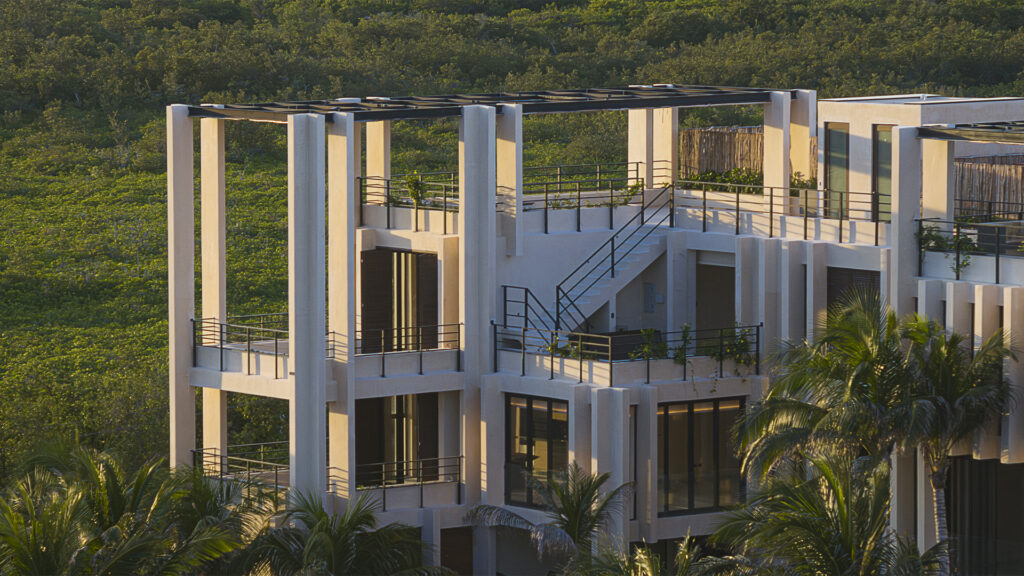
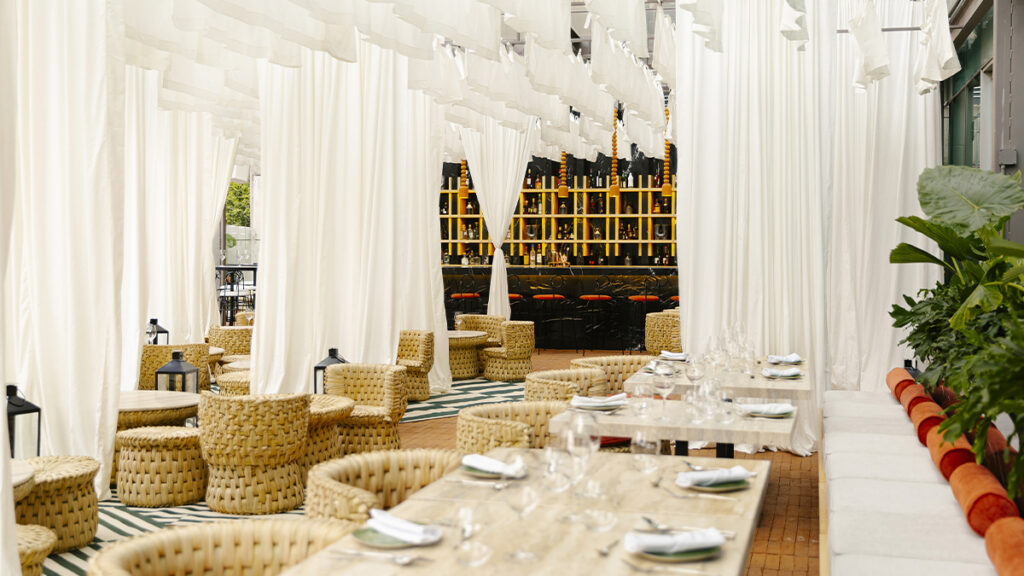
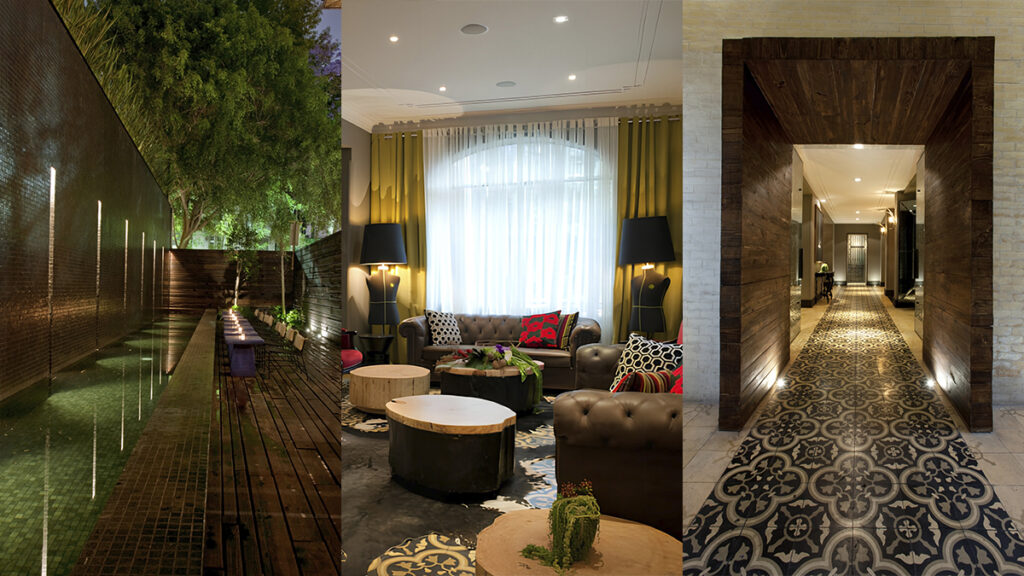
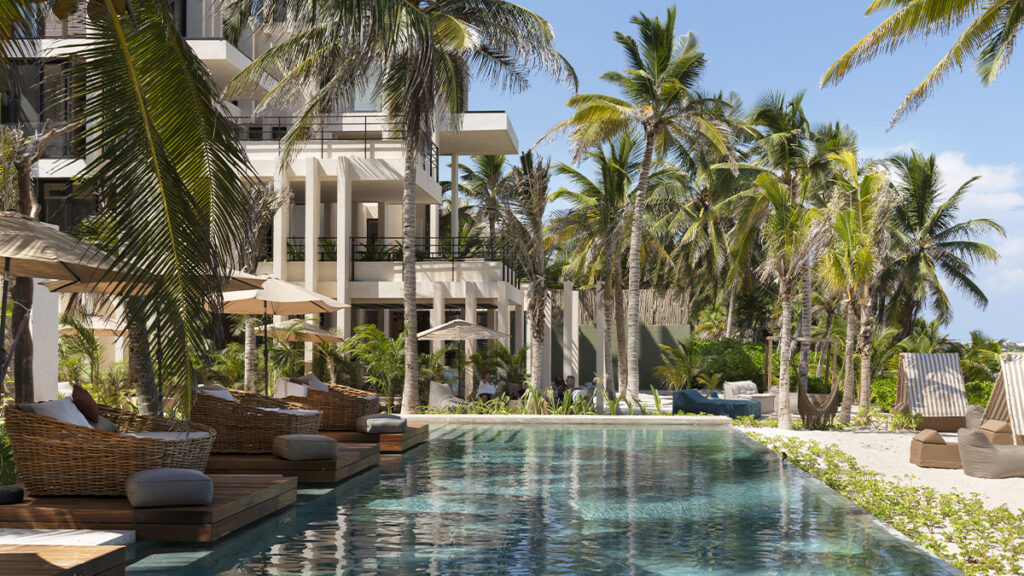
Among his completed projects are The Bespoke Residences development, located just outside Tulum; the Lahun Tiku hotel on the Mayan Coast; restaurants such as Abrecampo in Chiapa de Corzo; the historic renovation of the Brick Hotel in the Roma neighborhood; and, coming soon, a renovated version of Nicos, the legendary Mexican restaurant in Mexico City.
“I think there’s a key phrase: ‘axis mundi.’ Before reaching that conclusion, the firm’s director had dropped out of the art history program he’d enrolled in as a way of rebelling against his family’s tradition of architecture. Apparently, the rebellion was worth it.”
“I used to think that architecture was the center of the world, but that’s not the case; in reality, people are at the center of everything.” Jorge Medina, Muro Rojo.
Her mother, María Teresa Robles Álvarez, was the third woman in Mexican history to earn a degree in architecture. “It was the 1960s. My grandmother told her she would pay for her education, but only if she studied to become a teacher, which she refused. She decided it was better to work her way through UNAM to graduate in what she truly wanted.” And as a result, she carried on the family tradition. Her father is also an architect.
The 1990s and Muro Rojo
“The ’90s broke with everything, and in the 2000s we felt we needed to create a distinct voice once again,” Medina asserts. At that juncture, and as a grand statement of intent, Muro Rojo was the studio tasked with the contemporary reinterpretation of a historic structure as part of the revitalization of Colonia Roma: the Hotel Brick. The project began the transformation of the site into one of the modern—and somewhat hipster—epicenters of the Mexican capital.
“Back then, La Condesa was already the trendy neighborhood. La Roma seemed like a forgotten neighborhood. We sensed that the Brick Hotel could be a destination for a different, unique kind of traveler who dared to stay in an old house in the middle of a neglected neighborhood.”
Rome: From the Porfiriato to Gentrification
La Roma, the Porfirian neighborhood known for its statues, wide avenues, and stately mansions, had been abandoned in the 1950s by the capital’s affluent class. New neighborhoods had captured the attention of the wealthy, such as Polanco or Las Lomas, where modernity no longer consisted of granite facades, prestigious coats of arms, and quiet interiors, but rather concrete, glass, and the need to avoid living in the liveliest city in Latin America. The 1960s and 1970s fragmented the buildings with subdivisions.
The administration, along with some of the property owners, allowed the roofs to crack and the walls to become damp and moldy, and they let termites, fungi, and mold rot away the last vestiges of the neighborhood’s dignity. And then the earthquake struck. The one in ’85, the one that took lives and memories. And the crisis. The multiple crises, which turned the landscape into vacant lots, wastelands, and garages—territories without identity.
But that sense of abandonment, new perspectives, the effort to find new spaces for restaurant owners, and a neighborhood reputation that hovered between seedy and posh all came together to work a miracle of transformation.
Why is La Condesa the way it is? “Because from day one, the developers designed 30 to 40 percent of the neighborhood to consist of parks and community spaces. That encourages people living in the neighborhood to socialize and walk around,” Medina points out.
An English brick hotel and a new traveler
The famous Brick had originally been the private residence of an executive named William Newbold, president of the Bank of London in Mexico at the beginning of the last century. It later served as the military headquarters of the warlord Ávaro Obregón, and during the 1930s and 1940s it became a brothel. We believe the market is looking for those who will cater to it. Later, it housed the La Moderna locksmith shop. Today, the place is synonymous with modernity, luxury, and comfort in one of Mexico City’s most gentrified neighborhoods.
“So, in 2010, we turned it into the most widely featured hotel in the world and a destination that continues to attract visitors—and one of the key factors in making La Roma what it is today,” adds Medina.
Restoring, finding a market, gentrifying, speculating. Seeking to preserve the fleeting memory of spaces long forgotten. “Perhaps some neighborhoods lost what they once had, but we gained the La Condesa and La Roma of today. Not all real estate development is positive, and much of it can be questioned. But it always, always brings about change,” the architect maintains.
“We could harshly criticize gentrification, but all the downtown neighborhoods in the capital were run-down. You’d walk through La Condesa and the feeling that washed over you was that you were wandering through an unusual place, complete with its little corner store and frozen rents, the taco stands on the streets,” he says.
The Bo Hotel and the Creative Guide to Destroying Something and Creating Something Better
The Hotel Bo (b¨o, meaning “water” in the Tzotzillanguage ) in San Cristóbal de las Casas, Chiapas, is another milestone for the Muro Rojo studio. The project began in 2010 with the mission of reconstructing an existing building. There was a plan, an idea, but everything changed when the project’s initiator observed a renderingthat the studio was preparing for another space in San Miguel de Allende.
And it all started with my curiosity about how he managed to make the bathrooms in his hotel look like that. “I, being a big mouth, explained to him that he’d have to tear down the whole the building and rebuild it from scratch, because his building looked like a and our project a boutique hotel.”
It was five minutes of hesitation and one of decision. The next day, the owner destroy it completely and Muro Rojo would take charge of the new project. The only condition imposed was that they could not touch any of the century-old trees that the investor’s grandfather had planted.
Red Wall and the Bo Hotel
The brothers Carlos and Fernando Gutiérrez served as patrons of the studio. They organized a month-long trip through Chiapas so they could get to know the region to the core and grasp a culture that has existed there for millennia. The inspiration for Hotel Bo was traditional Mayan textiles and the women who make them, and a space “to watch the rain fall.”
The challenge wasn’t so simple: how could we build a boutique hotel in a city like San Cristóbal de las Casas when, at the time, lodging costs in the area ranged from four hundred to five hundred pesos? How to make the leap to a five-thousand-peso experience was the biggest concern.. “For me, it was marketing-wise impossible,” recalls Jorge. “How could we attract discerning travelers to a city off the beaten path?”
The hotel opened its doors in 2012, the same year as the EZLN’s “Silent March.” Today it is considered one of the most interesting boutique hotels in Mexico and has been recognized, among others, by the global guide to bars and restaurants The World’s 50 Best Hotels.
Abrecampo in Chiapa de Corzo. Food, the river, and our roots.
One of the studio’s most recent projects by the studio was completed in 2024 with the design for the Abrecampo restaurant in Chiapa de Corzo, a destination with a unique architectural blend on the banks of the Grijalva River “The intention behind this space was to tell the story of the settlements that arrived during the colonial era, to fuse that integration of worlds and reinterpret its implications, integrating the Mozarabic with Mayan roots. Or simply to enjoy the spot—the little pig, the posh atmosphere, and the rain.”
Tulúm, The Bespokey: The Mayan Space-Time
When we were commissioned to design The Bespoke hotel in Tankah Bay, ten minutes from Tulum in Quintana Roo, the project initially consisted of a complex of apartments. But we managed to transform the building in and of itself become a destination. How do you tell a different story in a place that is already privileged? The challenge? To build a hotel for owners. “ In such a heavily developed area, we decided that understanding how the Mayan-timewas important,” he explains. As a project, The Bespoke seeks to reflect the narrative of the Popol Vuh, which connects the celestial and earthly worlds, albeit in a distinctly contemporary style.
A memorable project in 2016: The new Nicos in Mexico City
By 2026, Muro Rojo’s flagship project is truly ambitious, and involves reinventing an iconic spot in Mexico City: the Nicos de Clavería restaurant. This space, which began as a soda fountain in the 1950s in Azcapotzalco, in the heart of Mexico City’s industrial zone, is one of the key places for understanding what the capital’s gastronomy is all about.
“We’re going to build a new Nicos in the southern part of the city,” says Medina, who has discussed this project at length with the owner, Elena Lugo Zermeño, and with chef Gerardo Vázquez Lugo.
“It’s been a monumental challenge to reinvent the design, but at the same time we had to be honest and pragmatic, drawing on the roots of what they’ve achieved over nearly 80 years,” he admits. “Giving a spatial voice to a place that’s already spectacular is complex. In addition to legendary cuisine , it is one of the few restaurants that generates no organic waste.” Construction work began this January 2026 . Rightin the midst of our conversation, Jorge and his partner are in the thick of finalizing the plans and preparations. The new Nicos aims to be ready by the end of April, just before the World Cup kicks off.
““Architecture should create a poetic space where your life has a place. Where you are the center”— Jorge Medina.
The Present of Muro Rojo
“Leonardo adapts to change; he belongs to a new generation that views life through a different lens. We’re approaching spaces from a much more architectural perspective—one focused on rhythm, metrics, and sequences that make them truly fascinating,” says Jorge.
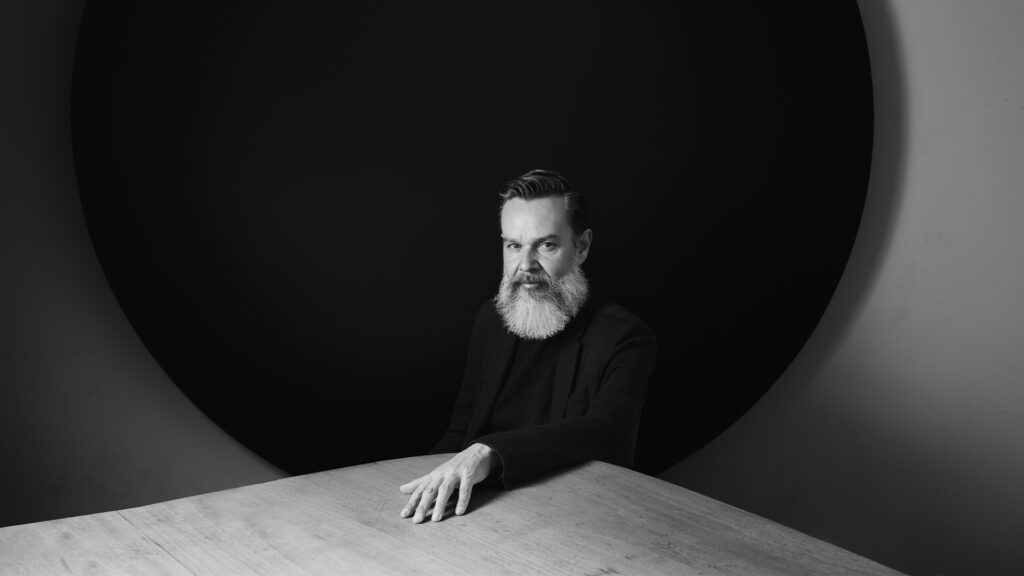
“You can’t design spaces with the intention of creating a sculpture. If it’s a museum, that’s fine—go ahead. But architecture should create a poetic space where your life has a place. Where you are the center,” he reflects. “I no longer know if I want to create the most architectural piece or the most beautiful one. I want to build something where those who inhabit it feel at peace, relaxed, and serene. The key? Discovering what things are made of,” he concludes.