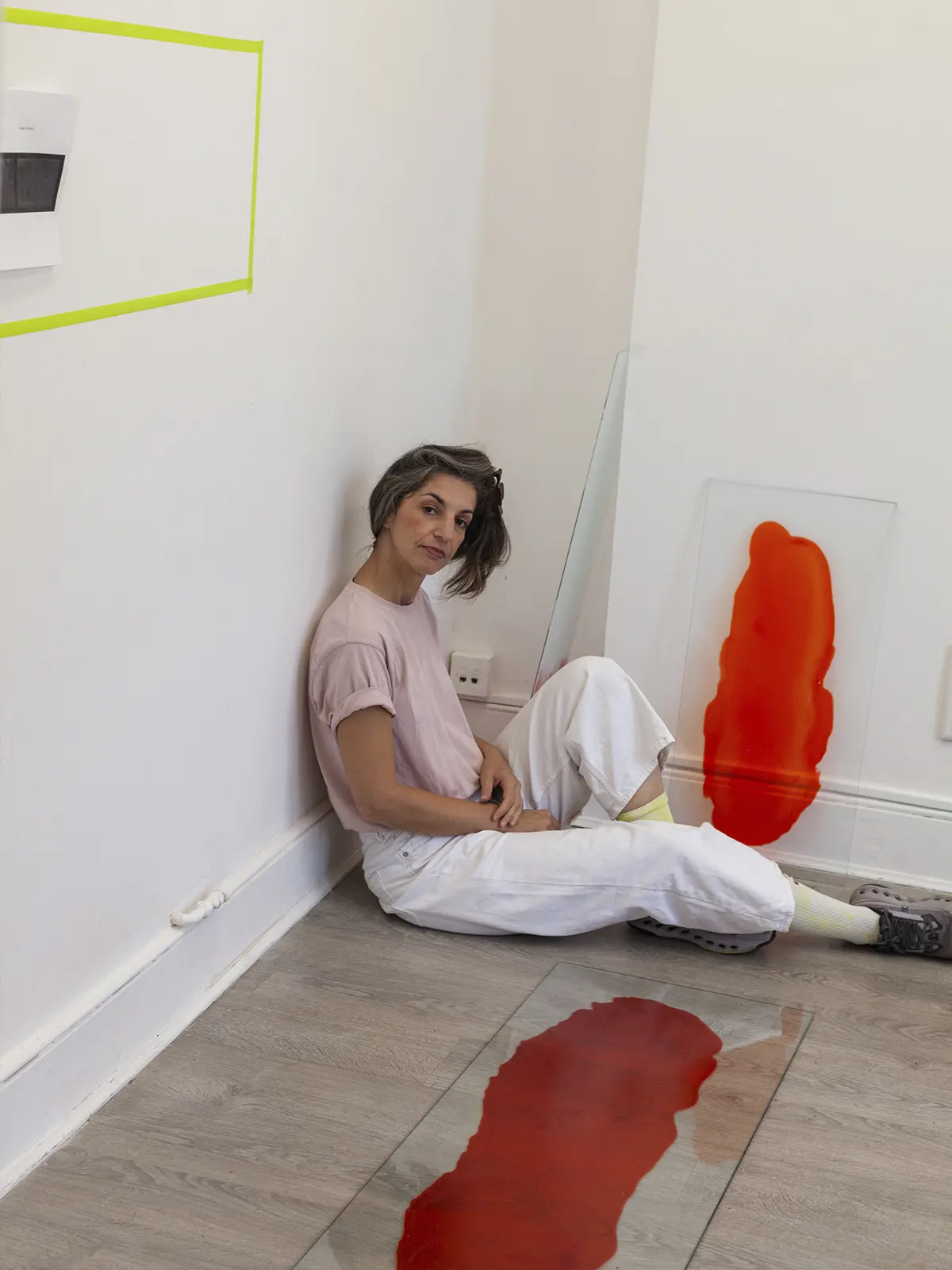

Mario Uvence, along with Alfonso Miranda, co-curated the Antique Dealers’ Hall at the fair. We spoke with Uvence.
Antiques Fair at Zona Maco 2026: At a time when contemporary art dominates the conversation, the collecting of antiques was present at ZⓈONAMACO 2026 as a reminder that the past continues to engage with the present.

“Zona Maco is a showcase not only for modern and contemporary art, but also—and practically since its inception—for antiques,” says Mario, who, drawing on his experience as a collector and cultural promoter in his home state of Chiapas, and an expert in art and antiques, accepted the invitation from Zélika García—founder and director of the fair—to be part of the event.
“Engaging with a work of art, looking at it directly, preserving it, and passing on knowledge about it is a moral obligation for collectors, antique dealers, and anyone with a sensitive eye” — Mario Uvence
Mario has a long career: he founded the Chiapas State Council for Culture and the Arts and served as its head on three occasions; he served as the state’s secretary of tourism; and he has been involved in the world of antiques—a field he is passionate about—for over forty years. In addition, he is involved in the hospitality industry, with projects that incorporate art, architecture, and identity.
He is currently working on establishing a museum in Comitán, Chiapas, to which he will donate his collection. His favorite saying— “Culture is what gives life meaning. Without it, life could not exist”—summarizes his personal philosophy and his work very well.
In its presentation, Zona Maco defines the Antiques Fair as a “symbolic universe,” a concept with which Uvence fully agrees: “We live surrounded by symbols: nature, water, fire, air. Humanity’s aesthetic expressions incorporate the symbolism of each historical period. I believe that with that phrase, Maco meant to say that human sensibility comes together here.”
Contemporary art and antiques: Are they at odds?
Given that a large portion of the public perceives Zona Maco as a contemporary art fair, Uvence believes it is essential to give the Antiques Fair a clear place within the event. “But although it may seem that way, there is no conflict. Contemporary artists often look to the past, whether to build upon it or to question it,” he explains.
“Who can deny, for example, the influence of the pre-Hispanic or African world on Picasso?” he asks. For him, the same is true in Mexico with its great figures of modernism, and an antique dealer can display a contemporary work—for example, a sculpture by Sebastián—alongside a 17th-century ivory piece. “There is no conflict, as long as both pieces are clearly classified and contextualized.”
Antiques will never go out of style, he says, “because collecting them is like treasuring a piece of human history.” “Throughout all periods of existence—what I call the gentle side of humanity: art—collecting has always existed.”

Antiques Trends in Mexico and Around the World
The rise of antique collecting in Mexico began with an extraordinary momentum that originated in pre-Hispanic times and continued through various periods of artistic evolution: the colonial and viceregal eras, the Baroque period, the 16th through 18th centuries, the era of evangelization, and, later, the 19th century. “All of this is reflected not only in architecture, but also in furniture, objects, ivory carvings, and pieces that arrived on ships from China,” adds Uvence.
For him, it is increasingly common to see in new architectural designs—especially in Europe—a harmonious coexistence between antiques and contemporary art: a historic sideboard in a modern room, a contemporary work on the wall, and, on a surface, an 18th-century Guatemalan sculpture or a 17th-century ivory piece. In that dialogue, he believes, “contact with art makes beauty inevitable.”
That said, Uvence believes that collecting has become more sophisticated and eclectic—in fact, it has always operated in those realms—combining antique pieces with contemporary works: “The finest examples can be found in museums around the world. You can visit the Hispanic Society in New York and encounter Mexican art—Talavera de Puebla, nun’s shields, Spanish and New Spanish works—and, on the same day, go to MoMA and discover the new trends.”
The curation of antiques at the Antique Dealers’ Hall at Zona Maco 2026
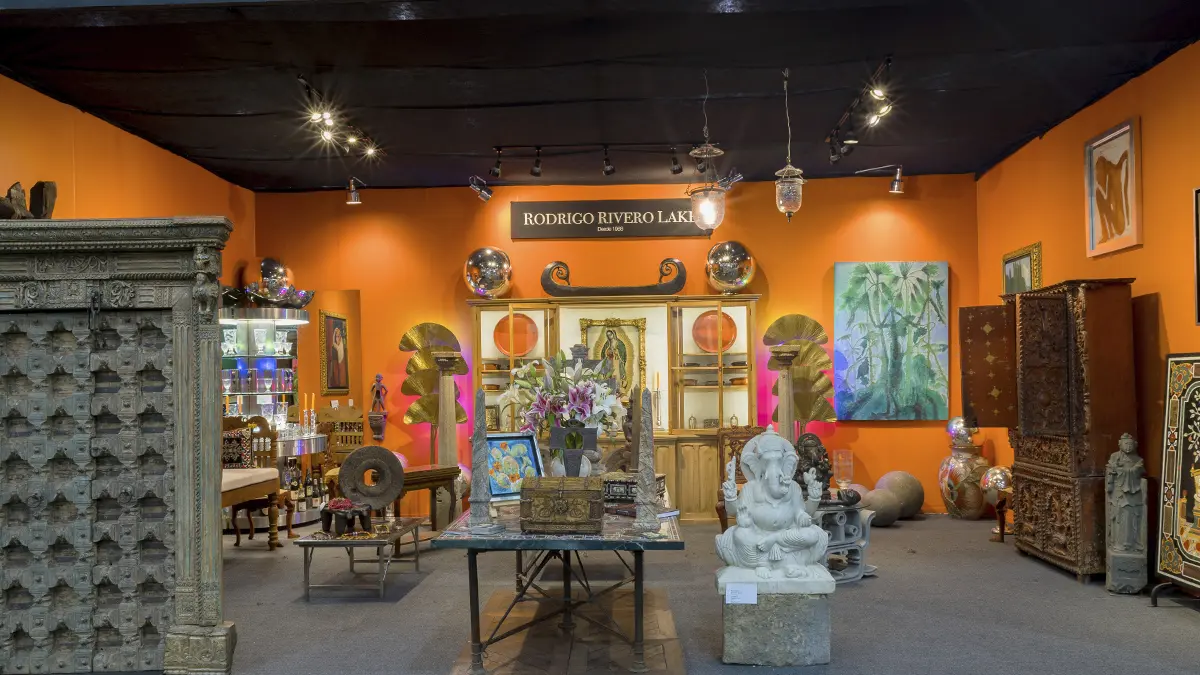
That vision was evident in his co-curation of the Antique Dealers’ Hall at ZⓈONAMACO 2026: “The first step was to select qualified antique dealers with experience and a proven track record: gallery owners from Polanco, Las Lomas, Plaza del Ángel, Guadalajara, Monterrey, and Puebla. The curation, which Alfonso Miranda—director of the Soumaya Museum and co-curator—and I oversaw, focuses on one fundamental point: the authenticity of the pieces.”
That authenticity is guaranteed by assuring the public that the information on the description card is accurate. “I’ve been an antique dealer and cultural promoter for forty years, which allows me to distinguish authentic ivory from fake, an 18th-century painting from a 19th-century one, the techniques of the Italian Renaissance, the High Baroque, or 19th- and 20th-century landscape painting, as well as to recognize works by Ángel Zárraga, Diego Rivera, and other great Mexican artists,” he emphasizes. The duo conducted an inspection prior to the fair’s opening to assure the public that they will be purchasing original works.
What antiques did you showcase at the Antiques Fair at Zona Maco?
“I’m bringing some very important pieces: an 18th-century landscape of the Alameda Central, attributed to Juan Patricio Morlete; a collection of nun’s coats of arms; furniture; a landscape of Santiago de Cuba; works by Ángel Zárraga; crowned nuns; 17th-century paintings and sculptures by Mathias Goeritz. It’s a diversity that’s truly exciting.”
Before taking on his role as curator, Uvence was a regular visitor to the fair: “I love walking around the event, even when I’m an exhibitor. I take the time to walk through the aisles and see what each aesthetic expression speaks to me: contemporary design, furniture, the return of retro and vintage styles, the great cabinetmakers of the 20th century, and antique books,” he recalls.
Throughout his career in the world of art and culture, he has been aptly described as “a tireless seeker of beauty,” and in that sense, he has a very unique perspective on the evolution of canonical concepts of aesthetics: “There is one thing that will never change: human sensitivity. It is innate, and for that reason, I place it above any other form of knowledge. Then come fashions and trends, which naturally change.”
Over the years, he has gained the experience needed to reflect on which modern works might endure and become valued antiques over time: “It’s a difficult question. It has to do with perception and taste. I’m not very fond of installations, because many are ephemeral and short-lived. On the other hand, a sculpture conceived with soul and form can indeed become an antique. Expressions change according to the world we live in. Today, for example, I’m very interested in art made from marine debris: plastics, wood, tires.”

Antiques as an investment
“Even with its ups and downs, art is a safe haven. We saw this during the pandemic, when the market contracted, but the greatness of masterpieces never fades. I’ve never seen a piece purchased with a discerning eye lose its value. The key lies in education, guidance, and discernment,” he states with confidence.
For Mario, the antique collecting market in Mexico has many strengths: “There are institutional collectors who focus on a specific period, and others who diversify into modern and contemporary art. In Mexico, there are extraordinary collections that will be preserved, passed down, or end up in museums.”
More articles and interviews about the event can be found in AW Magazine.
To keep exploring this thread, visit our contemporary art coverage.