
“You’re new here, you’re a foreigner; there are galleries here that have been around for 30 or 50 years, so what do you have to offer? You shouldn’t put this up, don’t do that, do this instead…” These were the kinds of things she used to hear from those around her. However, Jeannette Arévalo decided to ignore the noise and listen to her own voice. After all, that’s how great projects are born, isn’t it?

Committing to that mission hasn’t been easy, but our interviewee assures us that she has a great team and, above all, a vision honed through years of knocking on doors… until she decided to create her own space rather than waste time on the threshold: Galería Claroscuro, which—if we were to stretch the metaphor—is a name that suggests that light ultimately prevailed over darkness
Thus, the gallery director and photographer, who has a background in graphic design, has managed to carve out a space to exhibit both her own work and that of artists who captivate her. “I’m Bolivian-Mexican, I’ve been in Mexico for eight years, and I’m married to a Mexican,” she says, confessing that her heart is “shaped like a taco and a salteña—the traditional dish of Bolivia.”
Claroscuro Gallery: Between Validation and Police Dogs
“It sounds like a cliché, but we can all shine in this field,” she says. In a way, he doesn’t like that Claroscuro falls into the category of a traditional gallery, but he does tend to support the work of artists from his home country and foster cultural exchange: “It wasn’t until 2026 that we began bringing in Bolivian artists, such as Cristian Laime, a painter who participated in Zona Maco,” he notes. The other artist is photographer Michael Dunn Cáceres, who won the Leica Luxury Travel Award this year. And in May, they will bring Mexican visual artist Zaid Doki to exhibit in Bolivia.
Since last year, Galería Claroscuro has been certified by the National Art Museum of Bolivia, a designation that ensures that pieces brought in from abroad arrive in good, optimal condition, without airport sniffer dogs detecting any foreign chemicals or customs officials piercing the canvases to check for illegal contraband.

“Bolivian culture isn’t very well known in Mexico, whereas we there are more familiar with Mexican culture, so building that connection is important. Graciela Iturbide is going to exhibit at the National Art Museum there; we’re working out the logistics—it’s an exhausting process.”
Photography as a unique piece
Internationally, photography has gained ground at auctions and art fairs, but in Mexico it continues to face challenges in terms of recognition compared to traditional media. The Photography Biennial and venues such as the Centro de la Imagen have fostered its development and critical discourse in the country, as have venues like ZONAMACO Foto .
Before focusing more on photography, Claroscuro was primarily involved in painting and sculpture. There were many people interested in his work, but even in the case of painting—which is a unique piece—comparisons with photography always arose because of its reproducible nature.
“It was a little difficult to get people—collectors, in particular—to understand that your photographic piece is unique, and not just because I give you a certificate. This exhibition highlights the essential role of private collecting in Mexico in light of the decline in public art acquisitions,” explains Jeannette Arévalo.
“It was a little difficult… to get people—collectors—to buy into the idea that your photograph is unique, and not just because I give you a certificate,” he admits.
It is no coincidence that this vision resonates with what Graciela Iturbide once said: “Without imagination or dreams, there is no photography.” In *Claroscuro*, this principle ceases to be an abstract idea and becomes a tangible experience for the viewer.

In that same spirit, the gallery’s mission is not only to exhibit, but also to transform the way photography is understood and acquired. “I’ll mention a few here… there are galleries like Patricia Conde or Almanaque… each operates differently, but I feel that people remain within that niche,” he explains, while outlining his goal: “what I want is for people to discover new generations of photographers and understand what makes a piece valuable.”
A customer-focused sales model
That approach is also reflected in his sales model, which is more flexible and customer-focused: “I don’t just say, ‘This piece costs this much, and that’s that’… we look for options, payment plans, and arrangements,” he notes. Her approach is rooted in understanding the public within their context: “We’re in a consumerist country… so we should also offer them that opportunity.” In this way, he builds trust between the artist, the gallery, and the buyer through a direct relationship that he personally nurtures: “I have no problem opening the door, serving them a drink… because, at the end of the day, it’s the space I’m taking care of.”
The result, she explains, has been a closer relationship with the public and consistent attendance at her exhibitions, which usually last only a couple of weeks due to the venue’s limitations and the project’s self-managed nature: “I’d love to be Carlos Slim’s daughter… but I make do with what I can,” she says with a laugh, revealing that Claroscuro is not just a gallery, but also a constant exercise in resilience, learning, and conviction.
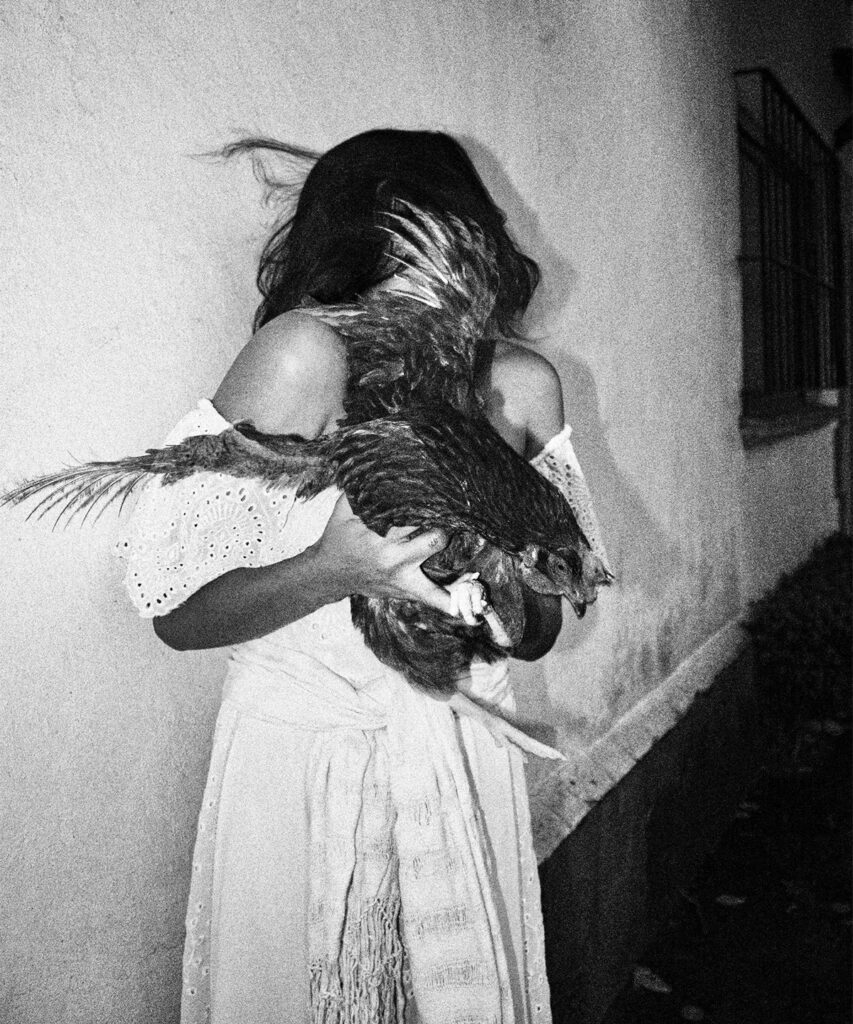
Territories of Light: Feminine Cartographies
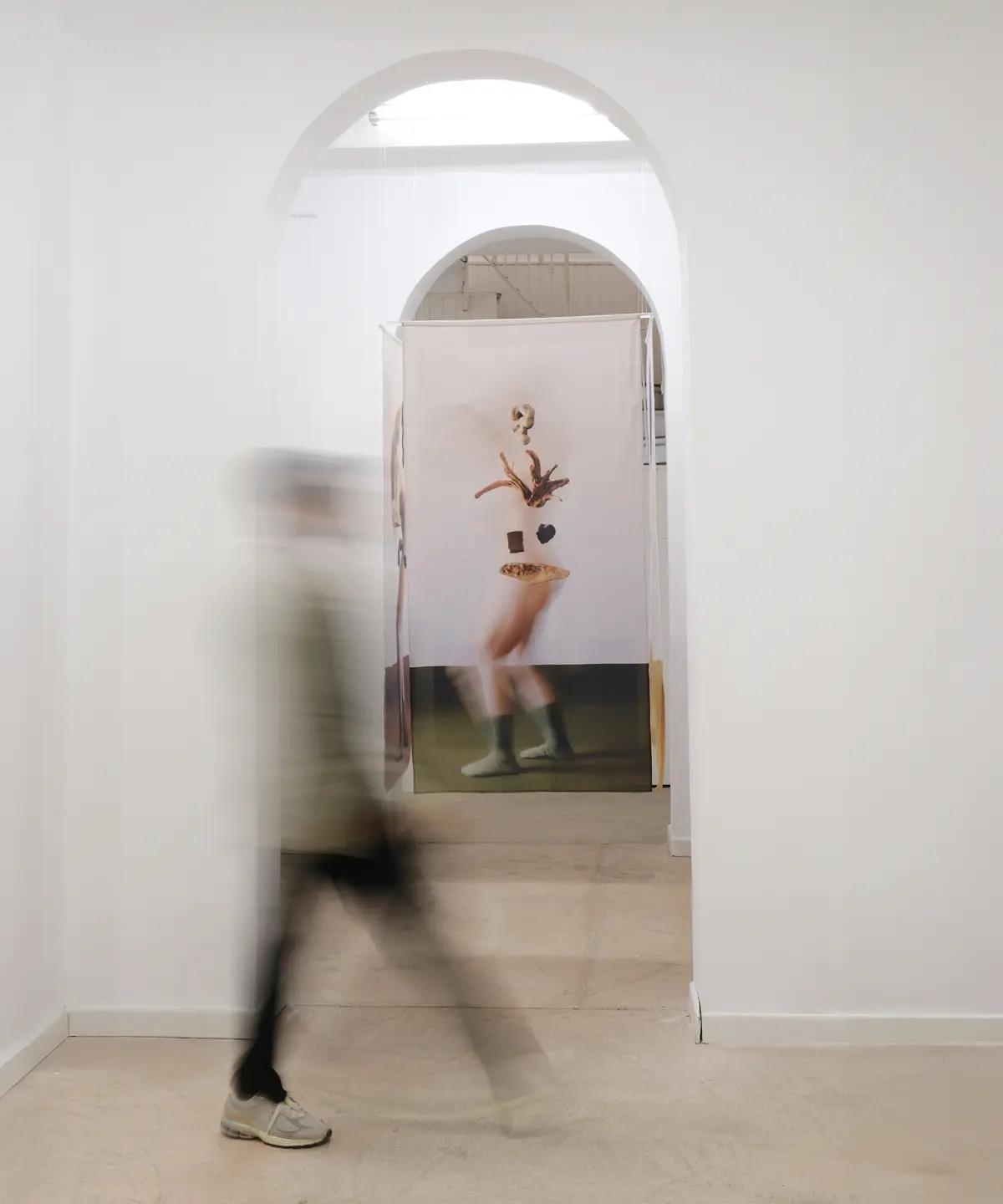
Currently, the exhibition Territories of Light: Feminine Cartographies draws precisely on that collaborative synergy and shared dissemination. The exhibition brings together the work of eight female photographers, including Bolivian and Mexican artists: Graciela Iturbide, Paola Lambertin, Brenda Islas, Andrea Ibarra Chávez, Andrea Ibarra Gómez, Gabriela Olivera, Sara Wayra, and Jeannette Arévalo Angus.
With this exhibition, Galería Claroscuro reaffirms its commitment to showcasing initiatives that promote intercultural dialogue and equity within the art world. More than just a discourse, the aim is to create platforms where women artists can expand their voices and practices in their own words.
Feminism and Photography
“A common thread, if you will—not to mention feminism—is a woman’s perspective, although each piece has its own distinct essence, and I think that’s what makes it so refreshing. ‘Andrea Ibarra Gómez, for example, photographs soccer players—both men and women—from other clubs,’ she says. ‘I met Graciela last year; her photographs inspire me. I really love her poetic, metaphorical black-and-white photography. It’s a delight.’”

“So, all of that was a challenge, and the curator, Maríe Fernández Mota, honestly really took on a challenge, because she told me: ‘Well, this looks like chili, pozole, and mole”—and this phrase certainly brings out his Mexican identity beyond his Bolivian origins—he says of the exhibition, which will be on view for a limited time through April 24.
Territories of Light: Feminine Cartographies is on display at Galería Claroscuro, located at 91 Camelia Street in the Florida neighborhood of Mexico City. The exhibition opened on April 9 at 7:00 p.m. and will be on view through April 24 at 91 Camelia Street, Florida neighborhood.
In that same spirit of openness—and with a clear focus on photography, in a city where venues dedicated to this medium are few and far between— Claroscuro also extends an invitation to the media, cultural journalists, art critics, and the general public to come and be part of the exhibition. More than just an event, it is conceived as a space for gathering and conversation.
To keep exploring this thread, visit contemporary art from Latin America.