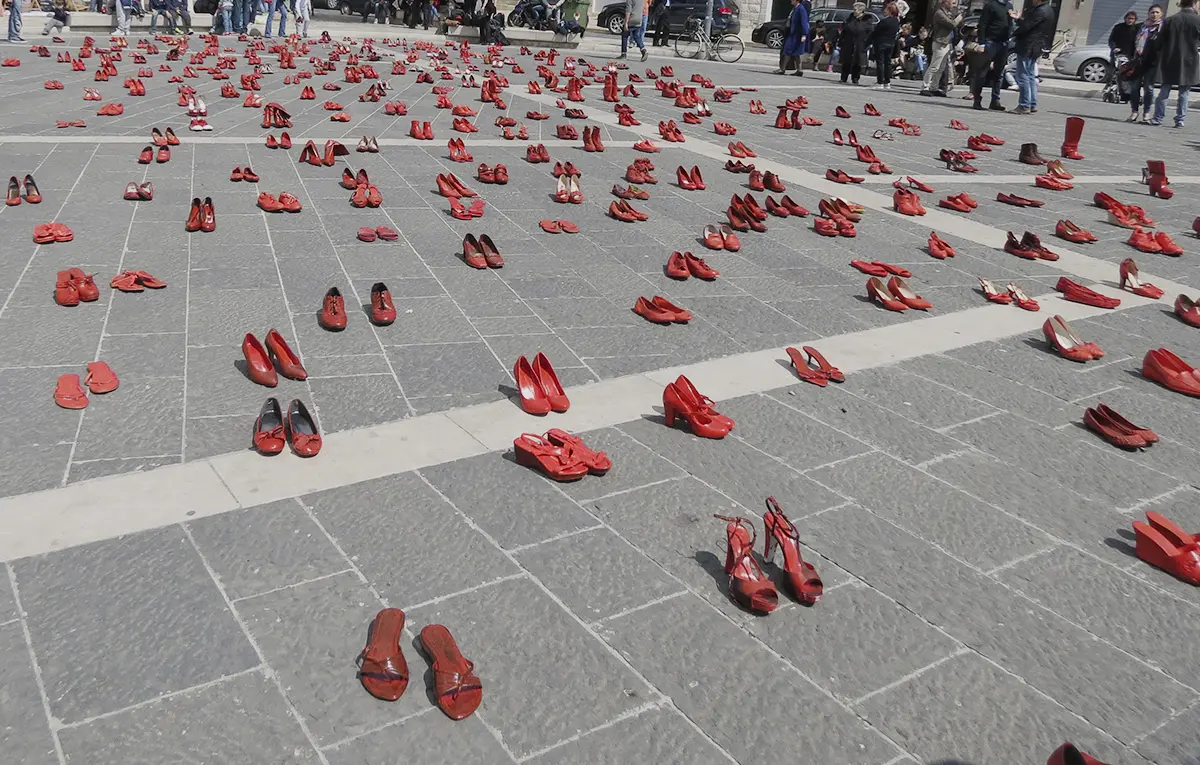

Elina Chauvet creó la instalación Zapatos Rojos en 2009, después de que su hermana fuera asesinada por su esposo en un caso de violencia doméstica en Ciudad Juárez, México. Ella tenía 32 años y la obra fue una manera de aliviar el dolor a través del arte y también de servir como inspiración para denunciar y prevenir los feminicidios.

Recientemente, Chauvet señaló que el proyecto fue reproducido en Bucarest el mes pasado —sin su conocimiento ni con su crédito— por la conductora de noticias rumana Alessandra Stoicescu. El tema generó un debate: ¿Una obra con un propósito social —como visibilizar el feminicidio— puede considerarse propiedad de una persona, o tendría que poder reproducirse libremente para fortalecer la causa, aunque no cumpla con los lineamientos artísticos? Aquí surge un conflicto: compartir el mensaje es importante, pero ignorar a quien lo creó también implica una injusticia.
Sobre ello, Art Weekends platicó con la artista originaria de Casas Grandes Chihuahua.
Zapatos Rojos se resignifica
En estos tiempos, ¿una obra como Zapatos Rojos se resignifica y adquiere nuevos sentidos según el contexto?
Creo que hay una resignificación de Zapatos Rojos cuando el elemento que lo compone en su forma se convierte en inspiración y da pie a nuevas propuestas e ideas aunque el mensaje siga siendo el mismo. Muchas artistas lo han hecho, utilizan el símbolo para hablar desde sus propios lenguajes, básicamente el proyecto en sí se mantiene igual desde que inició su viaje internacional hace 15 años, empezando por Italia y Argentina.
Así que supongo que sí hay alguna resignificación por supuesto al adaptarse a los diferentes contextos en los que se presenta, pero realmente se mantiene muy fiel a su significado en los diferentes lugares, porque básicamente las violencias a las mujeres en los diferentes contextos son muy parecidas.
Desde los años 90 has trabajado con contenido social. ¿Qué sientes que te define hoy como artista en este momento de tu trayectoria?

Desde que inicié a trabajar contenido social me identifiqué con los temas que me incomodan, con el tiempo y debido a lo sucedido con mi hermana me concentré en la violencia a las mujeres en todas sus formas. Realmente me cuesta trabajo definirme porque creo que vivo el momento histórico que constantemente está cambiando y tal vez sin darme cuenta yo también estoy en este cambio. En cuanto a mi trayectoria solo quiero mantenerme digna e íntegra con los temas que trabajo y seguir adelante, yo ya estoy viviendo mi futuro, uno más humano y empático para las nuevas generaciones, más compasivo del dolor del otro.
Cómo el arte genera un cambio real
Los zapatos son donados por la comunidad. ¿Crees que hoy hay mayor conciencia social? ¿Proyectos como este logran generar un cambio real?
Sí, definitivamente hay más conciencia social, he visto cómo a través de estos 17 años ha evolucionado el tema. Antes era tabú y no había vocabulario, ahora se pueden nombrar las cosas. Sí creo que proyectos como este logran cambios reales, y lo veo cuando se aprueban nuevas leyes y aparece la imagen de los zapatos rojos en las noticias o cuando me envían libros escolares con la imagen de alguna instalación. Las instalaciones son movilizaciones sociales que generan cambios.
La instalación ha sido replicada en muchos países, a veces sin autorización como el caso de la serie de TV. ¿Cómo has enfrentado este tipo de apropiaciones a lo largo de tu carrera?
Sí han habido muchas réplicas fuera del proyecto, y mi intención no es coartarlas, ni nunca lo ha sido. En muchas ocasiones no me han dado el crédito, en otras muchas sí, la mayoría de las veces que no hay reconocimiento es por desconocimiento y porque no hay una investigación del proyecto, simplemente lo ven en alguna parte y lo replican sin más. Pero la mayoría de las veces sí se informan y solicitan la obra.
La importancia para mí desde el inicio y al hacer esta obra de carácter conceptual y pública ha sido mantenerla íntegra, si no lo hubiera hecho así ya se habría disuelto. Al mantenerla con una autoría le da su carácter de obra de arte y la mantiene inalterable, en concepto, proceso y forma, algo que es fundamental para generar conciencia social.
¿Cuántos pares de zapatos rojos has acumulado?
Actualmente tengo más de 300 pares de zapatos enviados desde los diferentes países y todo un registro de videos, fotografías y objetos, libros, tesis, etc. Es el registro de los 17 años del proceso de Zapatos Rojos en el mundo, en el acuerdo que envío para su réplica hay un punto en el que se autoriza solo una réplica por persona, esto para evitar que se monopolice.
El tema del plagio de Zapatos Rojos en Bucarest
¿Por qué el caso de Bucarest fue diferente?
El caso de Bucarest en Rumania fue particular porque la persona sabía de mi autoría y ya lo había hecho en el 2018 y aun así omitió nuevamente mi nombre y no solicitó la obra. No hubo proceso de socialización y solo tomó la parte final de la instalación, la que tiene impacto visual y mediático.
«Para mí ´Zapatos Rojos´no es una obra con la que se deba o pueda lucrar. Yo no lo he hecho y nadie debería de hacerlo» comenta Elina Chauvet.

¿Qué representa Zapatos Rojos para ti a nivel personal, especialmente considerando tu historia familiar?
Para mí representa 17 años de trabajo y esfuerzo por una causa en la que creo, representa mi historia de vida y representa el amor y la ausencia de mi hermana, representa el dolor de mi madre, ese mismo dolor que se multiplica en el mundo en todas las madres, hermanas y familias que han tenido o tienen esta misma pena.
“Zapatos Rojos es mi historia y la de mi hermana”
En tu carta hablas de “borrado”. ¿Qué significa ese borrado para ti en un contexto más amplio?
Zapatos Rojos es mi historia, la de mi hermana, la de mi madre y las historias de las que también habla este proyecto y que lo disparó al mundo. La masacre de jóvenes mujeres en Cd. Juárez, sus desapariciones y el dolor de tantas familias, de las miles de historias que han acompañado a este proyecto por el mundo, el llanto que veo en cada instalación en la que he estado presente. Todo eso no se puede borrar por el interés personal de alguien.
¿Cómo describirías tu actualidad como artista? ¿En qué estás trabajando ahora mismo?
Mi actualidad es bastante plena en el sentido que puedo dedicarme solo a crear y a cumplir con compromisos propios del arte, me emociona mucho participar y estar presente en nuevos proyectos, actualmente estoy trabajando varios medios gráficos como collage, estampa sobre papel e iniciando un proyecto de gráfica textil y bordado, a mediados de mayo estaré en la ciudad de Culiacán, Sinaloa, para un proyecto que se llama Casa Migrante, una pieza colectiva por supuesto, muy política.

Después de esta polémica, ¿qué te gustaría que cambie en la forma en que se respeta el trabajo artístico?
Sabemos que el trabajo artístico es difícil. Es un mundo complicado para los creadores. Pero ¿qué seríamos sin el arte? Creo que lo que tiene que cambiar es la conducta humana. La honestidad es un tema importante, me gustaría que la gente tuviera ese valor.
Descubre más entrevistas en AW Magazine.
Encuentra más historias como esta explorando arte contemporáneo latinoamericano; también puedes continuar por artistas contemporáneos latinoamericanos.