
The space, located at 415 Lamartine Street in Polanco, manages—through Fondos Artísticos—the work of five key figures in modern Mexican art: Ángela Gurría, Helen Escobedo, Manuel Felguérez, Fernando García Ponce, and Abel Quezada, whose works, along with those of other artists, were featured in the largest space at Zona Maco 2026.

For decades, much of the region’s artistic output has been viewed as a promise for the future, rarely as a fully established presence within the global art scene. Founded in 2005, Proyectos Monclova somewhat contradicts that narrative. Not from the perspective of a local space with international aspirations, but as an institution designed from the outset to position its artists—historical, modern, and contemporary—on the same symbolic and commercial footing as any other within the global art market.
Proyectos Monclova: Which artists does it represent?
Since its inception, Proyectos Monclova has staked its reputation on presenting works that bridge different eras and actively promoting Latin American art on the global stage: “Our top priority is to ensure that our artists are recognized on par with any others in the world,” says Lovera. Have they succeeded?
“The gallery’s goals are to continue expanding our program and to bring all of our artists to the various international art fairs we participate in: Art Basel in Miami, Frieze Art Fair in London, TEFAF Maastricht in the Netherlands…,” says Alexandra.

“In Asia, people didn’t know much about most Mexican artists, but we’ve been going to Hong Kong for six years now, and they recognize us perfectly. For example, Gabriel de la Mora has had exhibitions at the M+ Museum, that country’s prestigious global museum of contemporary visual culture.”
Currently, the space located at 415 Lamartine Street in Polanco manages—through Fondos Artísticos—the work of five key figures in modern Mexican art: Ángela Gurría, Helen Escobedo, Manuel Felguérez, Fernando García Ponce, and Abel Quezada.
In addition, the gallery represents established contemporary artists such as Gabriel de la Mora, a conceptual artist who incorporates everyday objects and waste materials—such as shoe soles, eggshells, eraser shavings, and lint—into his works; and architect, designer, and museum curator Eduardo Terrazas, one of the leading national figures of the second half of the 20th century. At the same time, it manages the work of more than twenty emerging artists.
MACO 2026: What Did We See from Proyectos Monclova at the Fair?
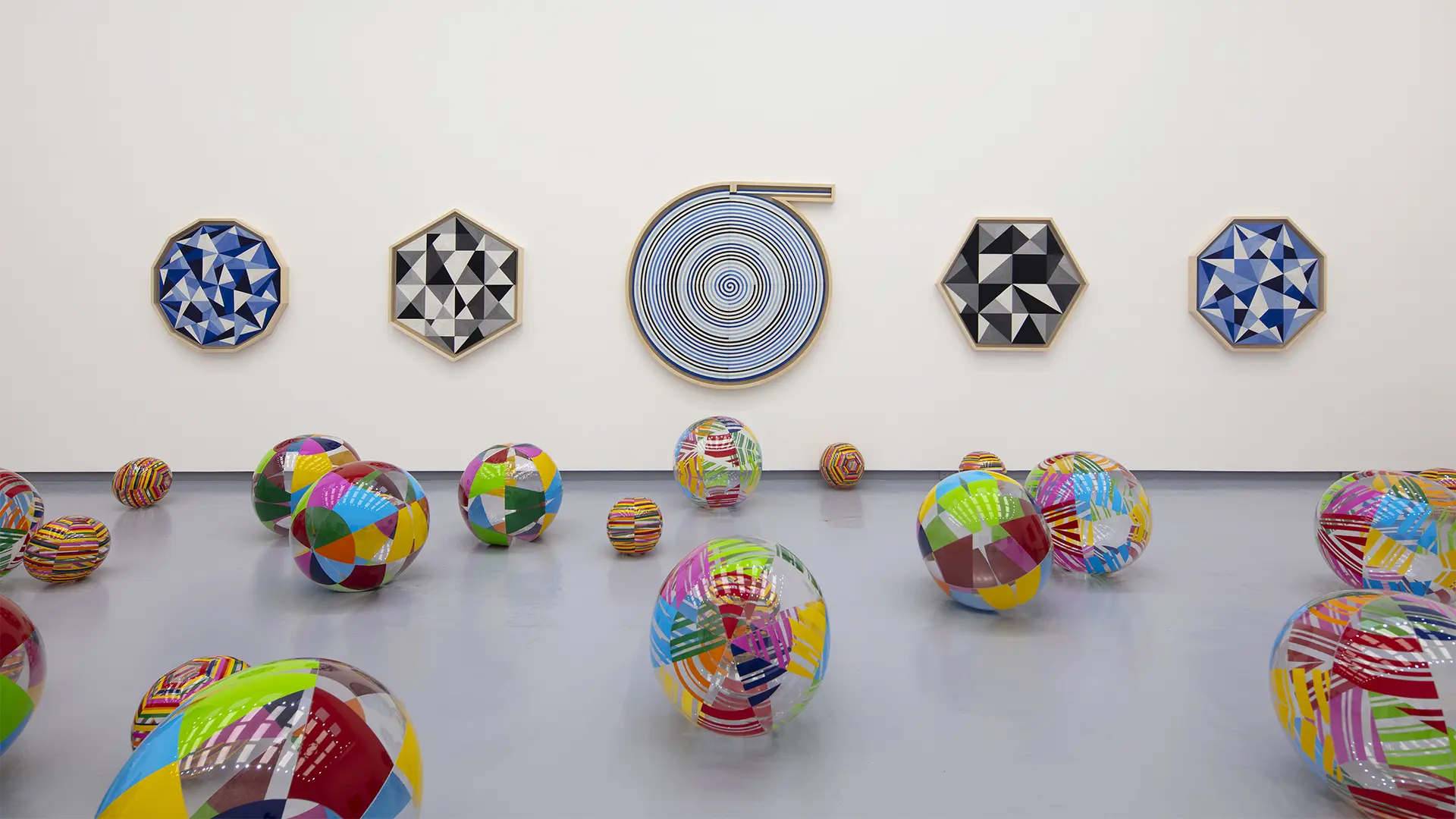
The fair, which took place from February 4 to 8, 2026, is one of the gallery’s most important showcases. It’s no surprise, then, that they have the largest space at the event: “We have practically one wall for each of our twenty-three artists.”
Although it has a global reach, the fair definitely functions as a regional platform for Latin America and as a showcase for validation, generating symbolic value and narratives that influence the visibility of Latin American art.
“At Zona MACO, we’re breaking down the walls so collectors can understand what Proyectos Monclova is really all about”
In addition to those already mentioned, participating artists include James Benjamin Franklin—no, he is not a descendant of the man featured on the $100 bill— Ištvan Išt Huzjan, Circe Irasema, Néstor Jiménez, Iván Krassoievitch, Josué Mejía, and Adrien Missika, along with names such as Yoshua Okón, Edgar Orlaineta, Hilda Palafox, Andrés Pereira Paz, Chantal Peñalosa Fong, Aydeé Rodríguez López, Michael Sailstorfer, Alejandra Venegas, and Tercerunquinto, the collective formed by the Monterrey-based artists Gabriel Cázares and Rolando Flores.
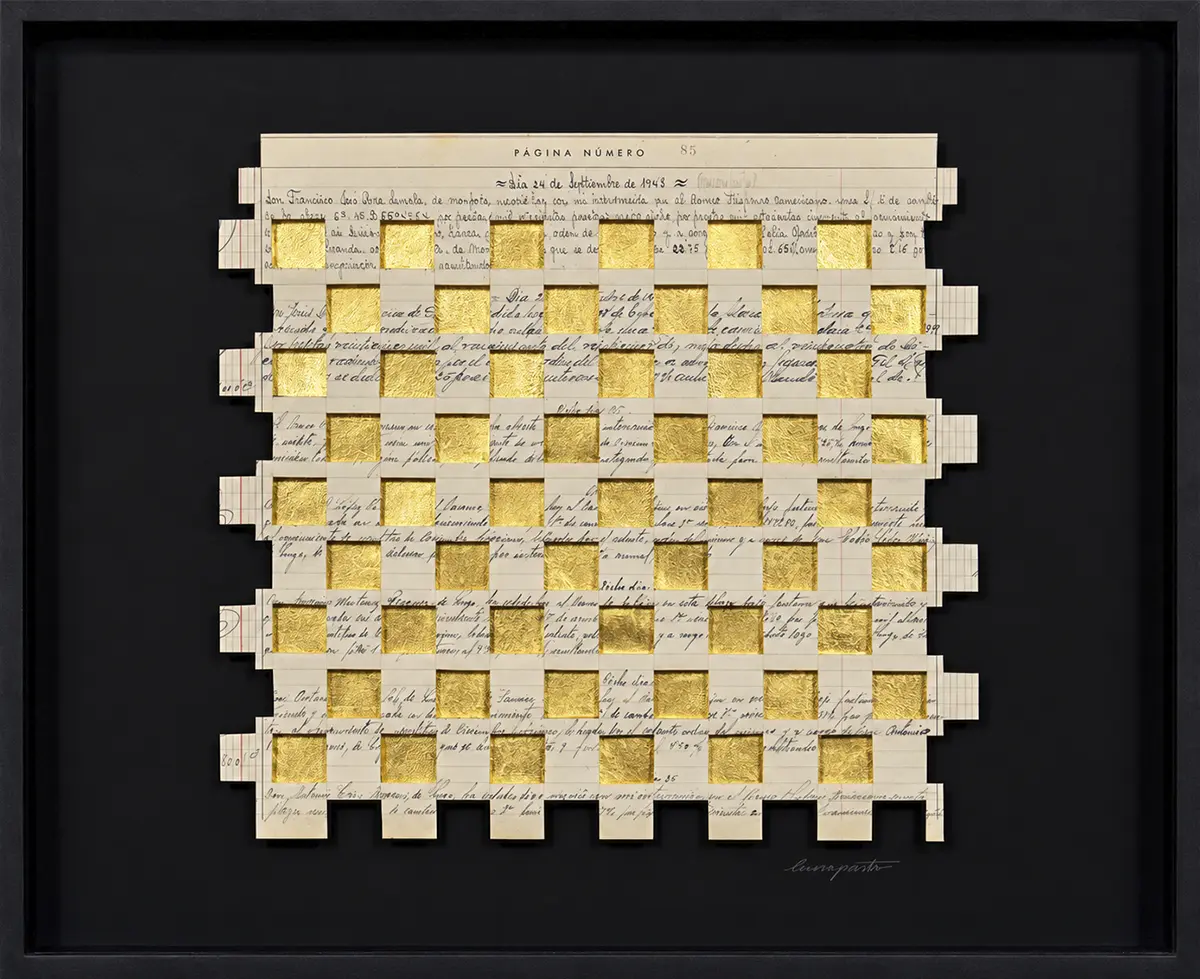
Two figures from the Brazilian art scene joined as guest artists—though not yet formally represented by the gallery: Macaparana, associated with Neoconcretism, and Juan Parada, whose work explores three-dimensionality through sculpture, 3D installations, and digital technologies.
How works end up at Proyectos Monclova: “We don’t seek out artists—we find them.”
“We’re not looking for anything specific. Sometimes, at an art fair somewhere in the world, we’ll walk by a booth and see a piece that really speaks to us, and we’ll talk to the gallerist about collaborating. It all starts with finding the artist, not searching for them.” For Proyectos Monclova, it is essential to give equal weight to all the creators who are part of their group: “If you have too many artists, you’ll have to space out their exhibitions, and the momentum is lost.” Quality over quantity seems to be one of the guiding principles that drives them.

“The new young collector isn’t just a rising star—they’re already buying”
“Part of our work is trying to educate new collectors and spark their interest in Mexican and Latin American art. It’s a constant struggle that any Latin American gallery faces,” he says when discussing the gallery’s challenges. Proyectos Monclova also keeps an eye on the novice art lover who, according to Lovera, tends to gravitate toward emerging artists. “The young collector isn’t just a prospect—they’re already buying. Far from being a future prospect, the generational shift is already happening: collectors in their 30s and 40s approach art with a more intimate, participatory, and educational mindset than that of the traditional buyer. We also offer many new works and are interested in emerging artists. In 2026 we will be presenting some of them; we are in the midst of the selection process.”
“The problem with Latin American art isn’t its quality, but how long it takes to gain recognition,” Alexandra Lovera, sales director at Proyectos Monclova, tells AW Magazine
The Monclova Projects Model
In terms of its organizational structure, Proyectos Monclova operates on a flat, clearly collaborative model. The team functions almost like a family: sales, production, logistics, archives, communications, and content all play an active role in planning exhibitions and selecting artwork. Teófilo Cohen, the gallery’s director—who also serves on the Selection Committee for ZⓈONAMACO 2026—generally has the final say, but discussions are collective, always taking into account the specific contexts of each case. The exhibition program is built with a long-term vision and planned up to three years in advance, allowing for the solid and strategic development of each artist. In the absence of a formal curator, the selection—generally eclectic—emerges from constant dialogue between the director, the team, and the artists themselves.
“The artist is a romantic; the gallery’s job is to channel that.”
“We have a touch of modern art and also a strong focus on contemporary art. But there’s no rigid line, as is the case in certain galleries where a specific trend is clearly recognizable. In our case, we don’t believe there’s a single style or movement. It just has to be something that moves and inspires us. That said, we always keep a sales eye on things,” Alexandra notes regarding her role as Big Sister. And in her role as Sales Director, she acknowledges that artists tend to be very romantic and hold a special fondness for works that aren’t always the most profitable. “That’s exactly our job: to channel the pieces and act as curators, without being professional curators.”
Proyectos Monclova continues to navigate the space between creative romanticism and market strategy, with the ambition of establishing a narrative in which Latin American art occupies a prominent place on the international art scene.
To keep exploring this thread, visit contemporary Latin American art; you can also continue through contemporary art galleries in Latin America.