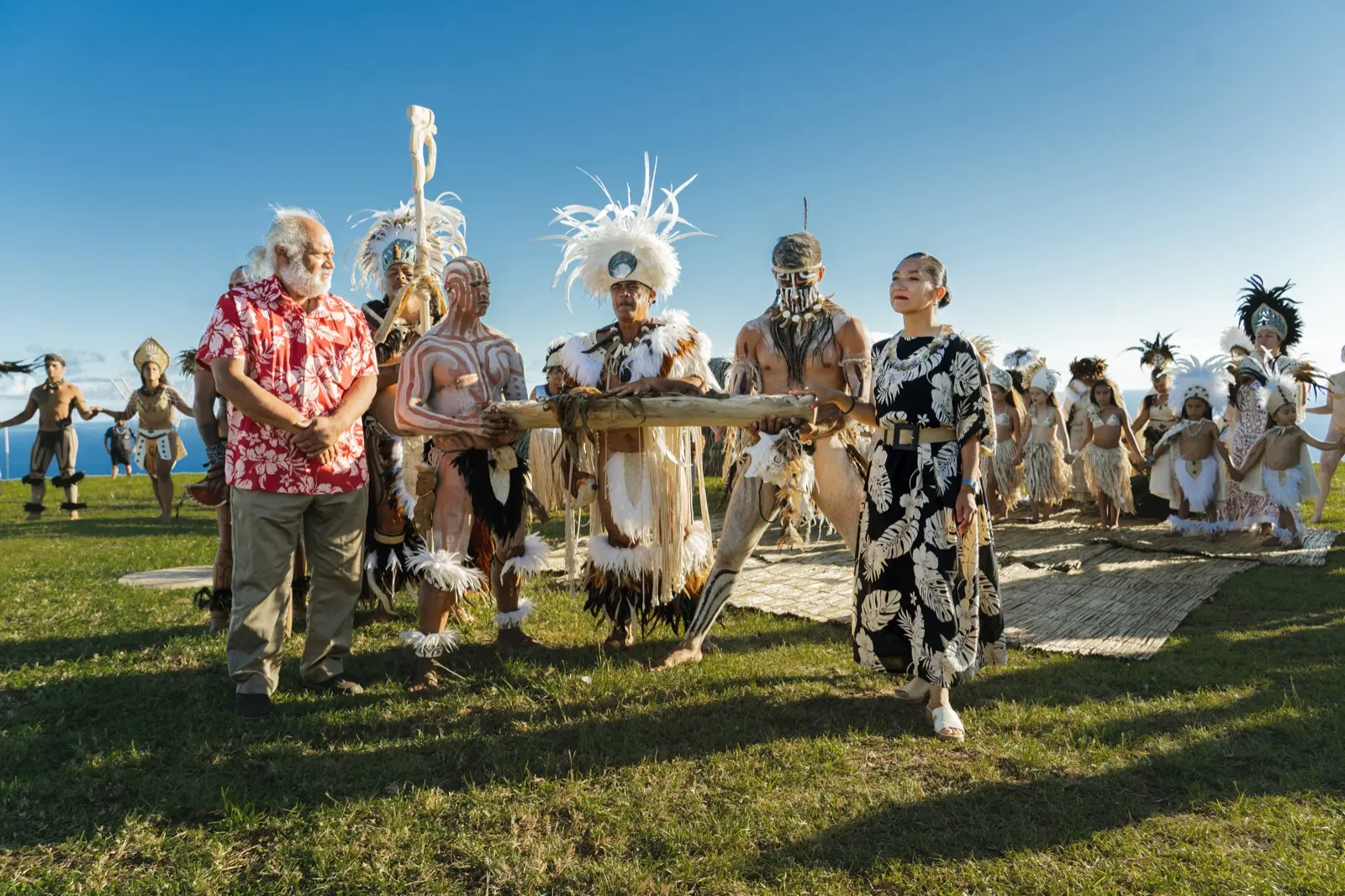

From February 3 to 14, the Chilean island will host Tāpati Rapa Nui 2026, a festival where Rapanui identity is celebrated through competitions, dances, songs, art, rituals, and all that cultural paraphernalia we may not have known we needed or even existed in one of Polynesia’s most captivating landscapes.
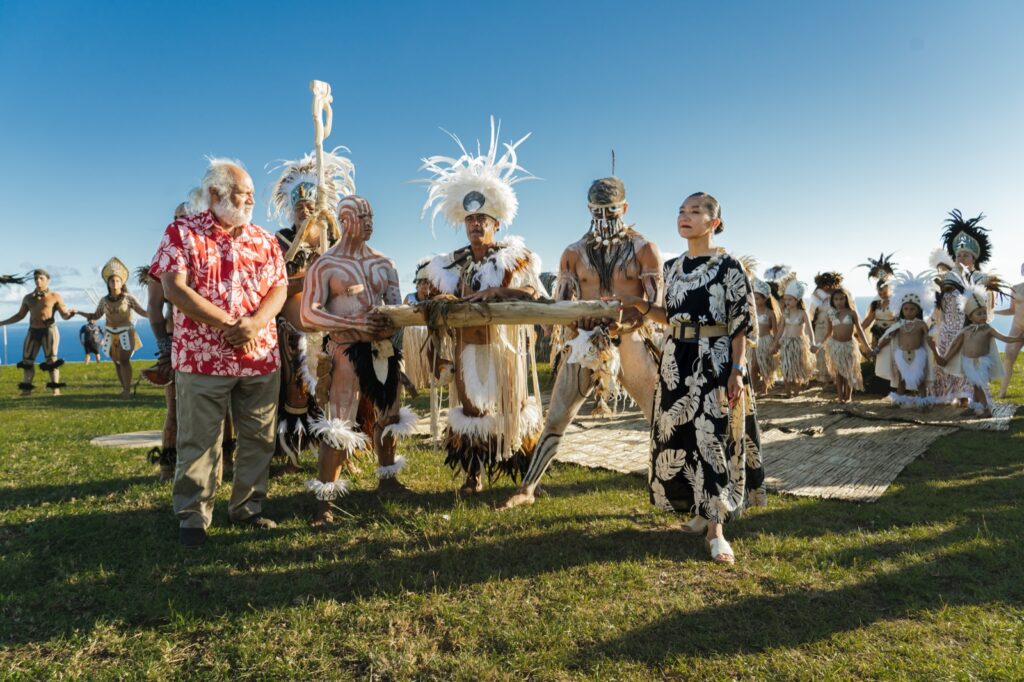
Valentine’s Day on Easter Island? Beyond the romantic postcard image and the moai in the background, February 2026 is one of the best times to visit Rapa Nui. Coinciding with the Festival Tāpati Rapa Nui, the island celebrates its identity, its living culture, and its connection to the land—offering travelers something far more interesting than a night celebrating Valentine’s Day.
The story behind the Tāpati Rapa Nui Festival and its 2026 theme
The 2026 edition centers on the theme “Vai Maŋaro: Water as the Source and Driving Force of Life,” inspired by the remarkable ancestral hydraulic system that, in a sense, foreshadowed today’s much-celebrated environmental sustainability. “We want to highlight the spiritual and practical relationship our ancestors had with this resource, remembering that caring for it defines the future of our culture and of future generations,” said the island’s mayor, Elizabeth Arévalo Pakarati.
The region’s ancient inhabitants—who will also be honored in 2026—relied on simple yet ingenious solutions, always in harmony with the local geology. All with the goal of making the most of what was available to them, especially water. Minimalists without knowing it? Their survival-oriented approach is worth recognizing in these times when, for example, a bottle of the Japanese brand Fillico Jewelry Water costs between $100 and $300.
The island sits on permeable volcanic rock, with no surface rivers, and the locals’ method of collecting water was almost poetic: waiting for the rain to seep through the rock, following its invisible path underground, and collecting it when it emerged on the coast, as if the ocean were returning to them what was rightfully theirs. All of this without manuals, without consultants, and, of course, without ChatGPT to explain the logistics to them.
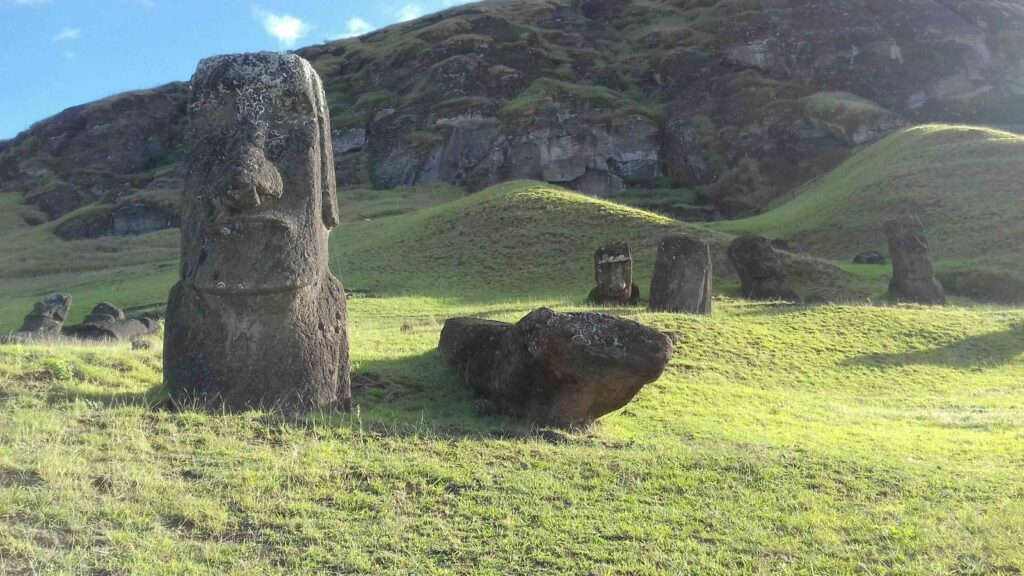
In the Ava Ranga Uka wetland area, in the central part of the islet, archaeologists discovered canals, stone terraces of varying heights, and structures that appear to be dams or ponds built to manage water flow. It is a system that today we might describe as a kind of hydraulic land art, where the infrastructure blends into the landscape and the technology is indistinguishable from the culture.
What to Do at Tāpati Rapa Nui 2026: Over 40 Options to Choose From
No, extreme sports aren’t just a millennial tourism fad: wait until you see the Haka Pei. In this activity, competitors hurtle down a hill on banana logs, as if defying gravity were the national sport. A perfect scene for those who love a thrill; if you have travel insurance, you’re in for a treat.
In addition, the activities—which include more than 40 cultural and artistic options, many of them open to the public—feature the Tau‘a Rapa Nui, a triathlon that combines vaka ama paddling, running, and swimming in a flooded volcano. It sounds cool and modern—like something out of a televised survival reality show —especially since it’s an event created in the 1960s—yes, the hippies are always to blame for everything—to honor a millennia-old identity.

Tāpati was born in that decade marked by the “love and peace” movement—yes, though not exactly as a folkloric oddity to which George Harrison might have dedicated a song, but rather as an act of cultural affirmation in the face of a Chilean government that, at the time, understood little of the island’s symbolic value. The Rapanui have been negotiating with Chile for decades for greater autonomy and control over their own territory, and their festival is also a reminder that here, culture is resistance. For this reason, each edition is a way of re-inscribing their collective memory into the calendar, a reminder that modernity has not erased their heritage.
Other activities at Tāpati Rapa Nui
Horse racing, another highlight, puts speed to the test. It also offers us Kai Kai. This storytelling involves creating figures with ropes while telling a story and looks like a children’s game is, in reality, ancient poetry you won’t find on TikTok. At night, Hanga Vare Vare Park becomes the main stage, and the Queen of Tapati, a woman—usually young—who symbolizes one of the two competing clans. It’s not a beauty pageant; it’s a celebration of family pride and local identity.
Takona, or How Skin Becomes a Cultural Archive
Takona isn’t just makeup; it’s a statement of identity. The bodies of locals and visitors alike are adorned with natural pigments that depict battles, symbols, and small metaphors of Rapanui life. It’s a way of remembering that, long before studio tattoos, there was an ancient art form that turned skin into a narrative. Without a doubt, this is another activity that makes the journey worthwhile.

But above all, and beyond the carnival-like images from previous years that we can see online —featuring local women dancing in the style of the Rio Carnival—Sunday on Rapa Nui is a sacred celebration for the indigenous people, a deeply meaningful tribute to the traditions of this land and the proper way to honor a living lineage.
“Tāpati is much more than a celebration: it is the heart of our cultural memory and the space where we reaffirm our history and envision our future. Every competition, every song, and every dance is an act of remembrance and hope that unites us as a people,” explains the mayor of the Municipality of Rapa Nui.
Polynesian and Chilean Cuisine: What to Eat on Easter Island at Tāpati Rapa Nui
During the festival, visitors can also enjoy the traditional cuisine of Easter Island, featuring the full flavor of Polynesian and Chilean cuisine, with a strong emphasis on seafood.
It’s okay to get excited like Tattoo in Fantasy Island with dishes like Umu Rapa Nui or Curanto Pascuense—the local specialty, cooked in a pit in the ground with firewood and hot stones, featuring local meats, fish, seafood, and vegetables wrapped in banana leaves— a Tunu Ahi—grilled seafood—or Po’e, a traditional Polynesian dessert made with sweet potatoes, compote, and coconut milk.

How to get to Tapati Rapa Nui
The most convenient way to reach Rapa Nui is by air. Flights depart from Santiago, Chile, bound for Mataveri Airport (IPC), with a flight time of no more than 5 hours and 40 minutes. There are also connections from Papeete, in Tahiti, and during certain seasons it is possible to arrive by cruise ship. Given the high demand—especially during the Tapati festival—it is advisable to book tickets in advance.

Is the Tāpati Rapa Nui an event for typical tourists?
Yes, but this isn’t just some folksy performance where you go to pose for a photo with the island’s monolithic statues in the background. It is, above all, a reminder that there are places where tradition remains alive and blends with modernity while continuing to honor its past, allowing us to discover how a somewhat mysterious people open up, celebrate, dance, create, compete, and paint their bodies to tell us face to face that their story is still being written.
Discover more getaways in Aw Magazine
To keep exploring this thread, visit our purposeful travel section; you can also continue through purposeful cultural destinations.