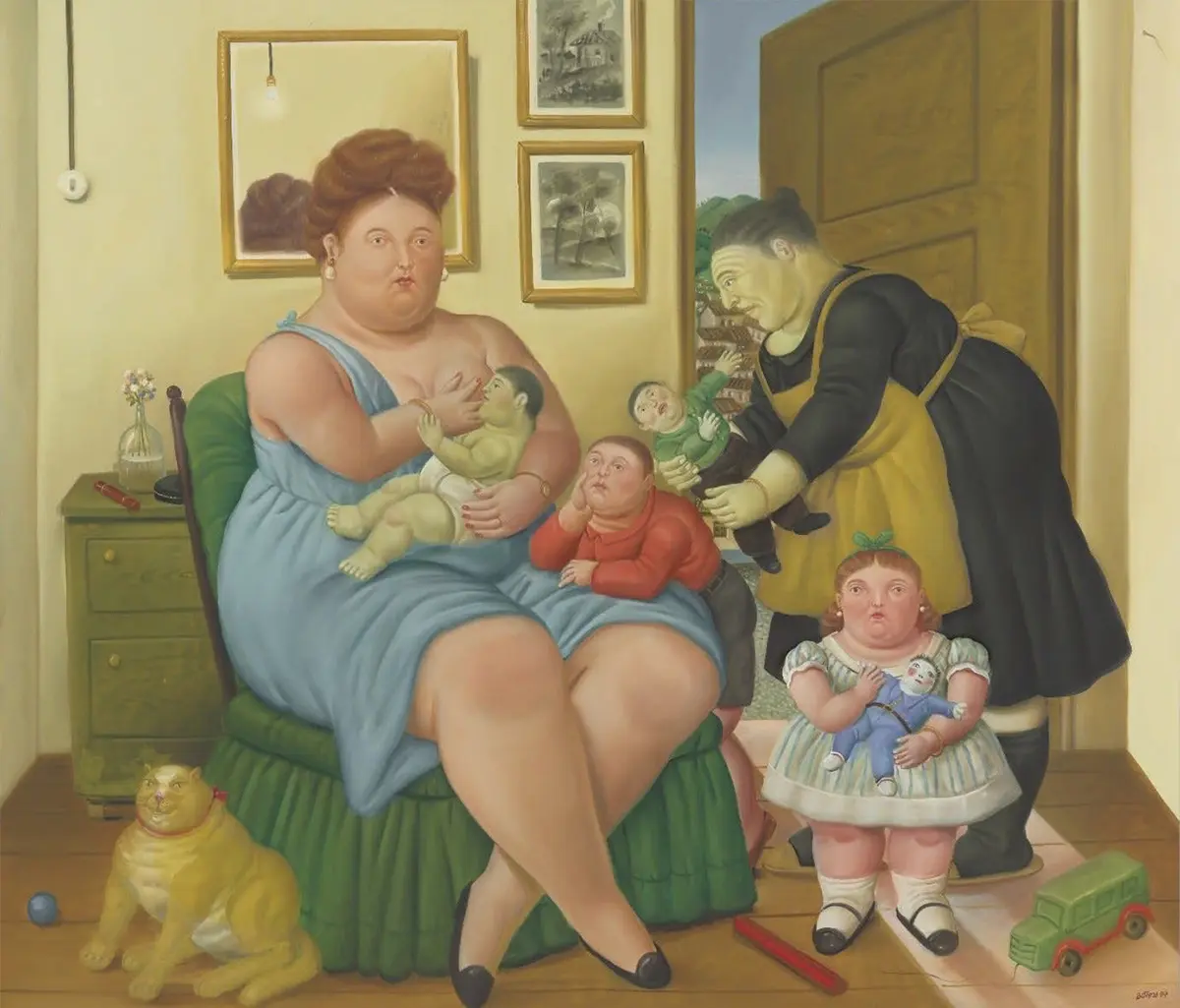

From the capital of the Colombian mountains, a city that has managed to rewrite its complex history through culture, theDuque Arango Gallery has forged a 40-year legacy in art that connects renowned figures in the global art market, such as Fernando Botero, with new trends and artists who challenge a country striving to engage with its past and present—artists we will see at Zona Maco.

Living in Medellín in the 1980s and 1990s was like an extreme sport. In the decade leading up to the new millennium, the city—located in northwestern Colombia, in the Central Cordillera of the Andes, about 400 kilometers from Bogotá—came to be considered the most dangerous city in the world, with approximately 380 homicides per 100,000 inhabitants.
The History of the Duque Arango Gallery
Opening a space dedicated to art in that context was a true statement of principles. Amid that climate, the Duque Arango Gallery opened its doors in 1980 at Cra. 37 #10 a -34, in the El Poblado neighborhood of Medellín, Antioquia. “Today we are in a city that has undergone a profound transformation through culture, technology, and art.
“It’s a very resilient place, and galleries like ours have been a driving force for change,” Federico Duque tells me. He is one of the five children of Germán Duque, who founded this space alongside his partner Sergio Arango.
In that decade, both of them had a dream that has endured for more than 40 years and has made the gallery bearing their surname one of the most prominent in Colombia.
The gallery’s number one market
The United States is their number one market worldwide. That is why Federico lives in New York, where he oversees the gallery’s projects, technology, and logistics. His responsibilities include filing customs paperwork, purchasing pieces for the collections, scouting for artists, and authenticating the works.
In his view, not only Colombian art but Latin American art in general is in high demand in North America for various reasons, such as the migration of Latin American collectors.
The Significance of Fernando Botero

“Fernando Botero is an artist of global stature, and his works are highly sought after anywhere in the world. Even in recent auction records, we’ve seen that they’ve conducted a study and concluded that there is interest in his pieces in more than twenty-five countries,” Duque acknowledges.
And one of Galería Duque Arango’s core principles is to bring together the great tradition of artists like Botero with contemporary works. Federico explains it this way: “We always focused heavily on modern art, until about seven years ago when we decided to take a break from that and inject new energy into the gallery. That’s how we started including contemporary artists and emerging artists with some experience.”
How to Achieve Prestige and Credibility
“As a reputable gallery that has always been known for selling authentic works, we must constantly ensure the security of the artworks,” he acknowledges. “We’ve been in the market for decades, and we are constantly ensuring that the works we acquire have a clear provenance and a certificate of authenticity from the artist.”
Duque says that for every ten works by Botero offered to them, four or five are fakes, but the gallery has a strong authentication team and, in the case of this artist, additional support from other gallery owners who also have extensive knowledge of the artist’s work, “including his children: Lina and Fernando Botero Jr.,” he notes.
The Profile of Art Seekers
The gallery’s clientele consists not only of those seeking a work by a great Latin American master, but also of clients who sometimes lack the capital to purchase a piece costing hundreds of thousands or millions of dollars, and who are willing to invest five or twenty thousand
“The gallery’s clientele isn’t limited to those seeking works by a great Latin American master; it also includes clients who may not have hundreds of thousands or millions of dollars to spend, but who are willing to invest five or twenty thousand” — González Alanís.
This strategy makes purchasing an original work of art at this gallery an achievable goal for new collectors and for members of the public who might feel intimidated when they walk into an exhibition and encounter exorbitant prices: “I wouldn’t use the word ‘intimidating,’” he clarifies.
“People are curious; they ask questions, they appreciate a work by a great master, and they check the prices—which are sometimes out of reach for most people. However, by combining a portfolio of modern artists with contemporary artists, it’s easier to strike up a conversation with a new collector.”
Duque Arango Gallery at Zona Maco
The Duque Arango Gallery has participated in Zona Maco since 2019 and considers this event one of the most important in Latin America. “We are making an increasingly rigorous selection and putting together a more significant curatorial program for our booth at this fair,” he says.
“With each edition, the expectations placed on us grow, and we are delighted that all the galleries are held to such high standards so that the event can maintain the level of quality it has always had. For example, we are asked to bring works of significant historical importance, by master artists, works that have not been exhibited at other fairs.”
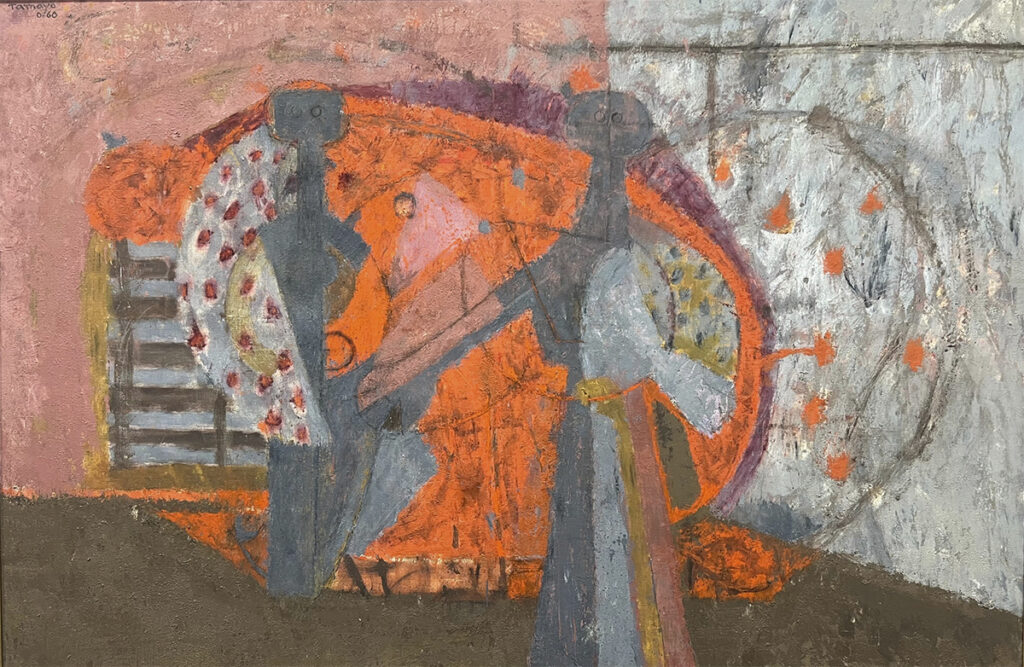
At this 2026 edition, the gallery presented several works by the Mexican icon Rufino Tamayo, an exhibition by the Cuban painter Wifredo Lam, two pieces from the 1970s by the Colombian master of the visual arts Olga de Amaral, and, of course, two pieces by Botero.
“In addition,” he notes, “the exhibition features contemporary works by the Cuban artists Ariel Cabrera and Julio Larraz—pieces that ‘complement the rest of our exhibition very well.’”
From Alejandra Aristizábal to Leonora Carrington
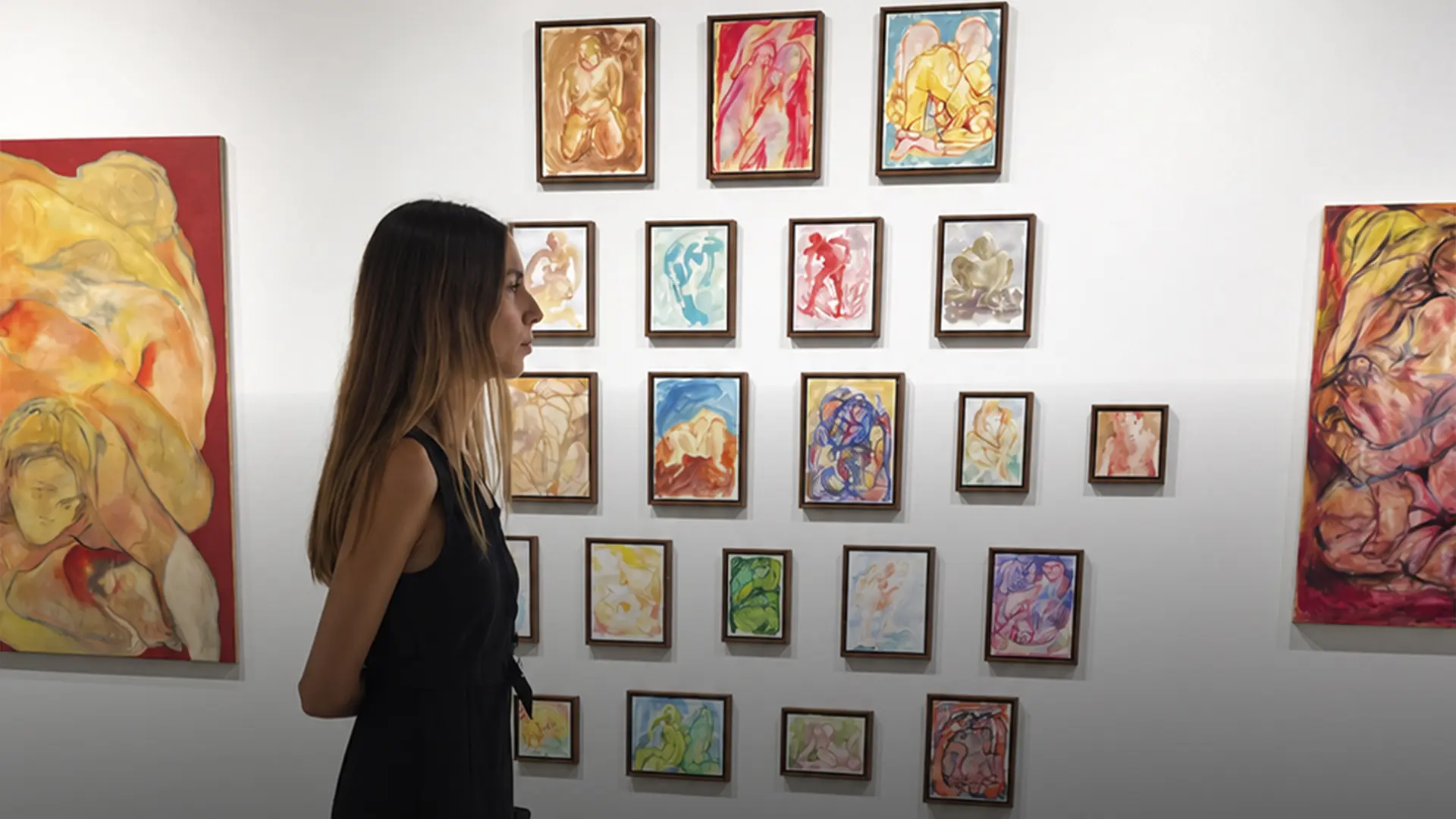
In addition to Zona Maco 2026 and its participation in ART SG (Singapore) in January, the gallery will present more than eight exhibitions this year. Among them is an exhibition by a promising Colombian artist named Alejandra Aristizábal. A native of Manizales, Colombia, she brings her work to life using natural materials such as fique—a fiber similar to agave. “At the last Art Miami fair, all the pieces we had of hers sold out in just three hours,” she tells us.
In addition to Aristizábal, the gallery features a diverse selection of works from different periods and in various sizes: the constructivist drama of David Manzur; the playful art of Javier Caraballo; the iconic surrealism of Leonora Carrington; works by Julio Le Parc, co-founder of the Groupe de Recherche d’Art Visuel (GRAV); the pop art of Álvaro Barrios; and, of course, works by the aforementioned leading figure in Colombian art, Fernando Botero.
The secrets of how a gallery selects a new artist
Regarding how the market can influence experimentation and the risk involved in including new artists in its roster, Duque explains: “We are very interested in first and foremost getting to know the artist as a person, understanding their vision regarding their work, their potential, and their prospects for longevity or growth.”

He asserts that the development of a promising new artist consists of three elements: the academic aspect, institutional support, and, of course, commercial success. “And in that process, we’ve had both successes and failures,” he acknowledges.
How should an emerging artist handle this situation?
For him, the rebellious, disheveled, and disruptive emerging artist no longer fits the current model—at least not for the gallery: “The perception of the artist has changed a lot. Let’s say that in the last century, he was the madman, the one who thought differently, the one who went his own way with a bottle of wine and a cigarette in his mouth,” she asserts.
“But today, many well-rounded artists are also businesspeople; in some way, they have to protect their work and their legacy,” he concludes.
The promotion and retention of Galería Duque Arango, from Colombia to the rest of the world, is proof that today, Latin American art is capable of competing with works from anywhere else on the planet. “We have been a continent ravaged by violence, by drug trafficking, by corrupt politicians,” he reflects, “which is why we have so much history to share with the world through art.”
“We are a resilient region, and telling that story and sharing the success stories that are part of our daily lives gives us strength and a unique perspective on art in Latin America.”
To keep exploring this thread, visit our contemporary art coverage; you can also continue through the galleries setting the agenda.