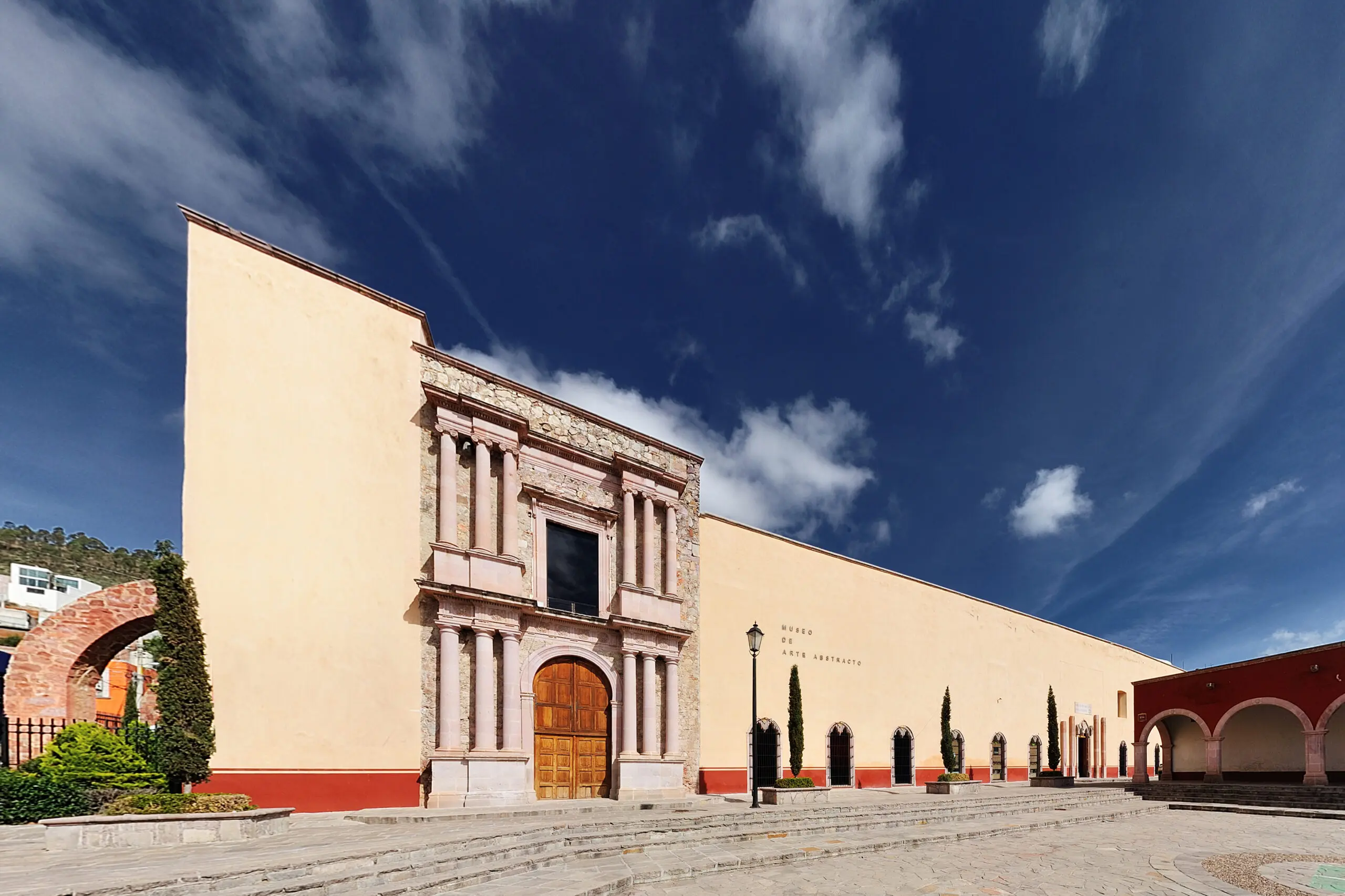

The Manuel Felguérez Museum of Abstract Art, located in Zacatecas, houses one of the most unique art collections in our country.
Six stone pillars frame the wooden gate. Upon entering, it’s hard to believe that this museum once housed the Conciliar Seminary of the Immaculate Conception, then a military barracks, and finally a prison. The building that houses the most groundbreaking visual art created in 20th-century Mexico was previously a space for religious education, militarization, and punishment.
The museum is located in the capital’s Historic District. Zacatecas is a splash of pink that stands out in north-central Mexico. The stonework dominates the space and catches the eye of locals and tourists alike. The facades of the historic buildings display ornamentation as complex and intricate as a Borgesian fantasy. Sunlight filters through the hills surrounding the city. The ground we see is the result of the combination of those rough stones and the carved stonework that has remained there for centuries. The building, sturdy on the outside, resembles a fortress.

Manuel Felguérez, the Abstract Avant-Garde in Mexico
Manuel Felguérez is at the heart of 20th-century Mexican art and thought. In the most trivial and amusing sense, this is demonstrated by the photographs in which the artist poses, as a very young man, alongside the Guanajuato-born writer Jorge Ibargüengoitia. Both were Boy Scouts, and both were born in 1928.
He was born in Valparaíso, Zacatecas. In Paris, from 1949 to 1950, he was a student of Ossip Zadkine, a Russian painter and sculptor who combined classical tradition with fragmentation and abstraction. Felguérez exhibited for the first time in 1958. From that point on, he established himself as one of the pioneers of abstract art in Mexico. During his lifetime, he received numerous awards and honorary titles. He was a Full Member of the Academy of Arts in Mexico and a member of the Institute of Aesthetic Research at UNAM.

Zacatecas is a place with incredibly deep roots in its history and traditions. Yet this native of Zacatecas became one of the most important avant-garde voices of his time.
No matter how rebellious and specialized it may have been, for Manuel Felguérez, art was not reserved for the elite. In a 1979 interview conducted by journalist and television host Silvia Lemus, the master spoke of the importance of bringing art to the streets and taking it out of its typical specialized circles. It was also crucial, he said, to separate it from the logic of supply and demand.
“These words—bringing art to the streets—mean giving art a public purpose. It means ensuring that our efforts as artists aren’t limited to the few people who can afford to buy our work, but rather that we can make art a social service”— Manuel Felguérez
Manuel Felguérez died in Mexico City in 2020.
The Manuel Felguérez Museum: Long Live the Break
The Manuel Felguérez Museum of Abstract Art is located in a building constructed in the 19th century. Currently, the building houses a comprehensive exhibition of the painter and sculptor’s work, as well as an interesting collection of abstract artists, including Vicente Rojo and Fernando García Ponce, among others. The museum has 15 galleries whose walls display both the permanent collection and various temporary exhibitions. The latter feature national and international artists who also work in the field of abstract art.
The museum’s collection consists of four main collections.
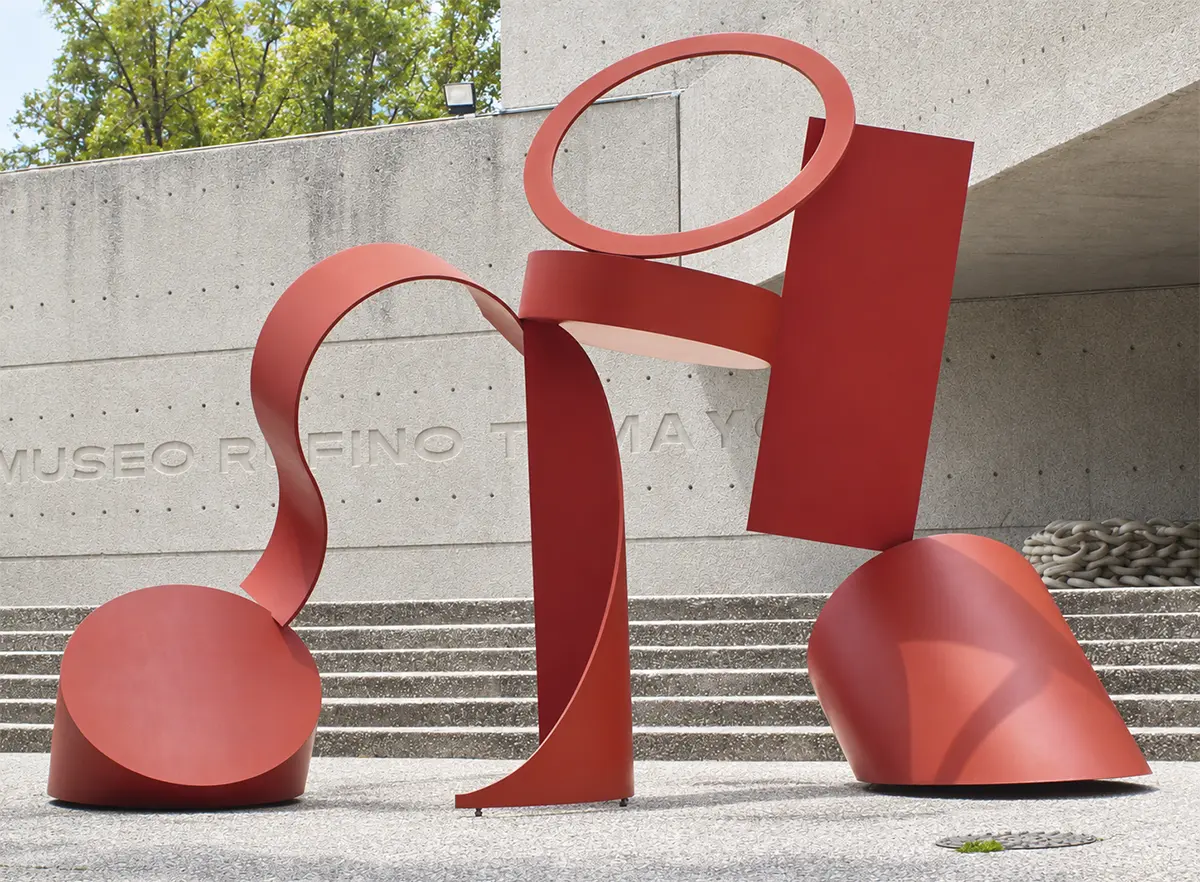
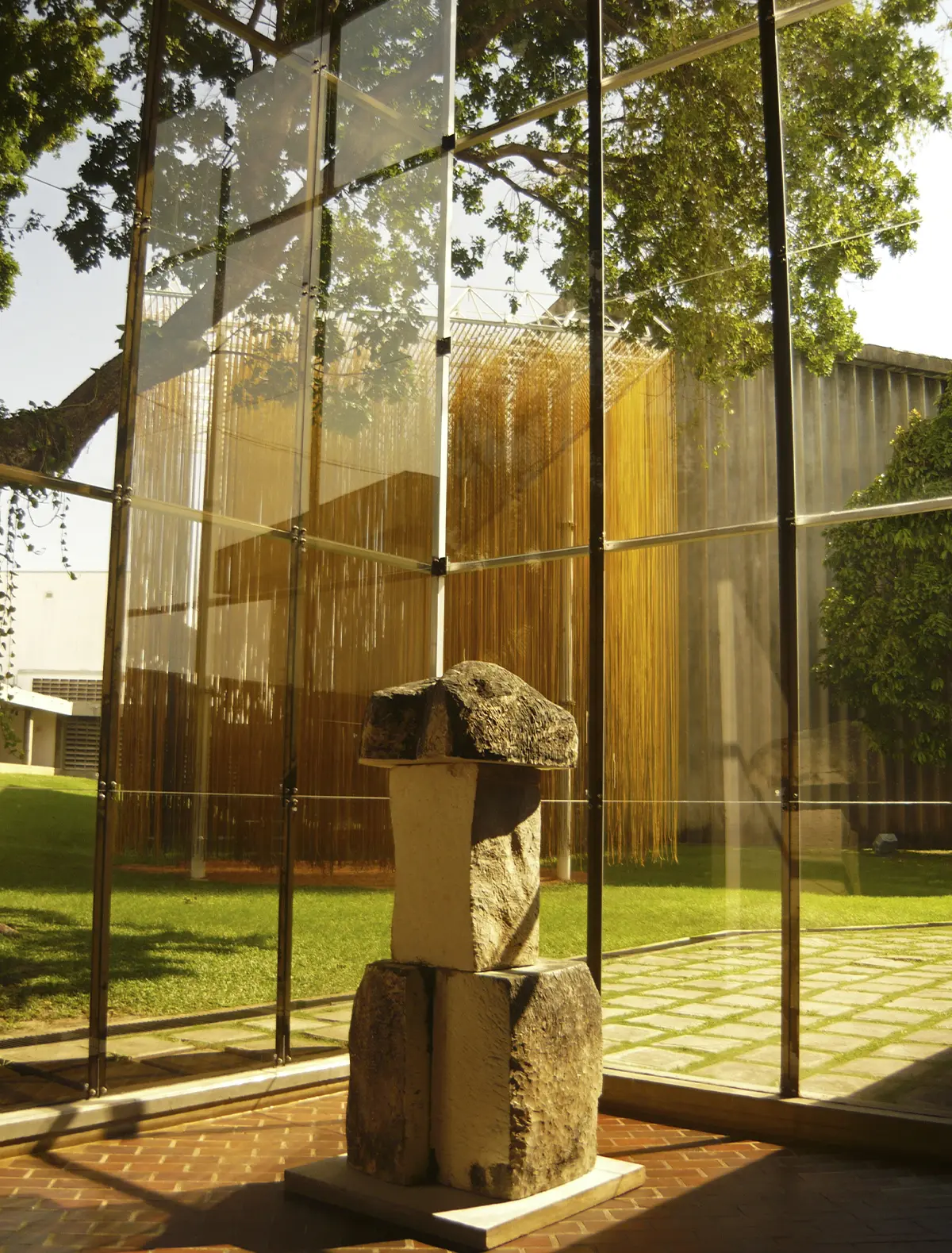
The anthology is a fine example of Felguérez’s multifaceted work in both painting and sculpture. In the Garden of Sculptures, a subsection of this section, visitors can view some of the pieces the artist created. It is also possible to explore the “Máquina Estética” and “Espacio Múltiple” series. These emerged in the 1970s as a result of Felguérez’s experiments with computing as a design tool. The master can be considered one of the first digital artists in Mexico.

Further along the tour, we can view the “La Ruptura” collection. In the mid-20th century, a group of young artists created and promoted a new aesthetic language in Mexico. They abandoned aesthetic nationalism and turned their attention to the European avant-garde movements of the time. They are known as the Ruptura Generation, with Lilia Carrillo, Vicente Rojo, Fernando García Ponce, Francisco Toledo, José Luis Cuevas, and, of course, Manuel Felguérez standing out among them. The focus of their work is formal experimentation, subjectivity, and abstraction. With them, muralism fell as the primary expression of Mexican art. This collection showcases the work of some of them.
Building on that creative freedom, the collective collection showcases the work of the generations that followed *La Ruptura*—that is, those artists who took the freedom and creative play of their predecessors to even greater extremes. The Generation in Divergence emerged between 1935 and 1945. Among its ranks, thanks to experimentation as a creative focus, Ilse Gradwohl, Irma Palacios, Susana Sierra, and Arnaldo Coen stand out.
Finally, the Osaka Murals are perhaps the collection most sought after by visitors. It consists of 12 large-scale paintings that were originally exhibited in the Mexican pavilion at the 1970 Osaka World’s Fair. The theme of the exhibition was human progress and harmony. Curator Fernando Gamboa invited a group of young artists to create the works. The artists were Manuel Felguérez, Lilia Carrillo, Fernando García Ponce, Arnaldo Coen, Francisco Corzas, Roger von Gunten, Gilberto Aceves Navarro, Francisco Icaza, Brian Nissen, Vlady, and Antoni Peyrí. After being preserved by INBAL for more than 40 years, the pieces were added to the permanent collection of the Felguérez Museum.

The collection of the Museum of Abstract Art represents a point of departure and contrast with the Mexican artistic tradition of the 20th century. It also stands in contrast to the city of Zacatecas itself. The Historic Center, an architectural complex dating back several centuries, surrounds the heart of the city, home to the rebellious and fierce art that rose up against its own immediate history.
Perhaps the museum is a metaphor for Manuel Felguérez himself.
A seminar, a military barracks, a prison, a museum
Construction of the building began in 1870. The building was designated for the Conciliar and Tridentine Seminary of La Purísima. Its walls and students witnessed more than 40 years of history. Before their very eyes unfolded the death of Benito Juárez, the rise and fall of the Porfiriato, and the arrival of the Revolution.
The seminary operated until 1914, when it was captured by Villista troops during the Siege of Zacatecas. The students and priests were left out on the streets. The building was then used as a military barracks. It soon fell into disuse. It wasn’t until 1964 that the renovation of the old seminary began. The goal was to build a prison. That same year, Gustavo Díaz Ordaz became president of Mexico. That president, for whom the prison system would be so important, was the one who suppressed the 1968 student movement and who took responsibility for the events of October 2 in the Plaza de las Tres Culturas. The building served as a prison until 1995.
In 1997, the local government invited Felguérez to establish a museum dedicated to his work, which by then had already been established as part of the canon of the visual arts in Mexico. In 1998, two years before the fall of the ruling party, the Museum of Abstract Art opened its doors.

The history of that building encapsulates that of modern Mexico, as a liminal space: a religious setting with great political power, which later collapses; a rebellion that shatters the existing balance of power and ultimately abandons itself; a revolution that becomes a one-party state and embraces prisons; and in art, a supposed democratic transition that canonizes those who once rebelled against the elites and the markets. It is possible that, with the museum, Manuel Felguérez has fulfilled his desire to democratize art. We should think about this more carefully.
On the way out
When visitors leave the museum, the first thing they see is Plazuela 450, a space surrounded by arches where some children are playing soccer. There are also stray dogs.
The preservation of Zacatecas’s Historic District makes it seem like a place frozen in time. But the truth is that the centuries have passed here as well. The building is a silent witness.
How much does that artistic legacy resemble a group of young seminarians, soldiers in training, or prisoners of the regime?
Discover other museums and galleries in AW Magazine.

To keep exploring this thread, visit our spaces with soul section; you can also continue through homes and spaces with a story.