
“Art should evoke emotion in the viewer, but that does not mean that this emotion must arise from an emotional situation. Art is not expression; art is knowledge,“ said the Venezuelan kinetic artist Jesús Soto (1923–2005).

The Founding of the Jesús Soto Museum of Modern Art
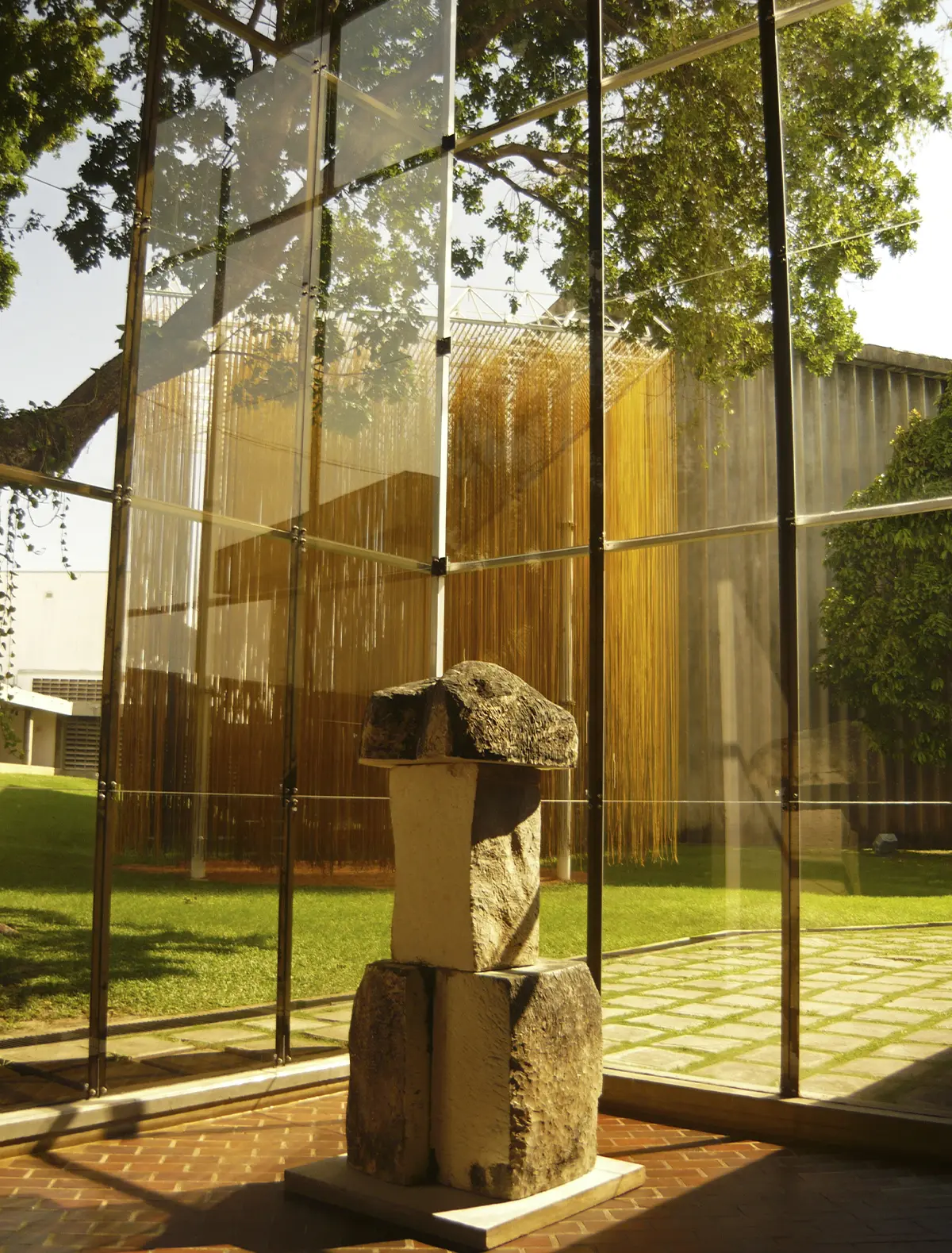
His museum, the Jesús Soto Museum of Modern Art, was inaugurated on August 25, 1973, in Ciudad Bolívar. The museum brings together Soto’s own work and the design by Venezuelan architect Carlos Raúl Villanueva (1900–1975), the architect behind the University City of Caracas—designated a UNESCO World Heritage Site in 2000—and one of the most influential Venezuelan architects of the modern era.
Designed to promote contemporary art in the artist’s homeland, the venue stands out for its cutting-edge architecture, which is considered an international benchmark even beyond the land of arepas.
After being closed for several years, the museum reopened its doors in 2025 to once again showcase Soto’s kinetic artworks to the public and restore one of southern Venezuela’s most iconic cultural spaces for the people.
The Essentials of Modern and Kinetic Art in Venezuela
“The museum’s architecture is, in itself, a work of art; its open spaces and seamless integration with the natural surroundings invite introspection and wonder,” states a curatorial text from the museum, presented during the new season.
In addition to Soto’s works, the museum features pieces by key figures in modern and kinetic art who shared aesthetic concerns with the artist or who, in some way, influenced his career.
Among them are notable works by the Venezuelan Carlos Cruz-Diez, the Polish artist Henryk Berlewi, the Ecuadorian Luis Molinari, and the Hungarian Victor Vasarely, with whom Soto crossed paths during the historic exhibition *Le Mouvement*, held in Paris in the mid-1950s.

The Soto Dimension
The museum closed in 2013, but following its reopening, it aims to enhance the visitor experience by incorporating digital tools.
The initiative was unveiled a few days ago during the opening of the exhibition *La Dimensión de Soto*, featuring interactive resources designed to introduce the public to the artist’s life and work through new platforms and formats tailored to the age of social media.
The Soto Dimension is an immersive experience and an interactive exhibition space created in honor of the artist.
What does Jesús Soto mean for art in Venezuela?
On June 5, Venezuela celebrated Soto’s birthday. His legacy of kinetic art continues to challenge the limits of perception, transforming the viewer from a mere observer into someone who feels as though they are part of the artwork.
Jesús Rafael Soto was born in Ciudad Bolívar, Bolívar State. From his earliest sketches featuring repetitive forms in Paris to his famous “Penetrables” pieces, his legacy endures. Soto’s work evolved from visual art based on mathematical concepts to an attempt to translate Bach’s musical structure into the visual realm.
The Jesús Soto Museum of Modern Art not only pays tribute to him, but also houses one of the most important collections of abstract and geometric art in Latin America, which was donated by the artist himself at the time.
The Museum’s Innovative Spirit in 2026
The exhibition introduced new tools that are innovative in Latin America. According to museum officials, these digital tools allow visitors to explore fundamental concepts of Kinetism—such as movement and the relationship between space and perception—through audiovisual and interactive experiences.
The project also includes social media outreach strategies aimed at connecting with new audiences and strengthening the museum’s educational impact. The goal is to preserve the legacy of the museum’s founder and honor his innovative spirit.
“Far from diminishing the content, technology today serves as a bridge for us. Through it, we achieve a visual stimulus that pays tribute to the master’s avant-garde spirit,” noted the museum’s communications team, which views these additions as a way to bring visitors—especially younger ones—closer to the institution’s highly prized permanent collection.
The futuristic character that distinguished Soto’s work
The incorporation of digital resources aims to preserve the futuristic character that distinguished Soto’s work. Just as the artist challenged traditional ways of understanding art through kinetic art, the museum is now embracing these new tools to share his legacy and expand the possibilities for interaction with the public.
Discover more articles on Latin American art in AW Magazine.