
60,000 million dollars. This is the sales figure recorded by the global art market last year, according to a report by Art Basel, one of the world’s most important international art fairs.

Basel 2026 and the Latin American Presence
The 2026 edition, which took place from June 19 to 21, ended on a high note, as usual, further underscoring that modern art from Ibero-America is currently enjoying a golden age.
A work such as Picasso’s *The Painter and His Model in a Landscape* by Picasso sold for $35 million—one of those transactions that, at this stage of the game, no longer seem implausible and that contribute to the aforementioned astronomical figure. A small drop, of course, but the ocean is made up of drops.
The City of Basel, Cultural Capital
The city of Basel, a picturesque town in northwestern Switzerland on the banks of the Rhine River, reaffirmed its status as a cultural capital for yet another year and contributed to the massive influx—fortunately not of the river—and the economic windfall.
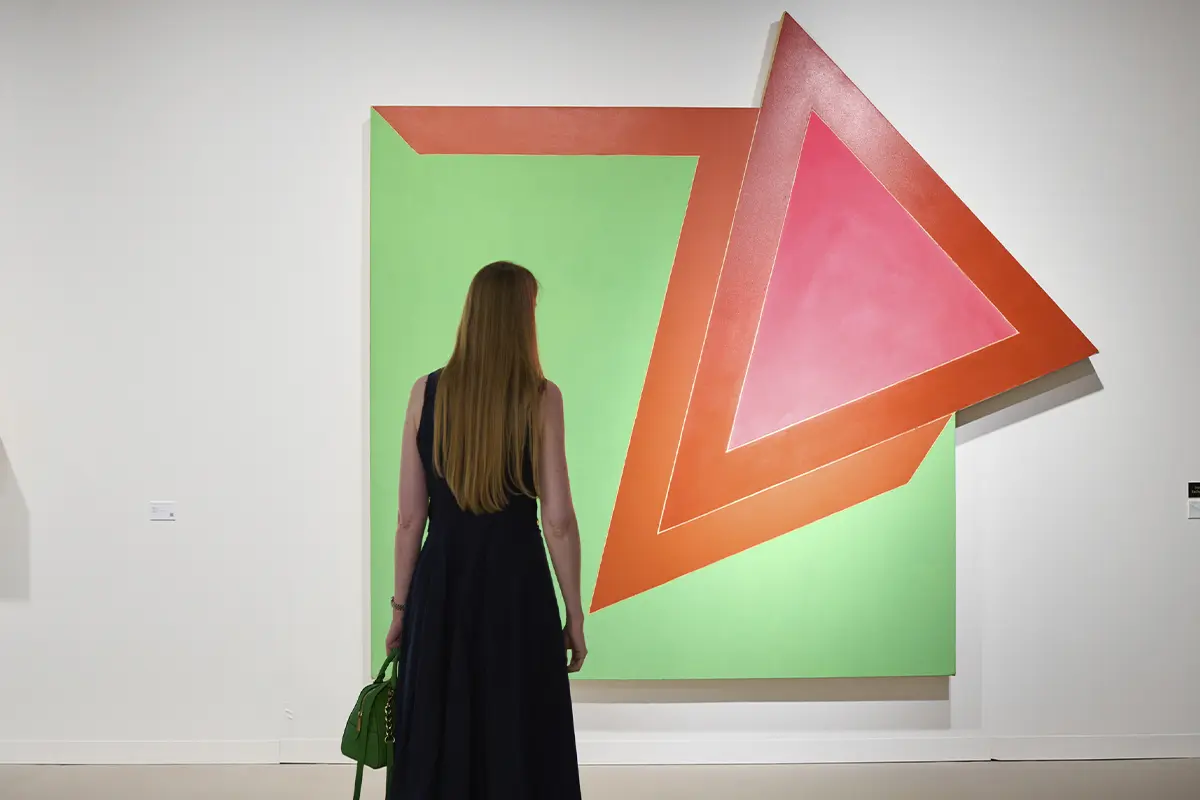
More than 290 galleries from 43 countries showcased the work of at least 4,000 artists from past and present, including pieces such as “Troy” (1962), a legendary silkscreen print by Andy Warhol.
The Ibero-American contingent, which is playing a significant role at the event, contributed greatly to this vibrant scene. The presence of the Latin American and Spanish markets in Basel was evident with Madrid-based artists Elvira González (on the cover), Elba Benítez, Ehrhardt Flórez, and Leandro Navarro; Barcelona-based Polígrafa Obra Gráfica; the Colombian gallery Casas Riegner; the Mexican gallery kurimanzutto; and the São Paulo-based galleries Casa Triângulo and Raquel Arnaud, among others.

The Spanish-Speaking Community: The Past and the Future
In addition, classics created by the Uruguayan artist Joaquín Torres García between 1916 and 1935 were exhibited in Guillermo de Osma’s space. But the Spanish-speaking community did not merely look to the past; it also laid the groundwork for the future.
The Max Estrella Gallery positioned itself at the forefront of technology within the Zero 10 digital section, and new collectors set their sights on solo projects by emerging artists such as Spain’s Mónica Mays and Mexico’s Ramón Saturnino in Statements, or on works by artists on the verge of establishing themselves, such as Oriol Vilanova, Sara Flores, and Guadalupe Maravilla.
This demonstrated that Spanish-language art is an indispensable part of the contemporary art scene and conceptual trends. Rafael Lozano-Hemmer, a Mexican artist based in Canada and a leading figure in interactive and technological art, also participated in this edition.
The Galleries at Art Basel 2026
The edition brought together 290 galleries from 43 countries and territories, with a strong Ibero-American presence in both the main section and the Feature, Statements, Premiere, and Unlimited sections.

From Spain, galleries such as Helga de Alvear, Sabrina Amrani, Elba Benítez, Prats Nogueras Blanchard, and Leandro Navarro stood out, presenting historical and contemporary works by Spanish and international artists. The Spanish participation focused particularly on artists with museum-level careers and on contemporary practices related to installation art, conceptual art, and sculpture.
Latin American Representation
Latin American participation was led by galleries from Brazil, Mexico, Colombia, Argentina, Chile, and Cuba. Among the most notable were Mendes Wood DM, Luisa Strina, Fortes D’Aloia & Gabriel, A Gentil Carioca, kurimanzutto, Galería OMR, Labor, Lodos, Proyectos Monclova, Instituto de Visión, Casas Riegner, Ruth Benzacar, El Apartamento, and Isabel Aninat, thereby solidifying the region’s influence within the global market.

The Most Prominent Latin American Artists at Basel 2026
Among the most prominent Latin American artists at Basel 2026 were internationally established names such as Gabriel Orozco, Damián Ortega, Abraham Cruzvillegas, Teresa Margolles, Doris Salcedo, Óscar Murillo, Delcy Morelos, Gabriel Chaile, Adrián Villar Rojas, Cildo Meireles, Ernesto Neto, Adriana Varejão, Rosana Paulino, Cecilia Vicuña, Alfredo Jaar, Carlos Garaicoa, and Yoan Capote—many of whom were featured in both commercial booths and curatorial projects and parallel exhibitions during Basel Week.
In Spain, the artists with the strongest institutional and commercial presence included Cristina Iglesias, Miquel Barceló, Juan Muñoz, Dora García, Ignasi Aballí, Antoni Tàpies, Eduardo Chillida, and Joan Miró, represented by Spanish and international galleries.

The 2026 edition also confirmed the growing interest among collectors and museums in Latin American art, particularly works exploring themes of identity, memory, territory, ecology, and historical reinterpretation, making artists from the region some of the fair’s most prominent figures
Find more connections between Latin American art and international exhibitions in AW Magazine.