From to
RocioSantaCruz presents the self-portraits and character-costumes of Mariaelena Roqué as part of her research on body and identity.
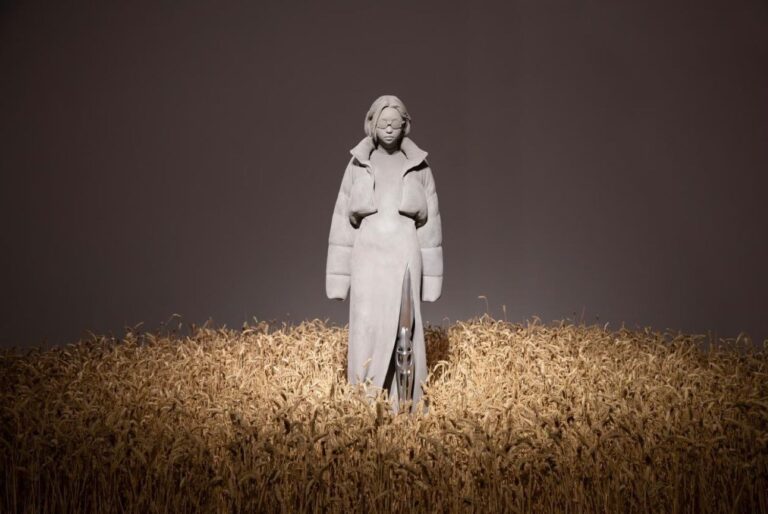
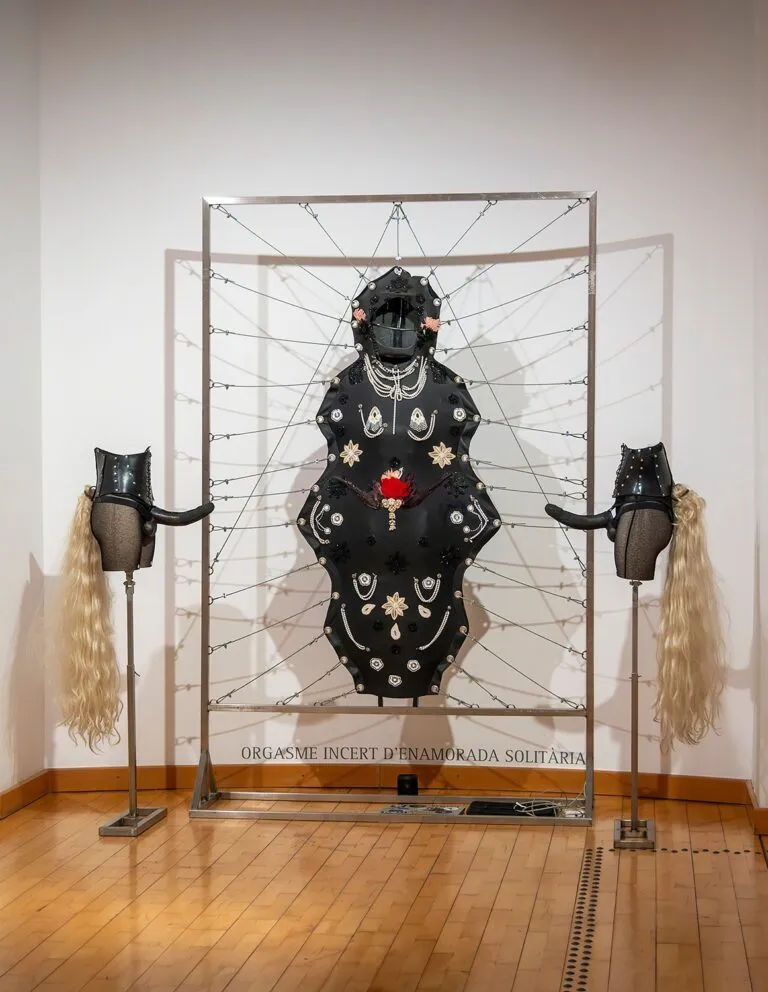
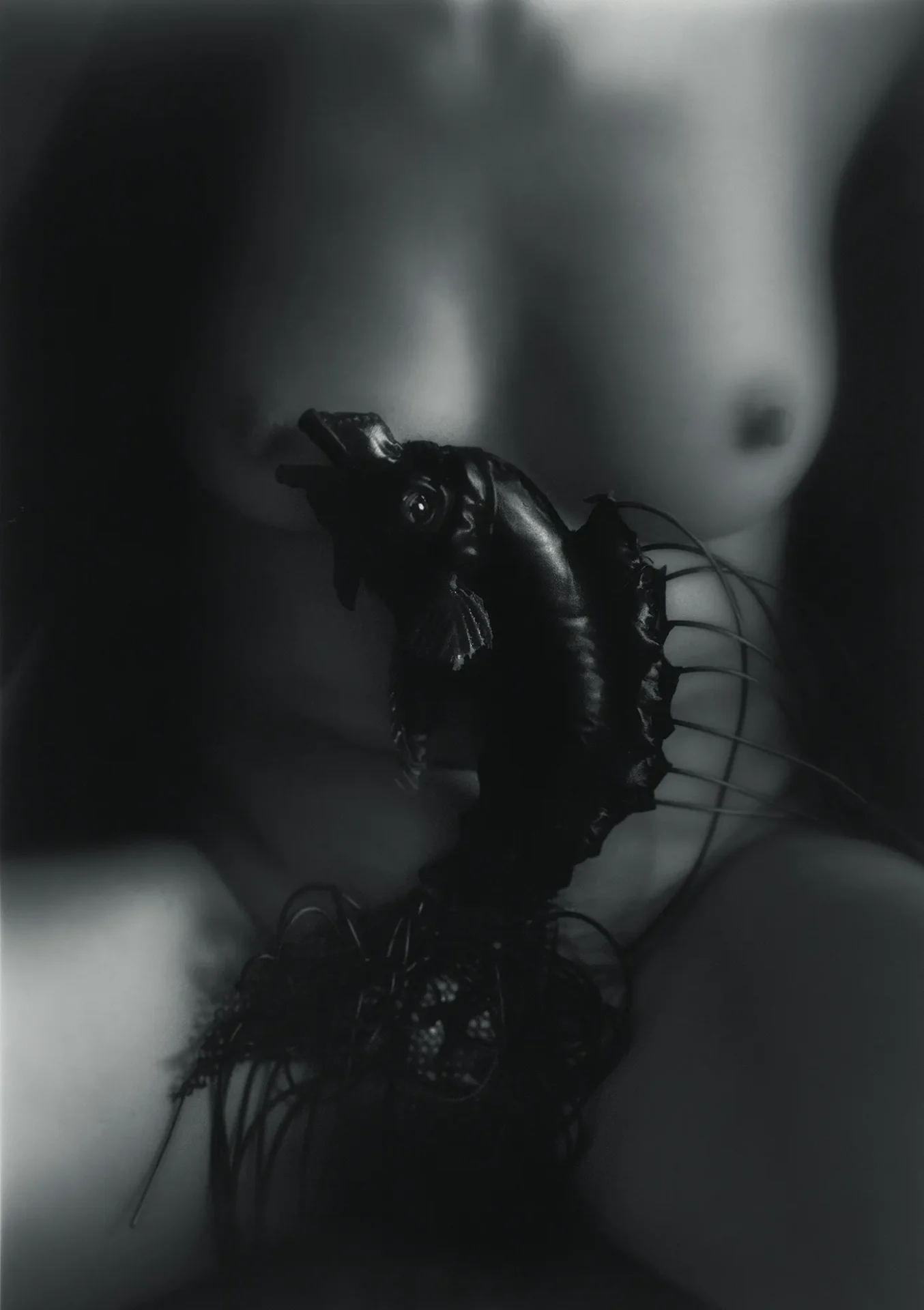
UnaDonaUna · AutoRetratRetratat brings together works by Mariaelena Roqué (Tarragona, 1952), created between the 1990s and 2026, at RocioSantaCruz in Barcelona. The exhibition, open from September 17 to November 21, features self-portraits, photographs, objects, and costumes that the artist has also conceived as characters and sculptures. Among the documented pieces areLa Bicha / AutoRetratsRetratats (1991–1993), constructed from synthetic hair, Lycra, leather, embellishments, and steel cables; DonaPeix (2000), a digital print; and various versions of UnaotraDonaUna i jo (2019/2026). The materials used in La Bicha allow the human silhouette to be altered to the point where it becomes difficult to distinguish where the dress ends and the sculptural object begins.
Roqué was born in Tarragona and grew up in Caracas, where he moved with his family during his childhood. In Venezuela, he studied dance and psychology and began working with photography, experimental film, and performance art. He also lived in the Philippines before settling in Catalonia in the early 1980s. His experience with movement and working with performers has remained a constant in his visual work. His costumes are not limited to identifying a character: they incorporate structures, rigid materials, and elements that alter the body’s proportions and constrain its movements. When displayed offstage, they retain the characteristics of objects constructed for a performance.
A significant part of her career was linked to the composer and performing artist Carles Santos, with whom she founded a company and developed shows that combined music, dance, set design, and performance art. Roqué contributed to the visual design of productions such as La pantera imperial, Ricardo y Elena, and *El adiós de Lucrecia Borja*. Their collaboration spanned more than two decades and resulted in works in which the costumes and set elements took on roles that went beyond merely accompanying the music. This shared creative endeavor contributed to her name frequently being associated with Santos’s, even though she had been pursuing her own solo work for years prior.
In 1997, she presented Despulles inoxidables at the Fundació Joan Miró in Barcelona. In 2006, the Museu Tèxtil i d'Indumentària organized Mariaelena Roqué despulla Carles Santos, an exhibition that brought together and examined the objects, costumes, and visual elements created during their collaborative work in the performing arts. Part of this work also reached French institutions, such as the Musée des Tissus et des Arts Décoratifs in Lyon, which presented Sous le signe d’Eros in 2010, and the Centre National du Costume de Scène in Moulins, where she participated in Les Insolites in 2011. In 2025, the Museu d’Art Modern in Tarragona dedicated Silenci despullat. UnaDonaUna to her, a solo exhibition focused on her artistic production. In 2026, she also presented an installation at the Museu de l’Ebre in Tortosa.
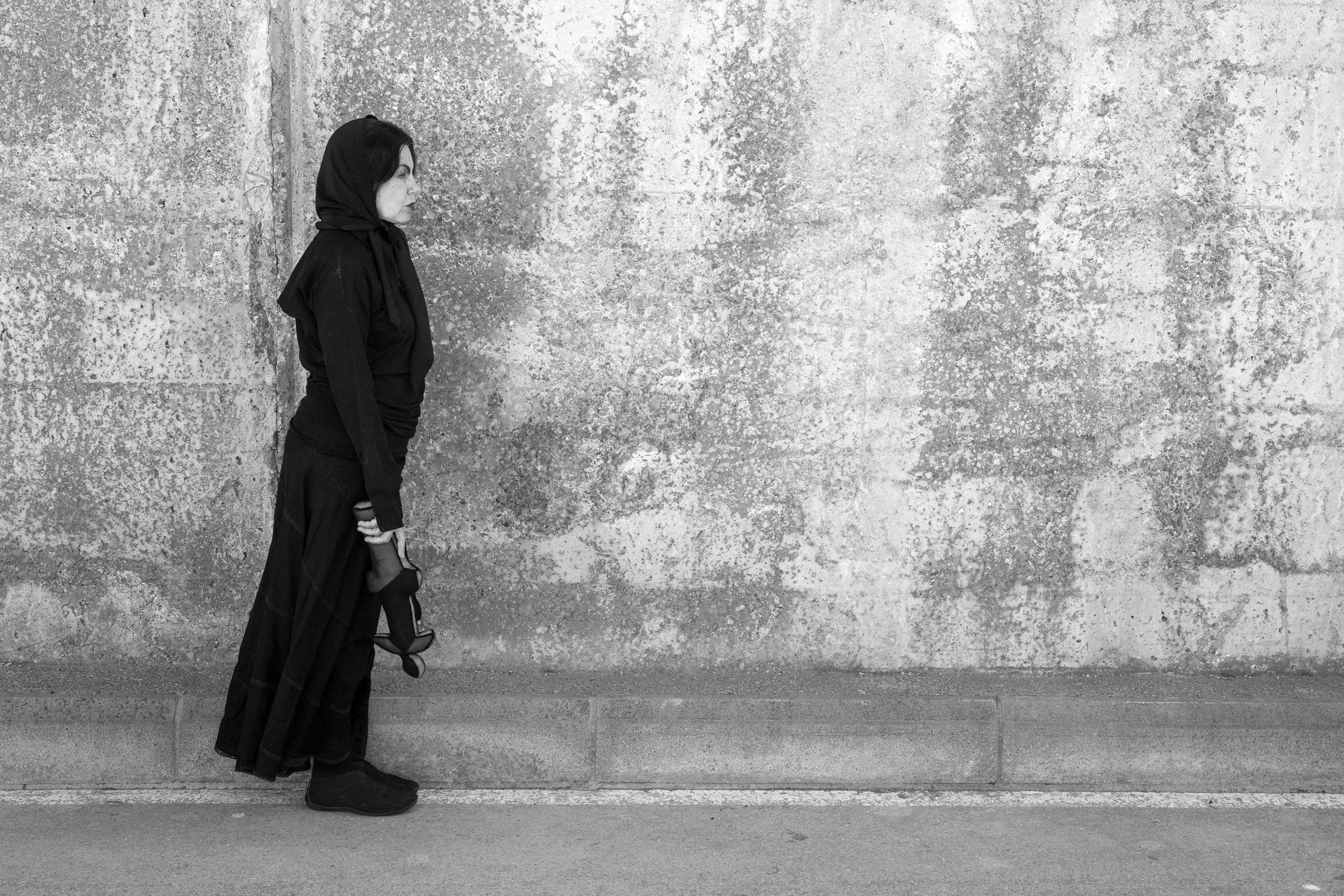
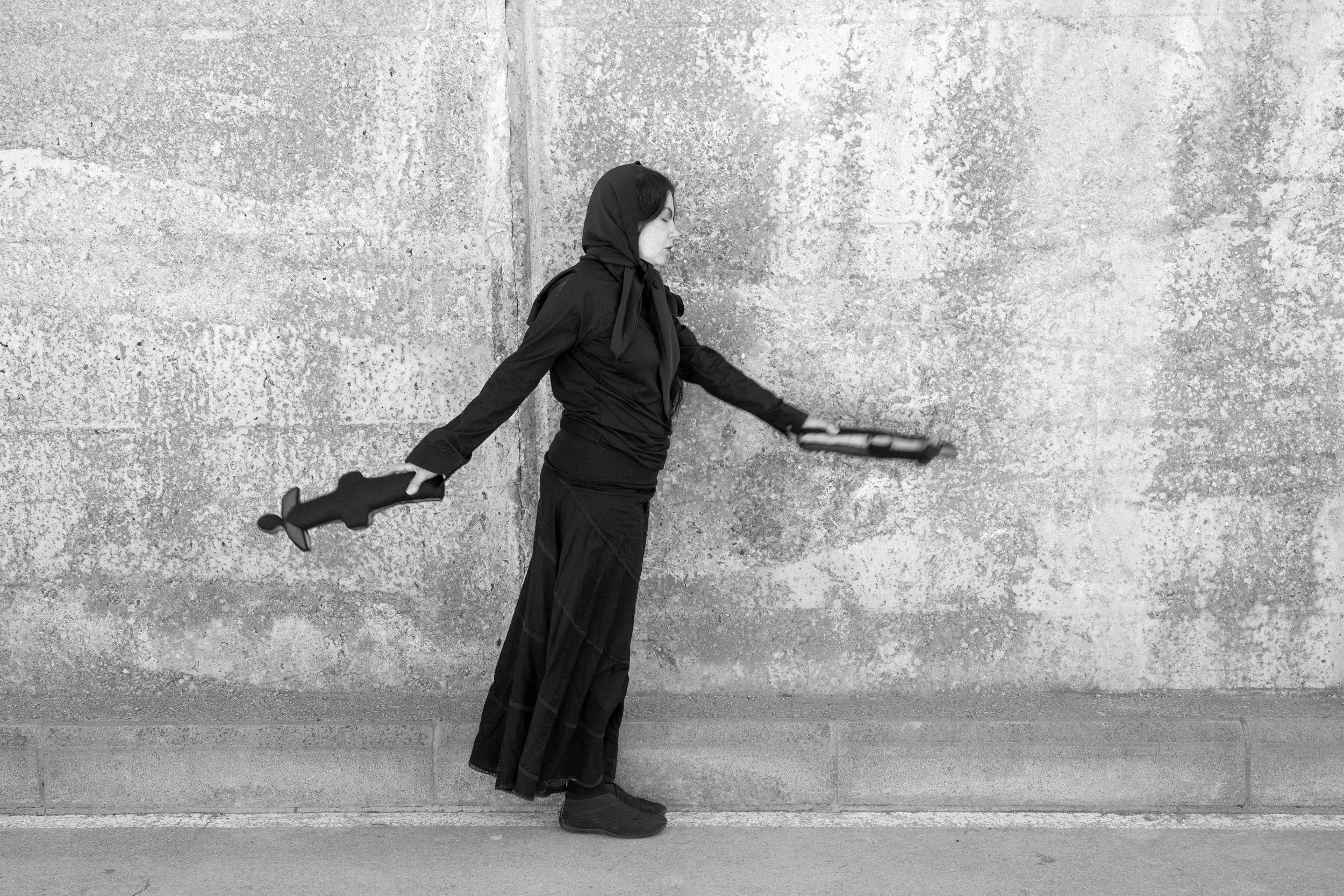
The self-portraits brought together in RocioSantaCruz correspond to different moments in that artistic journey. In DonaPeix, the digital image is incorporated into a series of transformations of the female figure that Roqué has also explored through dresses and objects. The versions of UnaotraDonaUna i jo allow us to trace the continuity of this work on self-representation. The artist uses her body and her image to construct characters that do not necessarily correspond to a stable identity. The gallery’s presentation links these transformations to her feminist stance and to a reexamination of the roles assigned to women.
Mariaelena Roqué
Mariaelena Roqué was born in Tarragona in 1952 and is a Catalan-Venezuelan artist. She works as a performer, visual artist, dancer, and set designer, combining short film, action, costume, photography, and sculpture. She co-founded the Carles Santos Company alongside the musician, with projects that linked music, dance, and visual practice. Her individual production continues this circulation between media through works centered on the body and representation.
Her presentations include Cópula Metronómica, at the Sala Metrònom in Barcelona in 1987, and Despulles inoxidables, at the Fundació Joan Miró in 1997. The Museo de Arte Moderno de Tarragona organized Silenci despullat. UnaDonaUna in 2025. In 2026, she presented an installation at the Museo del Ebro in Tortosa, as part of a career that includes museums, theaters, and international festivals.
The gallery
RocioSantaCruz opened in Barcelona in 2015, following the editorial and gallery activities of Rocío Santa Cruz, which began with Raíña Lupa in Paris in 1994. Located at Gran Via 627, it brings together photography, archive, publishing, and other contemporary practices. The gallery shares a space with ArtsLibris, the project dedicated to artist publications founded by Santa Cruz in 2009.
Its program includes artists such as Colita, Ouka Leele, Palmira Puig, Marcel Giró, Pilar Aymerich and Lúa Ribeira, alongside proposals in painting, installation, video, and performance. A portion of the exhibitions is developed through the research of archives and documentary backgrounds. The ArtsLibris bookstore maintains photobooks, artist publications, and works of contemporary thought in the same premises.
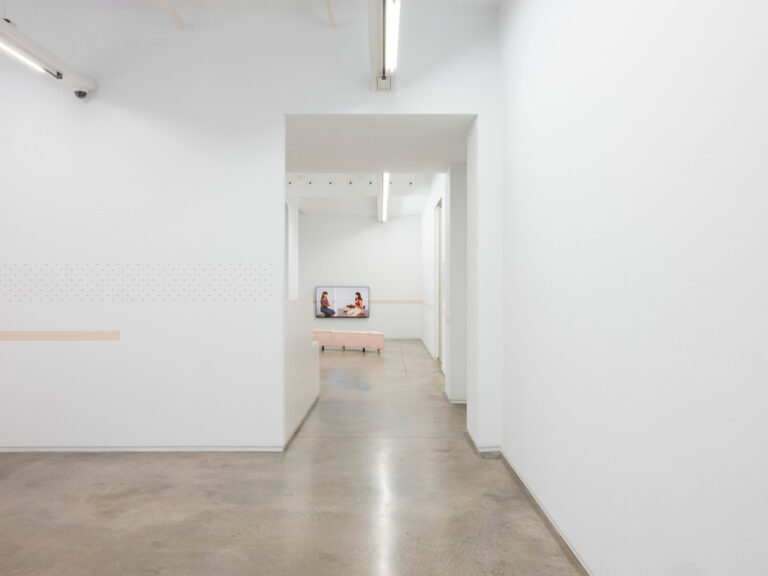
Exhibition images
Things to do near RocioSantaCruz
From Gran Via, you can continue toward Trafalgar to visit 3 Punts, Sorondo Projects, and Bombon. These three galleries offer a sequence of programs on the same street. àngels barcelona, on Pintor Fortuny, allows for a continued walk toward the Raval. Their listings help choose stops based on current exhibitions and available hours.