
The project, directed by Emilio Álvarez and Gabriela Moragas, continues a tradition that began in the Raval in 1995. Eulàlia Valldosera opens the 2026 season, and Lúa Coderch presents a four-day project during Barcelona Gallery Weekend.
Gallery Profile
Àngels Barcelona traces the origins of its current project to 2007, as a continuation of the Galeria dels Àngels, which had been active since 1995. Emilio Álvarez was already at the helm of that first gallery. In 2005, *El País* identified him as its director and as one of the organizers of LOOP, alongside Llucià Homs and Carlos Durán. The video art fair had begun in Barcelona in 2003. Álvarez remains a co-director of LOOP.
Galeria dels Àngels was located at 16 Àngels Street. The new project adopted the name àngels barcelona and moved to 27 Pintor Fortuny Street. Sources from those years indicate that the change was not entirely immediate: as late as 2008, some activities still used the name Galeria dels Àngels, while “àngels barcelona” was already appearing as the name of the new space.
.
Álvarez’s relationship with LOOP also provides concrete insight into the role that moving images have played in his work as a gallery owner. This is not a connection that was reconstructed after the fact. As early as 2005, he was already simultaneously directing Galeria dels Àngels and the fair, and the gallery’s program later incorporated solo exhibitions and projects by filmmakers and artists working with video.
Program
Why Go
In April 2008, Esther Ferrer (San Sebastián, 1937) held an exhibition at the gallery Se hace camino al andar during the opening of *Self-Portrait in Time*. MACBA preserves the recording of that performance in its documentary archive of the artist’s performances. That same year, Ferrer received the National Prize for the Visual Arts. She had been a member of Zaj since 1967 and represented Spain at the Venice Biennale in 1999. The link between a commercial exhibition and a public archive reappears in the physical proximity of MACBA, whose collection includes works by several artists associated with the gallery.
Such is the case with Harun Farocki (Nový Jičín, then Czechoslovakia, 1944–Berlin, 2014), a filmmaker who made more than a hundred films and videos. MACBA holds all three parts of *Eye/Machine*, produced between 2001 and 2003. In these works, Farocki used images from military and industrial systems to examine cameras and devices capable of identifying targets without the image necessarily being intended for a human viewer.
In 2014, Àngels Barcelona presented *Parallel I–IV*, four installations by Farocki dedicated to computer-generated imagery. Four years later, it organized *Men in Trouble* in collaboration with Antje Ehmann. One of the pieces included, *The Double Face of Peter Lorre* (1984), used photographs and film clips to reconstruct the actor’s career and the industrial conditions that shaped some of his roles.
What to Expect
Eulàlia Valldosera
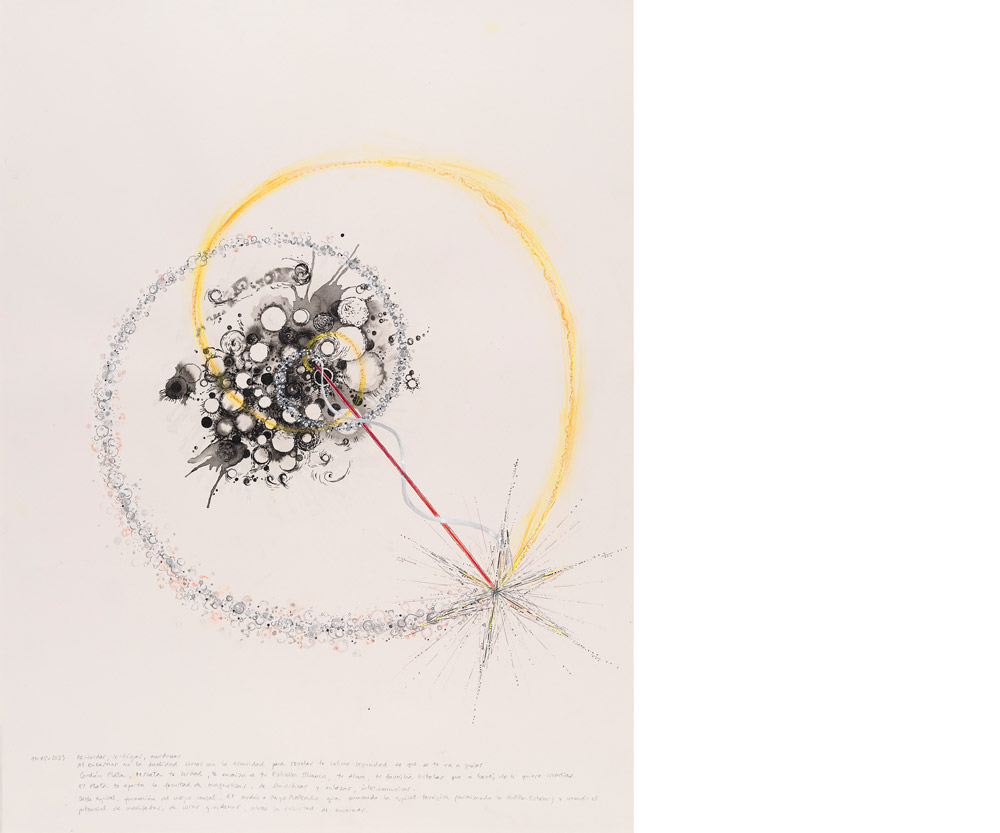
Anima Mundi. Graphic Thought
September 17 – November 7, 2026
Eulàlia Valldosera (Vilafranca del Penedès, 1963) studied Fine Arts in Barcelona and later audiovisual arts at the Gerrit Rietveld Academie in Amsterdam. During the 1990s, she created installations in which projectors and household objects were used to alter the images projected onto walls and floors. The Reina Sofía Museum reviewed this body of work in 2009 with *Dependencias*, an exhibition that began with her works from the late 1980s and included an installation in which the public moved shopping carts equipped with video projectors.
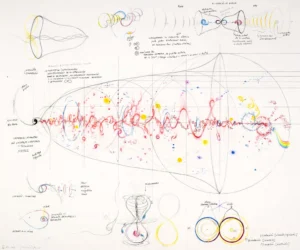
Anima Mundi comes from a later period. The exhibition brings together for the first time a selection of drawings and writings created over the past decade. The artist herself and the gallery use the term “channeling” to explain the process from which these works emerged. Barcelona Gallery Weekend datesthe incorporation of this method into her work to 2016.
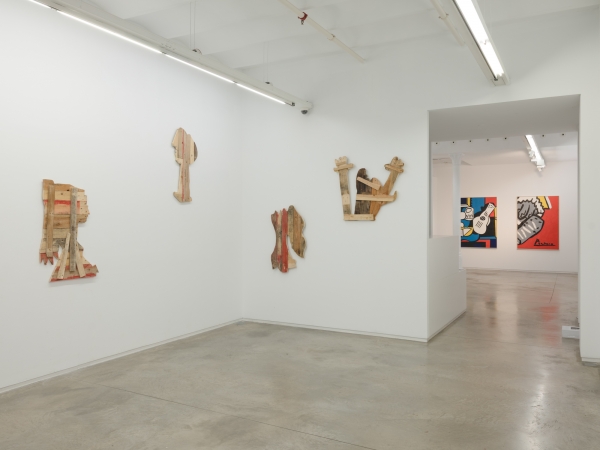
The exhibition begins with pages from a codex in which Valldosera records what she describes as visions of the energetic body and notes associated with them. The exhibition concludes with an installation dedicated to pregnancy in which she uses geometry and colored light. It is important to adhere to the artist’s own terminology here: these are concepts linked to the spiritual interpretation she gives to this phase of her work, not scientific categories.
Barcelona Gallery Weekend is featuring two works that are part of the exhibition: *Regeneration of My Embryo 1* and *Insertion into Duality*, both dated 2023. On Saturday, the 19th, at 1:00 p.m., the artist will present the performance *Gestation*.
During the four days of Barcelona Gallery Weekend, the gallery is also presenting *Teoría del fuego* by Lúa Coderch as part of the FLASH program.
MACBA is located at Plaça dels Àngels 1, just a few minutes from the gallery. Since July 9 , it has been presenting *The Gesture of Filming*, a program based on its video collection. One of its sections, “Counter-Information: Video-Nou / Servei de Vídeo Comunitari,” revisits the recordings made by these collectives in Barcelona between 1977 and 1983. The exhibition runs through May 23, 2027.
La Central del Raval is located at Elisabets 6. It opened there in 2002 and is housed in a former religious building that has been converted into a bookstore. It specializes in the humanities and hosts a program of book presentations and events.
For dining, Dos Pebrots is located at Doctor Dou 19, practically right next to the gallery. Albert Raurich opened it in 2016 after serving as head chef at elBulli. The restaurant draws on historical recipes and documents from the Mediterranean to recreate dishes from different eras. Each dish on the menu includes information about its origins. The Repsol Guide currently awards it one Sun, and Michelin includes it in its selection of Barcelona restaurants.
Lúa Coderch (Iquitos, Peru, 1982) studied at the Escola Massana and earned her Ph.D. in Fine Arts from the University of Barcelona. She lives and works in Barcelona. In April 2026, MACBA included her in “Murmullos,” its program of events marking the museum’s 30th anniversary, with “Rama,” a journey built around real and imagined episodes from MACBA itself.
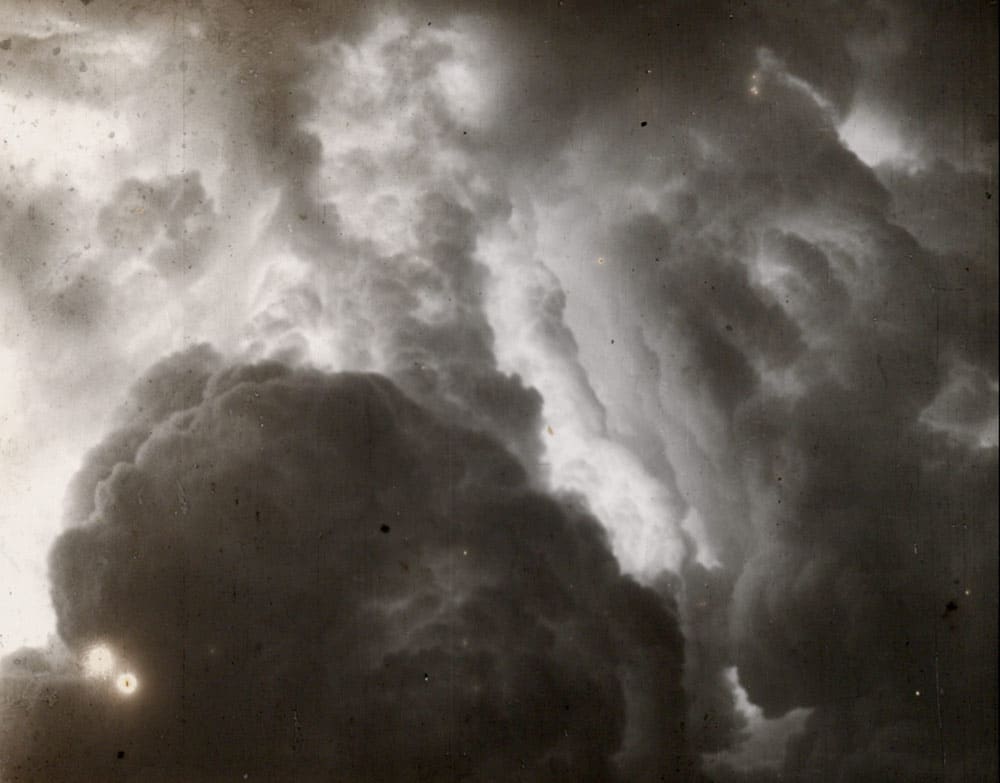
For *Teoría del fuego*, Coderch filmed a very brief sequence of a fire on 35 mm film and used that footage to create the video he is now presenting. The information published by Barcelona Gallery Weekend does not specify the film’s running time or list any other works, so it is best not to expand on the description until the complete technical details are available.
On Sunday, September 20, at 1:00 p.m., Coderch will lead a performative tour of the exhibition. *Teoría del fuego* ends that same day; *Anima Mundi* continues through November 7.
Represented Artists
What to Do Nearby
The location of Àngels on Pintor Fortuny puts visitors just a few minutes away from some of the Raval’s most important cultural venues. The MACBA is located on Plaça dels Àngels and currently has several exhibitions on view, including a presentation of its collection to mark the museum’s 30th anniversary, as well as projects by Basel Abbas and Ruanne Abou-Rahme, Anna Moreno, and Aurèlia Muñoz.
Before reaching MACBA, you’ll come across La Central del Raval, at Elisabets 6. The bookstore is housed in the former Capella de la Misericòrdia and also features a café. Its collection of books on art, philosophy, essays, and the humanities is a particularly good fit after an exhibition like Valldosera’s, where many of the references go beyond the strictly visual realm. On the same street as Pintor Fortuny, at number 31—practically right next to the gallery—is Caravelle. It’s open during the day and operates as a café and restaurant, making it a great spot to stop without leaving your tour of the Raval.
From Pintor Fortuny, you can also quickly reach the CCCB, located next to the MACBA. The building occupies part of the former Casa de la Caritat, and its courtyard offers a view of the contemporary architectural intervention carried out on the historic complex. Within just a few streets, MACBA and CCCB bring together two very distinct approaches to contemporary culture: one centered on art collections and exhibitions, and the other on programs that span philosophy, urban life, literature, film, and public debate.
The connection with Valldosera may extend even beyond àngels. The MACBA holds several works by the artist, including pieces from the series El melic del món. The proximity between the gallery and the museum makes it possible to place the drawings and texts from Anima Mundi to be displayed alongside earlier works that are part of the city’s public collection.

