From to
José de la Mano brings together works linked to his research on geometric abstraction, women artists, and queer art in the second half of the 20th century.
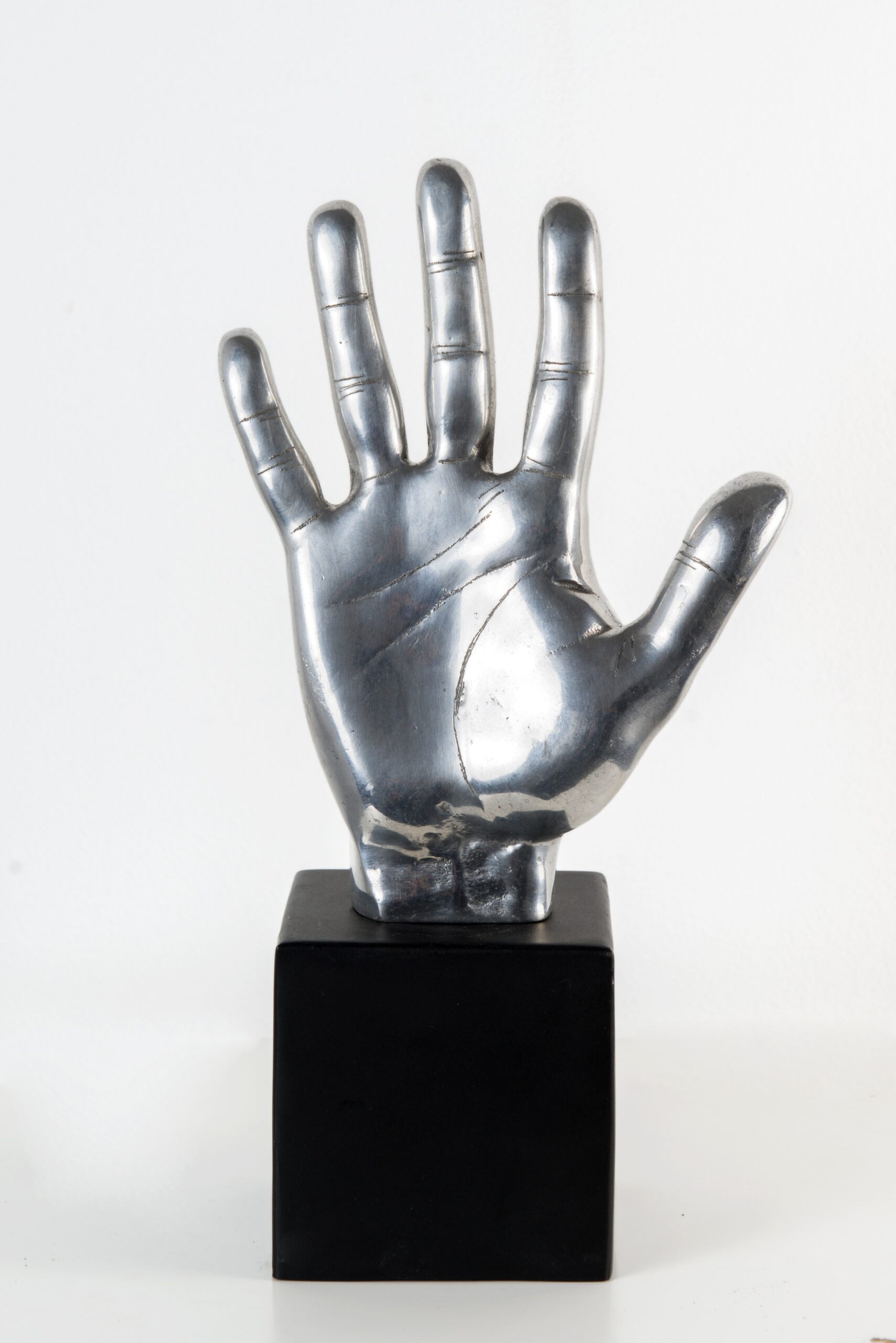
RECLAIMED HISTORY(IES). “Two Decades of Reconstructing ‘Another’ History of Art” opened on September 10, 2026, at the new location of the José de la Mano Gallery, at 3 Alameda Street in Madrid. Organized to mark the gallery’s twenty-first anniversary, the exhibition brings together works by Spanish artists from the second half of the 20th century whose careers have been part of the gallery’s research since 2005. The selection is divided into three sections: geometric abstraction, women artists, and queer art during the late Franco era and the Transition. Among the pieces are Mano térmica de artista by Lugán, created around 1973 in aluminum and iron, and Pájaro azul con micas, a textile work by Aurèlia Muñoz dated 1972.
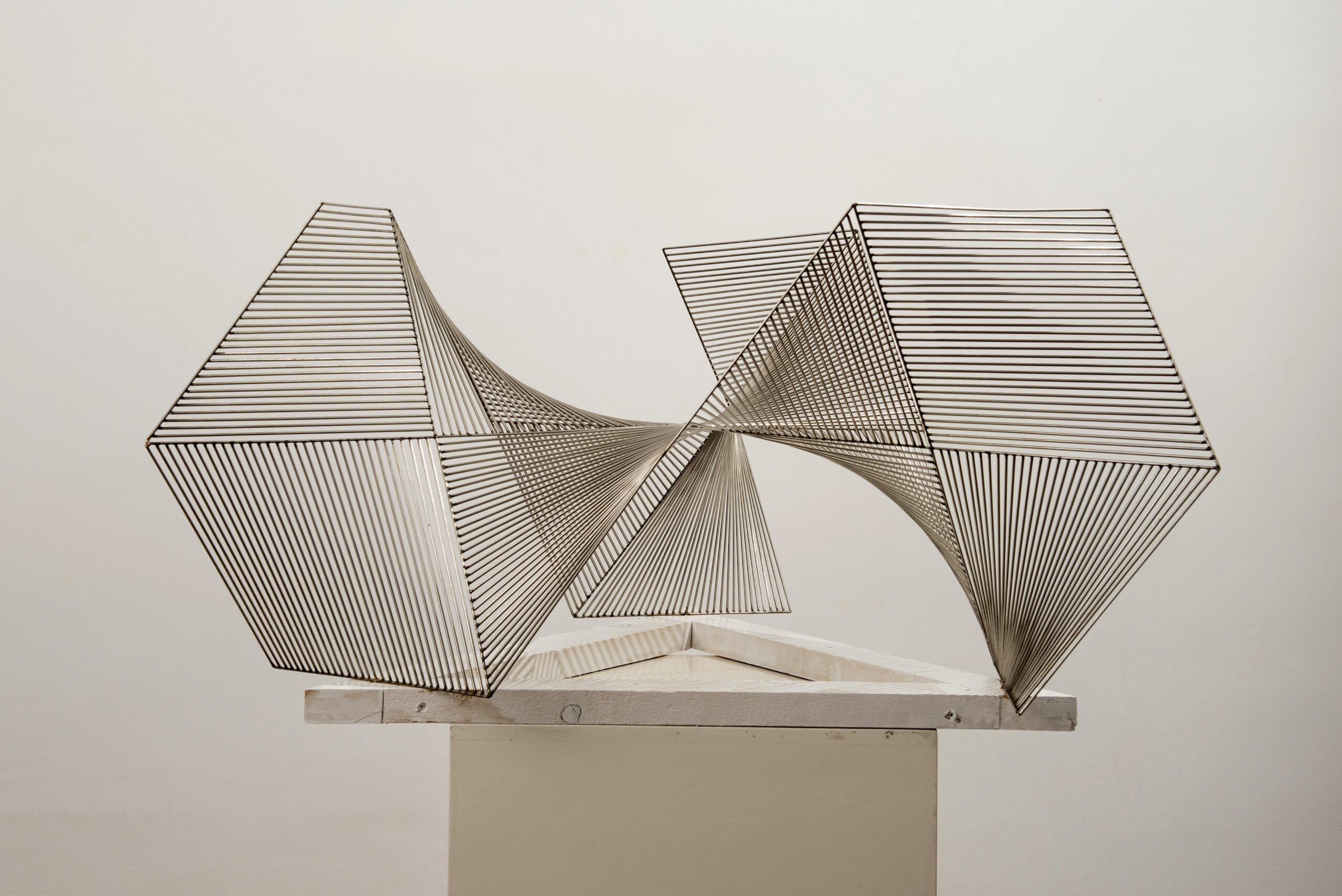
The first section revisits research on geometric abstraction and collaborative projects between artists, mathematicians, and engineers that took place during the final years of Franco’s dictatorship. One of its key references is the University of Madrid’s Computing Center, founded in 1966, whose seminars enabled various artists to work with computer-based techniques. The gallery has dedicated exhibitions to figures associated with that context, including Tomás García Asensio, José Luis Gómez Perales, and Lugán—the artistic name of Luis García Núñez. The latter incorporated electrical components, mechanisms, and interactive devices into sculptures that sometimes required viewer participation.
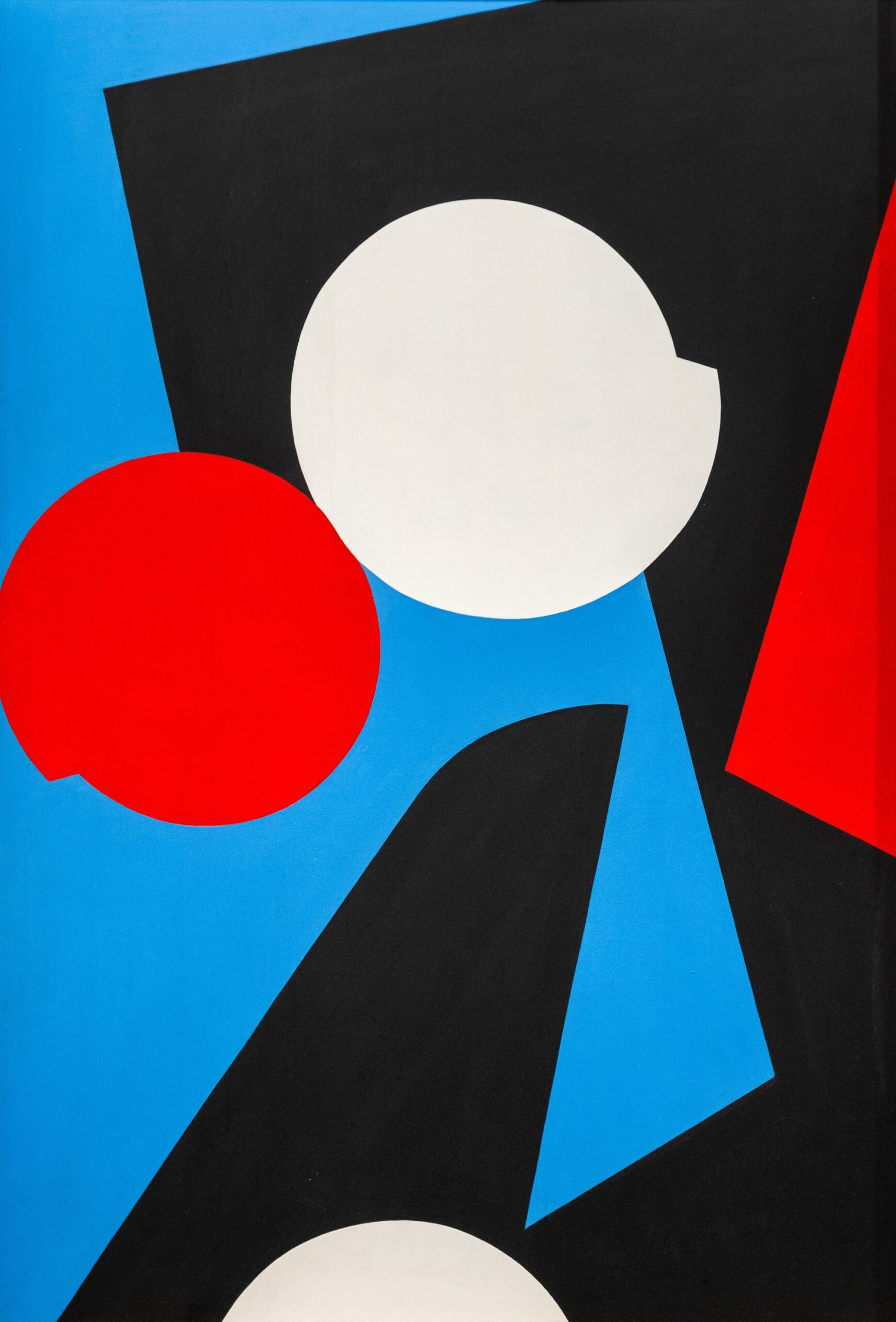
José de la Mano ’s research on women artists began shortly after the gallery opened. In 2006, he presented an exhibition of works by Aurèlia Muñoz (Barcelona, 1926–2011), who had gradually moved away from traditional tapestry techniques to work with three-dimensional structures created using knots, fibers, and natural materials. Blue Bird with Mica, from 1972, combines sisal ropes and sheets of mica using the macramé technique. The work dates from a period when Muñoz was developing suspended textile sculptures, moving away from the decorative function long attributed to the fiber arts. Her work garnered international recognition during her lifetime, although her presence in general accounts of Spanish art was subsequently sporadic.
The gallery has also researched the careers of Lola Bosshard, Maribel Nazco, and Inés Medina, artists who worked with abstraction and formal experimentation during the 1960s and 1970s. Their careers unfolded under different circumstances, but they offer a chance to revisit an art history that for years focused more on their male contemporaries. The recovery of these works has required locating pieces, reconstructing exhibitions, and consulting documentation that had not always been included in publications or institutional collections. The exhibition at Alameda presents some of the results of this work, which has been carried out through solo exhibitions and monographic studies.
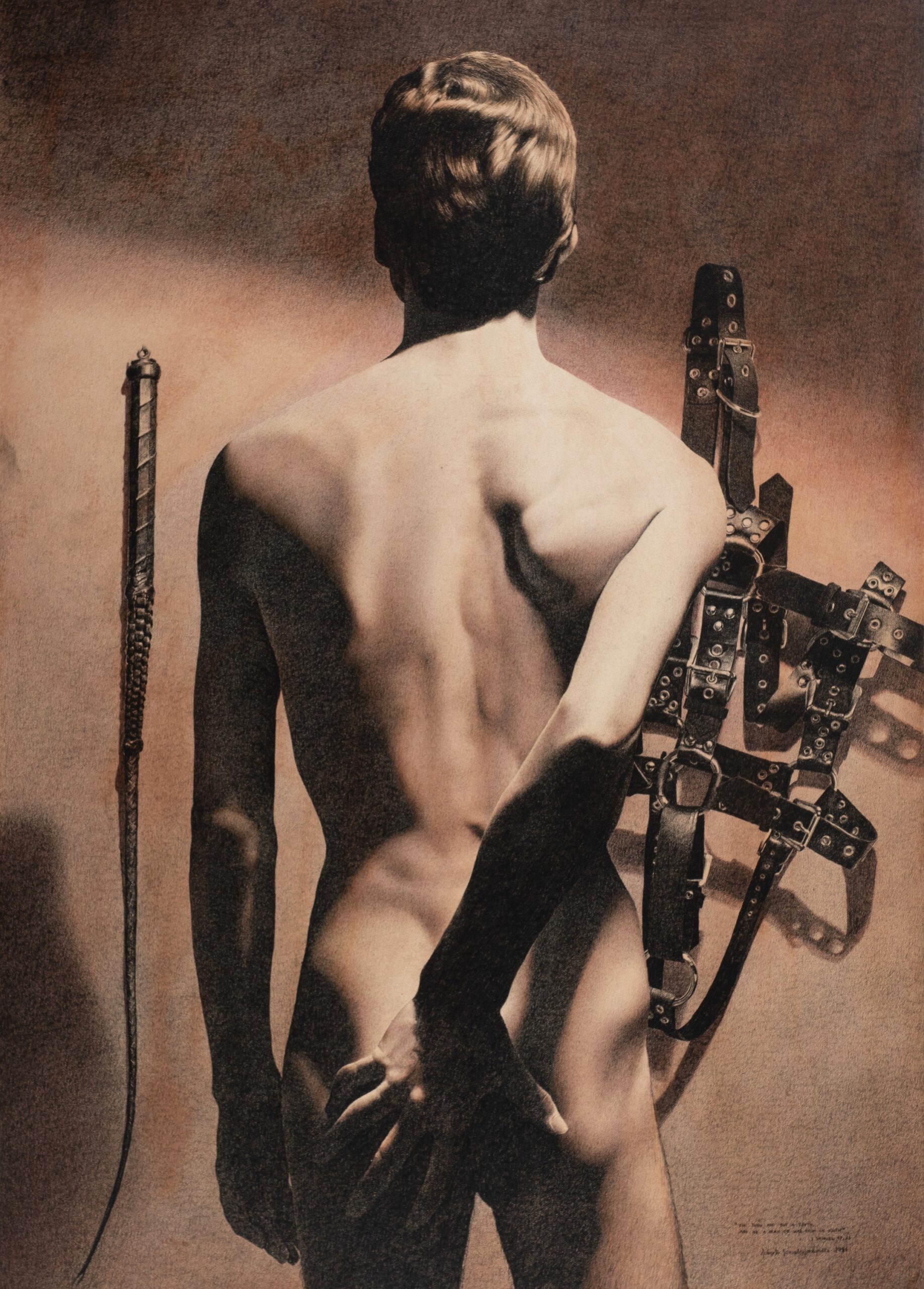
The third section examines the representation of homosexuality in Spanish art during the final years of the Franco regime and the Transition. In 2023, José de la Mano presented an exhibition of works by Juan-Luis Javier Marí, known as JULUJAMA, featuring paintings created between 1973 and 1981. Two years later, he organized Otros hombres(*Other Men*), dedicated to the homoerotic work of Roberto González Fernández from 1973 to 1985. This research has made it possible to once again showcase works whose circulation was restricted by censorship, social conventions, and the difficulties involved in preserving documentation of certain sexual and emotional experiences. The gallery has also worked with the work of Rodrigo, another artist linked to this line of research.
José de la Mano, who holds a Ph.D. in Art History, opened the gallery in 2005 with an exhibition dedicated to Virgilio Vallmajó, a Republican painter in exile in France. Since then, its program has featured artists whose work had been scattered or little studied, with a special focus on the relationships between Spain and Latin America. After operating out of spaces on Claudio Coello and Zorrilla streets, the gallery has moved to Alameda, near the Reina Sofía Museum and the Paseo del Prado. The new location spans two floors and allows for a combination of larger-scale exhibitions and smaller, more intimate presentations. HISTORIA(s) RECUPERADA(s) remained open until October 17, 2026, and brought together a selection of works linked to the main research projects carried out by the gallery during its first twenty-one years.
Exposición colectiva
The geometric abstraction section features figures such as Agustín Ibarrola, Manuel Calvo, Ángel Duarte, José María de Labra, José Luis Gómez Perales, and Lugán. The gallery links these works to research from the 1950s and 1960s and to the Centro de Cálculo. The collection allows for the exploration of different ways of working with structures, forms, and construction procedures.
Research dedicated to women includes names such as Aurèlia Muñoz, Lola Bosshard, Maribel Nazco, and Inés Medina. Another section addresses the work of Rodrigo, Roberto González, and Julujama in relation to queer art during the Transition. The proposal brings these lines together as parts of a history reconstructed through the location, conservation, and study of the works.
The gallery
José de la Mano opened his gallery in 2005 and focuses its activity on Spanish and Latin American art from the second half of the 20th century. Its program is developed through research into trajectories and works that had a limited presence in subsequent narratives. Geometric abstraction, women artists, and queer art organize several of these lines.
In 2026, the gallery presented its new premises at Alameda 3, in Madrid's Barrio de las Letras. The current exhibition accompanies this change of space and allows for a review of research developed over more than two decades. The documentation, catalogs, and presentation of works are part of an activity that maintains relationships with artists, collectors, and institutions.
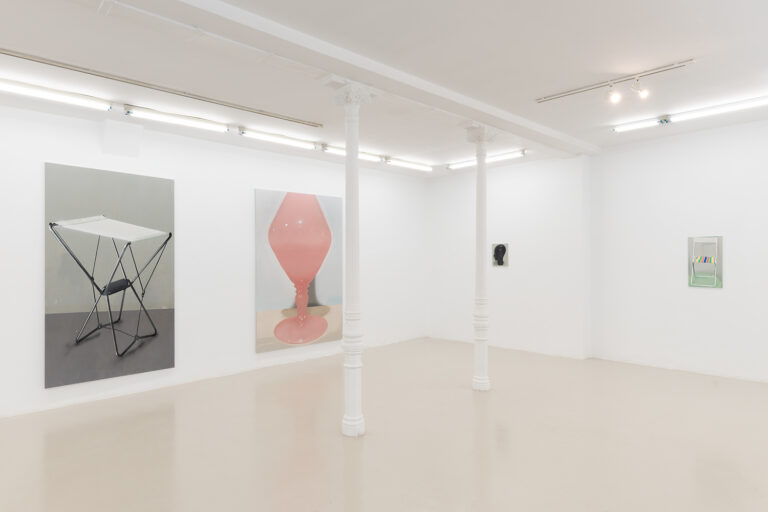
Exhibition images
Things to do near Galería José de la Mano
From Alameda, one can continue through the Barrio de las Letras toward Leandro Navarro, at Amor de Dios. Juan Silió, Espacio Mínimo, and F2 allow the visit to be extended later along Doctor Fourquet. The four entries bring together different programs of modern and contemporary art, allowing visitors to choose their next stops based on the exhibitions and opening hours of each space.