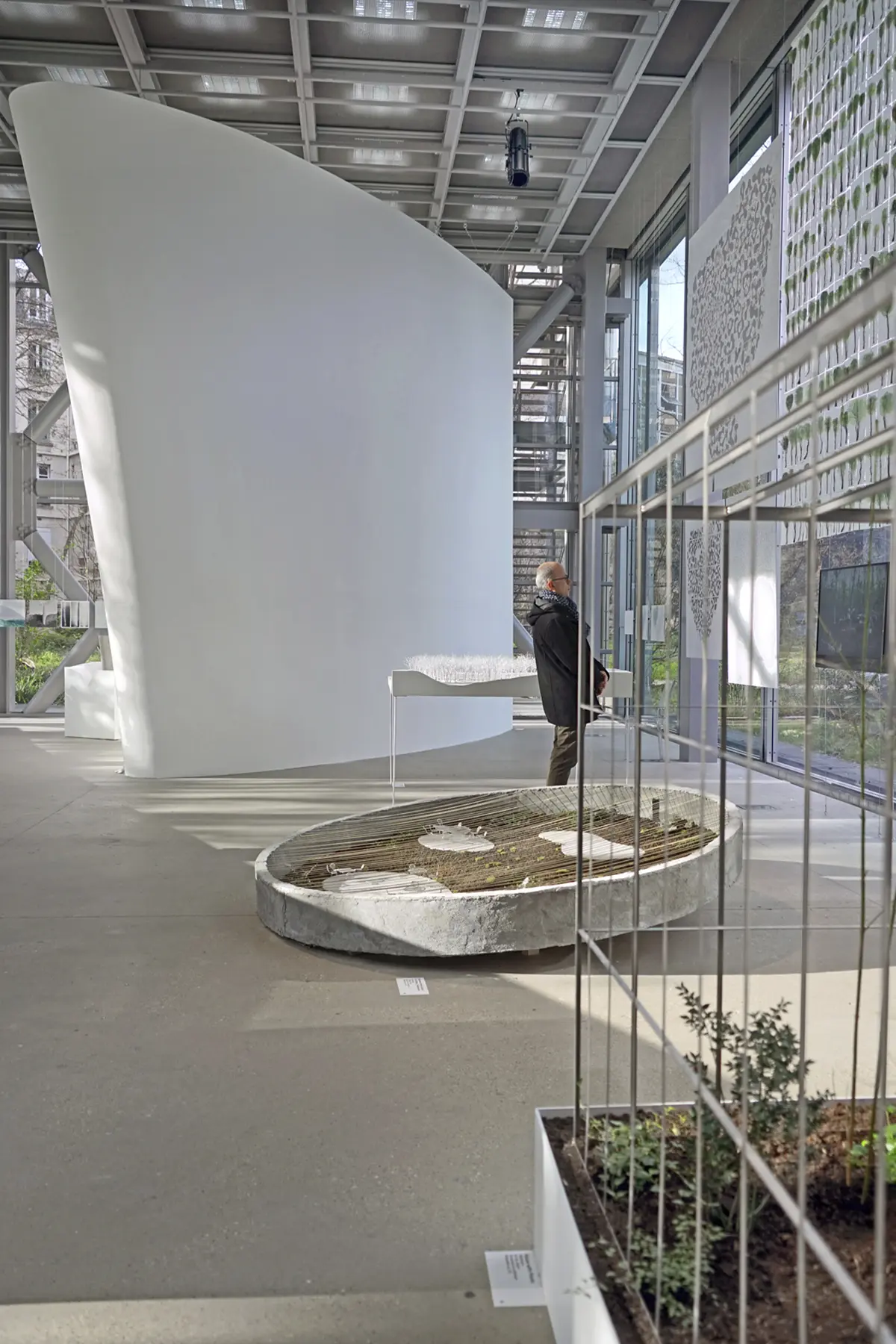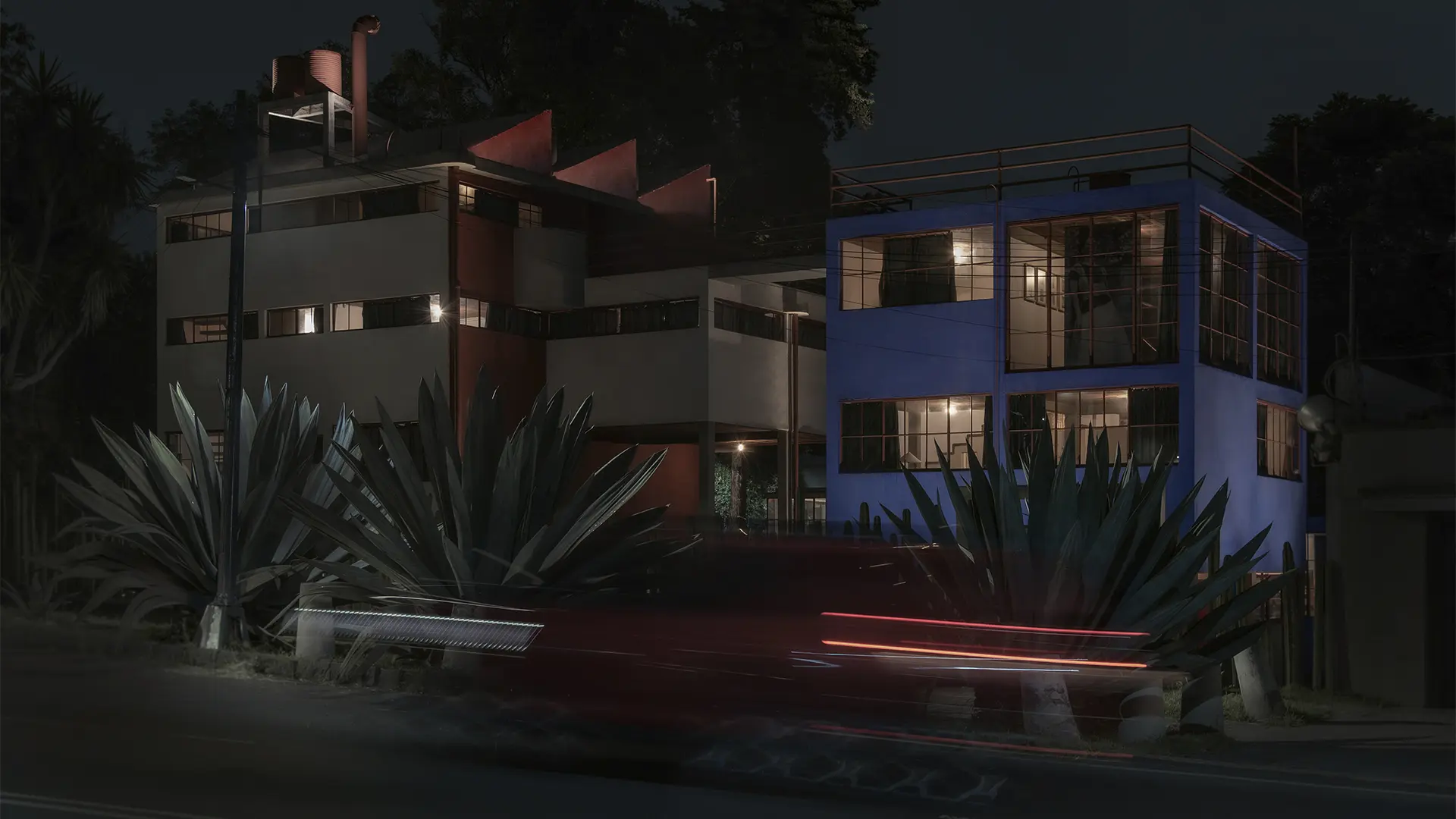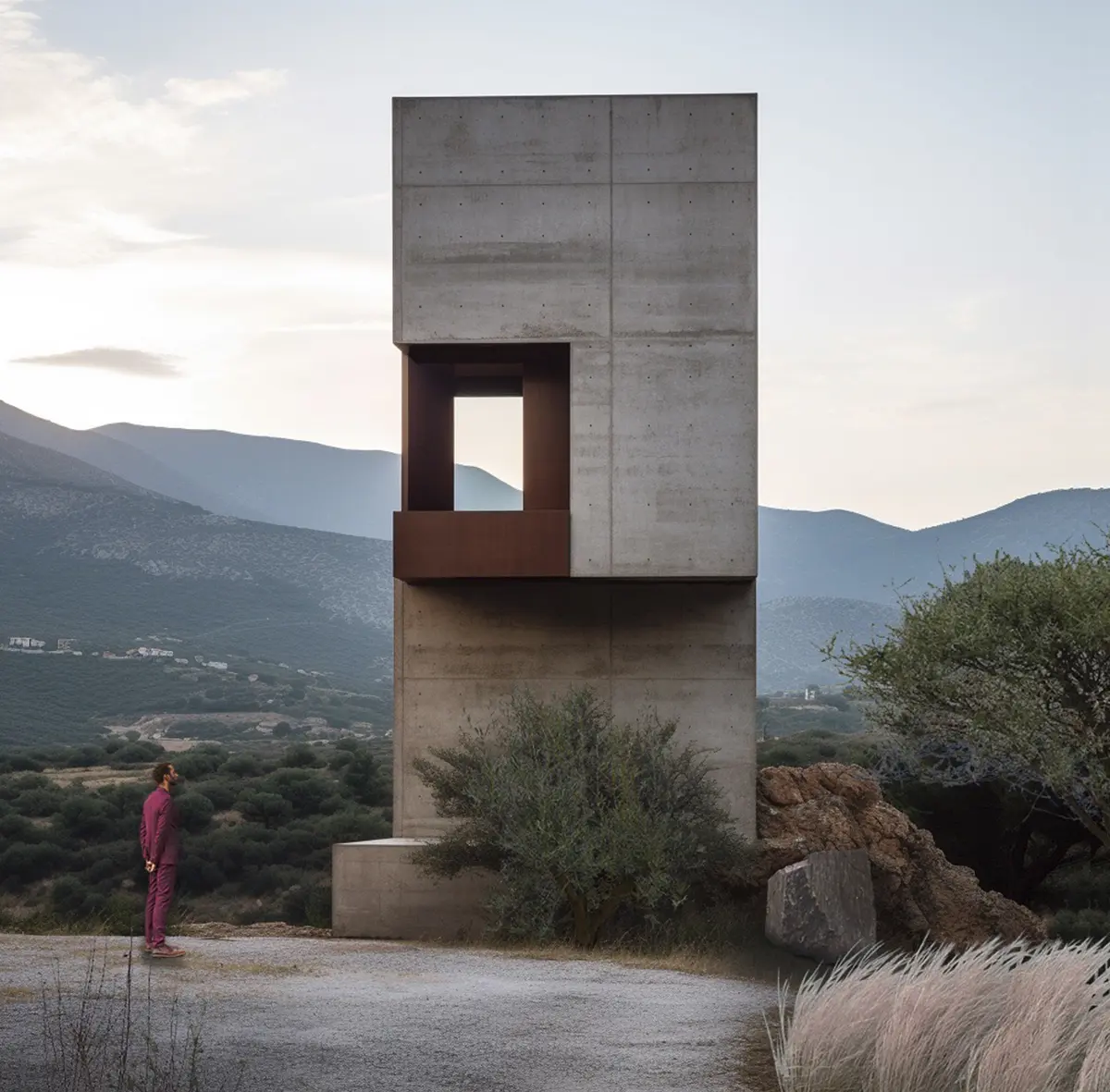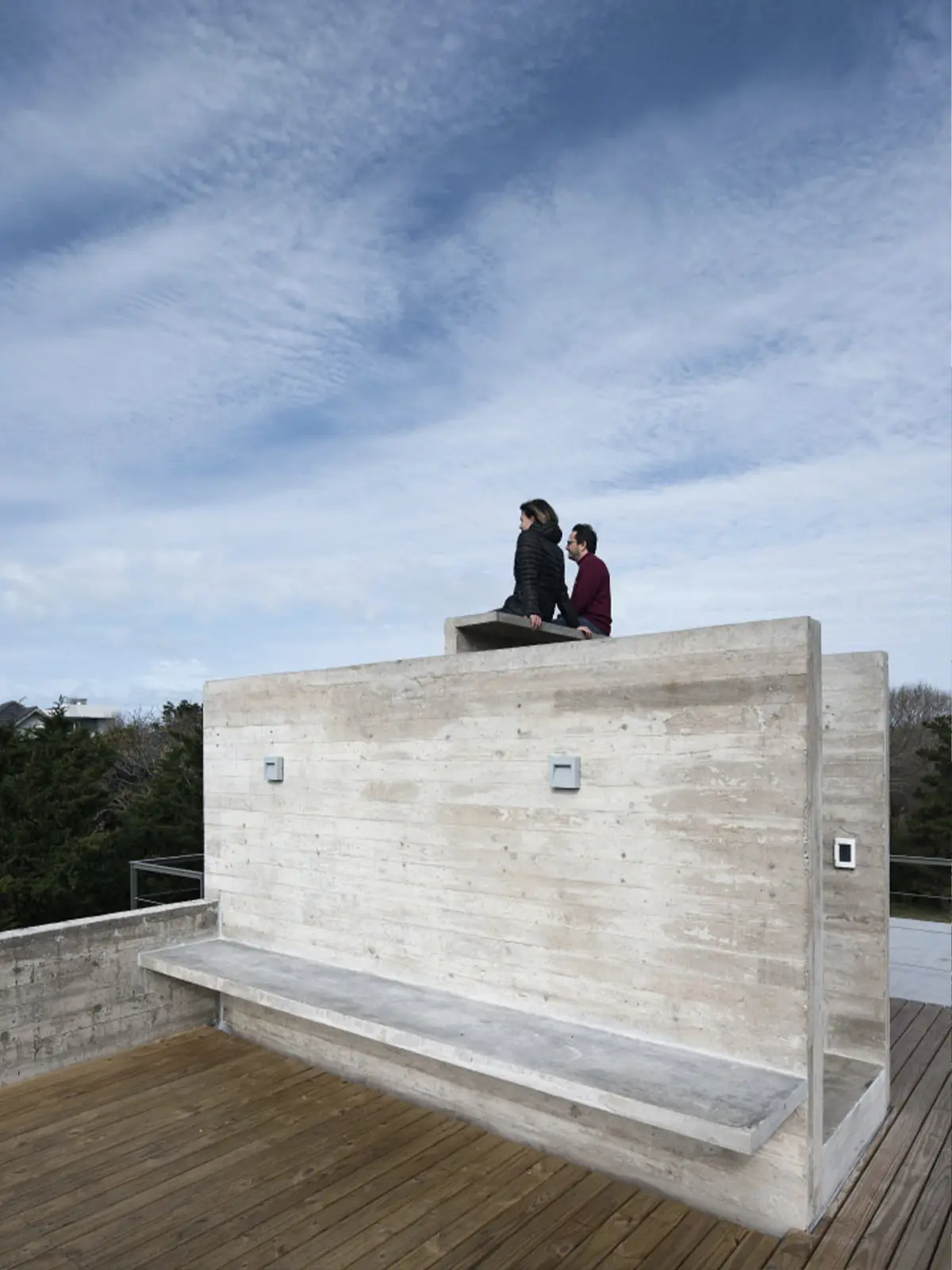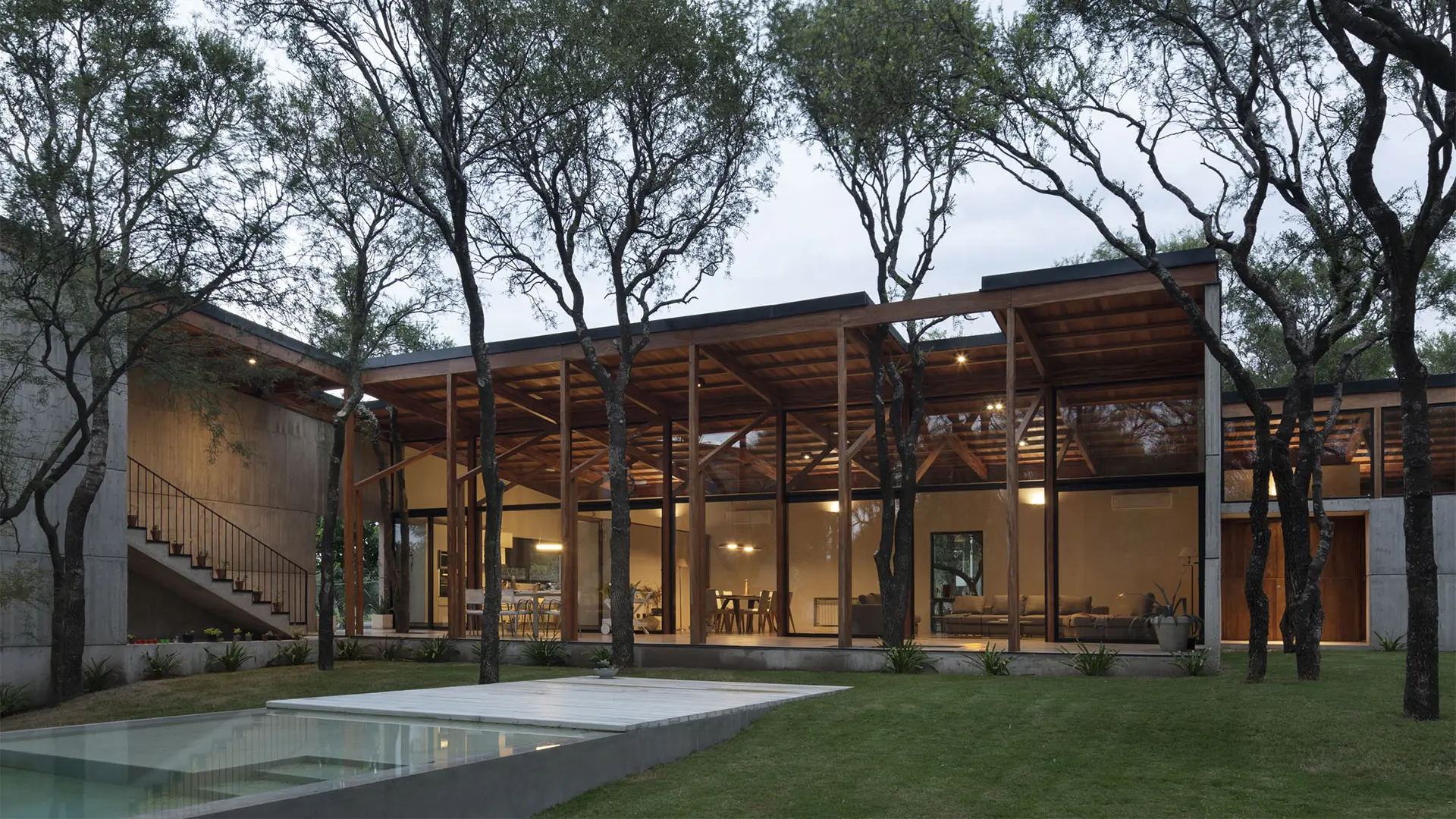

Founded in 2009 in Córdoba, Alarcia-Ferrer has established itself as one of the leading firms in rural and suburban architecture in Argentina.
Comprising Joaquín Alarcia and Federico Ferrer, the work of Alarcia-Ferrer Arquitectos has been recognized with national ARQ-FADEA awards and a consistent presence at biennials such as the BIAU (Ibero-American Biennial of Architecture and Urbanism), the BIA-AR (International Biennial of Architecture of Argentina), and the BAL (Latin American Biennial of Architecture).
His work has represented Argentina on the international stage without losing touch with its local roots. In AW Magazine, we spoke with Joaquín Alarcia, one of the firm’s founders. To our pleasant surprise, he spoke of architecture less as a formal repertoire and more as a practice interwoven with friendship, film, and music.
A clear guiding principle runs through his work: design always involves an attentive dialogue with the environment—both physical and spatial, as well as political and social.

Alarcia-Ferrer Architects: 16 Years of History, Enduring in Argentina
“The affection and camaraderie behind it
is what keeps us enjoying working together”—Joaquín Alarcia
Running an architecture firm for nearly two decades is a remarkable achievement. Alarcia-Ferrer Arquitectos has not only managed to weather the storms of time and reality, but has also reaped significant rewards.
Joaquín, in your experience, what accounts for Alarcia-Ferrer’s longstanding status as one of the leading law firms in Argentina and Latin America?
Federico and I founded the studio in 2009, but we’ve been friends for a long time. We share a close bond of friendship and camaraderie. I’ve been his friend and partner since first grade, the first school year here in Argentina. We spent our entire elementary, middle, and high school years together, as well as college and graduate school. We’ve traveled together. If our studio has lasted this long, it’s also because of a human connection—being friends and sharing an adventure.

Well, then the first factor in their long-standing relationship is the bond they share.
We know each other really well, and that has an impact, you know? Sometimes for the better, and sometimes for the worse. Of course, there are always disagreements—everyone has their own personal issues—but the affection and camaraderie that bind us together keep us enjoying our work together. We started this when we were in our twenties, and now we’re over forty. (Laughter)
It’s not very common to find a creator who openly expresses affection and camaraderie toward another—what fuels that relationship?
We both study and read a lot about architecture, but we’re also passionate about other disciplines: art, film, and music. I’m a huge movie buff. And we believe there are many points of contact between those fields in the creative processes. We think the history of cinema, music, and other arts is closely linked to our creative process.

Macroenvironment: Being an Architect in Argentina
The truth is that Argentina in 2009 wasn’t the same as it was in 2026. What has it been like for you to work as architects in your country?
There is another reality—the reality of Argentina. I imagine it must be similar in Mexico; it is similar in Chile and Brazil, and it is quite common throughout Latin America. In Argentina, strangely enough, we go through new crises every two to four years. That forces us to constantly reinvent how we practice our profession. There are times when we’re more involved in construction-related issues, other times when we focus more on design, and still others when we’re more involved in management.
How has dealing with multiple crises specifically affected the nature of your work?
A few years ago, we were very narrow-minded when it came to materials, construction methods, and so on. We approached projects from a very local and artisanal perspective. Sometimes, the country’s current situation influences these processes. These processes can become very lengthy, and this can lead to factors that are beyond an architect’s control.
The country’s economic reality, its relationship with the world, and what’s going on out there force us to constantly reassess things, you know?

Microenvironment: the relationship with space
Throughout its history, the firm has developed a body of work that is attentive to the specific conditions of each site. In homes in rural and suburban settings, or in projects such as the Pabellón Puente, the architecture does not impose itself; rather, it is guided by the landscape, the topography, and existing pathways. The environment is not merely a backdrop, but a force that guides material and construction decisions.

We must navigate national crises, but we must also address the spatial aspects architecturally, as you have done.
There’s a really beautiful thought I was discussing with some Spanish architects. They told me that architecture should be tailored to the places where you are. Not the other way around. Because sometimes we can create too much architecture—or too little.
In our case, many of our projects are in rural or suburban settings; there are fewer urban ones. In this sense, our buildings are often situated in a forest, by a lake, or in a landscape with mountains; we coexist with the trees and rocks.

Of course, it is designed and built based on the existing setting and the elements that are already there.
Yes, and every decision must be part of a comprehensive vision—not just of the construction itself, but of the existing space as well. If we’re working on a project with a sloped roof, that element must be part of the overall design. It’s not just a sloped roof, with one part made of stone and another of concrete. Every decision must have an internal logic, working in harmony with the other elements we’re working with.
So does architecture resemble cooking as well?
People always say that Italian food—which I personally love—shouldn’t have more than five ingredients. And that’s also part of the design process, so to speak, or the preparation process.
The Present and the Future
In late 2025, the firm Alarcia-Ferrer Arquitectos was included in the AD100 2026 list published by Architectural Digest Mexico and Latin America, a ranking that recognizes the most outstanding figures in architecture, design, interior design, and landscape architecture in Latin America.

To keep exploring this thread, visit contemporary and heritage architecture.