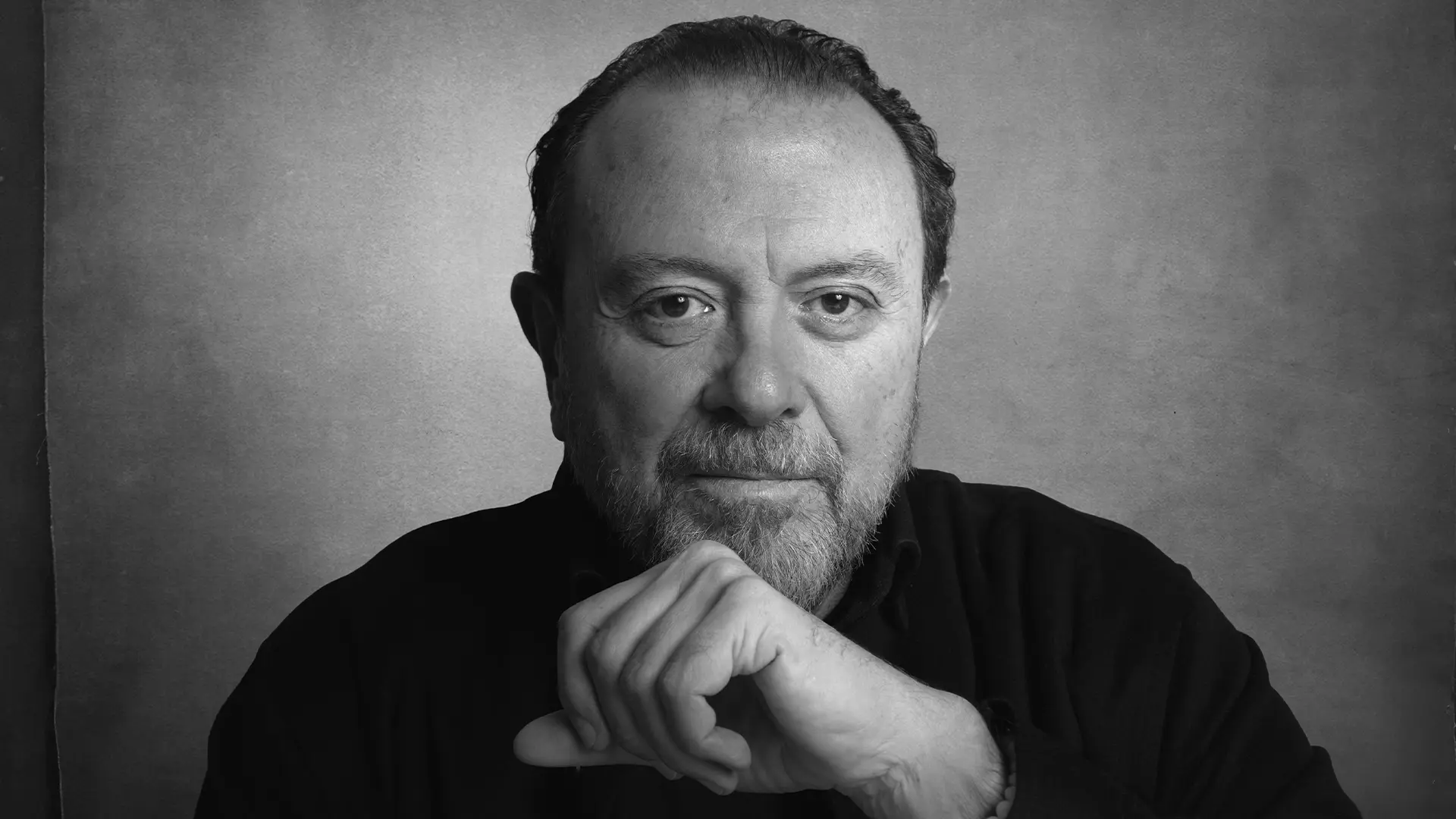

The Enrique Guerrero Gallery has a long history, during which its founder was known for making bold moves.
When, in 1997—after a period spent collecting for pleasure—he opened the gallery that bears his name in Mexico City, his debut was a resounding demonstration of this, featuring twenty-one works by Remedios Varo. “It was risky, but I was the new guy in the art world, and if I was going to do it, I had to do it right,” he recalls.
Not a single painting was sold, even though they cost roughly 10% of what the work of this Spanish surrealist, now based in Mexico, is valued at today. “The largest painting cost eighty thousand dollars. The least expensive one was about twelve thousand dollars. The event was packed. People asked questions, but nobody bought anything.”

Enrique Guerrero: A Space That Evolves
Throughout its nearly three decades of existence, the Enrique Guerrero Gallery has distinguished itself by showcasing both classical and contemporary works. At one point, the gallery exhibited works by Pablo Picasso, Robert Mapplethorpe, Louise Nevelson, and José Clemente Orozco.
But when the art world reached a turning point and people—captivated by the futuristic aura of contemporary art—began to lose interest in painting and conventional artists, Enrique was there too, reinventing himself and evolving alongside the new creators who would soon become leading figures in the national contemporary art scene.

Artists who ushered in a new era
“At that time, Pedro Reyes was doing things on a very sporadic basis, and Yoshua Okón had only mounted exhibitions at his space, La Panadería, but before we organized an exhibition for him in 2002, he had never exhibited in a gallery as such,” he recalls.
During those years, Guerrero discovered that there was a group of artists and architects in Guadalajara who were developing a very distinctive movement. “I chose four of them— Jose Dávila, Lebrica, Francisco Ugarte, and Fernando Palomar— and brought them to Mexico to put on their first exhibition.” These post-minimalist artists of the X generation of Mexican art burst onto the scene just as Mexico was beginning to integrate more visibly into international networks, and they soon became recognized figures. José Dávila has distinguished himself through projects such as A Promise is a Cloud, and his public installations have cemented his reputation as one of the most prominent contemporary Mexican artists.
The Santiago Sierra Factor at the Enrique Guerrero Gallery
But it’s not as if the average Mexican art lover was used to disruptive works either. “It took me three or four years to sell any of Santiago Sierra. It was very powerful work, full of social statements and political and border-related themes with very harsh images,” he recalls. “Not just anyone would buy a 1.50 x 2.20 m photograph, let alone the video pieces,” Guerrero recalls of Santiago.
Although he is of Spanish origin, Sierra has maintained a very strong connection to Mexico, where he established much of his career in the late 1990s. His work exposes power structures, the logic of exploitation, economic inequality, and racism through actions that do not merely represent these systems, but rather activate them in real time. Mexico and spaces such as Galería Enrique Guerrero were pivotal in the emergence of his critical voice and his performative method of political confrontation.

By that time, Enrique had already represented the Mexican artist Teresa Margolles —one of the most important and radical figures in contemporary art in Mexico and worldwide—and Julio Galán—who was one of the most significant Mexican artists of the 1990s, associated with Neo-Mexicanism, pictorial postmodernism, and queer aesthetics in Mexico— as well as an exhibition of works by Andy Warhol. “Painting never went away, even though many modern artists said it was finished and that they would never paint.” In the end, many detractors ended up doing so. “Gabriel Orozco, for example,” he points out.
Orozco turned his back on painting in the 1980s and 1990s, because he considered it a saturated, repetitive, and highly commercial medium. However, between 2000 and 2010, he returned to painting, but from a conceptual perspective that departed from traditional techniques.
Enrique Guerrero Gallery: A Look to the Future
Today, the gallery located in the San Miguel Chapultepec neighborhood of Mexico City—which also has a space in Todos Santos, Baja California Sur—continues to look toward the future. In 2025, it presented an exhibition by Alejandra Varela, a Mexican artist based in Milan who had never exhibited here before. Galería Enrique Guerrero is not limited to a single type of art: it has hosted painting, installation, video, photography, and conceptual work.
In 2026 (dates to be announced), the venue will showcase works by Mexican artist Fernanda Caballero in an exhibition titled *Nectar*; it will also feature the first exhibition by Glenda Torrado, a Colombian visual artist who has also never exhibited in the country. “And I’ll also have Sofía Cruz, another young Mexican artist living in Vienna,” adds the gallery owner.

“I’m interested in young, emerging artists who are creating original work. Galería Enrique Guerrero bears my name, so any artist who exhibits there has to appeal to me. They have to impress me first.”
“In art, everything has already been done; what lies ahead are reinterpretations. Surrealism wasn’t created by Dalí, Max Ernst, or Breton; you have to look at Bosch’s paintings, created centuries ago, to discover something that had already been done”—EnriqueGuerrero
And in a slightly more contemporary example, Sierra compares: “In the 1960s, the Argentine artist Óscar Bony locked a family inside a glass cube where everyone could see them, and that was very similar to what Santiago Sierra did with his performance art.”
That said, Guerrero believes that “an emerging artist must have quality, consistency, style, a voice of their own, and a personal signature,” he states.
Enrique Guerrero and emerging artists
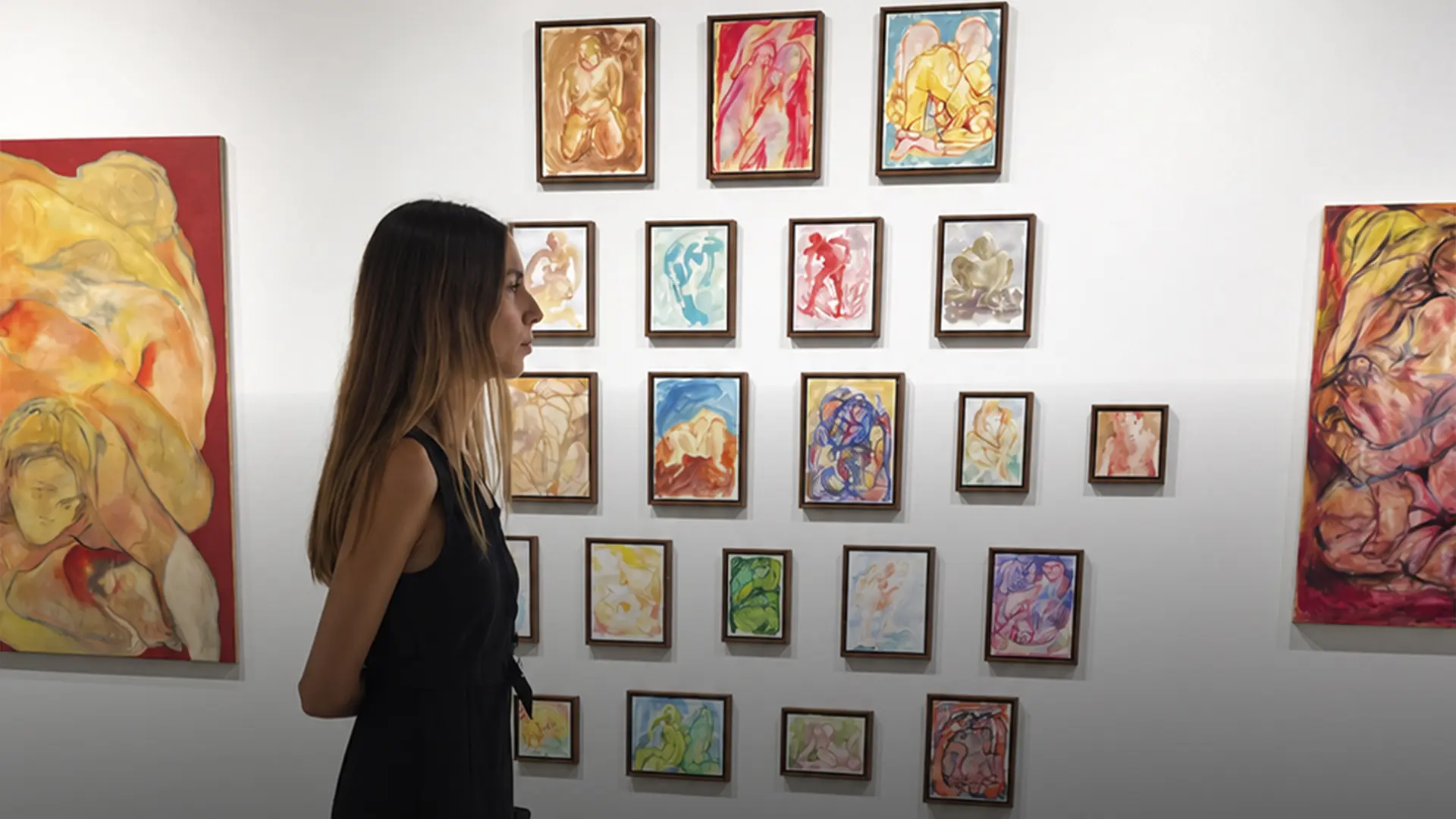
For Zona Maco 2026, which took place from February 4 to 8, 2026, in Mexico City, Guerrero—who is also president of GAMA, Galerías de Arte Mexicanas Asociadas— opted for a selection of modern and contemporary art, featuring works ranging from classics by Zacatecan artist Pedro Coronel, Rufino Tamayo, and German artist Mathias Goeritz, to new works by the aforementioned Glenda Torrado and Annie Flores, a young Mexican watercolorist who creates captivating erotic works and who had previously held solo exhibitions at the gallery, such as *Liquid Anatomy of Desire* (2015).
That Enrique Guerrero Gallery presented the work of Coronel—an artist who moved away from muralism to explore abstraction and color from a symbolic and spiritual perspective, with pre-Hispanic influences—and Tamayo—undoubtedly the bridge between Mexico and the global modern art scene—at the last fair was highly significant, given that both continue to be key figures on the international scene. Likewise, the gallery’s commitment to emerging artists like Annie is highly significant for new generations of Mexican artists.
“Art fairs wouldn’t exist if it weren’t for galleries. They can be exhausting at times, but they’re always enriching because you meet other artists and colleagues, make deals, and exchange artists and ideas.” So concludes Enrique Guerrero, undoubtedly a key figure in contemporary art in Mexico—and yes, quite literally, a true Guerrero.
To keep exploring this thread, visit contemporary Latin American art; you can also continue through contemporary art galleries in Latin America.