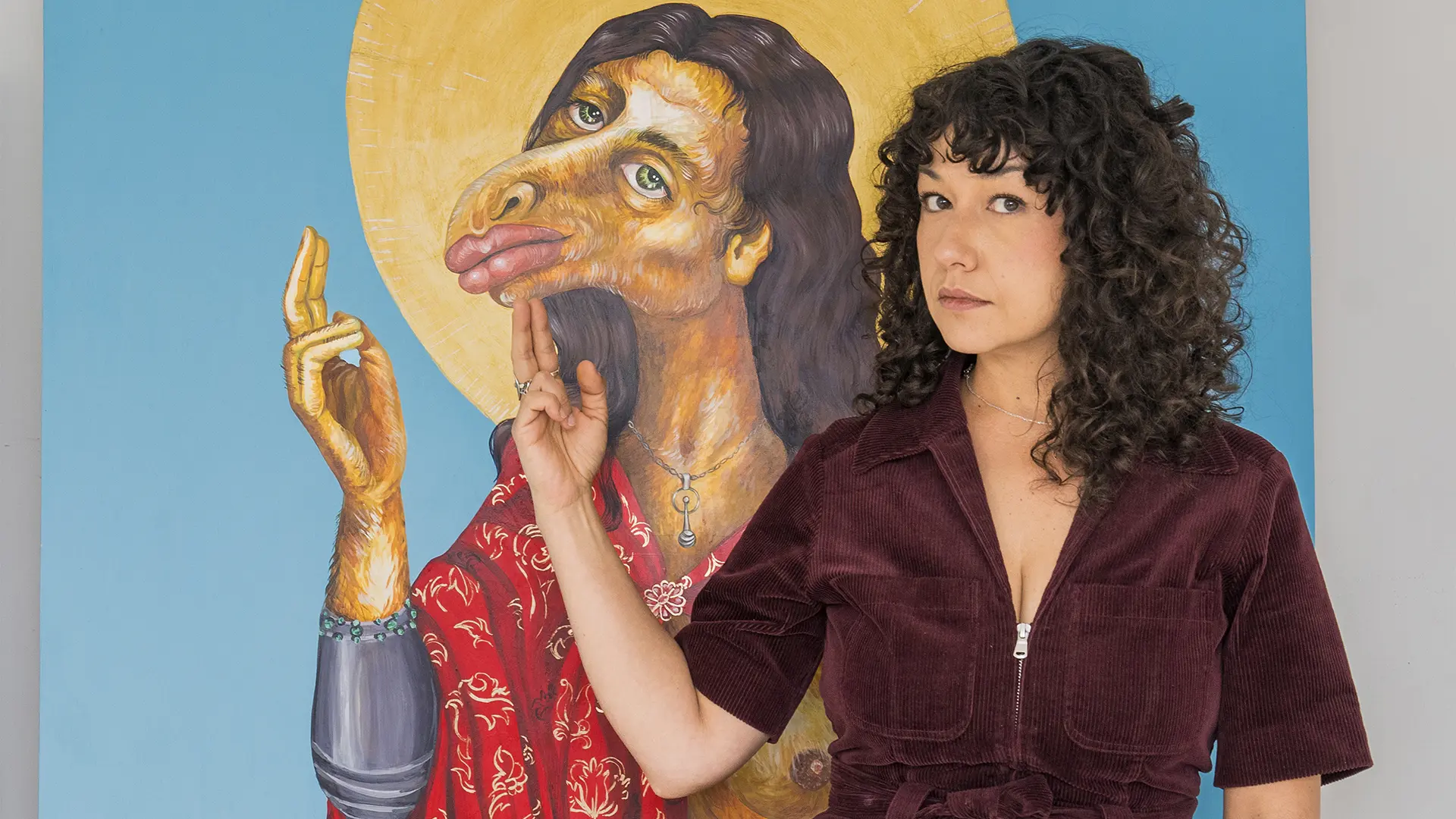

Glenda Torrado was born in Bucaramanga—the capital of the Santander department in northern Colombia—but has been living in Mexico City for nearly seven years. Her work—which was featured at Zona MACO 2026—is primarily based on drawing and graphic storytelling.
The artist works from her studio in Coyoacán, where, in addition to visual art, she creates comics, album covers, and projects in which the body, humor, and a symbolic darkness coexist without any underlying hierarchies. She arrived in Mexico in 2019, at a time of personal upheaval. Rather than explaining, her work opens up images that continue to resonate in the memory.
From Colombia to Mexico: Glenda Torrado’s Journey
Why did you decide to leave Colombia and come to Mexico? Were your reasons personal or artistic?
I had a very stable life in Colombia and felt the need to take some risks. I quit my job, ended a long-term relationship, and moved to Mexico without much of a plan. I earned a master’s degree in visual studies here and decided to stay.

Just before the pandemic, right?
Yes. The pandemic began in 2020, and I spent it in Malinalco, a very quiet town in the State of Mexico. There I created a graphic novel called Nuevos Medios, Nuevos Miedos, a visual analysis of the fears circulating on WhatsApp during the pandemic, combined with a illustrated diary of my personal fear of being isolated. I started it in 2019, developed it in 2020, and finished it in 2021.
The art scene in Colombia: then and now
What was the art scene like in Colombia at that time?
It was a really great time: independent bookstores, self-publishing festivals, comics and graphic novels, as well as self-managed spaces. I was working as a teacher and saw many students grow who later went on to create their own spaces. Even so, my decision to come was more personal than professional.
“Changing physical surroundings directly affects the way you draw. Mexico, with its sheer size and diversity, made a huge impression on me: museums, cultural events—all of that had a big impact when I arrived.”
“Changingphysical surroundings directly affects the way you draw. Mexico, with its sheer size and diversity, made a huge impression on me: museums, cultural events—all of that had a big influence on me when I arrived.”
How do the different disciplines you work in relate to one another?
Comics are my most immediate form of expression; I use them almost like a notebook. I’m also interested in performance and music, which I use to break away from social performativity and transform the body into something else.
Being a female artist in Latin America
How challenging has it been to create comics in Latin America, especially as a woman?
I wouldn’t say it’s particularly complicated in terms of gender. Many of the most renowned comic book artists in Latin America are women. What’s really challenging is the time commitment: creating comics requires an enormous investment of time. That’s why the master’s program was important to me; it allowed me to draw every day.

How long does it take you to create a graphic novel?
The second one, about boxing, took me about three years to complete. It was made possible thanks to the support of a friend who paid me a monthly stipend to help me make progress.
Is your work in the digital field?
It’s nothing much. I work by hand. I only use digital tools when I design album covers. I also don’t post my comics online, because many calls for submissions require that the work hasn’t been shown before.
Glenda Torrado: Influences from the World of Comics
What are your main influences as a comic book artist?
I’m interested in alternative manga, Julio Lucet, Robert Crumb, Aline Kominsky-Crumb, and Emil Ferris. She had a big impact on me because she had to relearn how to draw after an illness. In my case, due to a health issue, my right arm became paralyzed, and I learned to draw with my left. *New Media, New Fears* was drawn with both hands.
I suppose that influenced your work and the way you approach new pieces…
That completely changed my perspective. It was no longer so much about exploring the drawing itself, but rather about a catharsis achieved through images that were almost talismanic—invocations meant to ward off pain or evil.

As an album cover designer, how do you view the current situation?
There’s been a resurgence in vinyl, which is great news. I always work with large formats in mind, like LPs, even if the musician ends up releasing the music digitally.
What was your exhibition Readyméeme? The name definitely sounds to me like a parody of Duchamp
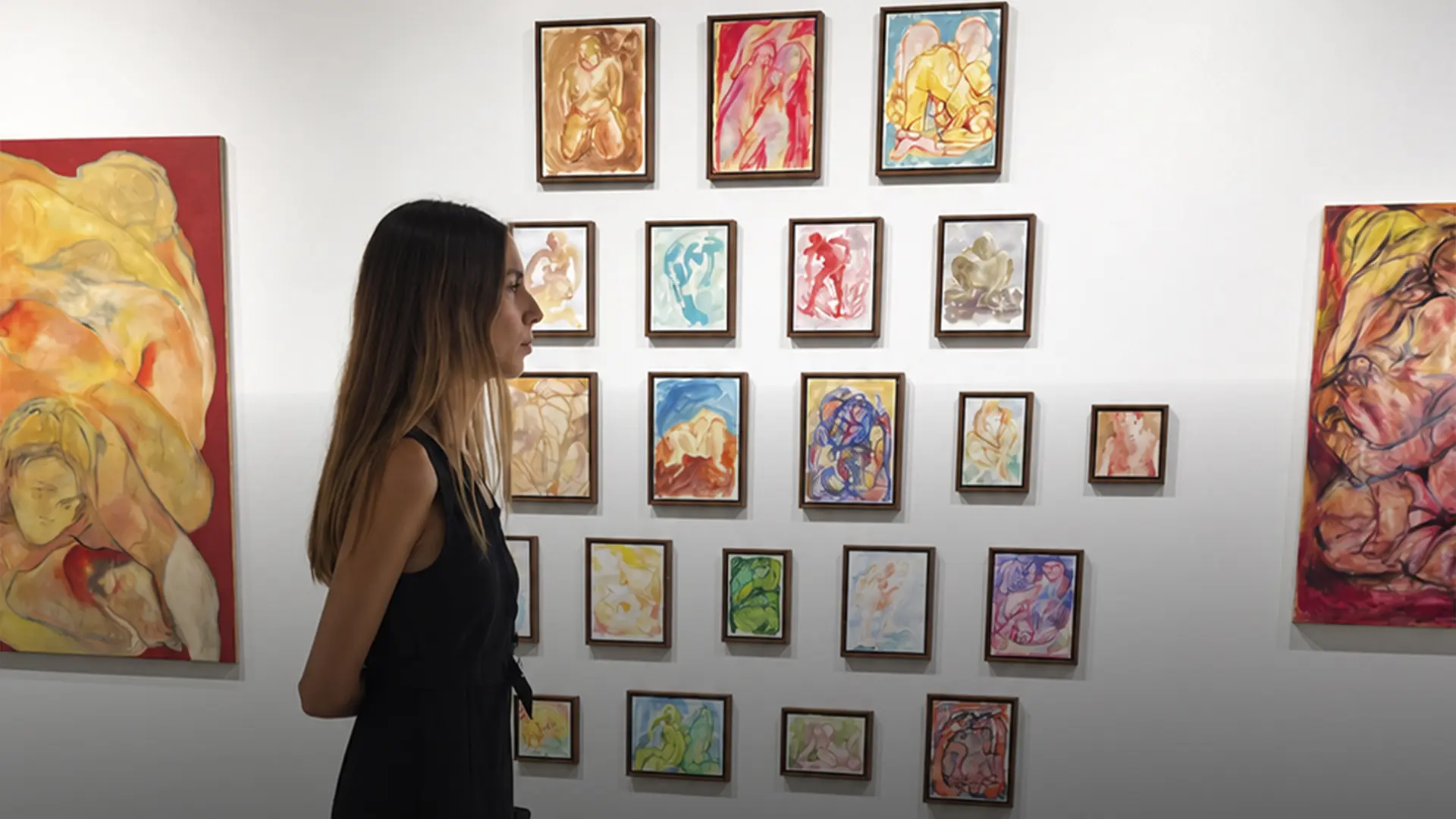
It was a solo exhibition that, of course, referenced Marcel Duchamp’s ready-made concept (which viewed artistic creation as arising from everyday objects, and which I created in 2024). At the event, I included a performance in which I handed out candies to the audience, made using molds of my own fingers. I also showed drawings and brought together different facets of my practice: music, performance, drawing, and food—a field I’m also interested in exploring through art.
Glenda Torrado and her participation in Zona Maco
What are you currently working on?
I participated in Zona MACO with the Enrique Guerrero Gallery, exhibiting a single work. I am also currently part of Cuarto de Máquinas, a project by Hilario Galguera focused on mid-career artists.
What did you exhibit at Zona MACO?
A drawing of an anthropomorphic cat, part of an exploration of human-animals. I also presented a piece featuring two women bending their bodies to form a pyramid that supports two pre-Hispanic figurines, inspired by depictions of Siamese twins, who are considered in indigenous cultures to possess divine powers.
Would you say your work is provocative?
I’m not trying to be provocative. I’m interested in humor and the beauty of the body, but people’s reactions vary widely.
Well, many artists are uncomfortable with the fact that their work is interpreted that way, but most of them enjoy it…
I don’t think too much about how my work will be received. Although I might hope it would make people laugh, the reactions are usually the opposite: some see childlike nostalgia, others pain or darkness. Over time, I’ve come to understand that it’s impossible to control how others interpret what you create.
Does a contemporary artist in the year 2026 really need definitions and labels?
If I had to, I would describe myself as a visual artist, although my creative process begins with drawing. I enjoy moving between disciplines; that fluidity is an essential part of my work.
To keep exploring this thread, visit contemporary artists and galleries; you can also continue through profiles of Latin American artists.