When people think of Argentine cuisine, meat is almost always the first thing that comes to mind: the asado, the grill, the ritual. However, there is another crucial aspect of this cuisine that often takes a back seat and which, paradoxically, better explains the country’s urban character: pizza.
Pizza in Buenos Aires has become a constant testing ground, a space where European traditions, global influences, and boundless creativity come together.
In AW Magazine, we highlight five restaurants where you can enjoy the city’s most experimental and distinctive pizzas.
Il Giardino Romagnoli: Sophistication Learned
Il Giardino Romagnoli is an elegant and unassuming restaurant located in Recova de Posadas. The menu doesn’t need to shout to get noticed. Its offerings follow Roman tradition: rectangular, double-baked pizzas designed for sharing.

Among its most signature offerings is the “Afrodisíaca,” a pizza where black truffle isn’t used as a showy touch but rather as an aromatic element. Mushrooms, capers, mozzarella, and smoked pancetta come together to create a rich, deep flavor.
This pizza shows how Buenos Aires has learned to look to Italy without caricaturing it. Sophistication lies not in exaggeration, but in the judicious use of ingredients.
Cosi Mi Piace: Translating Rome with Respect and Freedom
Cosi Mi Piace firmly believes that pizza doesn’t need to be adapted to local tastes to be successful outside of Italy. Their crust is thin, crispy, and without a rim, made with Italian flour and natural fermentation.

The Carbonare e Patate pizza perfectly encapsulates their concept. Baked potatoes, egg, crispy pancetta, and pecorino cheese come together to create a pizza version of a classic pasta dish—without a hint of irony. The goal is to faithfully and lovingly adapt one dish into another.
Buenos Aires needs neither to explain nor justify itself when it successfully carries out a tradition that is not its own. The result is technically sound, understated, and deeply urban.
Santo Pizza Bar: The Mold as a Manifesto
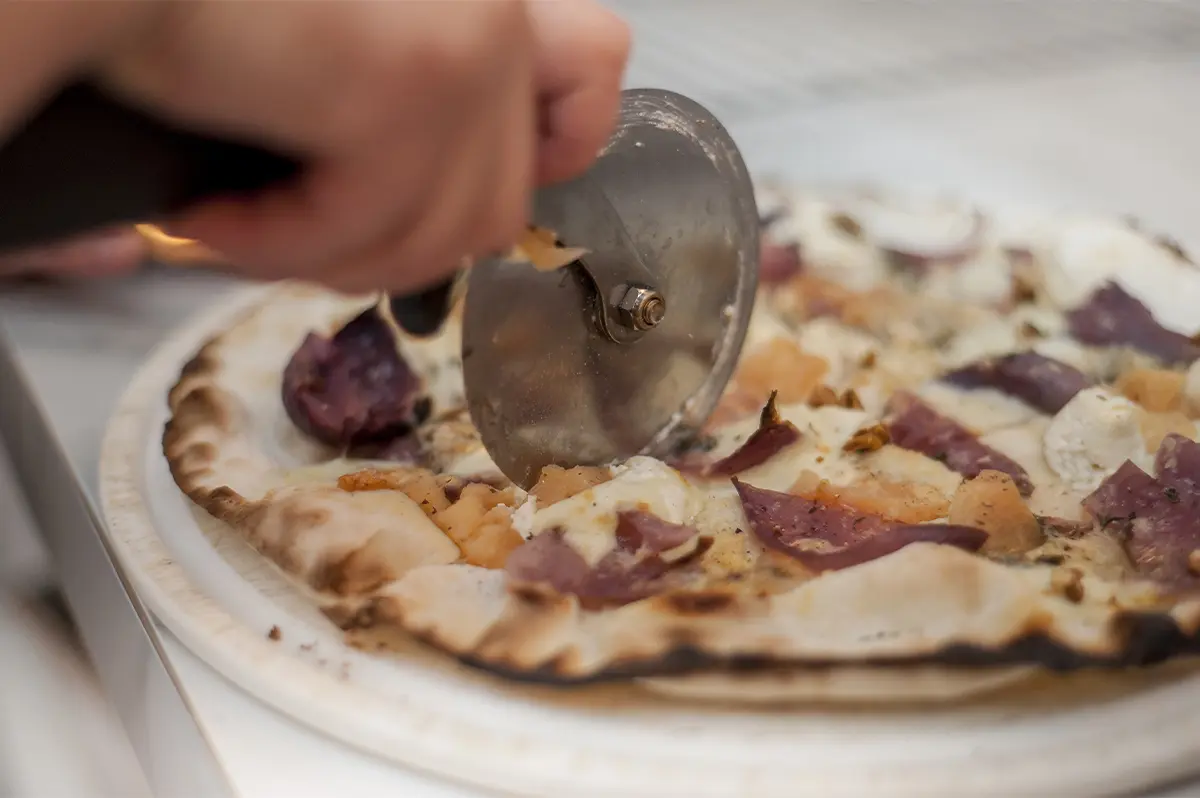
Santo Bar de Pizzas brings back one of the city’s most iconic styles: pan pizza. Located across from the Arcos District, the restaurant combines a laid-back atmosphere with a kitchen that takes its craft seriously.

The mortadella and pistachio pizza captures the essence of the restaurant. On a classic crust, ingredients that evoke Italy are presented, but with a contemporary twist.
Tradition is embraced and then reimagined. Santo Bar demonstrates that the quintessential Buenos Aires style can engage with the present without losing its identity.

Francisca del Fuego: The Oven as a Gathering Place
Francisca del Fuego offers a broader interpretation of pizza, viewing it as a cultural platform. Located in the Arcos del Rosedal, the restaurant blends Mediterranean and Middle Eastern influences.

The Vegan Roja, topped with hummus, tomatoes, olives, and basil, is one of their most memorable options. The ingredients don’t imitate traditional flavors; instead, they create new balances. The pizza doesn’t abandon its traditional form, but it embraces other culinary approaches.
Francisca speaks of a Buenos Aires that is open to other traditions, a city that sees diversity as a source of richness.

Hell’s Pizza: Exaggeration as a Symptom
Hell’s Pizza offers a deliberate departure from the norm. Inspired by New York-style pizza, its giant pizzas—sold by the slice—make excess their main selling point.

Cheddar cheese, bold sauces, fried chicken, and familiar flavors of American culture dominate the experience.
Options like the Chick Norris or the Buffalo Chicken don’t aim for subtlety or refinement. They rely on boldness and showmanship.
Hell’s Pizza speaks to a Buenos Aires that has also succumbed to the global clamor, embracing imported trends even when they are excessive.
Pizza: An Intimate Ode to Buenos Aires
These five restaurants offer different answers to the same question:What does Buenos Aires do with its heritage and with the new influences it embraces?
In that sense, pizza serves as the perfect metaphor for the city. Experimentation, playfulness, ingenuity, and humor all come together in a dish that embraces everything without losing its shape.
Discover other restaurants in AW Magazine.
To keep exploring this thread, visit our purposeful travel section; you can also continue through restaurants with history and flavor.