
“Colombian art”? You’ve probably heard the term somewhere, but it might not be one that our interviewee fully endorses.“It’s difficult—and it may seem like a contradiction—but I don’t feel comfortable talking about Colombian art; on the other hand, I do recognize the need to make sense of it, to examine and showcase what is produced in a given place.”

The Bachué Project and Critical Thinking
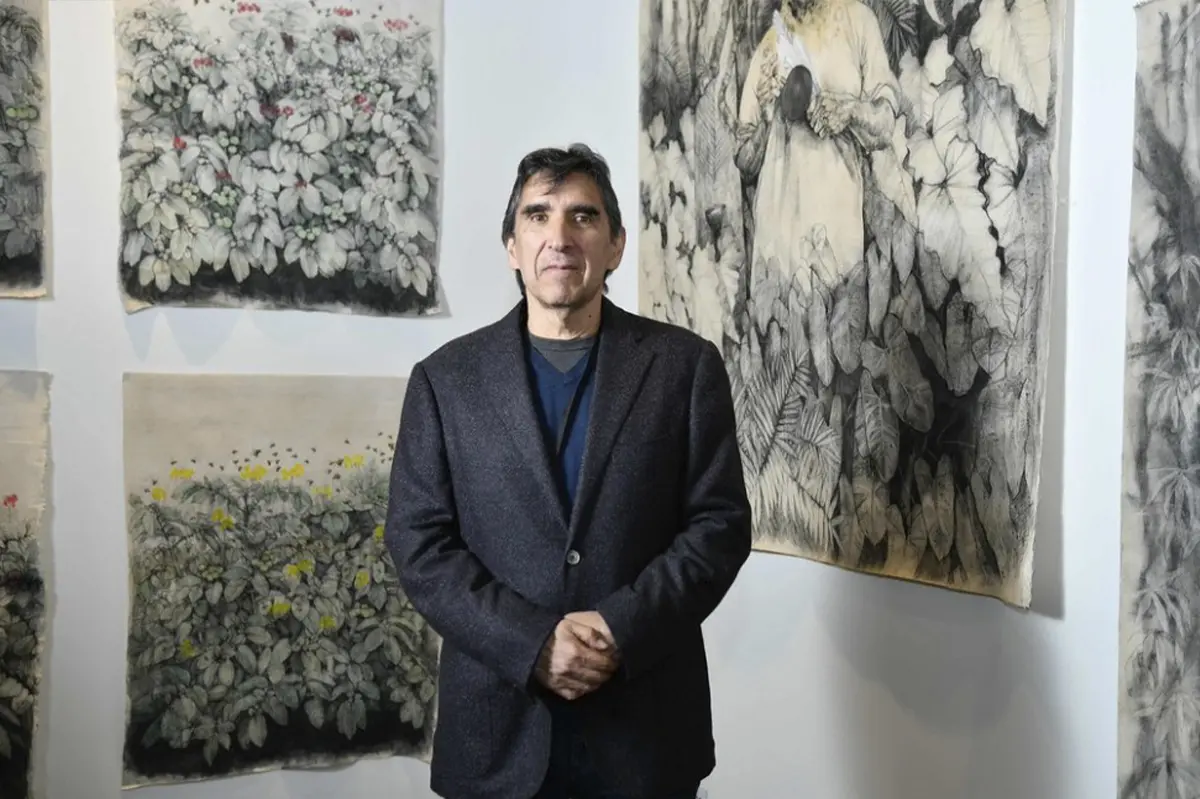
That’s how decisive José Darío Gutiérrez is, the founder of Proyecto Bachué, an iconic management platform focused on the visual arts whose goal is “to contribute to the development of a critically thinking citizenry”—as stated in its manifesto—from the 1980s to the present day. And in Colombia, that hasn’t been easy.
The project promotes contemporary practices in creation, research, and curation that, while staying true to their roots, encourage a reexamination of modern forms of expression. Gutiérrez, the project’s founder—along with María Victoria Turbay, who is also his wife—spoke with us about it from his home in Colombia.
“The project begins as a collection focused on what we might call the modern era, but as it progresses, it inevitably broadens its scope, because it becomes clear that the search for a distinctively Colombian artistic identity is a futile—or at the very least, flawed—endeavor.” – José Darío Gutiérrez
Let’s travel back to that decade of the last century, when José Darío Gutiérrez, a tenacious Colombian collector, sensed an unjustified pressure to construct a cultural imagination. It all began as one of those enduring initiatives, born of a genuine personal concern: to reexamine the processes of art in Colombia. “Who are we? What are we made of? Where are our roots?”: these were the questions that guided the collector in building that ideal.

Antioquia on the art map
As he explains, this is related to his background and his early years in Medellín. Gutiérrez points out that Antioquia is a region deeply proud of its ability to build itself up in the face of adversity, since during the colonial era it did not possess great wealth: it had no land that was easily cultivable or suitable for simple agricultural and livestock farming.
“Antioquia is a region that developed around gold mining, which involved demanding work and limited resources. Its mountainous terrain made communication with centers of power difficult; however, far from being an obstacle, this became an opportunity for endogenous development, giving rise to a society built on the essentials.”
“That was also my process, my role—so to speak—as a collector: someone interested in gathering works to construct a story, a narrative, or even a counter-narrative,” he explains.
Nationalism and Colombian Art
However, despite its local, grassroots, and national narrative implications, nationalism is not a valid category for him either, even when stripped—of course—of its political connotations. “The label disqualifies itself.” Any definition that imposes conditions on artistic creation ultimately invalidates it. Nationalist expressions, in general, are flawed: they arise in opposition to certain situations, yet retain an absolutist character. That is why they contradict the very essence of art as a realm that opens up possibilities,” he concludes.

Gutiérrez explains that art in his country has historically been shaped by specific events, such as violence, which for decades defined much of its international reputation, with artists such as visual artist and sculptor Doris Salcedo or the recently deceased pop artist Beatriz González.
However, he notes that this is changing thanks to improved artistic and historical training, which has broadened the themes and concerns of contemporary artists. Today, art of Colombian origin no longer revolves exclusively around violence, but responds in a more diverse manner to a variety of issues.
Multidisciplinary Collecting at the Bachué Project
Regarding his approach as a collector, he describes it as “multidimensional,” recognizing that every collector engages with multiple interests, media, and intersections within their collection, where even elements that seem out of place ultimately come together in a coherent whole. Through Editorial La Bachué, the space produces publications aimed at strengthening a cultural heritage that reflects on our current and local identity, helping to affirm a perspective unique to the southern region.
A fundamental principle of collecting
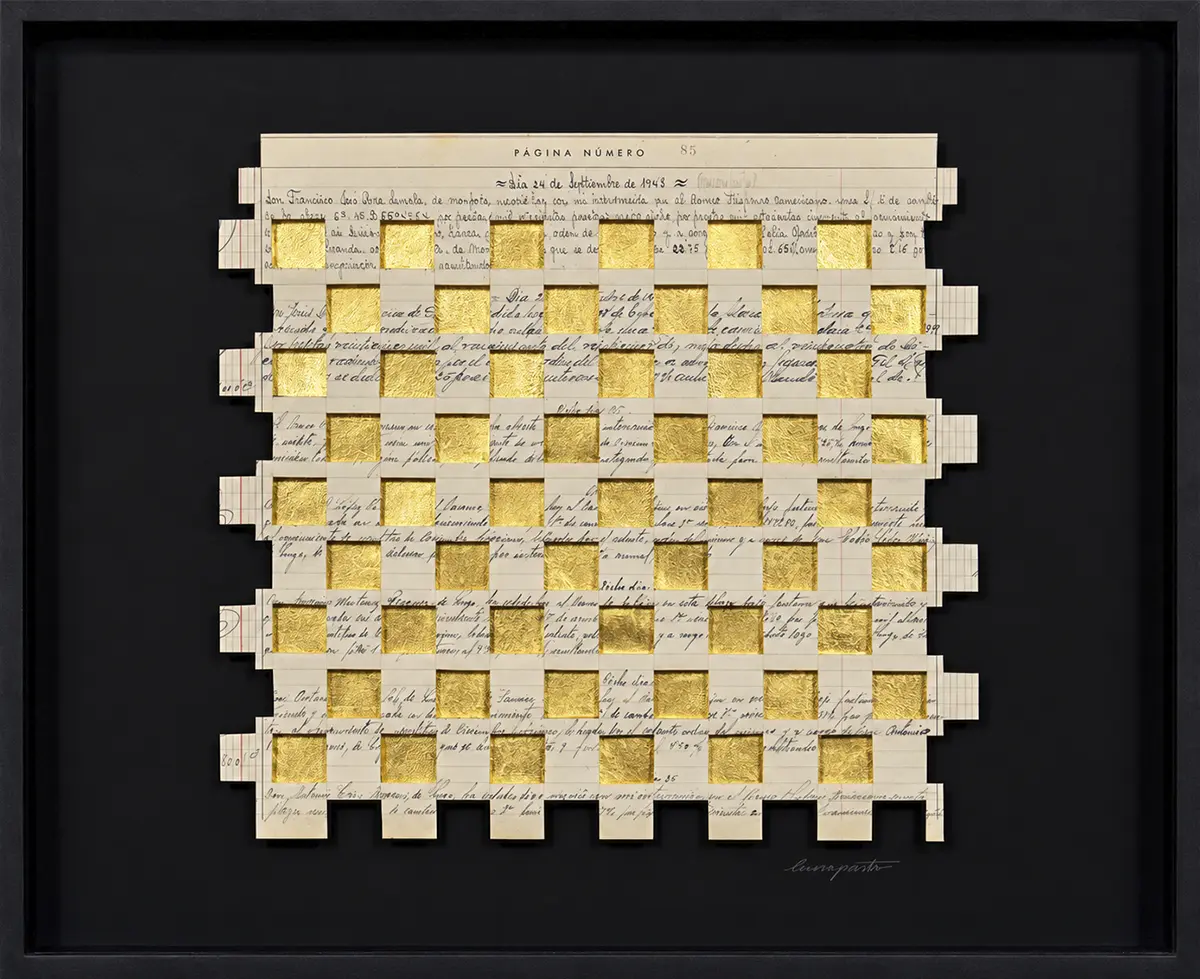
What attracted him most as a collector was abstract art, especially geometric art: its clarity and its ability to generate an immediate, even emotional, aesthetic appeal. In contrast, Colombian art from the first half of the 20th century lacks the same expressive power; it remains constrained by academic aesthetics and international influences—particularly those from Mexico. During those years, artists stopped looking to Paris and turned their attention to the Mexican, drawn by thematic affinities and the impact of muralism amid the construction of a national ideal.
There was also a period of almost excessive accumulation. However, with the consolidation and increased visibility of the Bachué Project —and the interest it has sparked among institutions—some pieces have been made available to public collections in recent years. This involves accepting the gaps—both emotional and material—left by their departure, but it responds to an essential principle of collecting: contributing to the examination and understanding of artistic processes.
El Dorado Space: Past and Present
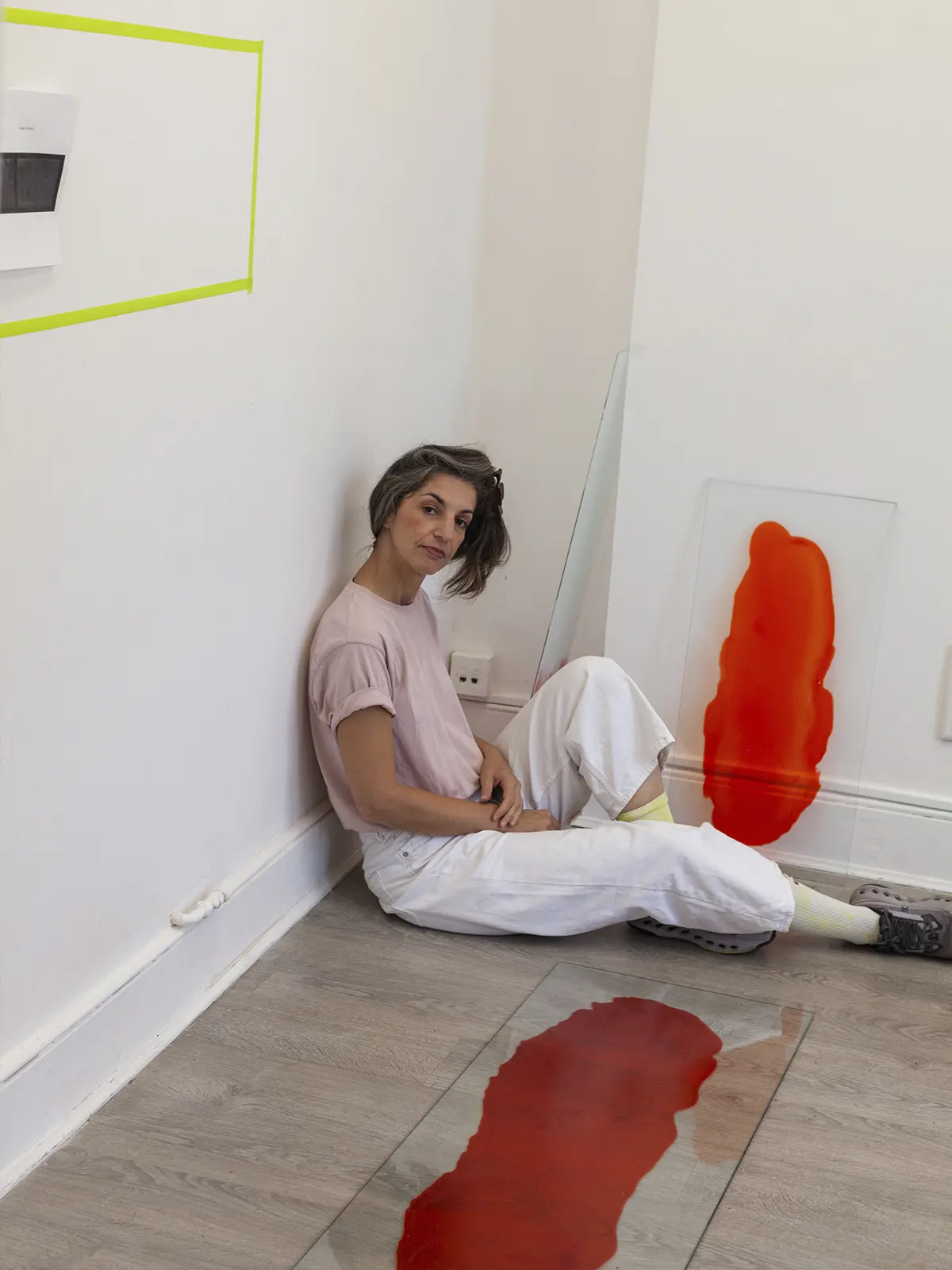
Space El Dorado, for its part, emerged as an offshoot of the project, stemming from a shared reflection between José Darío and his daughter Valentina. She—he confides—questions him about the fact that his work is centered on the past rather than the present of art, something he himself acknowledges as valid. However, he decides not to engage directly with young or living artists, as he does feel more comfortable working with the past.

That is why he encourages Valentina to take on this field, giving rise to the gallery as an ambitious venture in contemporary art, guided by a deeply human aspiration—albeit one that may be difficult to achieve.
At the end of the day, what Proyecto Bachué offers is not merely a collection or a narrative about art in Colombia, but a steadfast stance against any attempt to define it. In a context obsessed with labels, its approach insists on opening up the conversation, looking to the past, and challenging the present without completely closing it off. Perhaps it is there—in that resistance to fixing meaning—that art, including that produced in Colombia, finds a freer—and more uncomfortable—way of existing.
To keep exploring this thread, visit contemporary artists and galleries.