“Culture isn’t just for an elite; it’s for everyone,” Luis Guillermo Moreno tells me right off the bat. He’s a gallery owner trained in art restoration and the appraisal and valuation of art and antiques. Is that so? In the mid-1990s, while Colombia was going through one of the most complex periods in its recent history, art found persistent ways to make its way. It was at that juncture that what would later become LGM Galería was born.
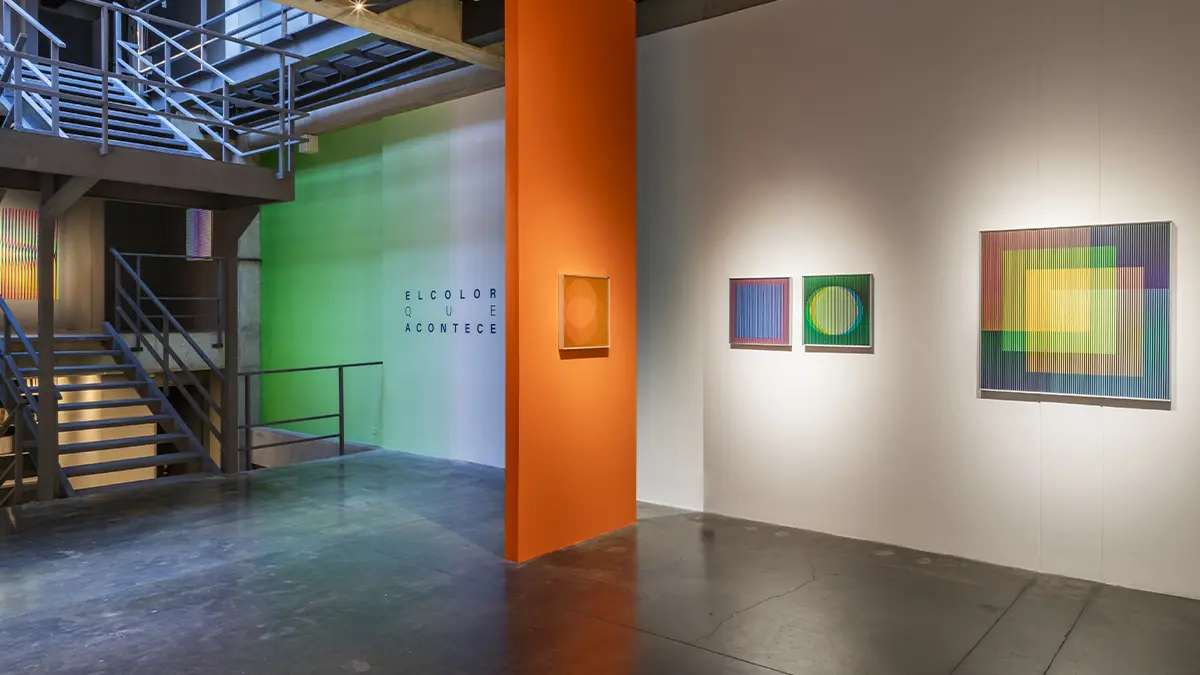
In this conversation, Luis Guillermo Moreno —yes, the gallery is named after his initials—looks back on and reconstructs the family history that led to the gallery’s founding, and reflects on the challenges, lessons learned, and risks taken that have shaped his career, as well as his plans for 2026 and his participation in Zona Maco.
“We started the business in 1995 as a family project. My family were also gallery owners; specifically, they were in the antiques business, which was very much in vogue at the time,” he recalls.
During those years, the leading Colombian artists included Beatriz González —who recently passed away— Doris Salcedo, Olga de Amaral, Miguel Ángel Rojas, and Darío Ortiz, among many others who continue to have a strong presence today.
The Art Market in Colombia
The art market has always been active in Colombia. Unfortunately, one cannot ignore the sociopolitical and security context the country was facing, with the issue of drug cartels and violence in the 1980s and 1990s. This led to a significant migration of Colombians abroad in the early 2000s.

“Fortunately, that situation was gradually resolved, and today the picture is clearer,” Luis points out. “Art fairs such as ARTBO (Bogotá International Art Fair), which is now a key part of the international circuit. The San Felipe circuit also emerged in a small, traditional neighborhood that is now considered a cultural and creative district.”
Historic galleries such as Galería del Museo, Galería La Cometa, and Alonso Garcés Galería were already established during those years and continue to maintain a significant international presence.
It was in 2021, with the opening of its current location at Calle 73 #20c-73 in Bogotá, that the space established itself as a leading destination for modern and contemporary art. “That year, we opened a building in San Felipe with over 560 square meters, exhibition terraces, storage rooms, an administrative area, and two terraces. We opened with the Cuban collective Los Carpinteros, whose works we continue to represent, especially through Alberto Rodríguez, who lives in Spain.”
“Today we focus on a blend of modern and contemporary art, though we’re increasingly leaning toward the contemporary, without neglecting the masters. At fairs like Zona Maco, we showcase both: for example, Edgar Negret alongside Alberto Rodríguez.”

Botero and the Culture Clash in Asia
In addition to its expansion in Latin America, the gallery has a strong presence in Asia: “We saw that region as an opportunity because there was very little Latin American presence there. We thought—wrongly—that it would be easier, but it was extremely complicated, ” he recalls. “We participated in two fairs in China and one in Korea for seven consecutive years. Then we opened up other markets: Spain, Venezuela, and we strengthened our presence in Bogotá,” he says.
During his early forays into the Middle East, people didn’t know how to react to Fernando Botero’s distinctive work. A large painting by Botero depicting a nude woman from behind left them bewildered. Culturally, there were restrictions on nudity, and some works were removed from the art fairs.
““During our first forays into the Middle East, people didn’t know how to react to Fernando Botero. His large painting of a nude woman seen from behind baffled them culturally; there were bans, and some works were removed,”Luis Guillermo Moreno (LGM)
The attendees, feeling a bit self-conscious, took photos of the price tag rather than the artwork. “At that time, it was already worth around $550,000. Today, it would be worth over a million, but the market wasn’t ready for it yet.”
The Focus and Challenges of Galería LGM
We recently presented a solo exhibition by the master artist Carlos Cruz-Diez, one of the leading figures in kinetic art, who spent more than 60 years exploring light and color. He is an artist of international renown, whose works are featured in major collections around the world.

The issue of women’s representation in the arts is another of our ongoing priorities: “It’s something we’re working on. This year we’ll be hosting an exhibition featuring a dialogue between two artists: Isidora Villarino (Chile) and Natalia López (Colombia). We’re also striving to achieve a more balanced representation. In addition, we have included artists from the LGTBIQ+ community. Not to meet quotas, but because they are strong artists whose work aligns with our vision.”
Politics stays outside LGM’s doors: “Here, we leave our political and personal ideals at the door. The only thing we evaluate is the artwork and how well it aligns with our program. We’ve exhibited artists with ideas very different from our own without any problem,” he says.
LGM Gallery at Zona Maco 2026
In this 2026 edition, the gallery featured five contemporary artists: Dagoberto Rodríguez, Tony Vázquez Figueroa, and Los Carpinteros (a collective of Cuban artists), as well as three modern artists: the sculptor Edgar Negret, Pedro de Ora, and Marcos Pina, considered the first modern geometric artist in Colombia. “We will also be featuring works by Nicolás Beltrán,” he adds.

Over the course of the year, LGM will host the Faenza collective, Mauricio Salcedo, Nicolás Beltrán, and Saúl Sánchez, a Colombian artist based in Canada.
“I always say that Colombians are in vogue. Artists like Beatriz González, Olga de Amaral, Doris Salcedo, and Delcy Morelos have a very strong international presence. The recognition is real,” concludes Luis G. Moreno. “LGM is our home. We make our living from this, we believe in it, and we do it with pride.”
To keep exploring this thread, visit contemporary Latin American art; you can also continue through contemporary art galleries in Latin America.