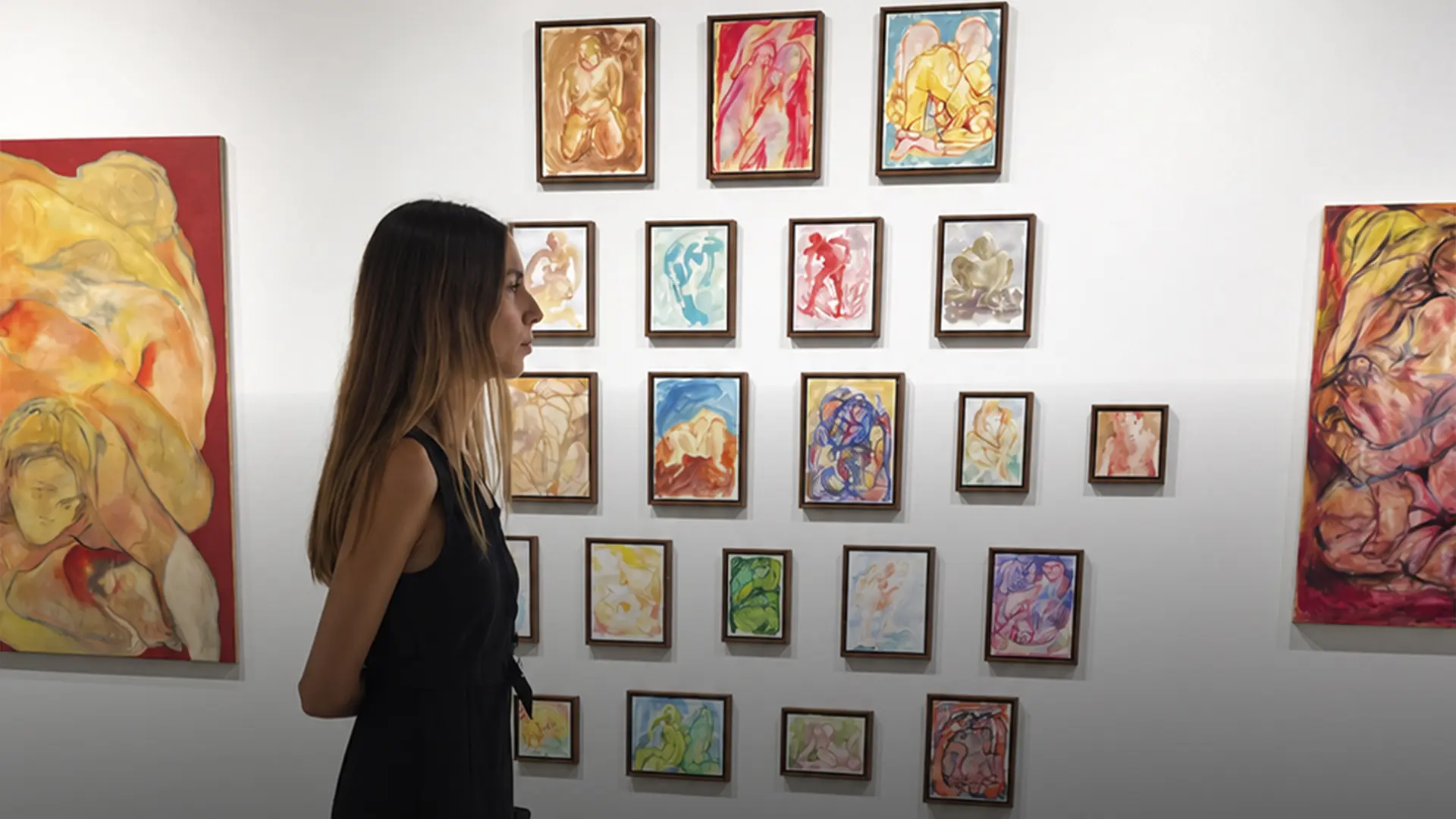

Estación Material, Vol. 5, once again brought to light what is no longer a secret: Guadalajara, Jalisco, is today one of the hubs of contemporary art in Mexico. From September 24 to 27, the city welcomed artists, galleries, collectors, and art lovers from across the country—and beyond. They visited the fair’s main venue, Plataforma, as well as Estudio ACME, located at Sala Roxy, and the participating spaces that hosted openings and alternative exhibitions in their studios or galleries.
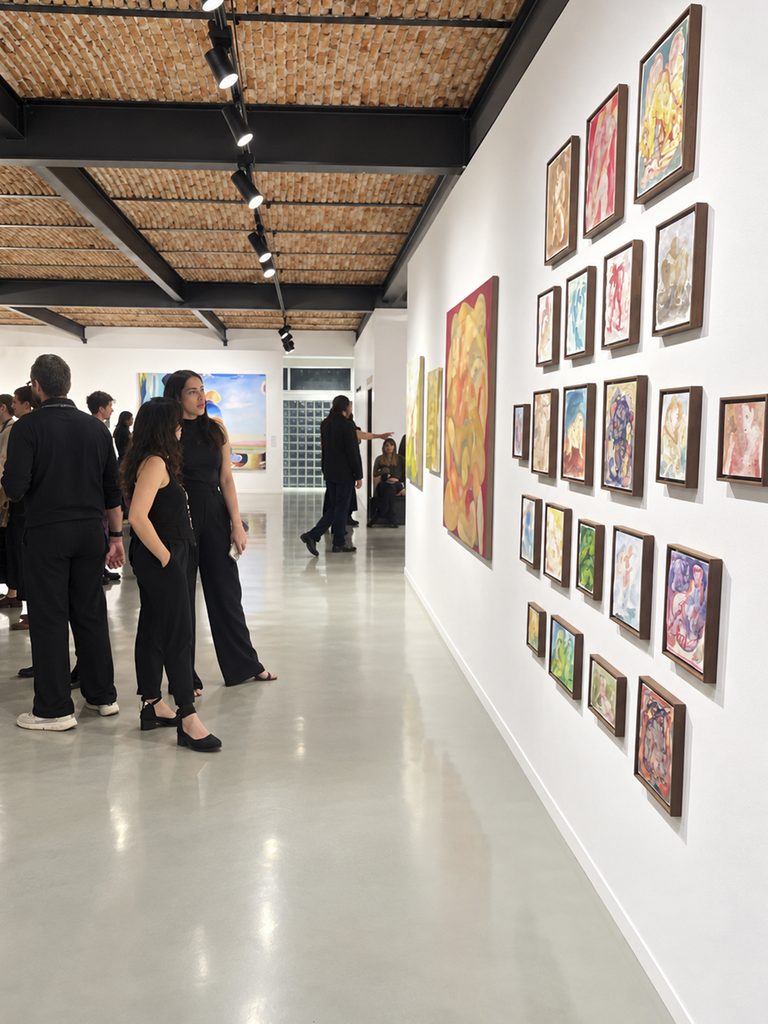
Not to mention the endless parties—one of which was called “Dance Without Mercy,” a name that speaks for itself—where the most recognizable faces in Mexican art gathered to celebrate the opportunity to meet face-to-face and continue building a scene in constant upheaval. A committee of hosts made up of collectors, patrons, and local artists opened their doors and helped make the experience even more welcoming.

From Material to Material Station
The Material art fair was launched in Mexico City in 2014, at a time when it was difficult for galleries and artists to participate in international art fairs. “Material began by seeking a way to stimulate the economies of our community of gallery owners and artists at a time when participating in international art fairs was very difficult,” recalls its founder, Brett W. Schultz.
Years later, his team founded Estación Material in Guadalajara, which has now held five editions.
“From the very beginning, the idea was to create a more nationwide event in Guadalajara with the support of many friends here and its large community of artists and gallery owners. In the end, we held the first two editions at Cerámica Suro,” recalls Schultz about the early days of Estación Material.

For this edition, the galleries submitted their proposals for artists and works, as is customary. Based on these proposals, the Material team designed the layout of the presentations to foster dialogue between the pieces and the spaces.
Although they strive to respect each gallery’s initial proposal, they sometimes suggest adjustments to maintain certain exhibition guidelines. Once the works have been selected, they determine the layout of the walls and the overall installation with the aim of offering a fluid and coherent experience. “Where the event isn’t perceived as a conventional art fair, but rather as a living, integrated space. Of course, always in keeping with the original spirit of Estación Material,” says Schultz.

A fair where people can come together
The fair brought together more than 150 works by over 70 artists, with the participation of 18 galleries and projects based in Mexico. Among the spaces presenting works were Alejandra Topete Gallery, Galería Karen Huber, General Expenses, Gobernador, PEANA, Pequod Co., Revuelo, and SAENGER Galería (Mexico City); CURRO and PALMA (Guadalajara); guadalajara90210 (Mexico City–Guadalajara); and Travesía Cuatro (Madrid–Mexico City).
“For this edition, we brought in Antonio Vidal, who is 30 years old. Art fairs like Estación Material are important because 95% of what I sell as a gallery is in Mexico. Guadalajara is a huge market,” says Álvaro López Ochoa of General Expenses.
Artist Sergio Chavarría, from Galería Revuelo, emphasized the importance of keeping Estación Material in Guadalajara. For him, decentralization isn’t just about taking projects to other cities, but about recognizing that those places have their own spaces and scenes. Although it was his first visit to the fair and he hadn’t yet seen it all, he sensed an atmosphere different from that of Mexico City.

Artist Julieta Beltrán Lazo, from Galería Palma, highlighted Estación Material’s role in supporting emerging artists. She noted that the guidance these venues receive contributes to their professional development and that, for an artist, participating in the fair also builds confidence in their work and in their ability to communicate it.
For Claudia Llanza of Travesía Cuatro, Estación Material “is an opportunity to meet people and reconnect with artists, collectors, curators, and colleagues.” The fair holds special significance for the gallery, which has been based in Guadalajara for 13 years and presented a project by Guadalajara-based artist Jorge Méndez Blake at this year’s edition. “It’s a great excuse to reconnect and renew relationships,” she notes.
Beyond the Fair
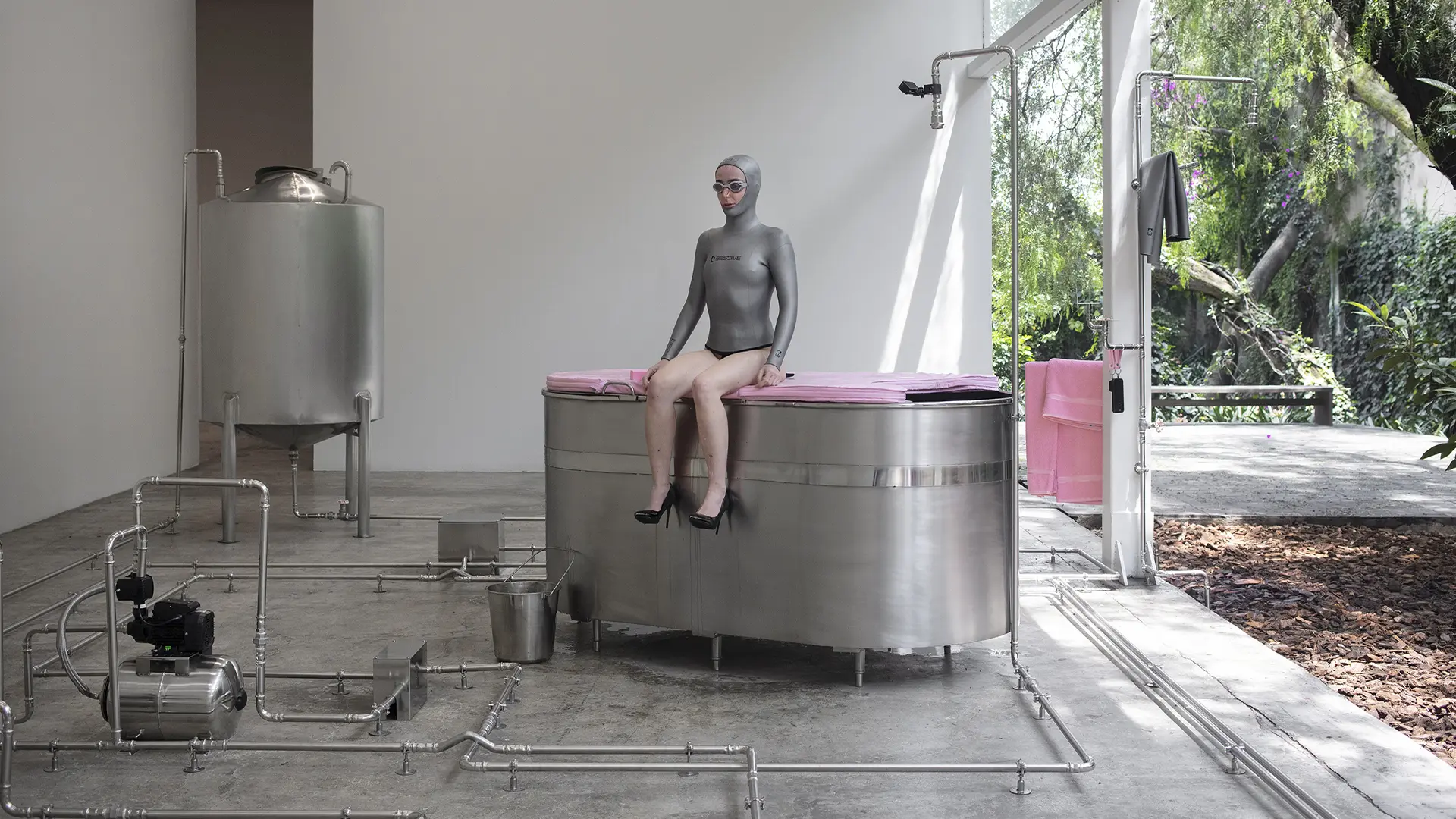
The exhibition EXPLANADA, *While It Collapses, It Blooms*, on view at Sala Roxy as a parallel exhibition, imagines a park in transformation, inhabited by works that resemble animals, plants, or forms that are difficult to classify. Straddling the line between the natural and the artificial, it presents an ecosystem where collapse also opens up new possibilities.
Juni Aranda, Andrea Ferrero, Antoine Garnier, Julieta Gil, Diego González, Chavis Mármol, Cosa Rapozo, Gabriel Rico, Marco Rountree, Max Ruelas, Guadalupe Salgado, Cristina Umaña, and Luis Alfonso Villalobos are participating in this production created by Salón ACME.
Discussions were also held as part of the VOCAL program. During the session dedicated to Expo Arte—the country’s first art fair— Gabriela López Rocha and Guillermo Santamarina revisited its history and the role of early art collecting in the Guadalajara art scene.

At the panel discussion on takeover bids, Mariana Munguía and José Dávila discussed the networks and management models that have driven contemporary art in the region. Rubén Méndez and Baudelio Lara, for their part, analyzed three independent models that have transformed local artistic production and circulation: the Taller de Gobelinos, Cu.Mu.Lo, and Arena México Arte Contemporáneo.
The Vibrant Scene in Guadalajara
After five editions, this broader perspective coexists with something equally important: a fair that continues to take shape in Guadalajara, building on the relationships its community forges year after year.

“Estación Material offers insight into the vibrant scene in Guadalajara, but it also provides a good overview of the national scene,“Brett W. Schultz
More than just another event on the calendar, Estación Material vol. 5 reaffirms that art in Mexico is not a passing trend, but rather a process supported by institutional memory, local collecting, and a vibrant community.
Guadalajara doesn’t just welcome contemporary art—it provides a space for it to celebrate its present and its future.
Discover more art fairs in Mexico and Latin America in AW Magazine.