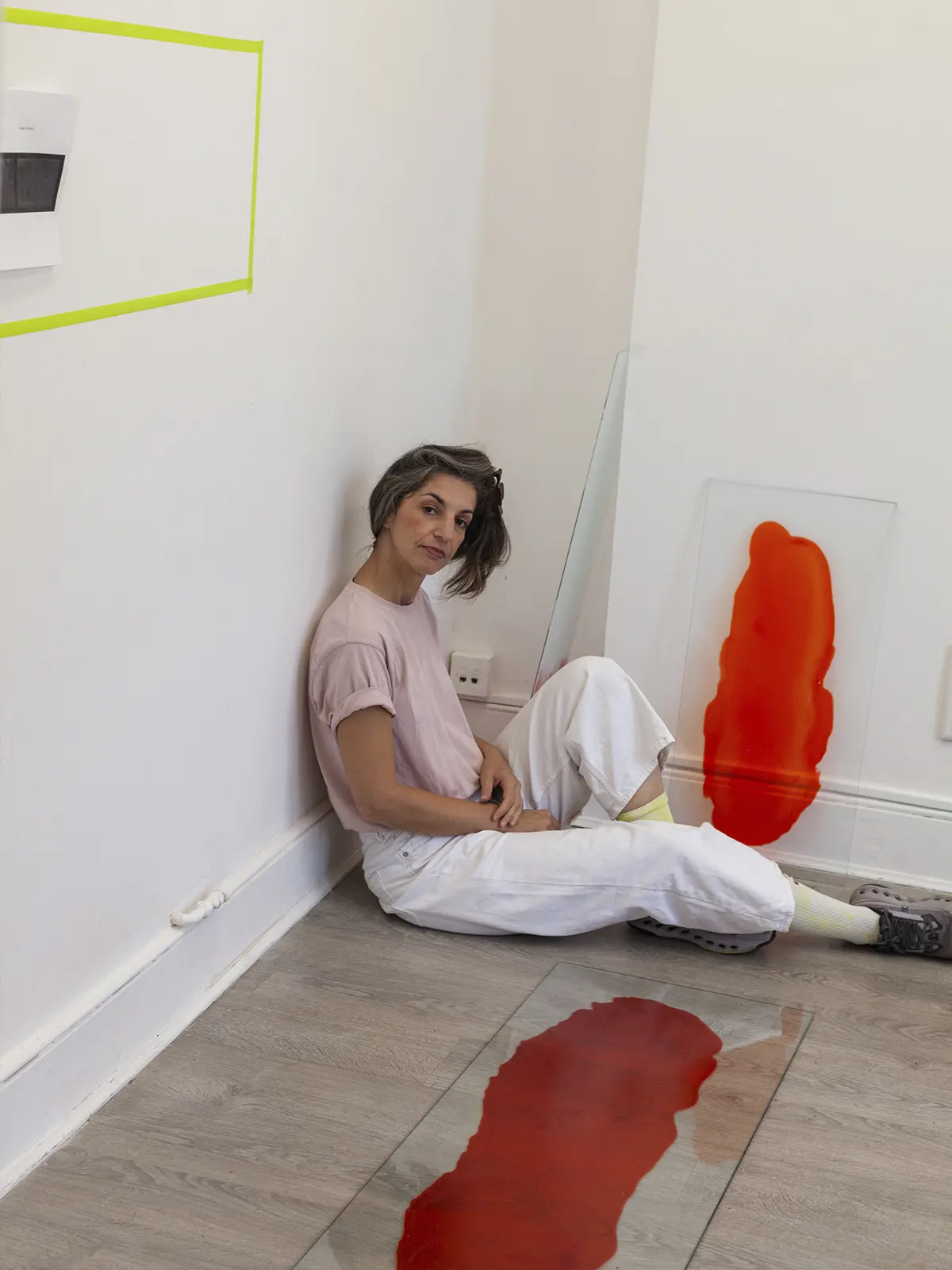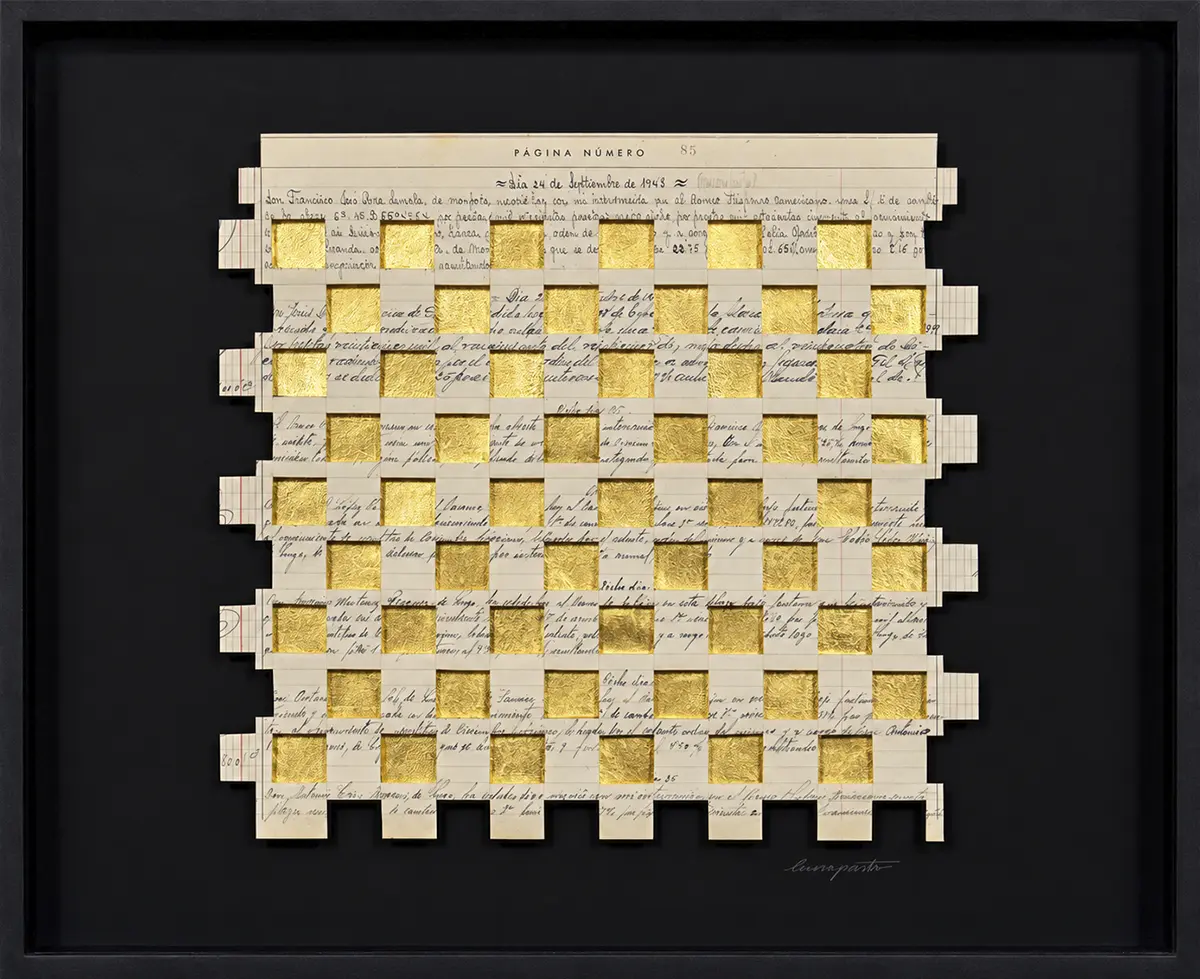

A while back, I read a tweet about him that said, “Jorge Méndez Blake is a writer who makes sculptures.” During the recent Art Week in Guadalajara, I stopped by his open studio to see his work, chat with him, and find out whether or not his pieces are meant to be read.

“I’m always playing with the idea of whether my work should be read,” he confides to me regarding the question of whether or not he is a visual artist, writer, or poet. “I like to experience the intensity of writing a poem,” he says, knowing full well that he won’t succeed because he doesn’t get out of bed to write like a writer who devotes eight hours a day to it.
“I create art that incorporates writing as part of the process.” He warns me that he tries to be careful with that comparison, but that he likes to spark that debate.
A book is more than just something to read
Méndez Blake’s career—which has taken him to venues such as the Museo Cabañas, MARCO, the Palm Springs Art Museum, and the Musée d’Art Moderne in Paris—cannot be understood merely as a series of exhibitions, but rather as the constant expansion of a single idea: creating tension between literature and physical space. His works, now part of collections such as the National Gallery of Victoria, the Jumex Collection, and the MUAC, continue this exploration in which the book ceases to be merely an object for reading and instead becomes matter, structure, and a catalyst for meaning.
Once you learn about his studio and his career, it becomes much clearer: his works were not created to be displayed in a library. The massive outpost, filled with large-scale sculptures, projectors, printed sheets, paintings, and materials, reveals that his approach is not to rely on any single element.
At the entrance, we are greeted by a car with no wheels or tires. Instead, a stack of books supports the body of a piece titled *Haiku for Parking Lot (LTD)*, 2020–2026. The image lends itself to many interpretations, but the reception area, the art gallery, and the studio converted into a sort of garage offer clear clues as to the direction of his work.

We don’t know what books are under the car, but a purist would be up in arms, just as when someone uses any old book to prop up a wobbly leg on a piece of furniture. To use literature for such purposes would be, for someone jealous of the symbolism of the printed book, almost like burning the letters, in the manner of the arsonist firefighters in Fahrenheit 451.
There is nothing sacred about art
But for Méndez Blake, nothing is sacred, and any book could have been used as a prop in her piece. “I could have used any book. I think that, beyond religious issues or the sacred canon of literature, everything is completely vulnerable and completely worthy of being used, distorted, destroyed, vandalized… and it’ll do it good.”
“Anything goes. An artist is free to do whatever they want; there are no set rules. Over the years, I’ve learned that as an artist, you have complete freedom over your creative processes—to create, recreate, and reinvent them whenever you want”—Jorge Méndez Blake.
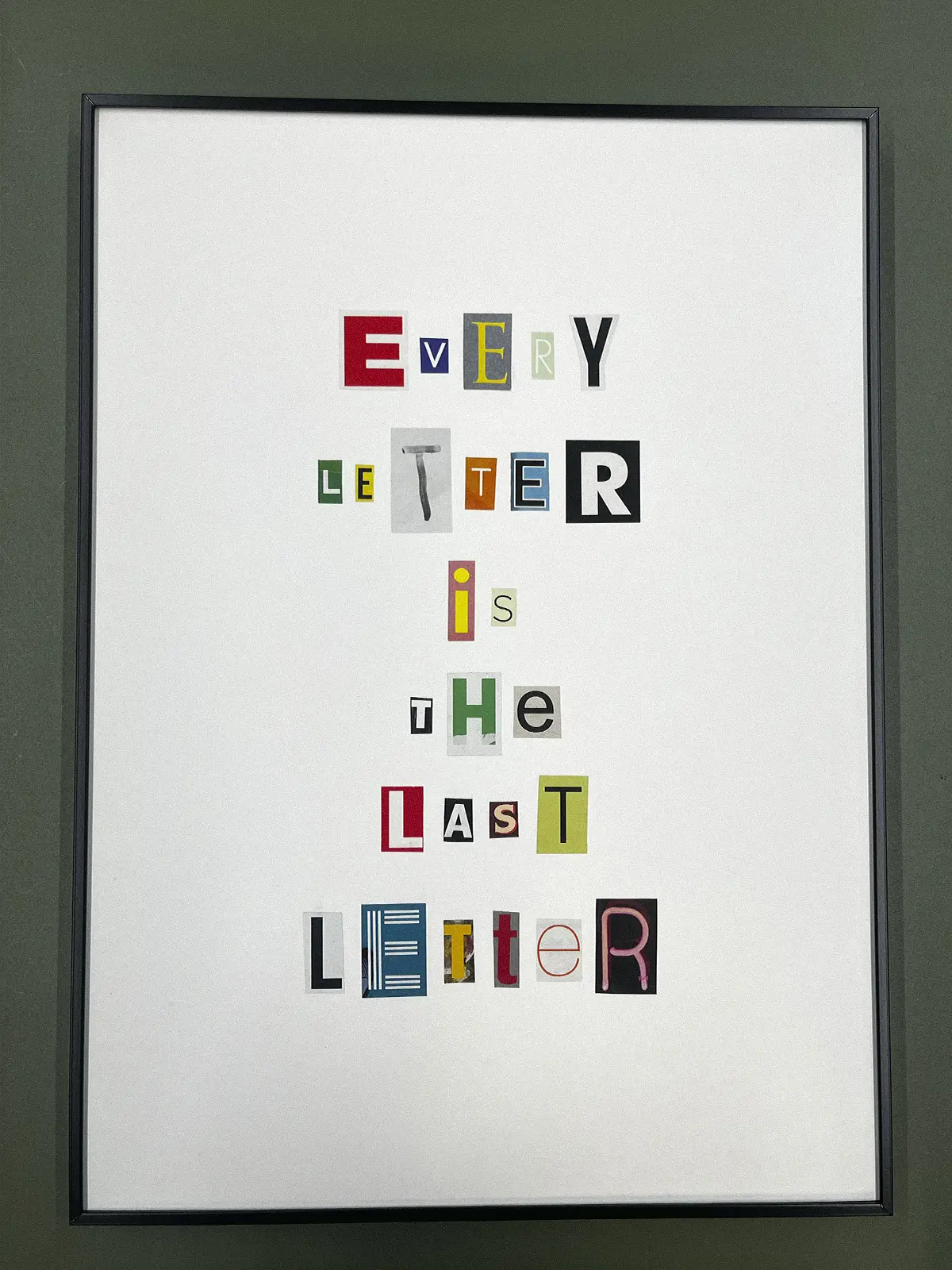
The element of surprise is also part of the charm of art. A massive brick structure would be nothing more than an imposing piece of architecture were it not for a small note tucked away between the bricks—a phrase in English that translates to: “Every poem is the last poem. “

Other large-scale works of his on display there, currently being completed at the Jorge Méndez Blake Studio, include drawings such as Defend Democracy (Theater VI) / Defend Democracy (Theater VI), 2025: “They’re like reminders of what needs to be defended—democracy and poetry, for example,” he notes. “Poetry isn’t necessarily democratic. But they both began in the same place, which is Greek theater,” he adds.
Does building mean destroying?
Just like literature, Méndez Blake’s work invites visitors to piece together the narrative from messages, slogans, and a sense of déjà vu that evokes literary works—works that might be found in an encyclopedia just as easily as in a fanzine. “And to do that, I rely heavily on the strategy of different scales. That is, large scale versus very small scale. That allows you to discover things as you gradually become immersed in the pieces.”
When asked whether he considers himself a destroyer of the past or a builder of something new, he replies: “I don’t know if building is the same as destroying, or if you build by destroying. That ambiguity is a good thing. I use a strategy that consists of dismantling a text, breaking it down, and destroying it. Hopefully, this leads to new interpretations.”
In that sense, Méndez Blake always thinks of the audience as readers and considers how they will interpret the play. “With a book, you either connect with it or you don’t. It should be similar with a play; it has to do with the way you discover something and interpret it.”
Exploring typography is also part of his creative process: “The moment I begin to manipulate and influence the typography—its scale and the way one letter connects to another—new interpretations begin to emerge,” he says.
Layered Art
He has always maintained that his works have different levels of interpretation: one that is visual, at first glance. But then, like an onion, you peel away the layers and discover new things. “I prefer to work with an idea and push it to its absolute limit,” he says, “as an artist, you have to understand and be comfortable with what you’re talking about.”

For the artist, exhibiting in Guadalajara is a much greater challenge than, say, Paris, “because it’s your hometown. Everyone knows you, everyone knows your career. If you go to Tokyo for an exhibition where no one has seen your work, then whatever you put out there is new,” he confesses, acknowledging that art criticism in Mexico is very particular: “It’s so hard to make art, and yet someone still manages to tear you down and criticize your work? I think that’s why criticism here is so kind.”
In the end, the initial question—whether or not her works are meant to be read—seems to lose its relevance. Méndez Blake’s work does not seek to answer it, but rather to shift it: reading ceases to be merely a matter of scanning words and becomes a way of inhabiting spaces. In this interplay between artist and viewer, we all inevitably end up becoming readers.
To keep exploring this thread, visit contemporary artists and galleries.