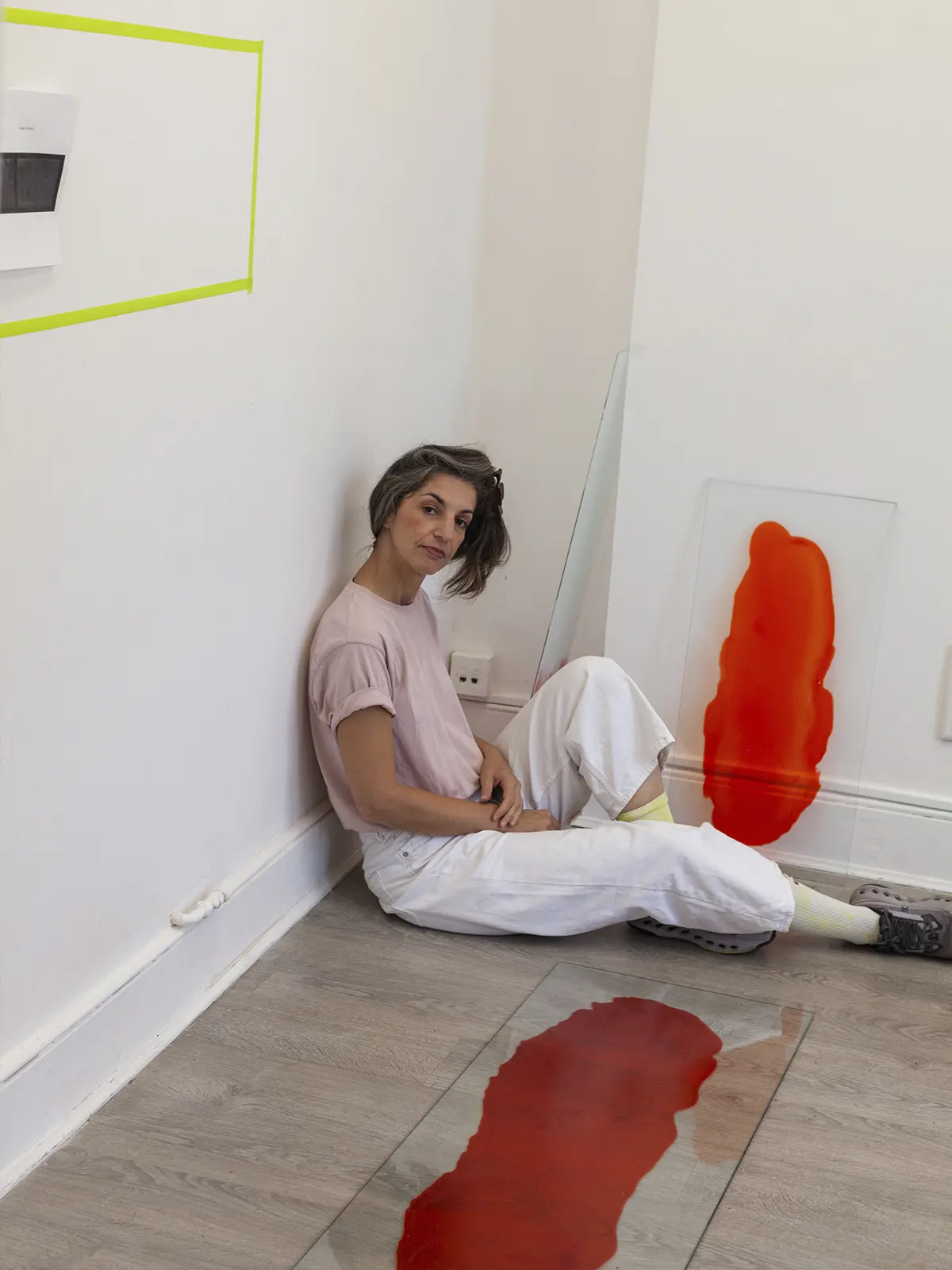

The American-Panamanian artist transforms nature and everyday life into video art that reveals the tensions between science, politics, and human fragility.

If you visit Panama, in addition to admiring the huge ships passing through the Canal, you might want to look down at the ground from time to time. There’s something to see there, too. In that part of the Caribbean—even in the metropolitan area—it’s common to see processions of carpenter ants marching through their own tiny world, like workers heading toward the great machine.
Panamanian ants work—without any benefits—cutting leaves that they then carry back to their underground nests. There, they chew them up and cultivate a fungus that serves as food for their young.
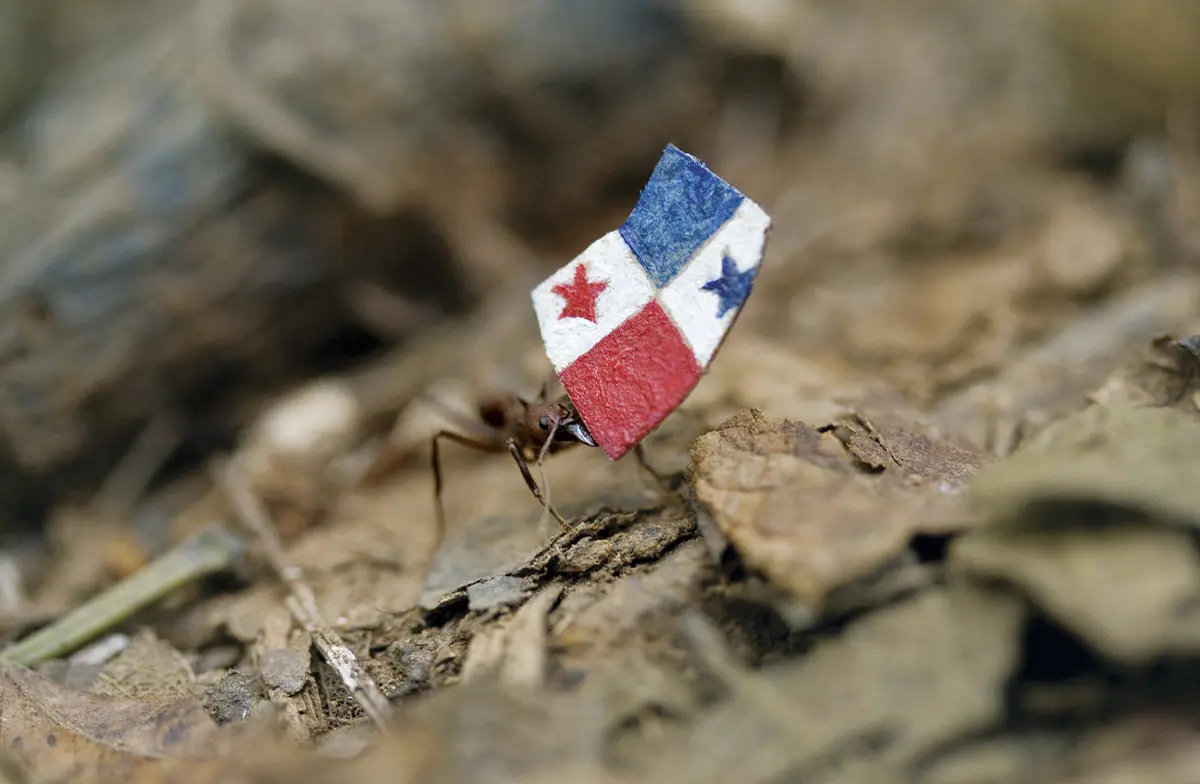
But what if one day, instead of plant debris, the ants appeared in the frame carrying social slogans, symbols of peace, and tiny United Nations flags? The American-Panamanian artist Donna Conlon created a series of videos and photos in which these insects, like tiny activists, seemed to develop social awareness. “It’s a very iconic piece of mine because I manipulate the situation, but I don’t manipulate the behavior,” she assures me. In the same series, in the piece *The Dumpster*, a colony of ants carries tiny one-dollar bills and tosses them into a trash can.
Between video art and biology: the world as seen by Donna Conlon
The first thing that caught my attention about her work was precisely those portraits of ants that resembled human beings resisting the yoke of a dictatorship. Donna created that project in the context of the 2003 U.S. invasion of Iraq. “There were protests everywhere against that invasion, and I thought maybe we should look at life from the perspective of those insects,” she explains.
Donna is a biologist by training. But during her postdoctoral program, she realized she didn’t want to pursue that career path: “I felt like a naturalist, but a career in science wasn’t for me.” She soon discovered that art was her true passion. So, in addition to rounding out her education with master’s degrees in art, she began creating her work based on curiosity and observation of the world. That said, she acknowledges: “No, I can’t deny it—my scientific roots are clearly still present in my work.”
An exploratory tour of the area
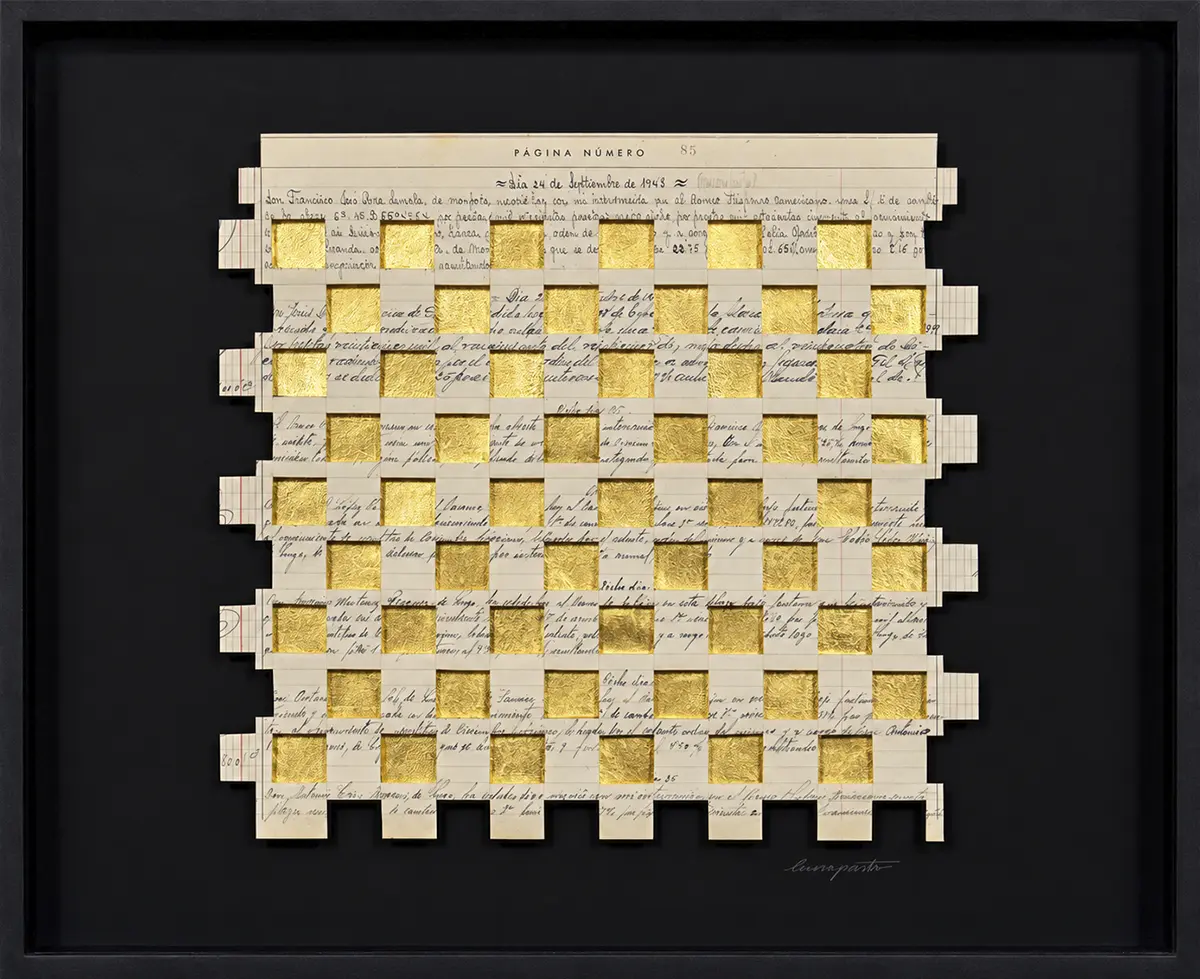
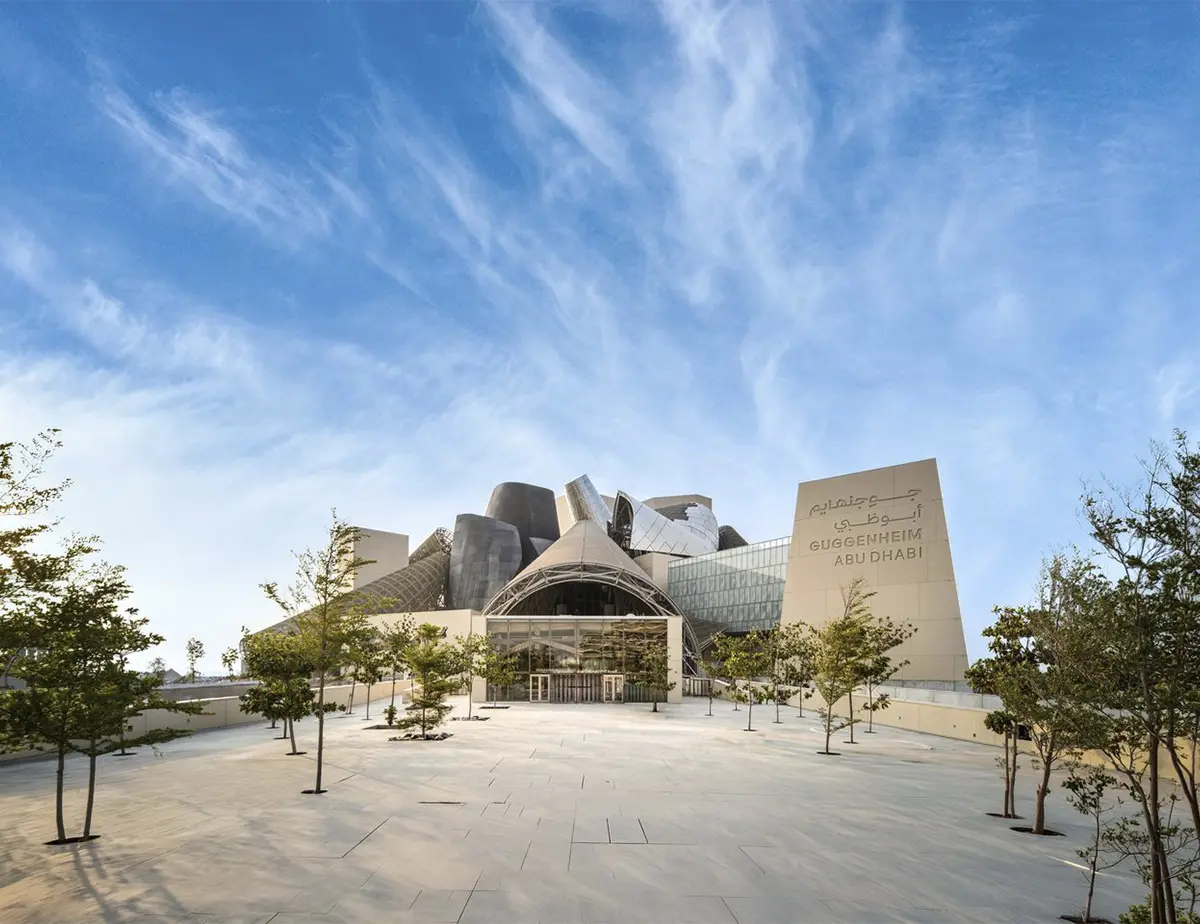
Her work—which she herself describes as “a kind of socio-archaeological exploration of her immediate surroundings”—has been widely exhibited on the international art scene. She has exhibited at venues such as the Museu de Arte de São Paulo, Tate St. Ives, and the Metropolitan Museum of Art in New York, and has participated in biennials such as the Venice Biennale. In Panama, she is represented by the Diablo Rosso gallery. In 2025, she received a Guggenheim Fellowship, and throughout her career, she has moved naturally between video, drawing, and installation to observe—almost like a scientist—the contradictions of contemporary life.
“Video is very democratic. You can view the work from anywhere in the world,” he says. “I like how accessible it is and the fact that I can put my work online. Sometimes people are afraid to go into a museum because they think they won’t understand abstract art. Video art doesn’t have that problem; people approach it and generally understand it.”
Art and the Fragility of Life
Undoubtedly, amid science and technology, there is a philosophical thread running through her work that connects us to nature as a symbol of the fragility of life and the precariousness of our relationship with the other living beings that inhabit the world. In 2019, the former biologist created a piece featuring a hummingbird on the palm of her hand. The bird appears dead at first and then flies away. “This work reflects the power of birds and their affinity with humans—there’s a reason they appear in design, art, painting, and folklore. We intuitively understand how symbolic birds are. The eagle, power. The owl, wisdom. The raven, death,” she tells me.
Between Two Cultures: Panama and the United States (and a Bit of Mexico)
Donna was born in Texas, but she has spent more than half her life in Panama, where she moved with her boyfriend in the 1990s after he was offered a job at the Smithsonian Tropical Research Institute. Today they are married, have two children, and a story set against the backdrop of the Caribbean Sea.
There’s a term in English called “third culture,” and Donna identifies completely with the concept. “I belong to both worlds and to a gray area between two cultures,” she says. And when you add the fact that her maternal grandparents were Mexican, the picture becomes complete. She is so Panamanian that she was included in a book Latin American Artists from 1785 to Now (2023).

“Ever since I arrived, I’ve loved the city’s energy—it’s very urban, yet there’s a dense jungle right next to it. But yes, I love the food, the music, and the people. I really like how peaceful it is here. I grew up in the Texas desert. And I didn’t know—he’s a Pisces—how important the sea would be to me. Now I can’t imagine living far from the ocean.”
By the time they arrived in the region where salsa singer Rubén Blades had once run for president, the chaos of the U.S. invasion—during which General Antonio Noriega was extradited—had already subsided. “It had happened a year earlier, but the issue was still very much on everyone’s mind when we arrived. The areas that had been destroyed still looked as if the bombing had taken place the day before,” he recalls.

On Female Anonymity and the Valid Obsession with Observation
“Anonymous Was Woman ” is one of the awards she has won. It is an effort to address a situation as unfair as that of ants working without a day off on Sundays. “The title comes from a book by Virginia Woolf, which refers to how anonymous we women are in a world made and run by men,” Donna asserts.
Currently, in addition to working on his project funded by the aforementioned Guggenheim Fellowship, he has a couple of notable exhibitions. One in Spain, titled Listen to the Hummingbird (after a Leonard Cohen song), is on view at the Madrid gallery Espacio Mínimo from March 28 through May 16, 2026. The exhibition features previously unseen videos and sculptures that address precisely the precarious relationship between humans and nature.

Meanwhile, his series *Cityscapes* —which is part of the FEMSA Collection and explores the Panamanian urban landscape through objects and waste—is on view at the MARCO Museum of Contemporary Art in Monterrey.
“Are you going to quote me?” she asks moments after admitting that she is an obsessive observer of her surroundings; she thinks the connotation of the word might be associated with obsessive-compulsive disorder. “I’ll never be able to fully express how I feel as a human being in a situation where you have to speak up,” she says (and yes, I did end up quoting her).
To keep exploring this thread, visit contemporary art from Latin America.