
LS/Galería, led by Lourdes Sosa, is anything but a conventional space. From the moment you walk in, you feel that energy that only art can create—as metaphysical as that may sound. The background of Lourdes Sosa, who runs this space and is now participating in this art week, GAMA Week, speaks for itself: she was the director and founder of the Santa Teresa Cultural Center—now known as X Teresa—deputy director of the Museum of Modern Art, director of the National Auditorium Gallery at the National Institute of Fine Arts, and head of the Visual Arts Unit of the Federal District Department. In 2000, she founded Lourdes Sosa Galería, now LS/Galería.

But in addition to her career, what undoubtedly stands out is the passion with which she speaks about the art world. As part of the kickoff of the event organized by Galerías de Arte Mexicanas Asociadas—a tour that brings together Mexico City’s leading modern and contemporary art galleries—we visited LS / Galería to talk with Lourdes and learn about“From Giorgio de Chirico to Pedro Friedeberg,” the exhibition that will be on view at this event through November.
How does all your experience and that wealth of knowledge come together in LS/Galería today?
Well, the gallery—which opened 26 years ago—is still operating in much the same way. When I founded the space 26 years ago, my goal was to promote that wonderful generation—the one that truly brought about a change, a very significant change. As you well know, the Mexican school of muralism was very important after the Mexican Revolution because there was a need to reinforce a very nationalist identity. And then suddenly this aspect emerged—and that’s where the gallery’s mission comes in.
The shift that marks the beginning of that break starts with some very specific characters…
Yes, for example, with Tamayo, who says: “Well, I need to paint and express what I truly feel.” And when you look at his work, it’s quintessentially Mexican: the landscapes, the color, the horizons. He turns his gaze to Mérida, to ancient Mexican civilizations. He and that group of artists began to be called “La Ruptura,” but in reality, all they wanted was creative freedom.
“I think the word ‘breakup’ doesn’t quite capture it. Because it wasn’t a breakup. They didn’t want to break up with anything.”

Maybe they didn’t want to break with anything, but they did make it clear that they were doing something different…
Yes, of course, it changes, and—to tell you the truth—everyone’s fighting over it. In Pedro Coronel, you see fantastic color; in Lilia Carrillo, spontaneity—that organic, marvelous quality. That color. Vicente Rojo with those repeated geometric patterns. And Arnaldo Coen, who in a way was, for me, the artist who went all out. He worked with body painting. He was one of the first to do body painting in the Americas—one of the very first.
And besides, muralism had a message behind it…
That was exactly it, and it was necessary. It was a matter of pedagogy. They included everything related to the Revolution, social protests, and disagreements. And that’s why you’re suddenly left with a small void—there are great artists, but there’s no change. There’s a continuation.
From the Break with Tradition to Contemporary Art
I notice that in the exhibition curated specifically for GAMA Week 2026, you created a dialogue between Friedeberg and de Chirico in “From Giorgio de Chirico to Pedro Friedeberg.”
Notice how fascinating their similarities are. Both lived to be 90 years old, and both are of Italian origin—that is, de Chirico was born in Greece to Italian parents, but he’s truly Italian. Friedeberg was born in Florence and moved to Mexico. But that’s beside the point; those are just coincidences. What’s most important is that their work also represents a break with architecture—a break with reality.

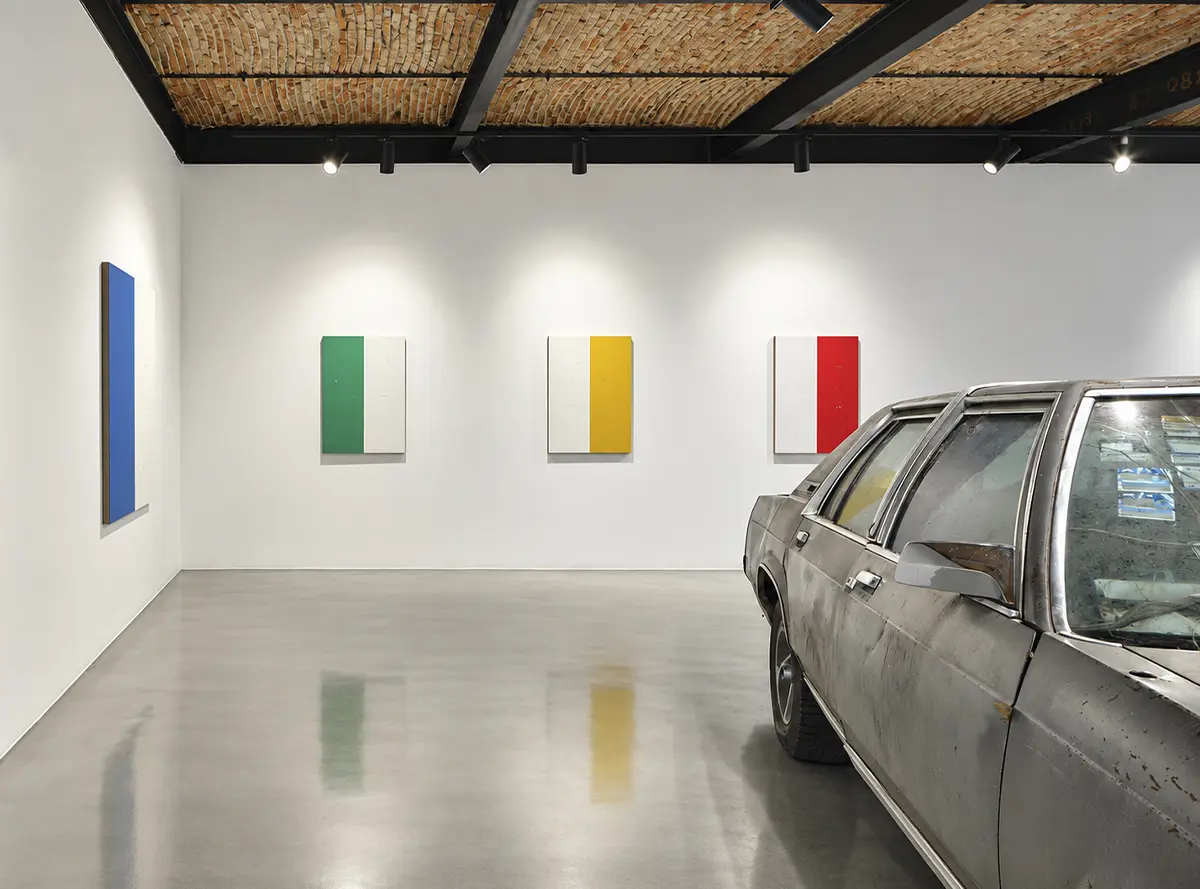
View of the LS/Galería exhibitions as part of GAMA Week 2026. Photo: AW Magazine staff.
And, in a way, contemporary art is also turning its attention back to that generation.
If we take a look at the galleries right now—since we’re talking about GAMA, for example—which are contemporary art galleries that grew, developed, and established themselves as contemporary art spaces, they’re returning to this generation. For example, kurimanzutto, which represents Lilia Carrillo, or Proyectos Monclova, which currently represents Manuel Felguérez.
So does that mean there was no generational shift during that entire period? After the Break, in contemporary art?
No, for me there wasn’t one, and that’s the problem. There are very good artists—there are fantastic artists I could name—I admire them, I’ve exhibited their work; I’ve been in this field for a long time, I’ve organized exhibitions for all of them, and I have great respect for them, but they weren’t part of a movement as such. It’s curious, because the artists of the Ruptura didn’t come together, didn’t issue manifestos, didn’t say, “We’re part of the Ruptura,” but they shared that common idea of opening up a space for freedom—even though they didn’t have galleries, didn’t have exhibition spaces, didn’t have government support, and didn’t have walls.

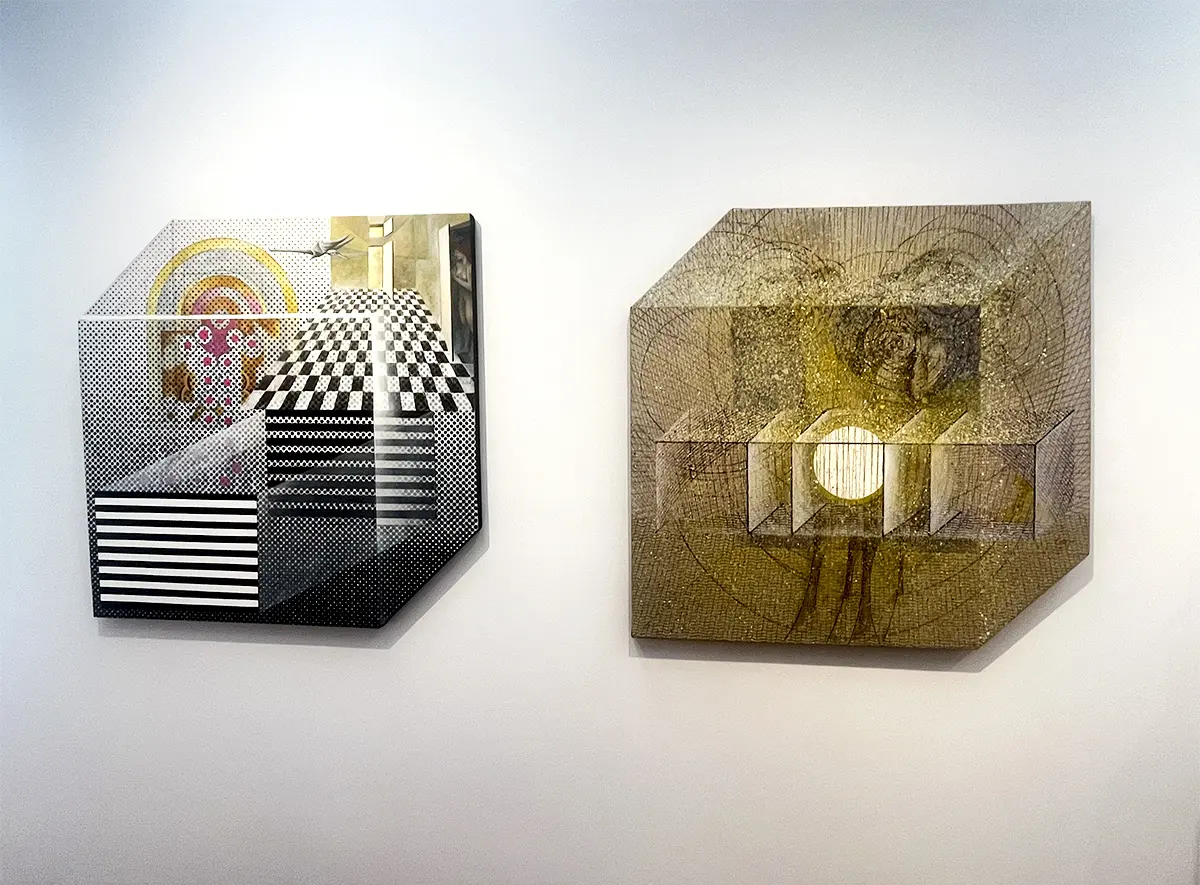
View of the LS/Galería exhibitions as part of GAMA Week 2026. Photo: AW Magazine staff.
Collecting and the Role of Galleries
Is collecting also a factor that sustains a gallery?
We are a gallery that believes in the future, that believes in collecting—that the more collectors there are, the more interest there will be in art and the more support there will be for artists. The gallery and its work do need to make sales to stay afloat—many families depend on us—but the gallery has a much greater purpose: to bring people closer to art.
Even here at the gallery, we have what’s called “Kids Welcome,” where children are free to come and participate. For example, this Saturday we’re kicking off GAMA Week, and the very next day—Sunday—we have a private event for Kids Welcome.
Who is still the most important figure in the art world—aside from the artist, of course?
There are many people involved. The dealer, the journalist, the critic—there are a thousand things—the interior designer, the architect; there are a thousand ways to use art. The point is for art to become a part of us. With art, you don’t even have to know anything—you just have to let yourself feel it, because it has the wonderful ability to evoke emotion. And that’s what I do every day of my life. We work, we spread the word, we promote, we give talks—I’m part of the Mexican Culture Seminar, and we’re going to give talks all across the country.

View of the LS/Galería exhibitions as part of GAMA Week 2026. Photo: AW Magazine staff.
LS/Gallery at GAMA Week 2026
So, what else can we expect to see from the gallery’s participation in GAMA Week 2026?
“From Giorgio de Chirico to Pedro Friedeberg,” of course. GAMA is a fantastic initiative, because in a way, galleries operate a bit like islands—each with its own project and doing its own thing. The other galleries certainly don’t align with what I do. So, now that we have the opportunity to come together as a community of galleries, we’re enabling people to engage in dialogue, make comparisons, visit, and have many more opportunities to learn about what’s happening on the art scene in Mexico.
To what extent do the character and spatial layout of the building—the large house in Polanco where the gallery is located—influence its concept?
Well, this house is actually quite unique. When we bought it, we noticed it had an impressive number of little rooms, with padded fabric and mirrors on the ceilings. So sometimes I think it used to be a brothel. But it definitely has a good vibe.
Discover more articles on Latin American art and collecting in AW Magazine.