The fourth edition of ABC Art Baja California has cemented its status as a leading event in the art scene of Baja California Sur.
In this way, by making an impact that extends beyond the cultural sphere, the event fosters creative development, strengthens the community, and showcases the region’s identity. AW Magazine spoke with the project’s founders, Karim Reza and Zélika García, who shared their insights on the growth and significance of this initiative.
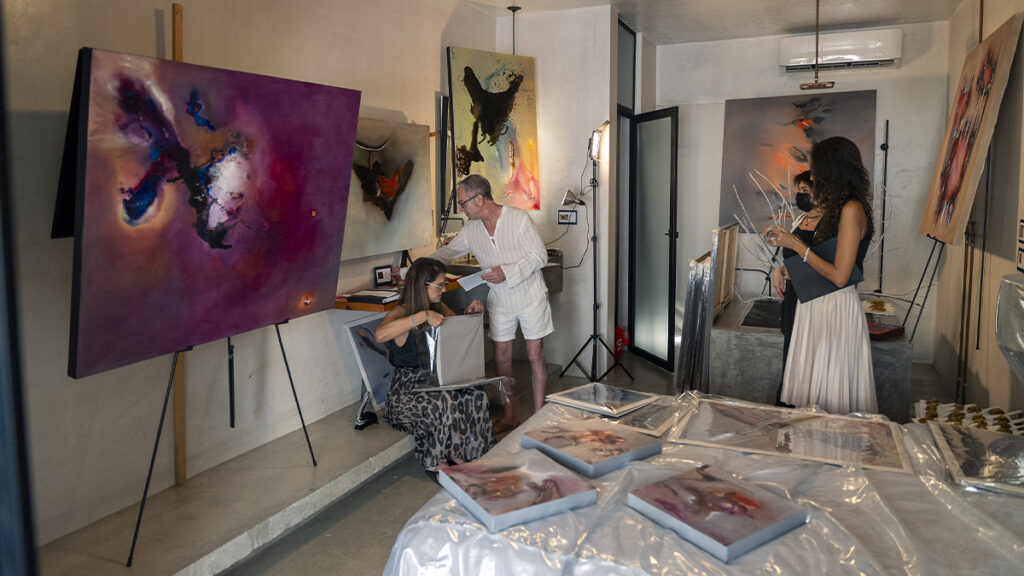
The San José, Todos Santos, and La Paz corridor
Why the San José, Todos Santos, and La Paz corridor? For those of us who aren’t from the region, how do they complement each other?
Karim: We think of it as a single journey that unfolds in layers.
Zélika: San José is where everything comes together and is on full display: that’s where the most visible projects are, and it’s the gateway for galleries, collectors, and visitors from out of town. Todos Santos operates differently—it’s slower, more process-oriented. It’s where you really understand how artists work, how things are built from the local level up. And La Paz has a more institutional presence: museums, theaters, and spaces that provide context and cultural support for the project.
Karim: What we want is for them not to feel the same. We want you to have to move around, for the rhythm to change, for you to understand that art here isn’t a one-time event, but a system that comes to life in different times and spaces.
The curatorship of ABC Art Baja California
What sets the curation of this event apart?
Karim: The project is built more around a process than a single narrative. There is a selection process, but it’s based on open calls, relationships, and what’s already happening in the scene.
Zélika: We’re more interested in fostering an ecosystem than in putting together an exhibition. That means embracing a certain degree of diversity—even contradictions—but it also allows the festival to better reflect the reality of today’s art world.
Karim: In that sense, curation is dynamic and multifaceted, and is defined by the intersection of artists, spaces, and context.
What role do emerging artists play compared to established ones at the festival?
Karim: What we’re aiming for is for them to coexist in the same context: the same spaces, the same audiences, and the same conditions of visibility.
Zélika: That makes the collaborations feel more natural and less forced. An emerging artist can engage directly with an established one without there being a clear hierarchical relationship.
Karim: Rather than separating profiles, what matters is that different paths intersect and inform one another. That’s where the project becomes most interesting, because it better reflects how the scene actually works today.
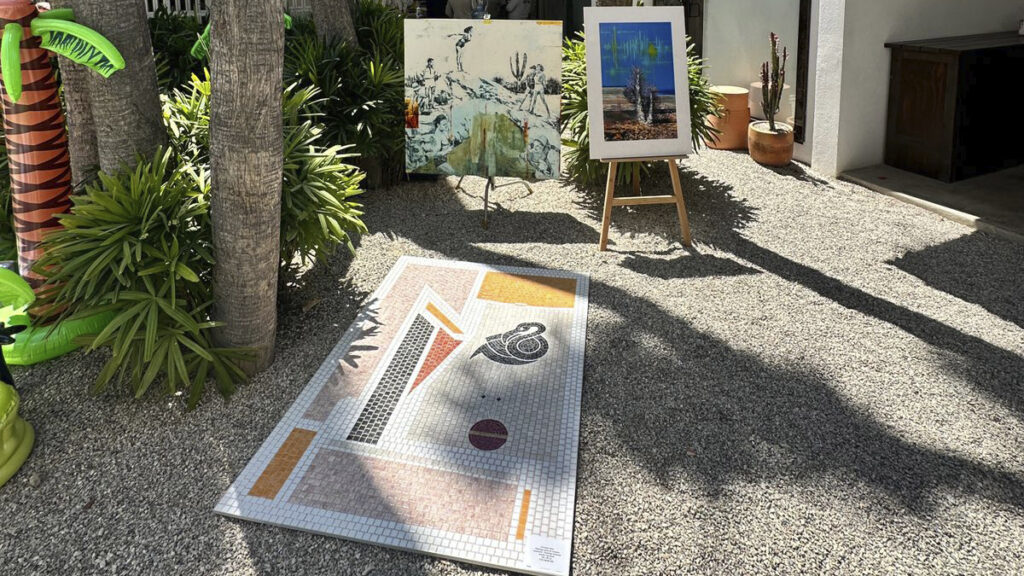
ABC Art Baja California: A Scene in Motion
How do the different disciplines (visual art, sound, performance) interact within the festival?
Karim: Everything takes place within the same venues and spaces—that’s exactly what makes the festival unique.
Zélika: The artworks, the sound, and the interactive installations are integrated into hotels, restaurants, and public spaces that are already part of each city’s cultural life. That makes the connection feel natural.
Karim: It also reflects the way the region is structured. There is an active community that works in an interdisciplinary way, and the festival fits right in—it doesn’t impose an external logic. In the end, what you see aren’t isolated disciplines, but a single dynamic scene, connected to the region, to the people who live there, and to its visitors.
How does presenting art in non-traditional spaces transform the art experience?
Zélika: That changes the way it’s perceived: there’s a greater sense of intimacy and more open interpretations. It also allows local residents and visitors to share the same experience, which reinforces the idea of the festival as an active part of the community.
“When art is integrated into hotels, restaurants, public spaces, or artists’ studios, it becomes part of the region’s everyday life. You’re not entering a space dedicated exclusively to art; you encounter it within a real-life context.”
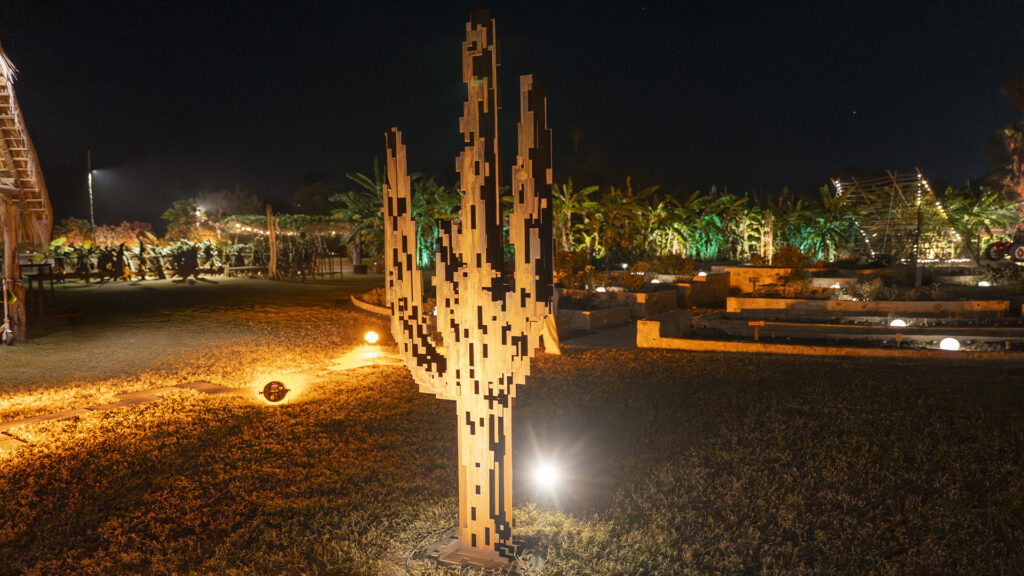
How do you view the growth of collecting in the region, and what does the event contribute?
Karim: Over the past four years, we’ve seen the art scene grow; there’s now a solid foundation of artists, venues, and audiences who understand the value of collecting art. It’s not an imported phenomenon—it’s been built from the ground up.
Zélika: The festival has served as a pivotal point in that process: it brings stakeholders together and creates the conditions for that relationship between production and acquisition to unfold more directly.
Karim: With the launch of PLATAFORMA ABC, we are taking an important step forward. It is the first art and design fair within the festival and aims to become a benchmark by bringing together these elements in a single space and facilitating connections between artists, galleries, and collectors.
Zélika: Rather than starting something from scratch, what we’re doing is giving structure, continuity, and scale to a market that’s already taking shape.
ABC Art Baja California: The Schedule
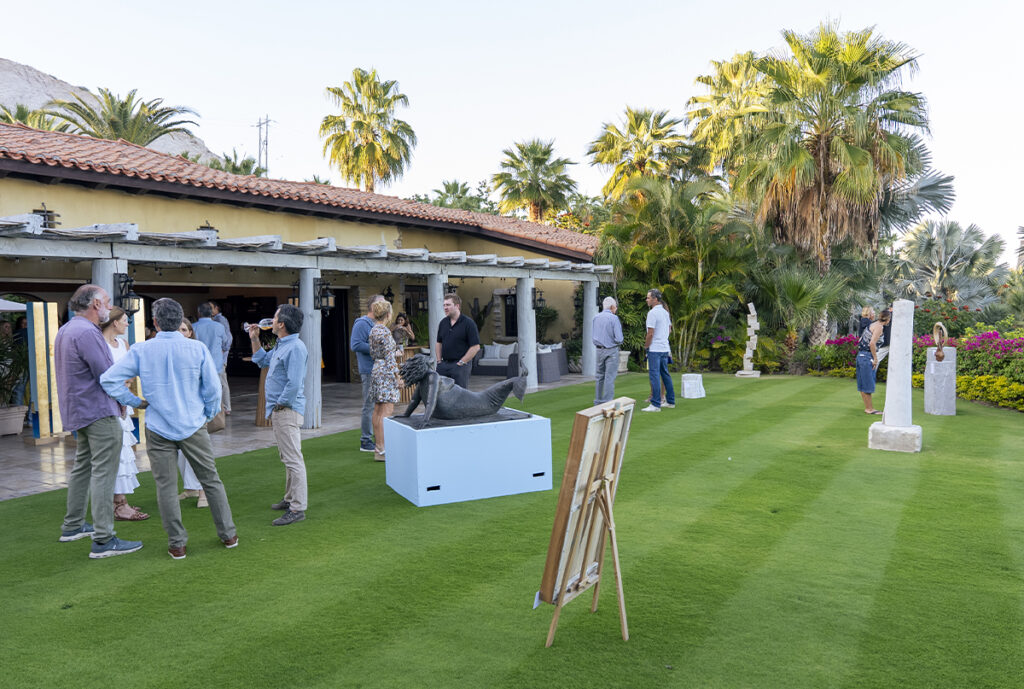
For its 2026 edition, the festival will take place at three venues—San José del Cabo, Todos Santos, and La Paz—fostering a collaborative network among artists, cultural spaces, and local institutions. Over the course of three weeks, it will present a program designed to highlight contemporary artistic production.
In San José del Cabo, activities are organized through Plataforma ABC, Sala ABC, Patio ABC, Sonido ABC, Local ABC, and Estudios ABC. In Todos Santos and La Paz, Sala ABC, Patio ABC, Sonido ABC, Local ABC, and Estudios ABC are featured, expanding the circuit beyond a single location.
A highlight of this program was Plataforma ABC, held from March 19 to 22, 2026, in a Hotel Art Fair format at the Hotel Drift in San José del Cabo. It brought together 29 spaces—including both individual and shared booths—focused on exhibiting and selling artwork. Participating were galleries, design studios, collectives, independent artists, and artisans, with pieces spanning painting, photography, printmaking, collage, watercolor, textiles, sculpture, and design.
Sala ABC , meanwhile, will take place from March 18 to April 5, 2026, featuring open-theme wall exhibitions. These take place at the Hotel Drift in San José del Cabo—exclusively for members of Plataforma ABC—as well as at the Teatro Otras Palabras, expanding the festival’s reach within the region’s cultural scene.
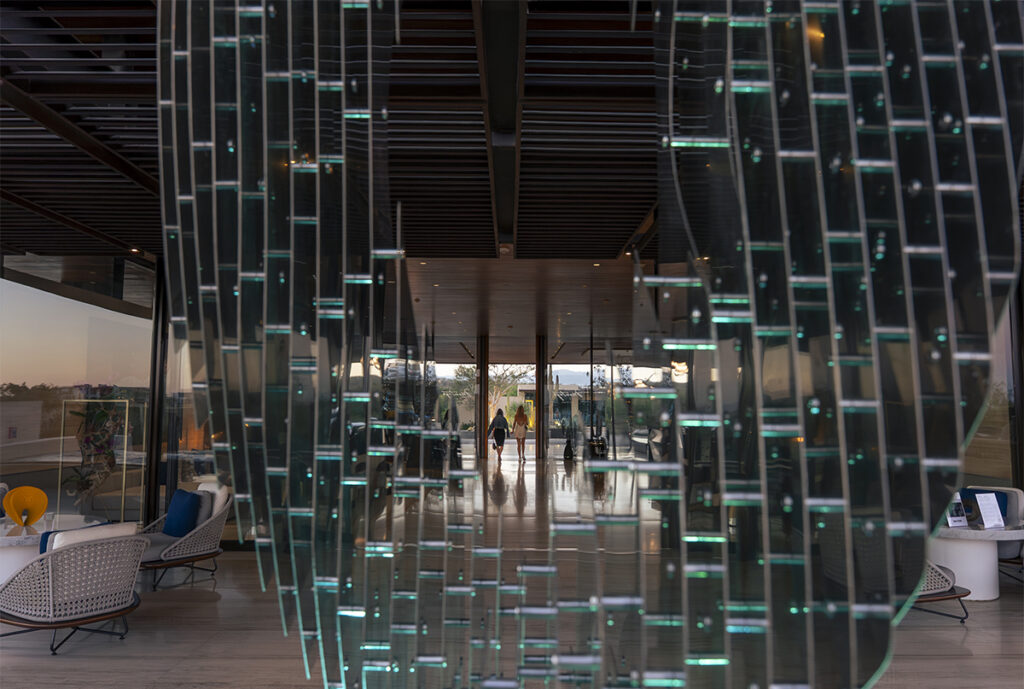
More than just a traditional event, ABC Art Baja California has established itself as a living structure that connects territory, community, and artistic production. Its growth not only reflects the region’s current moment but also projects its capacity to sustain and transform the scene over time.
Participating artists and galleries:
6×4 The Affordable Art Project (Mexico City), AGO Projects / Crossing Four (Mexico City), Alejandra Topete Gallery (Mexico City), Alfredo Bucay Atri (Mexico City), Amvleto / Hilario Galguera (Todos Santos), Artistas Del Jardín Del Arte Plaza Mijares A.C. (San José Del Cabo), Baja En Homenaje | By Properties In Cabo (San José Del Cabo), Blue Zone (San José Del Cabo), César Rodrigo Escultor (Mexico City), Estudio Marte (Mexico
City), En Blanco Gallery (San José Del Cabo), Ethra Gallery (Mexico City), L86 Gallery (Valle De Guadalupe), Militar Gallery / Todos Santos Gallery (Todos Santos), Ginocchio Gallery / Pedro Ávila Gallery / Desiert@Bierto (San José Del Cabo / Metepec / Desierto Abierto), HSBC (San José del Cabo), KOIK Contemporary (Mexico City), Lux Perpetua Art Centre (Mérida), Mascota (Mexico City), MotoTintype (San Francisco), Muzeion
(Monterrey), Palmira (San José Del Cabo), Proyectos Monclova Gallery (Mexico City), RGR Gallery (Mexico City), Roca Griega (San José Del Cabo), Saenger Gallery (Mexico City), Son Espace Gallery (Girona), Sten Studio (Mexico City), and txt.ure (Mexico City).