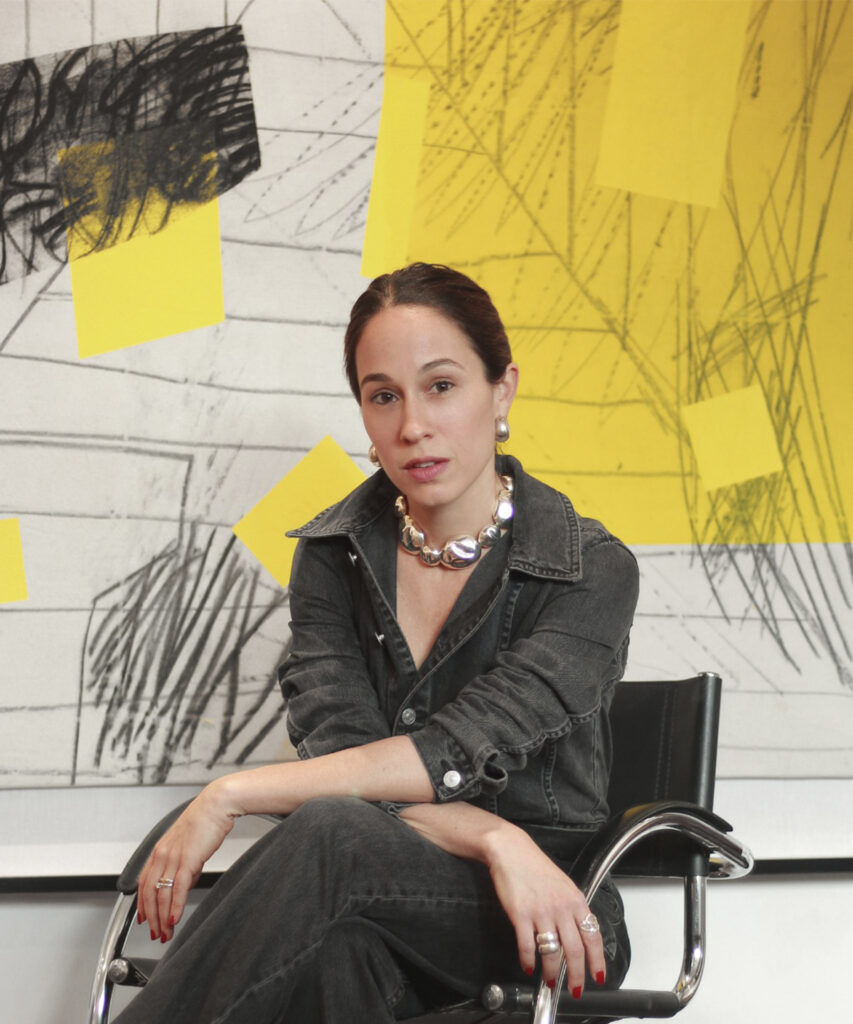
In the heart of Caracas, Volante Studio—a project by Ana Volante—has redefined interior design by blending functional, visual, and emotional elements.
Memory and Desire
Ana Volante, the founder of Volante Studio, is passionate about creativity and has always embraced her heritage: “My grandfather, an Argentine who moved to Venezuela after marrying a woman from Caracas, was an architect and painter.”
“I used to sneak into his studio because I loved the smell of turpentine and watching him sketch a building or a landscape. I felt that that world was perfect, and somehow I wanted to be a part of it.”
After completing her studies in interior design in Caracas, Ana traveled to Milan to further her specialization. There, she was captivated by the vibrant energy of one of the hubs of residential, commercial, and luxury design.
Now that she is settled in her home country, she has a clear vision of the direction she wants the studio she founded in 2017 to take, with the aim of bringing together functional, visual, and emotional design.
“I love Venezuela, and I’ll always promote what we do here,” she says, her face glowing—the lights around her help—and it’s clear that she’s passionate about what she does.
A studio where creation and design coexist
Volante Studio was founded during a very difficult time in Venezuela: “While we were experiencing blackouts and had no electricity,”
“I began sketching my first furniture line on paper, which I called the Moon Collection.”
The series of wooden and metal tables and side tables, inspired by Brutalism and the 1960s and 1970s, featured clean geometric shapes and circles—which create a “lunar effect.”
It was an interesting start that showed him that art and design were “closely intertwined when it came to creating a collection of furniture or perhaps accessories.”
The studio’s guiding principle is to curate pieces that meaningfully integrate into the design of spaces, creating a harmonious whole. “I like to help my clients understand the artwork in relation to other elements; I would never sell something that is perceived solely as a decorative item,” explains Ana Volante. For her, it is essential that “people understand what the artist was trying to say, what it meant, because it’s all about contemplation.” After all, the buyer or collector will wake up every day and live with that artwork or those pieces of furniture in their space.”
Women, Art, and Contemporary Fiction
In addition to its creative studio, Volante Studio features a shop and an adjoining gallery that showcases works by Venezuelan artists, with a curatorial focus on women artists whom Ana believes have historically been overlooked in the narrative of Venezuelan art.
However, he believes that the political and social situation Venezuela has been experiencing for several years—at the time of this interview, tensions between the United States and the South American country were deeply concerning—is not a factor in this omission.
“It’s not just happening in Venezuela—it’s a global phenomenon. Today, I estimate that Latin American museum collections contain only about 13% works by women; exhibitions featuring male artists are still held in higher regard.”
His assessment is accurate, since according to recent statistics from institutions such as Chile’s National Museum of Fine Arts, the representation of women is less than 15%, and in Mexico—according to the MUAC—although the figure has increased by a single digit, the numbers still fall short. “The positive thing is that I believe there is an effort to rectify and rewrite this history,” says Volante.
Ana clarifies that Volante Studio is not a feminist space. “It’s a matter of equal opportunity. Art shouldn’t be judged based on gender, but on ability.”
“Here we have a rotation of male and female artists, and there are no labels; here there is art.” But is it really possible to completely separate equality, representation, and feminism in the contemporary Latin American context?
Creadoras, a project with regional impact
In that regard, one of the studio’s most important projects is the Creadoras contemporary art competition, a collaboration with the Development Bank of Latin America (CAF) and the GBGArts gallery. “In 2023, we held the first launch at the National Art Gallery, featuring ninety-three Venezuelan artists.”
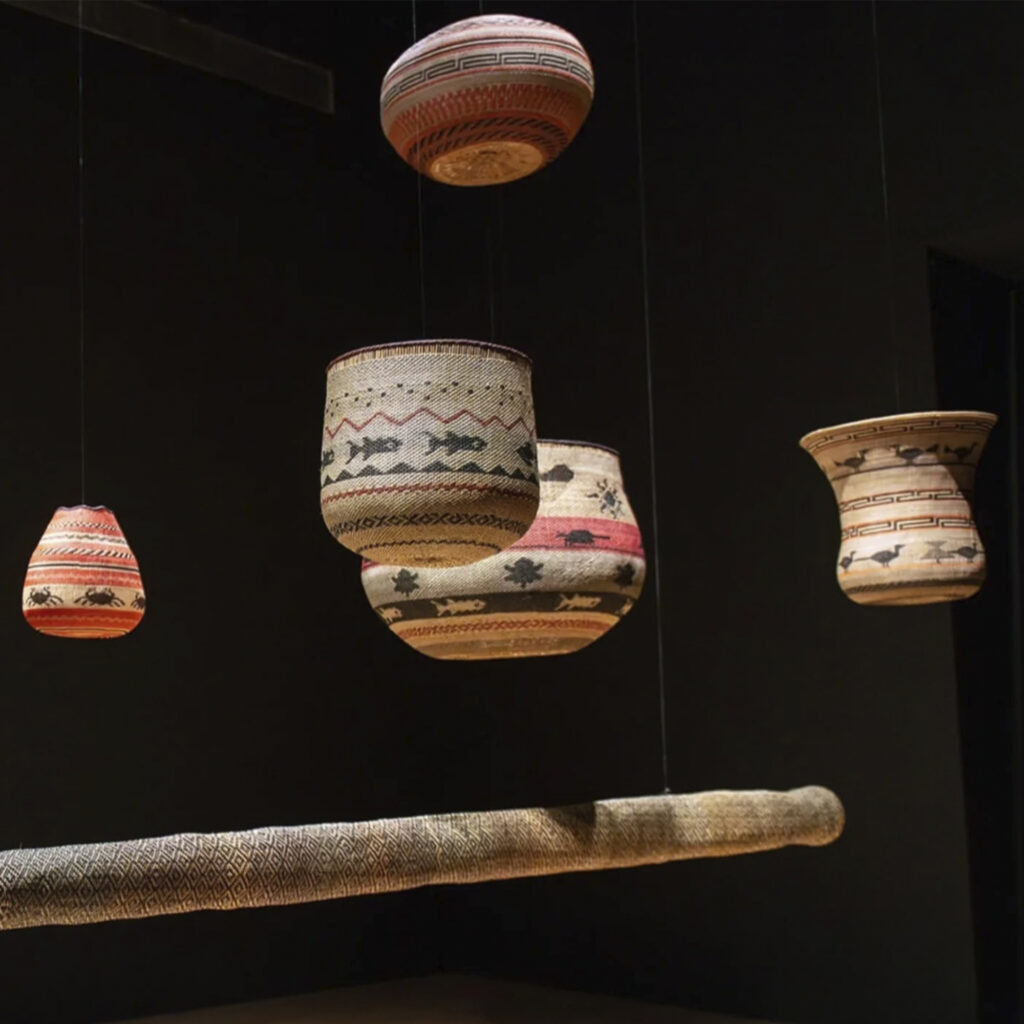
One of the artists who has participated in Creadoras is Luz María García, an artist from the Ye’kuana—an indigenous community living in the jungle of southern Venezuela—who keeps the tradition of basket weaving alive. “It’s important as a matter of historical memory that can evolve and take on a contemporary twist and be recognized as a work of art. We must dispel the idea that traditional art is just a souvenir.”
In 2026, this initiative plans to expand: “The goal is for Creadoras to cover Latin America, Spain, and Portugal. We visited Paraguay and realized the need that exists in the region, and the importance of connecting traditions and memory.” The new edition will reveal its new headquarters—which will be outside of Venezuela—on January 27.
A Venezuelan activist: Does politics influence art?
Behind him hangs a painting by the late Venezuelan artist Asdrúbal Colmenares: a piece of modern art that pays homage to Yves Klein and Piet Mondrian, featuring a modified Coca-Cola can and the stars and stripes of the American flag. “No, I don’t involve politics in my work,” he clarifies,
“When people ask me about my political leanings, I say that I’m simply a champion of Venezuela; I’ll always work for the good of my country, developing projects and raising the profile of artists. No matter who comes to power, we have no choice but to keep building our nation in some way.”
At a time of heightened political sensitivity in Venezuela, marked by recent events, Ana Volante has chosen not to comment and has limited herself to a brief message: “We’re all fine,” accompanied by emojis of waving Venezuelan flags.
Interior Design as a Creative Discipline
When Ana Volante accompanied British architect and curator Jane Hall to New York to present her book *Making Space: Interior Design by Women* (2025)—a work that includes a reference to Volante Studio—she discovered an anecdote in the prologue that left a deep impression on her.
Elsie de Wolfe, the American woman considered to be the first to practice interior design as a profession, recounts in that introduction how a wealthy client refused to pay her the $17,000 he owed her for her work.
It was the 1920s, and although interior design had existed throughout history, it was not yet recognized as a formal profession.
When he was asked at the trial what he did—since he didn’t understand the concept—Wolfe simply replied, “I create beauty.” This story reveals how, just a century ago, interior design began to be recognized as an art and a profession, and not just as a trade for “keeping the house pretty,” Ana says.
“Sometimes architects have a hard time understanding that they need to work hand in hand with interior designers—that one can’t exist without the other.”
“Sometimesarchitects have a hard time understanding that they have to work hand in hand with interior designers—that one cannot exist without the other”— Ana Volante
For her, interior designers create interior architecture, “because we understand living space; we experience it differently. It’s true that architecture can be more permanent due to the weight it carries, but we focus on ergonomics, functionality, materials, and the enjoyment of each space—and that’s key.”
Craftsmanship, Memory, and the Contemporary
For the studio, it is rewarding to create commercial and residential interior spaces where clients perceive innovation in the designs, “wonderful materials, and an understanding of that perfect imperfection that comes from working with artisans.”
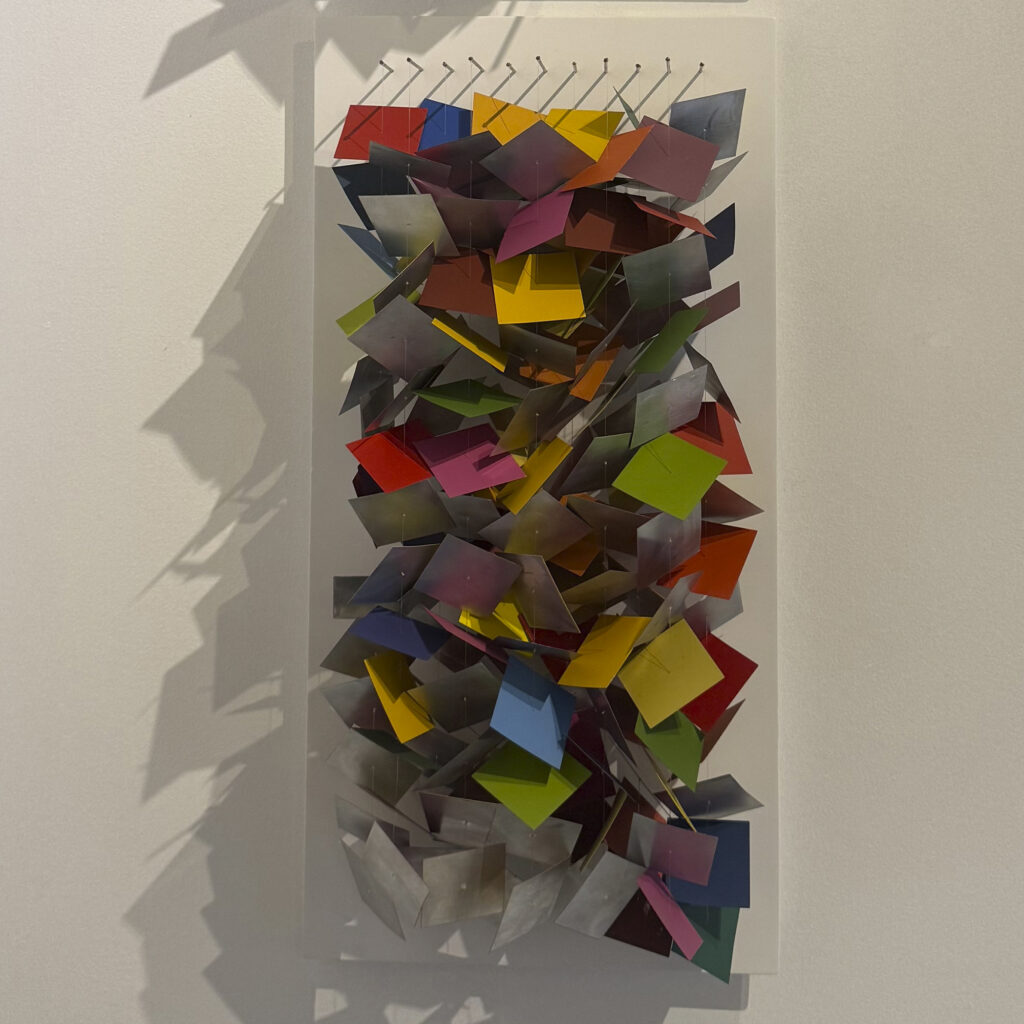
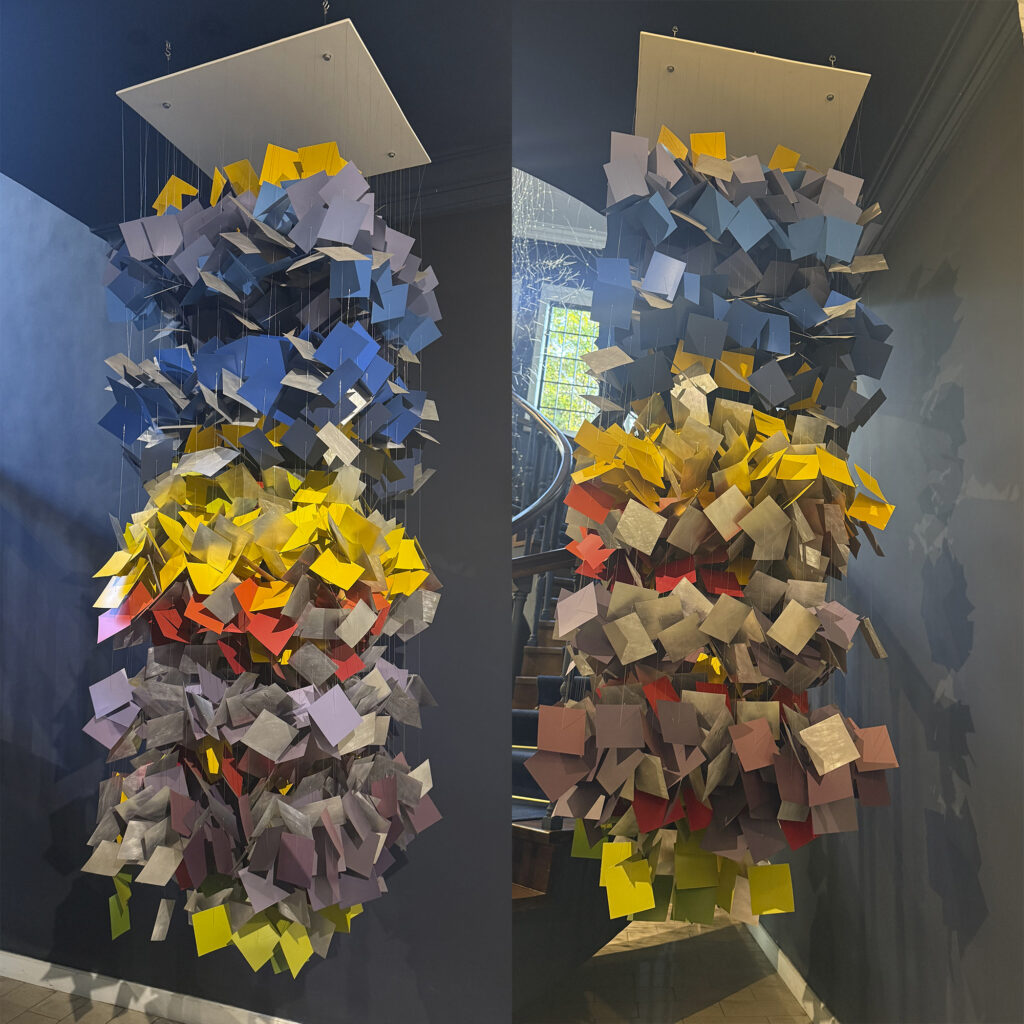
The catalog also highlights the conceptual art of Venezuelan artist Joaquín Latorraca. “I’m amazed by his 360-degree kinetic pieces, which consist of small stainless steel squares that move and produce a rich, subtle sound when the wind sets them in motion.” One of his hanging sculptures adorns the gallery’s entrance.
Joining these artists are Andrea Ciervo, Mariadela Araujo, Alicia Coles, Cristóbal Ochoa, and Reymond Romero, among many others.
Compendium and Creative Partnerships
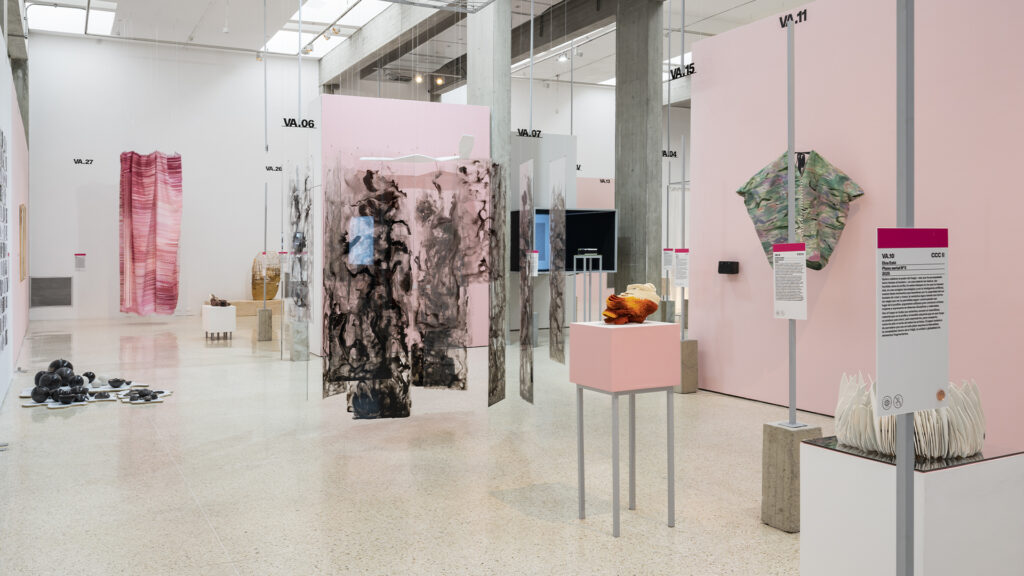
Another major initiative by Volante Studio was Compendio, an event that—along with four other studios specializing in design, architecture, and urban planning in Caracas (Atelier Caracas, Mobel Siglo XX, Oda by Eric Brewer, and GBGArts—was presented as part of Caracas Design Week 2023. The exhibition brought together fifty original pieces dating from 1954 to the present.
“As curators of this design narrative, we wanted to highlight the pieces that deserve recognition in the history of Venezuelan design.” This small milestone took place at the Cubo Negro. The space is an urban icon of local architecture, known for its prismatic geometry and dark glass facade.
“We rely heavily on partnerships; in Venezuela, there’s no competition among galleries. I can just pick up the phone and call another gallery to send them a client.”
Technological Challenges and the Future of Design by Volante Studio
Today, the firm faces not only a complicated socio-political landscape—hoping that conflicts do not escalate following the extradition of Nicolás Maduro to the United States—but also technological challenges.
“Anyonecan try their hand at interior design using AI, but the human touch is essential and irreplaceable if a design is to stand the test of time—and people know it»— Ana Volante
“It’s a great time for art and design in Venezuela; there’s a real desire to showcase our talents,” he says, and his words are definitely inspiring.
Discover more spaces and ideas in art and design in AW Magazine.