Not only does she bear a surname that’s legendary in art history— Picasso—but she’s also the beloved partner—just take a look at her Instagram—of Matt Groening, creator of The Simpsons. But to reduce Agustina Picasso ’s biography to that relationship would be unfair. The Argentine artist already had a career of her own long before she settled in Los Angeles and distanced herself from the art scene where she grew up.
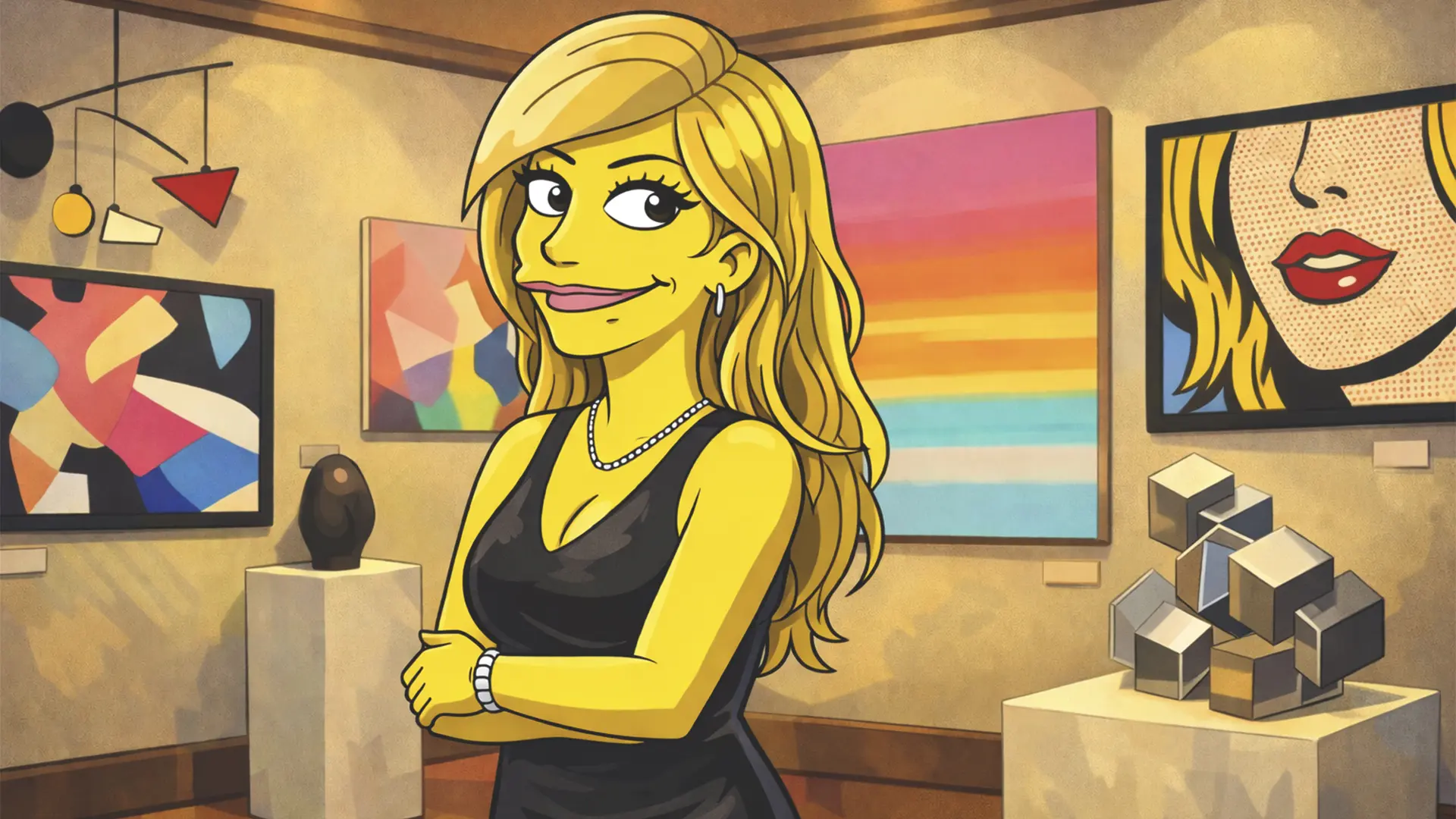
Agustina Picasso before Matt Groening
Picasso was a founding member of Mondongo, one of the most unique art collectives to emerge in Argentina in the late 1990s. In 2008, after marrying Groening, she decided to move to the United States and leave the group to focus on her family: together they had eight children (and no, none of them are named Bart or Lisa).
The couple met in 2007 in Los Angeles during an art exhibition featuring Walt Disney films. Groening—who would have thought: a self-confessed Mickey Mouse fan… and today The Simpsons are part of the same corporate group—ran into Agustina there, who frequently attended design exhibitions in the city. “Every time there was an exhibition in L.A., I’d go. That’s how Matt and I met. We started out as friends. First, we had a really good relationship, and then we started dating. I have a lot of admiration for him,” she told the newspaper Clarín. An admiration that is indeed mutual: the cartoonist has also praised his partner’s work—now on hiatus—on several occasions. When they started dating, Picasso was completely devoted to Mondongo, and judging by the band’s work during those years, it’s clear she was having a lot of fun.
The couple often visits Argentina incognito, but the first time their romance “caught” the press off guard was back in 2009, when they happened to be in Buenos Aires under the perfect cultural pretext: a Mondongo exhibition. He, always discreet, appeared at the Argentrash exhibition—presented by the highly regarded National Arts Fund at 600 Alsina Street—under the creative pseudonym Matías Fogwill Jr., a nod to the Argentine writer who would pass away a year later.
What is Mondongo?
Founded in 1999, the collective originally consisted of Agustina Picasso, Juliana Laffitte, and Manuel Mendanha: a trio that challenged local conventions. The name, clearly not glamorous, refers to a popular Latin American stew—known in Spain as callos—made with cow tripe.
Their early works drew attention for their use of unlikely materials. For example, they recreated the White House (when Bill Clinton was still in office) using smoked ham and portrayed the Argentine actress and showgirl Isabel Sarli using cookies. Plasticine became one of their favorite materials, perhaps because of its playful nature, applied to images with strong symbolic and political weight.

They soon gave up cold cuts because of concerns about the toxins in the preservatives (and we’re referring to chemicals, not the Argentine political party Conservative Political Action Conference or similar groups) and began creating slightly more ambitious dishes using ingredients they didn’t have in the pantry or freezer.
And yes, they started messing with a different kind of livestock: sacred cows. That’s how they created portraits of Che Guevara with bullets, Jorge Luis Borges with threads, and Eva Perón with breadcrumbs. However, their defining moment came when they created a portrait of the Spanish royal family using colorful mirrors.
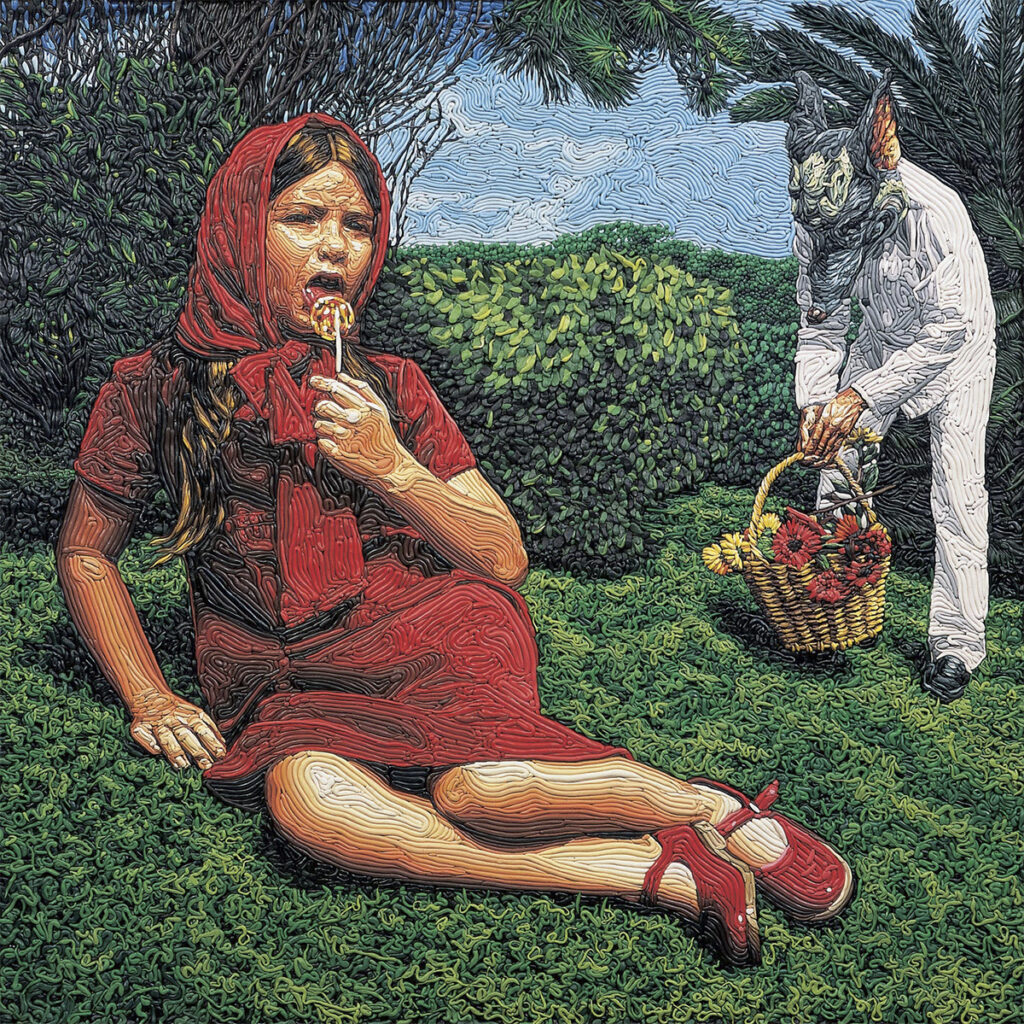
Tripe and the most expensive Argentine item ever sold at auction
The truth is that it would be unfair to pigeonhole Mondongo’s work into a single category. For more than two decades, the collective has sought to “push the boundaries, concepts, and scales,” as they explain in their manifesto. In addition to the founders, the group boasts an extensive and inclusive roster of artists that is constantly evolving. They have also incorporated disciplines such as performance and animation, as well as a technique called “slow oil,” a type of stop-motion animation that uses paint.
The highlight came in 2024 when, following Agustina’s passing, his piece *Argentina (Landscapes)* sold for $1.2 million, becoming the most expensive Argentine artwork ever sold at public auction.

Currently Mondongo has its headquarters in the province of Entre Ríos
Agustina, who rarely gives interviews, traded the frenzy—and the sacrifice—of collective art for family life. “Amor amarillo,” Gustavo Cerati would say . Although the artist probably never imagined that the title of his first solo album could serve as a metaphor for falling in love with the man who drew Springfield’s most famous yellow family.
To keep exploring this thread, visit our cultural perspectives section.