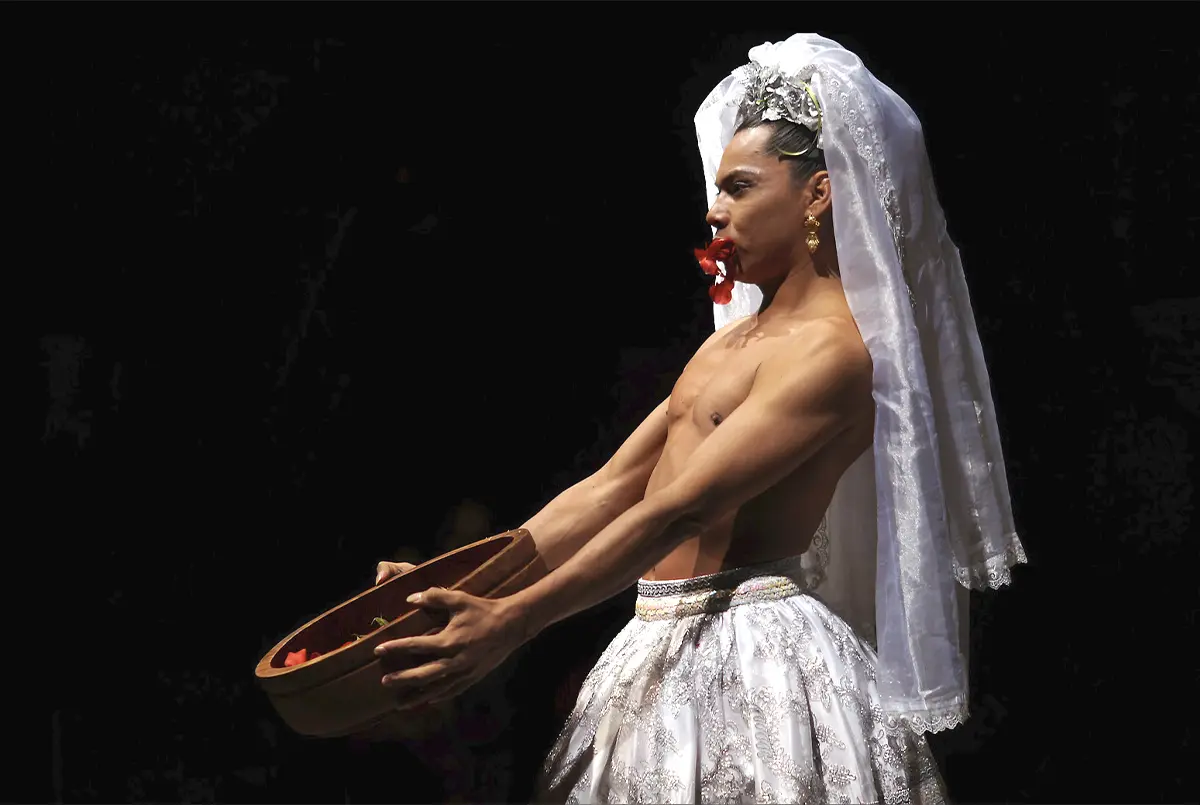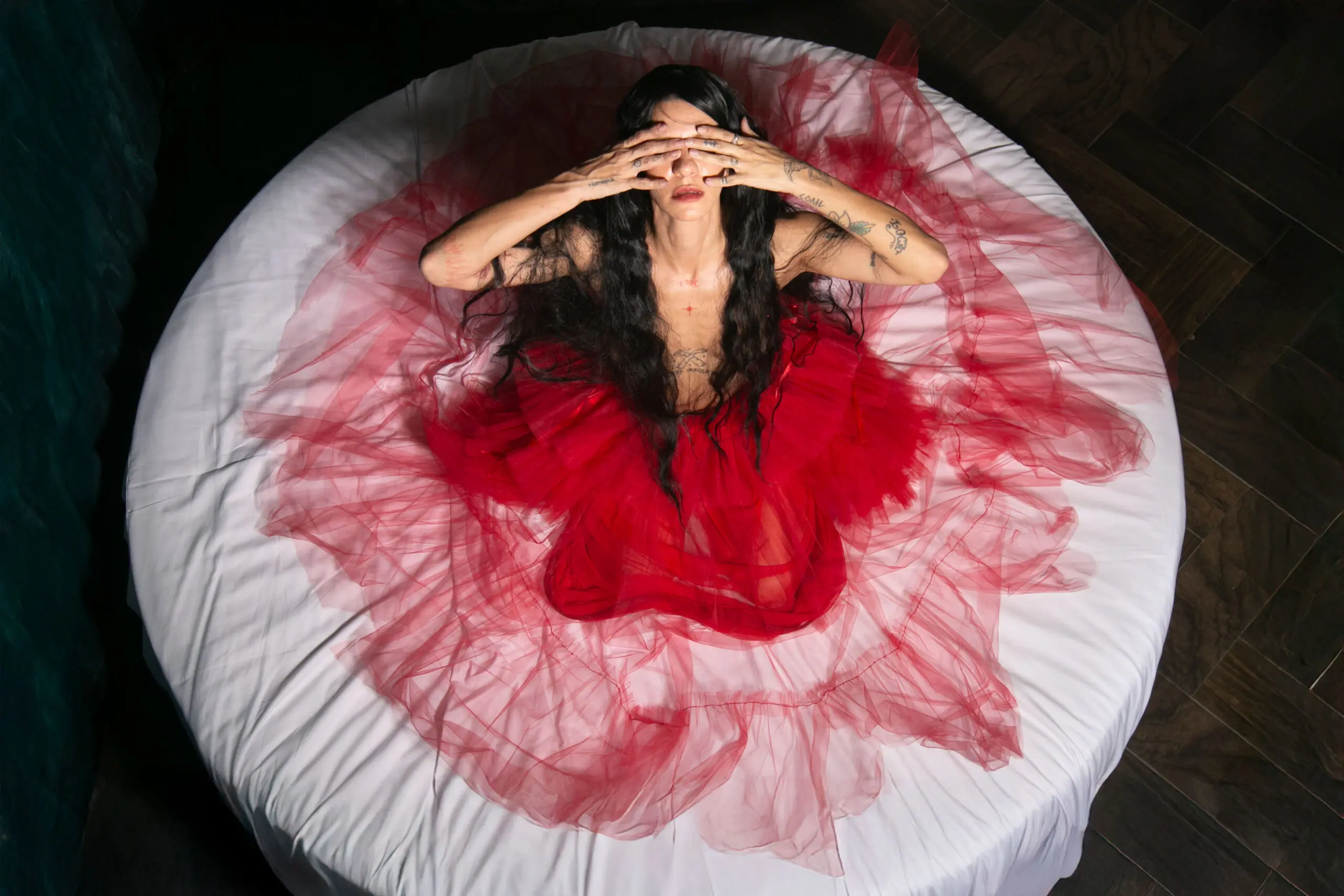

Lorena Barquet, aka Hardcorette, es una artista y performer mexicana que ha logrado labrarse un camino en una escena en efervescencia, no exenta de golpes bajos. Platicamos con ella sobre su visión, su perseverancia y sobre cómo percibe el auge del arte-acción en México.
“Podría tener una beca del FONCA, podría ser una diva, podría fingirme demente, podría huir del país, podría vivir en el mar para siempre. Podría trabajar ocho horas diarias, podría ser buena amiga, podría ser tu amante, podría ser brillante, podría decirte que en realidad no lo siento”, dice uno de los versos que Lorena solía compartir hace algunos años en su antiguo blog, diariodeunactrizmaleducada.

“Ya hice casi todo eso, menos conseguir la beca; aunque, en realidad, ni lo he intentado”, comenta.
Hoy los tiempos son otros, aunque aclara que ese texto pertenece al pasado y ya no se identifica mucho con él. Tampoco ha vivido en el mar, por cierto.
Formación y primeras rupturas
La prohibición del performance y el nacimiento de una vocación
Desde hace algunos años decidió dedicarse al performance y combinar esa pasión con las artes plásticas, además de participar ocasionalmente en montajes teatrales muy populares. Entre ellos, destaca su participación en El Foro Teatro Contemporáneo del director polaco Ludwik Margules en la Ciudad de México.
El director tenía una opinión muy particular sobre el performance, y lo consideraba “el hijo bastardo del teatro”, recuerda Lorena. Cuando Margules falleció de forma intempestiva a mitad de la carrera y la academia cerró, ella tuvo que inscribirse en la escuela de artes escénicas Casa Azul, donde —confiesa— nunca esperó graduarse haciendo una obra del Siglo de Oro español, cuando su principal interés en realidad era estudiar teatro contemporáneo.
En aquel periodo comenzó su acercamiento a un mundo en el que no tenía que aprenderse los diálogos de El perro del hortelano. “La primera vez que fui a una clase de performance me asusté un poco”, recuerda. “Nos dieron una aguja y nos pidieron que nos cosiéramos en la piel la etiqueta de una ropa. Eran ejercicios muy disruptivos y transgresores para mí en ese momento”.

En esos años, Lorena se fue a vivir un tiempo a Portugal, muy enamorada, a una comunidad anarquista autosustentable. Al regresar a México, en medio de una crisis de depresión, comenzó a enfocarse más en el performance y eso —de algún modo— le salvó la vida: “Busqué hacer cosas para no morirme, para investigar, y lo sigo haciendo: viviendo el arte de acción”.
Un estilo performático que otorgue identidad
Así comenzó a realizar performance en fiestas y eventos, y su arte pronto escaló.
“Todo me surge en momentos cotidianos. El epifenómeno”, como decía el artista Juan José Gurrola —para describir el conjunto de pensamientos casuales y volátiles que aparecen cuando el pensamiento reflexivo o racional está en estado de “no pensar”—, “es parte fundamental de mis procesos”, asegura ella.

“El performance es muy generoso porque te devuelve imágenes súper poderosas y potentes; entras en un estado meditativo» — Lorena Barquet.
Evita, sin embargo, dar una definición personal del performance: “Definirlo es limitarlo”, asegura, y prefiere entenderlo, básicamente, como un arte donde el cuerpo es el medio.
El auge del performance en México y Latinoamérica
“Estamos viviendo un boom del performance en México”, afirma Lorena. Y no solo aquí: también en muchos espacios de Latinoamérica, festivales, museos y centros culturales han abierto líneas permanentes hacia esta disciplina.
También proliferan las plataformas independientes. “A principios de los 2000 era algo muy ignorado: teníamos a figuras como Pancho López —hoy director del Festival Internacional de Artes Escénicas Extra!— o la polémica Rocío Boliver —La Congelada de Uva—, pero no había mucha comprensión de esa expresión artística.
Sin embargo, hoy todo el mundo quiere ser performer”, dice. “Y no lo llamaría falso performance; simplemente hay mucho, y no todo es muy bueno”.

La genealogía del performance mexicano
Desde los años 90, figuras clave como Roberto Escobar, Melquiades Herrera, Maris Bustamante y Felipe Ehrenberg le daban aliento al performance mexicano desde trincheras como el Museo de Arte Carrillo Gil.
Las siguientes décadas fueron decisivas y dieron la pauta para este auge actual, que si bien a veces se puede mimetizar con la moda, continúa siendo un bastión cultural subversivo y necesario dentro del arte experimental.
Cuando a principios de esta década ferias como Zona Maco, Material Art Fair y diversos festivales interdisciplinarios comenzaron a incluir performance dentro de sus contenidos, esta disciplina comenzó a contar con una relevancia institucional que le quitó mucho de su aura de marginalidad.
Museos, ferias y una escena marcada por voces femeninas
Espacios como el MUAC, Ex Teresa Arte Actual, el Museo Tamayo, el Centro de Cultura Digital o el Museo Jumex —con proyectos curatoriales ligados al cuerpo— se han sumado a la tendencia de los años recientes, presentando piezas de artistas como Noemí Ontiveros, Deborah Castillo, Mónica Mayer —pionera del performance feminista nacional—, Julio Barriga, la muy pop-art Polimera o Andrés Gudiño.

¿Se nota que la balanza está, además, marcadamente inclinada hacia el lado femenino?
Lorena Barquet: entre escenas, teatros y pantallas
Pero Lorena tampoco se siente parte de alguna escena particular: “Nunca tuve en mente: ‘¡Voy a ser performer!’. Nunca he seguido una sola línea”, reconoce.
Siempre se ha sentido más a gusto trabajando en proyectos underground como Plástico 2012 (2015), de Ricardo Soto, o Spells and Magicians Chapter Six: Vehicle Park (2015), de Gabriel Reyes.
Exploraciones, piezas recientes y colaboraciones internacionales
Como artista también ha explorado otros territorios. En 2019 realizó una pieza con la galería japonesa Aoyama Meguro para la Material Art Fair de la Ciudad de México. Se tituló Cut Your Hair Here (Córtate el pelo aquí) y consistía, literalmente, en cortarle el cabello a la gente.
Obras audiovisuales y crítica a la cultura visual
Su experiencia hace algunos años como parte del elenco de la exitosa obra Mentiras sí fue diferente, porque implicó tener éxito, dinero y fans: “Era teatro en serio, como en Broadway: micrófono, peluca, maquillaje, funciones llenas… pero no era lo mío; el ambiente era muy feo y competitivo entre las actrices”.
Otro de sus trabajos audiovisuales recientes, Los weyes del maguey (2024), es un corto más histriónico que experimental. En esta minipelícula cursi de desamor, Lorena se interpreta a sí misma: “Es un cortometraje que da risa, pero fue bastante triste vivir la historia”.
La obra comienza con música vernácula e imágenes de Pedro Infante en una puesta en escena kitsch.

Metaporno, inteligencia artificial y nuevas miradas
En 2024 presentó Metaporno, una reflexión sobre lo que podría existir más allá del porno en una sociedad saturada de imágenes sexualizadas. “El montaje consistió en una serie de pinturas en técnica mixta y fotografías impresas en canvas, pintadas al óleo e intervenidas con algo de inteligencia artificial”.
Esta obra estuvo presente en la pasada edición de Zona Maco. “También he hecho pequeños videoperformances y fotos pensadas como retratos antiguos intervenidos con pintura, como las fotografías de las abuelas en blanco y negro con toques de color”, relata.
Performance, censura y los golpes bajos al performance
¿La cultura de la cancelación y la corrección política afectaron al mundo del performance? “Cuando abres un performance al público, pues cuidado: puede haber quien se moleste y diga ‘eso no es arte’. Puedes marcar un límite ante el público o puedes abrirlo a los demás”, opina, y pone de ejemplo a Marina Abramović: “Ella nos lo enseñó: puso una mesa con la pistola o la navaja para que la audiencia hiciera lo que quisiera, incluso pudieron acabar con su vida”.
Para Lorena, el performance es extremo por naturaleza, y que te digan que no puedes hacer tal o cual cosa no es positivo. “Lo que es cierto es que se trata de un arte vivo que debe ir adaptándose, pero yo creo que toda esa carga de censura en las redes y el linchamiento sí fue un golpe bajo para el performance”.
Nuevas obras y horizonte creativo hacia 2026: Art Weekend
Actualmente, Lorena prepara nuevas piezas para presentar en 2026 y retomará un postdrama titulado Las mujeres horror.
Además, se presentó en Studio Berlín durante Art Week CDMX con el performance COATL, al que describe como “un performance sonoro en vivo donde se explora el cuerpo como un lugar que resignifica el tatuaje como vía de transformación, creando un archivo corporal en el cual la vulnerabilidad, la resistencia y el renacimiento quedan plasmados”.

Se trata de una obra que habla sobre las cicatrices, la ruptura y el desgarre como conceptos. La acompañaron los artistas Matías Solar e IMAABS.
La trayectoria de Lorena Barquet demuestra que el performance en México se ha consolidado como un territorio fértil para la experimentación, la disidencia y la construcción de nuevas narrativas corporales.
La foto de portada es de Gustavo Cisneros.
SIgue a Lorena Barquet en IG.
Más artículos de artistas iberoamericanas en AW Magazine.
Encuentra más historias como esta explorando nuestra sección de cultura.